
⚡ 스프링 프레임워크( Spring Framework)
-
Framework : 애플리케이션을 구현하고 관리하는 환경(틀, 약속)
-
Spring 3.XX ~ 5.XX
-
스프링 프레임워크는 자바 플랫폼을 위한 오픈 소스 애플리케이션 프레임워크이다. -
전자 정부 표준 프레임워크로 채택 > 전자정부사이트
-
세팅된 개발 환경 제공 + 생산성 + 개발 편의성 + 유지/보수성 + 현업 > 대형 프로젝트
[ 구성 요소 ]
-
의존성 주입 지원(DI)
-
관점 지향 프로그래밍 지원(AOP)
-
Spring MVC 지원
-
레이아웃 지원(Tiles)
-
데이터베이스 연동 지원
- JDBC
- Spring JDBC
- ORM(JPA)
- MyBatis
⚡ 스프링 프로젝트 구조
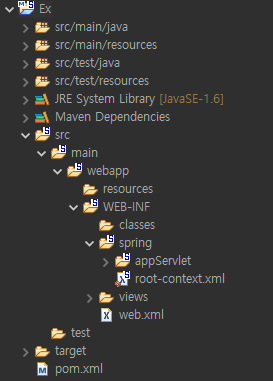
-
src/main/java
- 여태까지 사용하는 Java 소스 폴더
-
src/main/resources
- Java 소스 이외의 자원 폴더
- 설정
-
src/test/java
- 테스트용 폴더
-
src/test/resources
- 테스트용 폴더
-
JRE System Library
- JRE jar
-
Maven Dependencies
- 메이븐(빌드 도구 + 라이브러리 관리 도구 등)
- 프로젝트 생성 & 유지 관리 & 배포를 도와주는 프로그램
- 수업용 > jar 파일들 관리 용도로 사용
- Spring = Maven or Gradle
-
src
- 1~4 까지의 물리적 표현
- 소스의 루트 폴더
7.1 webapp *
- 웹 루트 폴더
7.2 webapp > resources
- CSS, JavaScript, Images 등을 저장하는 폴더
7.3
webapp > WEB-INF⭐7.3.1 classes - 컴파일된 클래스 파일 저장폴더 - 개발자 관여(X) 7.3.2 spring - 이 폴더 이하에서 모든 스프링 설정을 한다. ⭐ 7.3.2.1 appServlet 7.3.2.1.1 servlet-context.xml - 웹 요청과 관련된 환경 설정 7.3.2.2 root-context.xml - 스프링 전체 환경 설정 7.3.3 views - 뷰 페이지 폴더 7.3.4 web.xml - 아파치 톰캣 서버 설정
⚡ 스프링 DI (Spring DI) ⭐
-
Dependency Injection
-
의존(성) 주입 : 어떤 객체가 사용하는 의존 객체를 직접 만들어 사용하는게 아니라, 주입 받아서 사용하는 방법
-
객체를 관리하는 방법
-
스프링에서 아주 중요한 개념 중 하나 -
스프링 전반에 걸쳐서 DI가 적용되어 있음
-
DI : 잘 알려진 디자인 패턴 중 하나 > 스프링에서 도입 + 구현 + 적용 > Spring DI
-
프로그래밍에서 구성 요소간의 의존 관계가 소스 내부가 아닌 외부 환경에 의해서 정의되게 하는 디자인 패턴
-
IoC ( Inversion of Control )디자인 패턴 : 역제어 > 객체를 생성하는 순서가 뒤집힌다.
🦾 DI/IoC 개념 실습1
- "com.test.spring.di01" 패키지 생성
- com.test.spring.di01 > "Ex01.java"
					   > "Pen.java"
					   > "Brush.java"
					   > "Hong.java"
					   > "Lee.java"
1) Ex01.java
-
Ex01과 Pen의 관계
- Ex01이 Pen을 의존(사용)한다.
- Pen을 Ex01의 의존객체라고 부른다. 즉, 주입되는 객체 (Pen : 의존객체)
- Ex01이 자신의 업무를 구현하기 위해서 Pen을 사용했다.
- Pen이 없으면 Ex01은 업무를 진행할 수 없다. -
Ex01과 Brush의 관계
- Brush는 의존객체
-
Ex01과 Hong의 관계
- Ex01 > Hong > Pen
- Ex01 > (의존관계) > Hong 의존객체 > (의존관계) > Pen 의존객체
- Ex01과 Lee의 관계
- 의존 주입
- Ex01 > Lee > Brush
package com.test.spring.di01;

public class Ex01 {

	public static void main(String[] args) {

		Pen pen = new Pen();
		pen.write(); //펜으로 글씨를 적습니다.

		Brush brush = new Brush();
		brush.draw(); //붓으로 그림을 그립니다.

		Hong hong = new Hong();
		hong.run(); //펜으로 글씨를 적습니다.

		//****
		Brush b = new Brush();
		Lee lee = new Lee(b); //의존(객체) 주입(DI)
		lee.run(); //붓으로 그림을 그립니다.

	}
}
2) Pen.java
package com.test.spring.di01;

public class Pen {

	public void write() {
		System.out.println("펜으로 글씨를 적습니다.");
	}
}
3) Brush.java
package com.test.spring.di01;

public class Brush {

	public void draw() {
		System.out.println("붓으로 그림을 그립니다.");
	}

}
4) Hong.java
package com.test.spring.di01;

public class Hong {

	public void run() {
		Pen pen = new Pen();
		pen.write();
	}
}
5) Lee.java ⭐
package com.test.spring.di01;

public class Lee {

    //의존객체
	private Brush brush;

	//DI 구현 ⭐
	//1. 생성자
	//2. Setter

	//1.다른 사람(외부)이 만들어서 생성 > 생성자 > 의존 주입 도구
	public Lee(Brush brush) {
		this.brush = brush;
	}

	//2.Setter > 의존 주입 도구
	public void setBrush(Brush brush) {
		this.brush = brush;
	}

	public void run() {
    	//의존 객체 생성 X
		//Brush brush = new Brush(); //직접 생성
		brush.draw();
	}
}
🦾 xml설정 실습2
- "com.test.spring.di02" 패키지 생성
- com.test.spring.di02 > "Ex02.java"
					   > Pen.java
					   > Brush.java
					   > "Hong.java"
					   > "Lee.java"
> "di02.xml"- Pen, Brush 파일 실습1 동일함
1) Ex02.java
package com.test.spring.di02;

import org.springframework.context.ApplicationContext;
import org.springframework.context.support.ClassPathXmlApplicationContext;

public class Ex02 {

	public static void main(String[] args) {

		//m1();
		m2();
	}

	private static void m2() {

		//Ex02 > Hong > Pen
		//Ex02 > Lee > Brush
		ApplicationContext context = new ClassPathXmlApplicationContext("com/test/spring/di02/di02.xml");

		Hong hong = (Hong)context.getBean("hong");
		hong.run(); //펜으로 글씨를 적습니다.

		Lee lee = (Lee)context.getBean("lee");
		lee.run(); //붓으로 그림을 그립니다.

	}

	private static void m1() {

		//스프링 환경 > 객체 생성 + 소멸 > 스프링 관리
		//  > 관리 XML 필요

		//Pen 객체 생성하기
		Pen p1 = new Pen();
		p1.write();

		//XML 설정 읽기 > 인식 > 호출
		ApplicationContext context = new ClassPathXmlApplicationContext("com/test/spring/di02/di02.xml");

		//getBean() > 식별자를 검색 (id) > 해당 클래스의 인스턴스 생성(new Pen()) + 반환
		Pen p2 = (Pen) context.getBean("pen"); //id
		p2.write();

		Brush b1 = (Brush) context.getBean("brush"); //id
		b1.draw();

		Pen p3 = (Pen) context.getBean("p1"); //name
		p3.write();

		Pen p4 = (Pen) context.getBean("p2"); //name
		p4.write();

		Pen p5 = (Pen) context.getBean("p3"); //name
		p5.write();

	}

}
2) dio2.xml
- 스프링 설정 파일(XML)
- 자바 객체 생성 + 설정 > 자바 객체 = Bean
<?xml version="1.0" encoding="UTF-8"?>
<beans xmlns="http://www.springframework.org/schema/beans"
    xmlns:xsi="http://www.w3.org/2001/XMLSchema-instance"
    xsi:schemaLocation="http://www.springframework.org/schema/beans
        https://www.springframework.org/schema/beans/spring-beans.xsd">

	<!-- m1() -->
	<!-- 하나의 객체가 어디에서 쓰이느냐? > 역할 달라질 수 있다 > 식별자 여러개 제공 > 가독성 -->
	<bean id="pen" name="p1 p2 p3" class="com.test.spring.di02.Pen"></bean>
	<bean id="brush" class="com.test.spring.di02.Brush"></bean>
	<!-- <bean id="pen" name="필기도구 메모도구 연필 볼펜"  class="com.test.spring.di02.Pen"></bean> -->

	<!-- m2() -->
	<bean id="hong" class="com.test.spring.di02.Hong">
		<!-- Spring DI -->
		<!-- 생성자 인자 -->
		<constructor-arg ref="pen"></constructor-arg>
	</bean>

	<bean id="lee" class="com.test.spring.di02.Lee">
		<!-- Spring DI -->
		<!-- Setter -->
		<property name ="brush" ref="brush" ></property>
	</bean>

</beans>
3) Hong.java
- Ex02 > Hong > Pen
package com.test.spring.di02;

public class Hong {

	//의존객체
	private Pen pen;

	public Hong(Pen pen) {
		this.pen = pen;
	}

	public void run() {
		pen.write();
	}
}
4) Lee.java
- Ex02 > Lee > Brush
package com.test.spring.di02;

public class Lee {

	//의존객체
	private Brush brush;

	public void setBrush(Brush brush) {
		this.brush = brush;
	}

	public void run() {
		brush.draw();
	}

}
⚡ 스프링 AOP (Spring Aspect Oriented Programming) ⭐
- 관점 지향 프로그래밍
- 관점 지향 :
어떤 로직을 기준으로 핵심적인 관점, 부가적인 관점으로 나누어서 보고 그 관점을 기준으로 각각 모듈화하겠다는 것 - 여기서 모듈화란 어떤 공통된 로직이나 기능을 하나의 단위로 묶는 것
주업무와 보조업무를 분리시켜 각각의 업무를 관리하는 기술- 생산성 + 유지 보수성 향상
- [주요 관심사(Core Concern)]로부터 [횡단 관심사(Cross-cutting Concern)]의 [분리]를 허용함으로써 모듈성을 증가시키는 것이 목적
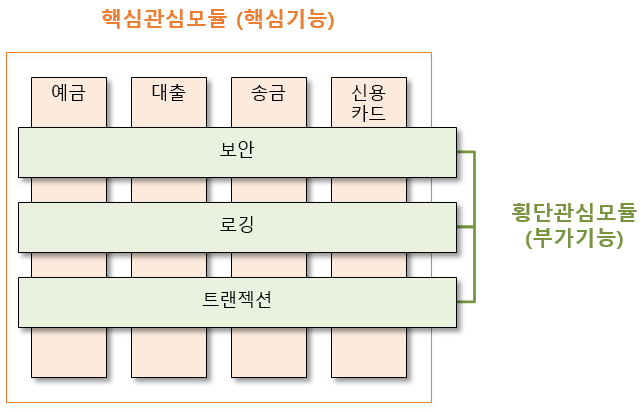
[ Spring AOP 구분 ]
-
Core Concern
- 주업무(핵심 기능)
- ex) 예금, 대출, 송금, 신용카드 등
-
Cross-cutting Concern
- 보조업무(부가기능)
- ex) 보안, 로깅, 트랜잭션 등
-
Advice
< 주업무가 실행되는 어느 시점에 보조 업무를 실행할지? >- Before Advice : 실행 전
- After Advice : 실행 후
- Around Advice : 실행 전&후
- After-returning Advice : 주 업무가 성공적으로 리턴되면 동작(단, 메소드 내부에 리턴값이 존재하는 경우)
- After-throwing Advice : 주 업무 실행 중, 예외가 발생하면 동작
🦾 AOP 실습
- "com.test.spring.aop" 패키지 생성
- 					   > "Main.java" 			//메인 클래스
					   > "Memo.java" 인터페이스   //메인 업무
					   > "MemoImpl.java"        //메인업무

					   > "Logger.java"			//보조업무
					   > "memo.xml"				//스프링 설정
1) Main.java
- 메인 클래스
- 컨트롤러 (주업무 통제하는 역할)
- 기존의 주 업무 + 보조 업무 -> "AOP"를 통해서 통제한다. > 반드시 Memo객체를 스프링을 통해서 생성 해야 한다.
package com.test.spring.aop;

import org.springframework.context.ApplicationContext;
import org.springframework.context.support.ClassPathXmlApplicationContext;

public class Main {

	public static void main(String[] args) {

		//메모 쓰기
		ApplicationContext context = new ClassPathXmlApplicationContext("com/test/spring/aop/memo.xml");

		Memo memo = (Memo)context.getBean("memo");

		memo.add("스프링 AOP 작업을 하고 있습니다.");

		//메모 읽기
		try {

			String txt = memo.read(5);
			txt = memo.read(15);

		} catch (Exception e) {
			//e.printStackTrace();
		}

		//메모 수정하기
		boolean result = memo.edit(5, "수정한 내용입니다.");

		//메모 삭제하기
		result = memo.del(5);
	}

}
2) Memo.java
- 메인 업무
package com.test.spring.aop;

public interface Memo {

	//메모 쓰기
	void add(String memo);

	//메모 읽기
	String read(int seq) throws Exception ;

	//메모 수정하기
	boolean edit(int seq, String memo);

	//메모 삭제하기
	boolean del(int seq);
}
3) MemoImpl.java
- 메인업무 객체
package com.test.spring.aop;

public class MemoImpl implements Memo {

	@Override
	public void add(String memo) {
		System.out.println("메모 쓰기: " + memo);
	}

	@Override
	public String read(int seq) throws Exception{

		if (seq >= 1 && seq <= 10) {
		System.out.println("메모 읽기: " + seq);
		} else {
			throw new Exception("존재하지 않는 메모");
		}
		return "메모입니다.";
	}

	@Override
	public boolean edit(int seq, String memo) {

		System.out.println("메모 수정하기: " + memo);

		return false;
	}

	@Override
	public boolean del(int seq) {

		System.out.println("메모 삭제하기: " + seq);

		return false;
	}
}
4) Logger.java
- 보조 업무 객체
package com.test.spring.aop;

import java.util.Calendar;

import org.aspectj.lang.ProceedingJoinPoint;

public class Logger {

	public void log() {
		Calendar now = Calendar.getInstance();
		System.out.printf("[LOG][%tF %tT] 로그를 기록합니다.\n", now, now);
	}

	public void time(ProceedingJoinPoint jp) {
		long begin = System.nanoTime();
		System.out.println("[LOG] 기록을 시작합니다.");

		//주 업무
		try {

			jp.proceed(); //지금 실행하는 주업무의 대리자

		} catch (Throwable e) {
			e.printStackTrace();
		}

		long end = System.nanoTime();
		System.out.println("[LOG] 기록을 종료합니다.");

		System.out.printf("[LOG] 소요 시간 %,dns\n", end - begin);
	}

	public void histroy(Object memo) {
		System.out.println("[LOG] 읽기 기록: " + memo);
	}

	public void check(Exception e) {
		System.out.println("[LOG] 예외 발생 " + e.getMessage());
	}

}
5) memo.xml ⭐
- Spring AOP 설정
<?xml version="1.0" encoding="UTF-8"?>

<beans xmlns="http://www.springframework.org/schema/beans"
   xmlns:xsi="http://www.w3.org/2001/XMLSchema-instance"
   xmlns:aop="http://www.springframework.org/schema/aop"
   xsi:schemaLocation="http://www.springframework.org/schema/beans http://www.springframework.org/schema/beans/spring-beans.xsd
      http://www.springframework.org/schema/aop http://www.springframework.org/schema/aop/spring-aop-3.1.xsd">

   <!-- 주 업무 객체 -->
   <bean id="memo" class="com.test.spring.aop.MemoImpl" />

   <!-- 보조 업무 객체 -->
   <bean id="logger" class="com.test.spring.aop.Logger" />


   <!-- 주 업무 객체 + 보조 업무 객체 -->
   <!-- Spring AOP 설정 -->
   <aop:config>

      <!-- 보조 업무를 담당할 객체를 지정 : 역할(Role) -->
      <aop:aspect id="loggerAdvice" ref="logger">

         <!-- 주 업무 객체를 지정 > 메소드 찾기 > 포인트컷 지정하기 -->
         <!-- Point Cut : 주 업무 객체의 특정 메소드 -->
         <!-- Point Cut 지정 방법 > Aspectj 표현식을 사용한다. -->

         <!-- 포인트컷 지정(= 주 업무 지정) -->

         <!--

         	Aspectj 표현식
         	- execution([접근지정자] 반환형 [클래스].메소드(인자)
         	- execution(public void com.test.spring.aop.MemoImpl.add(String))

         	- 접근 지정자  > 생략 가능(public만 가능)
         	- 반환형 	 > 생략 X
         	- 클래스 	 > 반드시 전체 경로 표현. 생략 가능
         	- 메소드 	 > 메소드명. 생략 X
         	- 인자 	     > 인자리스트. 생략 X

         	- 와일드 카드
         		1. *  : 반환형, 패키지, 클래스, 메소드명
         		2. .. : 인자 리스트

         	tip_ 공통점을 찾아라!

          -->

         <!-- <aop:pointcut expression="execution(public void com.test.spring.aop.MemoImpl.add(String))" id="p1"/> -->

         <aop:pointcut expression="execution(public String com.test.spring.aop.MemoImpl.read(int))" id="p1"/>

         <aop:pointcut expression="execution(public boolean com.test.spring.aop.MemoImpl.edit(int,String))" id="p2"/>

         <aop:pointcut expression="execution(public * com.test.spring.aop.MemoImpl.*(..))" id="p3"/>


         <aop:pointcut expression="execution(public * com.test.spring.aop.MemoImpl.*(int))" id="p4"/>

         <aop:pointcut expression="execution(public boolean com.test.spring.aop.MemoImpl.*(..))" id="p5"/>


		<!-- 생략 가능... but 권장 X -->
         <aop:pointcut expression="execution(* *(..))" id="p6"/>


		<!-- 첫번째는 무조건 int, 2번째는 알아서해라 -->
		<aop:pointcut expression="execution(public * com.test.spring.aop.MemoImpl.*(int,..))" id="p7"/>


		<!-- 메소드가 add단어로 시작하는거 -->
		<aop:pointcut expression="execution(public * com.test.spring.aop.MemoImpl.add*(..))" id="p8"/>

		<aop:pointcut expression="execution(public * com.test.spring.aop.MemoImpl.*a*(..))" id="p9"/>

		<aop:pointcut expression="execution(public * com.test.spring.aop.MemoImpl.add(..))" id="p10"/>

		<aop:pointcut expression="execution(public String com.test.spring.aop.MemoImpl.read(int))" id="p11"/>


         <!-- 위빙(Weaving) > 포인트컷과 보조업무 결합 x 5가지 방법 -->
         <!--
            After Advice
            - 주 업무 실행 > 보조 업무 실행
         -->
         <!--
         <aop:after method="log" pointcut-ref="p1"/>
         <aop:after method="log" pointcut-ref="p2"/>
       	 -->

         <!-- <aop:after method="log" pointcut-ref="p9"/> -->
         <!-- <aop:before method="log" pointcut-ref="p9"/> -->
         <!-- <aop:around method="time" pointcut-ref="p3"/> -->

		<!-- 주 업무를 실행한 후에 `주 업무의 반환값을 사용`하는 보조업무를 실행 -->
		<!-- <aop:after-returning method="histroy" pointcut-ref="p11" returning="memo"/> -->

        <!-- 주 업무를 실행 중 `예외가 발생`했을 때 보조업무를 실행 -->
		 <aop:after-throwing method="check" pointcut-ref="p11" throwing="e"/>

      </aop:aspect>

   </aop:config>

</beans>