👉 What if your application gets hacked… not after release, but during development itself? 😨
👉 What if your application gets hacked… not after release, but during development itself? 😨
That’s the reality today. Security is no longer optional — it’s mandatory from day one 💡
👉 This is where DevSecOps comes in — integrating security into every stage of development 🚀
🔹 The Reality: Why Traditional Security Fails
Many organizations still follow:
Security testing at the end ❌
Manual vulnerability checks ❌
Delayed issue detection ❌
👉 Result:
Costly fixes 💰
Security breaches 🔐
Loss of user trust
🔹 What is DevSecOps?
👉 DevSecOps = Development + Security + Operations
✔ Integrates security into DevOps pipeline
✔ Automates security checks
✔ Ensures secure and fast delivery
👉 “Shift Left Security” is the key concept 🔥
🔹 Why DevSecOps is Important
✔ Detect vulnerabilities early
✔ Reduce security risks
✔ Faster and safer releases
✔ Continuous monitoring
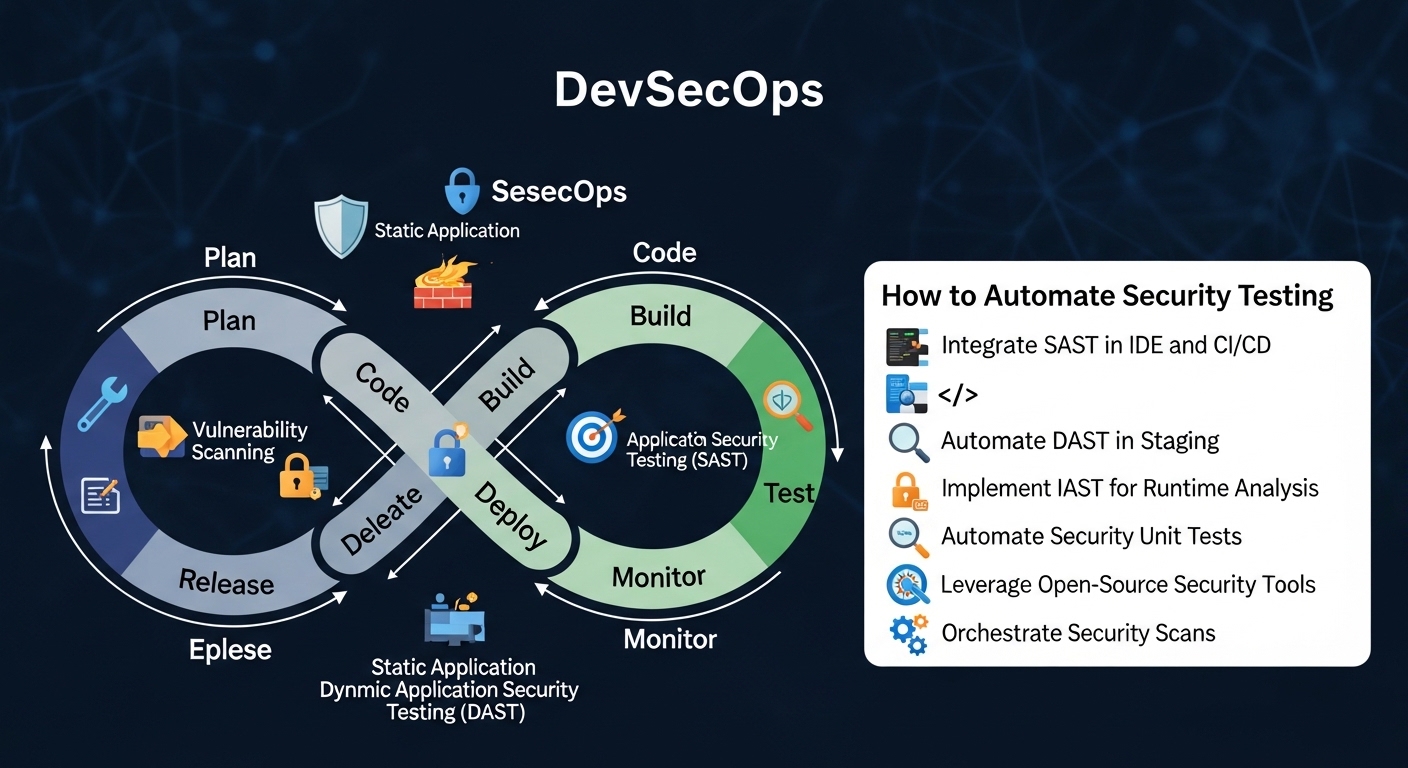
🔹 DevSecOps Lifecycle
Plan 📋
Develop 💻
Build ⚙️
Test 🔍
Release 🚀
Monitor 📊
👉 Security is added at every stage
🔹 What is Security Testing?
👉 Security testing identifies:
Vulnerabilities
Threats
Weak points
👉 Ensures application is secure before release
🔹 Types of Security Testing
🔸 1. SAST (Static Application Security Testing)
✔ Analyzes source code
✔ Finds issues early
🔸 2. DAST (Dynamic Application Security Testing)
✔ Tests running application
✔ Detects runtime vulnerabilities
🔸 3. SCA (Software Composition Analysis)
✔ Checks third-party libraries
✔ Finds vulnerable dependencies
🔸 4. Container Security
✔ Scans Docker images
✔ Identifies misconfigurations
🔹 How to Automate Security Testing
🔸 Step 1: Integrate Security in CI/CD
👉 Add security tools in pipeline
✔ Example:
Jenkins
GitHub Actions
🔸 Step 2: Use Automated Scanning Tools
👉 Popular tools:
SonarQube (Code quality + security)
OWASP ZAP (DAST)
Snyk (Dependency scanning)
Trivy (Container scanning)
🔸 Step 3: Run Scans on Every Commit
✔ Detect issues instantly
✔ Prevent insecure code
🔸 Step 4: Automate Dependency Checks
✔ Identify outdated libraries
✔ Fix vulnerabilities early
🔸 Step 5: Set Security Gates
✔ Fail build if vulnerabilities found
👉 Ensures only secure code is deployed
🔸 Step 6: Continuous Monitoring
✔ Monitor production systems
✔ Detect real-time threats
🔹 Example DevSecOps Workflow
Developer writes code 💻
Code pushed to GitHub 📤
CI pipeline runs ⚙️
Security scans executed 🔍
Build passes only if secure ✅
Deployment happens 🚀
🔹 Common Mistakes
❌ Ignoring security in early stages
❌ Manual testing only
❌ Not updating dependencies
❌ No monitoring
🔹 Real-World Benefits
Organizations adopting DevSecOps achieve:
Faster secure releases 🚀
Reduced vulnerabilities 🔐
Better compliance 📊
Improved trust 🤝
🔹 What to Learn Next?
CI/CD Pipeline
Docker & Kubernetes Security
Cloud Security (AWS/Azure)
Ethical Hacking Basics
🔹 Career Opportunities
DevSecOps Engineer
Security Engineer
Cloud Security Specialist
SRE
👉 High demand in cybersecurity 🔥
DevSecOps is the future of secure software development 💡
👉 Automating security ensures faster, safer, and smarter releases
Start integrating security today and stay ahead 🚀