ICE 급습을 목격했을 때 법적으로 할 수 있는 5가지 일
서론: 무기력한 목격자에서 힘을 가진 동맹자로
출근길이나 동네를 걷다가 갑자기 눈앞에서 긴장된 상황이 벌어지는 것을 보았다고 상상해보세요. 이민 단속 요원들이 누군가를 심문하고 있고, 공기는 공포와 불확실함으로 가득 차 있습니다. 대부분의 사람들은 첫 반응으로 무력감을 느낍니다. 무엇을 할 수 있을까? 무엇을 해도 될까?
이런 상황에서 당신은 결코 무기력하지 않습니다. 몇 가지 핵심 권리와 전략을 알면 큰 차이를 만들 수 있으며, 단순한 방관자가 아닌 동맹자가 될 수 있습니다. 이 글에서는 이민세관단속국(ICE)과 접촉하는 상황에서 지역사회 구성원을 지원하기 위해 법적으로 취할 수 있는 5가지 놀랍고 효과적인 행동을 소개합니다.
1. 차이를 아세요: 모든 영장이 동일한 것은 아닙니다
이것은 누구나 알아야 할 가장 중요한 정보 중 하나입니다. ICE 요원들이 영장(warrant)이라는 문서를 제시할 수 있지만, 모든 영장이 사유지(집)에 들어갈 법적 권한을 주는 것은 아닙니다. 이 차이를 이해하는 것은 강력한 지역사회 방어 수단입니다.
- 사법 영장(Judicial Warrant): 법원에서 발급되며, 법 집행 기관이 집에 들어갈 수 있는 유일한 영장입니다.
- 행정 영장(Administrative Warrant): 국토안보부(DHS)나 ICE 내부에서 발급되며, 집에 들어갈 권한을 주지 않습니다.
구분하는 주요 시각적 차이:
- 사법 영장: “UNITED STATES DISTRICT COURT”에서 발급되며, 제목이 “SEARCH AND SEIZURE WARRANT” 또는 “FEDERAL ARREST WARRANT”입니다. 판사의 서명이 있어야 하며, 정확한 이름, 주소, 날짜가 기재되어 있습니다.
- 행정 영장: “U.S. DEPARTMENT OF HOMELAND SECURITY”에서 발급되며, 보통 “Warrant for Arrest of Alien”이라는 제목입니다. 이민 담당관이 서명하며, 판사 서명은 없습니다.
가장 중요한 핵심 메시지:
“행정 영장만으로는 이민 단속 요원이 사유지에 들어갈 수 없습니다.”
이 지식은 강력한 방패가 됩니다. 주민들은 판사가 서명한 올바른 영장이 제시되지 않으면 출입을 거부할 법적 권리가 있습니다. 문을 닫은 채로 요원에게 영장을 문 아래로 밀어 넣어달라고 요청하는 것만으로도 체포를 막을 수 있습니다.
2. 휴대폰을 사용하세요: 기록할 권리는 보호할 권리입니다
미국에서는 수정헌법 제1조에 따라 공공 장소에서 법 집행 활동을 하는 경찰이나 ICE 요원을 촬영할 권리가 있습니다. 방관자로서 목표는 방해하지 않으면서 상황을 기록하는 것입니다. 핵심 원칙은 간단합니다: “지원하되, 방해하지 말라(Support, Not Obstruct).”
안전한 거리에서 휴대폰으로 사건을 기록하면 나중에 법적 대응에 매우 귀중한 증거가 될 수 있습니다.
안전한 거리에서 기록할 내용:
- 시간, 날짜, 장소 (녹화 시작하면서 소리 내어 말해 명확한 타임라인 확보)
- 요원의 이름과 배지 번호
- 차량 번호판
- 절차 위반이나 강압 행위
요원들이 자신을 “경찰”이라고 잘못 소개하거나 오해의 소지가 있는 정보를 줄 수 있다는 점을 유의하세요. 당신의 역할은 보고 듣는 것을 정확히 기록하는 것이며, 연방 요원에게 거짓말을 하는 것은 법적으로 금지되어 있습니다. 관찰과 기록에 충실하세요.
3. 5D를 익히세요: 안전하고 효과적인 개입 프레임워크
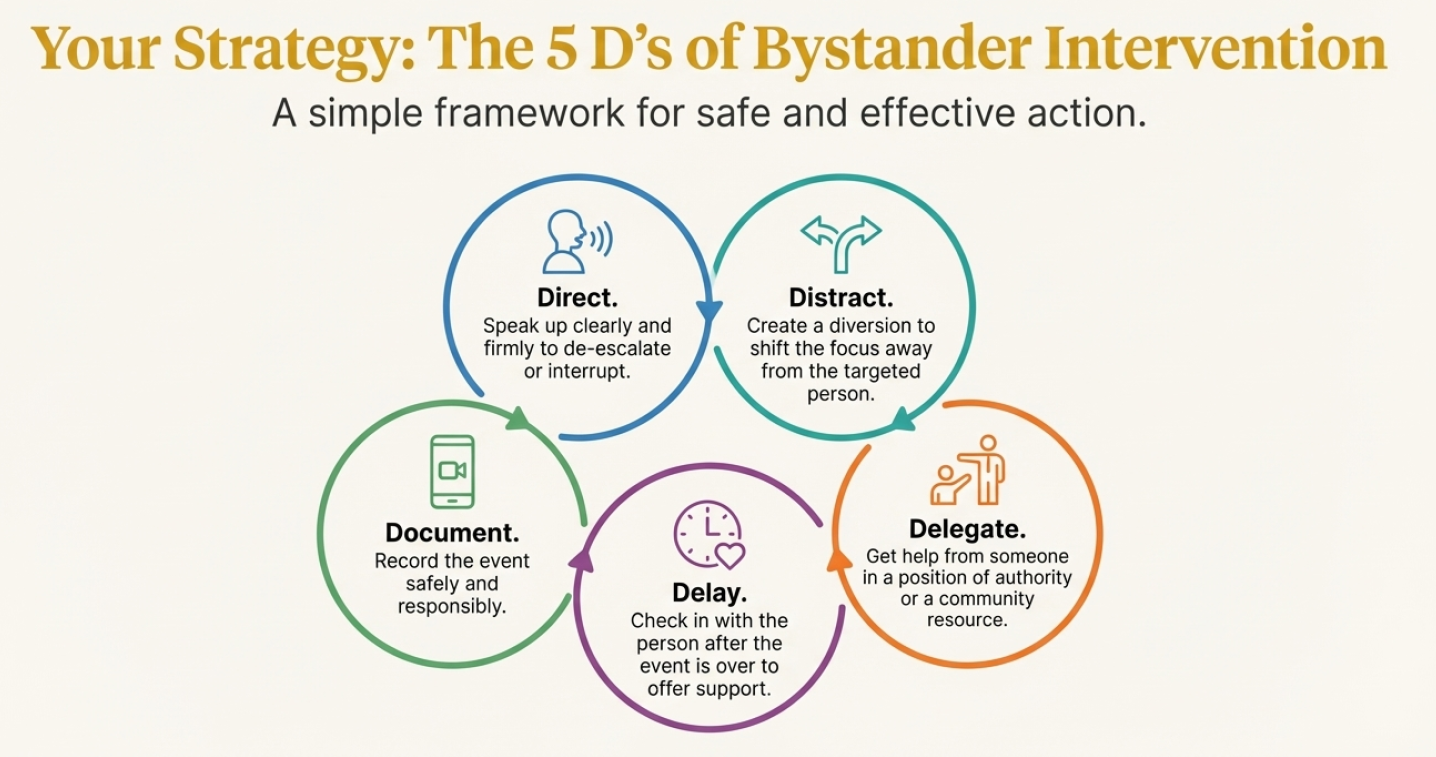
“5D”는 방관자 개입을 위한 실용적인 도구 상자입니다. 직접적인 대립 없이 상황을 완화하고 대상자를 지원할 수 있는 다양한 옵션을 제공합니다. 상황과 자신에게 가장 안전하고 적절한 방법을 선택하세요.
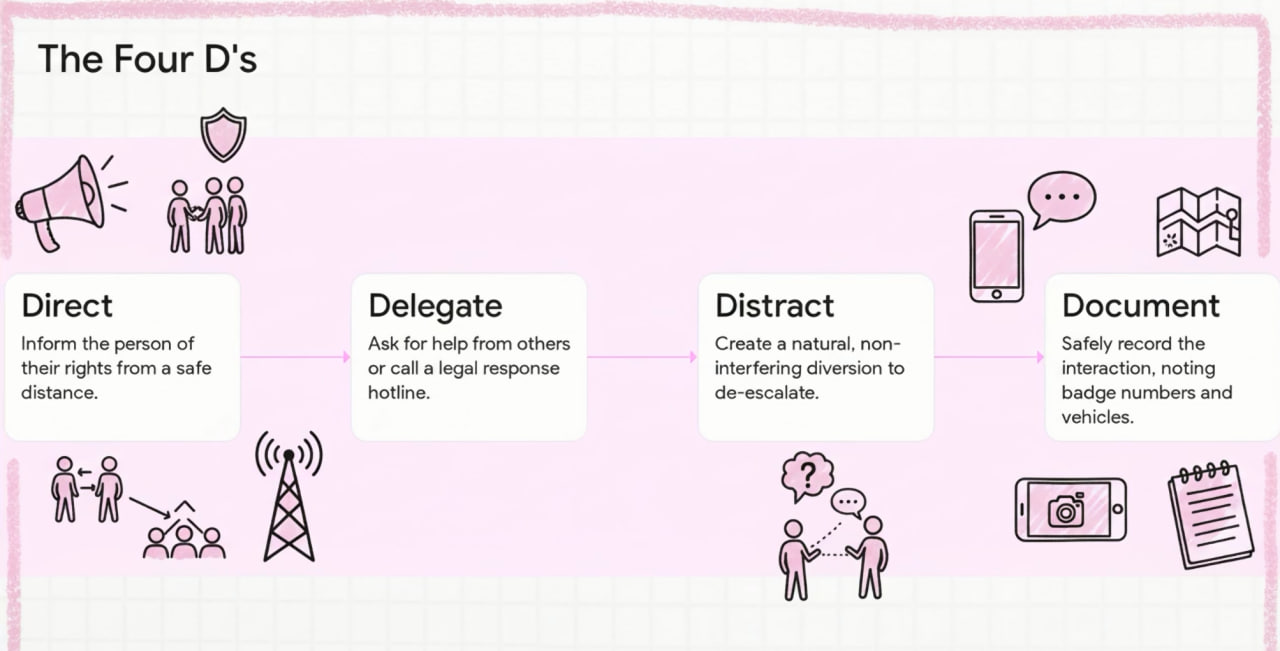
- Direct (직접): 명확하게 말하기. 요원에게 질문을 해서 잠시 멈춤을 만들거나, 차분한 목소리로 주변 사람들에게 권리를 알려줄 수 있습니다.
- Delegate (위임): 다른 사람에게 도움 요청. 지역 이민자 권리 신속 대응 핫라인에 전화하거나, 법률 감시자나 권위 있는 사람에게 도움을 요청합니다.
- Distract (산만하게 하기): 자연스럽고 비대립적인 방식으로 상황을 방해. 길을 물어보거나, 관련 없는 작은 소란을 만들어 주의를 분산시킵니다.
- Document (기록): 앞서 설명한 대로 안전하게 상황을 녹화. 객관적인 기록을 남깁니다.
- Delay (지연): 상황이 끝난 후 대상자에게 다가가 괜찮은지 확인하고, 가족·변호사·지역사회 지원 단체 연락에 도움을 제안합니다.
이 프레임워크는 여러 방식으로 행동할 수 있게 해줍니다. 대립적이지 않아도 도움이 될 수 있으며, 때로는 즉각적인 위험이 지나간 후의 지원이 가장 강력할 수 있습니다.
4. 목소리를 사용하세요: 결과를 바꿀 수 있는 핵심 문구
고도의 스트레스 상황에서 정확히 무엇을 말해야 할지 아는 것은 대상자와 방관자 모두에게 큰 힘이 됩니다. 당신의 말은 헌법상 권리를 상기시키고 요원이 적절한 절차를 따르게 할 수 있습니다.
요원에게 할 말:
- “그 사람은 자유롭게 떠날 수 있나요?(Are they free to leave?)”
- “저는 방해하는 것이 아니라 관찰하고 있습니다.(I am not interfering, I am observing.)”
- “이 집에 들어가기 위해 판사가 서명한 영장이 있나요?(Do you have a warrant signed by a judge to enter this home?)”
- “변호사와 상담할 권리가 있지 않나요?(Don’t they have the right to speak with a lawyer?)”
대상자에게 알려줄 말:
- “침묵할 권리가 있습니다.(You have the right to remain silent.)”
- “변호사 없이 어떤 서류에도 서명하지 않을 권리가 있습니다.(You have the right to not sign any documents without a lawyer.)”
- “변호사와 상담할 권리가 있습니다.(You have the right to speak to a lawyer.)”
5. 앱이 있습니다: 기술로 힘을 얻다
디지털 시대에 지역사회 방어를 위한 강력한 새 도구는 바로 스마트폰입니다. 전국한인봉사교육단체협의회(NAKASEC)가 개발한 “Know Your Rights 4 Immigrants” 앱은 필수 정보와 경보를 손끝에 제공하는 현대적 도구입니다.
주요 기능:
- 여러 언어로 권리를 소리 내어 읽어줍니다(대상자가 너무 위축되어 스스로 말하기 어려울 때 매우 중요).
- 버튼 하나로 미리 작성된 긴급 연락처에 알림을 보냅니다.
- 법률 디렉토리와 가족 대비 양식 등 필수 자원을 포함합니다.
앱은 애플 앱스토어에서 “Know Your Rights 4 Immigrants”, 구글 플레이스토어에서 “KYR 4 Immigrants”로 검색할 수 있습니다. 이 도구는 가장 필요한 순간에 법적 정보와 긴급 연락을 직접 손에 쥐게 해줍니다.
결론: 행동으로 옮겨진 지식이 더 안전한 지역사회를 만듭니다
이민 급습을 목격하는 것은 두려운 일이지만, 수동적인 관찰자로 남을 필요는 없습니다. 여기 소개한 5가지 행동은 지식이 개인을 효과적인 동맹자로 만들어준다는 것을 보여줍니다. 변호사가 아니어도 긍정적인 영향을 줄 수 있습니다. 방관자 권리와 책임을 기본적으로 이해하기만 하면 됩니다.
관찰하고, 기록하고, 목소리를 내는 것으로 당신은 이웃의 권리를 적극적으로 지키는 수호자가 됩니다. 각각의 작고 정보에 기반한 행동은 모두에게 더 안전하고 정의로운 지역사회를 만드는 데 기여합니다.
이제 안전하고 법적으로 지원하는 방법을 알았으니, 다음에 불의를 목격한다면 어떻게 행동하시겠습니까?
5 Things You Can Legally Do When You Witness an ICE Raid
Introduction: From Helpless Witness to Empowered Ally
Imagine you're on your way to work or walking through your neighborhood when you see it: a tense encounter on the street that looks like an immigration raid. Agents are questioning someone, and the atmosphere is thick with fear and uncertainty. For most people, the first reaction is a feeling of helplessness. What can you do? What are you allowed to do?You are not powerless in this situation. Knowing a few key rights and strategies can make a significant difference, turning you from a bystander into an ally. This article outlines five surprising and impactful actions you can legally take to support your community members during an interaction with Immigration and Customs Enforcement (ICE).
1. Know the Difference: Not All Warrants Are Created Equal
This is one of the most critical pieces of information anyone can have. ICE agents may present a document called a warrant, but not all warrants grant them the legal authority to enter a private home. Understanding the distinction is a powerful form of community defense.A Judicial Warrant is issued by a court and is the only kind that gives law enforcement the right to enter a home. In contrast, an Administrative Warrant is issued internally by the Department of Homeland Security (DHS) or ICE and does not grant that authority.To tell them apart, look for these key visual differences:
A Judicial Warrant will typically be issued by a “UNITED STATES DISTRICT COURT” and will be titled “SEARCH AND SEIZURE WARRANT” or “FEDERAL ARREST WARRANT.” It must be signed by a judge and contain the correct name, address, and date.
An Administrative Warrant is issued by the “U.S. DEPARTMENT OF HOMELAND SECURITY” and is often titled “Warrant for Arrest of Alien.” It is signed by an immigration officer, not a judge.The single most important takeaway is this:"Immigration enforcement cannot enter private property with only an administrative warrant."This knowledge is a powerful shield. It gives residents the legal right to deny entry unless the correct, judge-signed document is presented. Simply keeping the door closed and asking agents to slide the warrant underneath can prevent an arrest.
2. Use Your Phone: Your Right to Record Is a Right to Protect
In the United States, the First Amendment gives you the right to film law enforcement, including ICE agents, performing their duties in public spaces. As a bystander, your goal is to document the situation without interfering. The core principle is simple and memorable: "Support, Not Obstruct."From a safe distance, you can use your phone to create a record of the encounter, which can be invaluable for legal challenges later.What to Document from a Safe Distance:
The time, date, and location ( narrate this aloud as you begin recording to establish a clear timeline for the evidence ).
Agent names and badge numbers.
Vehicle license plates.
Any potential procedural violations or instances of coercion.Be aware that agents may sometimes misrepresent themselves as "police" or provide misleading information. Your role is to document what you see and hear accurately, but you are legally prohibited from lying to federal agents. Stick to observing and recording.
3. Master the 5Ds: A Framework for Safe and Effective Intervention
The "5Ds" are a practical toolkit for bystander intervention. They provide a range of options that allow you to help de-escalate a situation and support the targeted individual without direct confrontation. You can choose the method that feels safest and most appropriate for you and the specific circumstances.
Direct: Speak up clearly. You can ask an agent a question to create a pause or inform people nearby of their rights in a calm voice.
Delegate: Get help from others. This could mean calling a local immigrant rights rapid response hotline, or asking a legal observer or another person in a position of authority for assistance.
Distract: Create a natural, non-confrontational diversion to interrupt the situation. This could be asking for directions or creating a minor, unrelated disruption that draws attention away.
Document: Safely record the situation, as detailed in the previous point. This creates an objective record of what happened.
Delay: Check in with the person after the situation is over. Ask if they are okay and if they need help contacting family, a lawyer, or a community support organization.This framework is valuable because it offers multiple ways to act. You don't have to be confrontational to be helpful; sometimes the most powerful support comes after the immediate danger has passed.
4. Use Your Voice: Key Phrases That Can Change the Outcome
In a high-stress situation, knowing exactly what to say can be incredibly powerful for both the person being targeted and the bystander. Your words can serve as a reminder of constitutional rights and may cause agents to follow proper procedure.Phrases to Say to Agents:
"Are they free to leave?"
"I am not interfering, I am observing."
"Do you have a warrant signed by a judge to enter this home?"
"Don't they have the right to speak with a lawyer?"Phrases to Inform the Targeted Person:
"You have the right to remain silent."
"You have the right to not sign any documents without a lawyer."
"You have the right to speak to a lawyer."
5. There’s an App for That: Technology for Empowerment
In the digital age, community defense has a powerful new tool: the smartphone. The "Know Your Rights 4 Immigrants" app, developed by the National Korean American Service & Education Consortium (NAKASEC), is a modern tool designed to put essential information and alerts at your fingertips.Its core functions include:
It can read your rights aloud in multiple languages, which is a critical function if a person is too intimidated or distressed to speak for themselves.
It allows you to send a pre-written alert to emergency contacts with a single button press.
It contains a legal directory and other critical resources, like family preparedness forms.You can find the app on the Apple App Store as "Know Your Rights 4 Immigrants" and on the Google Play Store as "KYR 4 Immigrants." This tool is impactful because it puts essential legal information and emergency communication directly into people's hands when they need it most.
Conclusion: Knowledge in Action Creates Safer Communities
Witnessing an immigration raid can be intimidating, but you don't have to be a passive observer. The five actions outlined here show that knowledge empowers individuals to act as effective allies. You don't have to be a lawyer to make a positive impact; you just need to understand the basics of bystander rights and responsibilities. By observing, documenting, and speaking up, you become an active defender of your neighbors' rights. Each small, informed action contributes to a safer and more just community for everyone.Now that you know how to safely and legally offer support, how will you choose to act the next time you witness an injustice?
한국어 교육 슬라이드 내용입니다. 각 슬라이드는 교육의 핵심 목표와 실질적인 대응 방안을 담고 있습니다.
슬라이드 1: 이민단속 목격 시 주변인 대응방안 교육
- 목적: 미국 헌법과 이민법에 근거하여 주변인으로서 법적으로 할 수 있는 일과 권리, 한계를 이해합니다.
- 교육 목표:
- ICE의 검문 및 체포 상황에서 안전하고 효과적인 지원 방법 습득.
- 상황별 시나리오를 통한 실제 대응 연습.
- 면책 조항: 이 교육은 법률 자문이 아니며, 법을 어기도록 조장하지 않습니다.
슬라이드 2: ICE(이민세관단속국)의 주요 단속 방식
- 장소: 주로 집, 직장, 대중교통 정류장, 법원 등 공공장소를 대상으로 합니다.
- 특징:
- 사복 착용 및 마스크로 얼굴을 가리는 경우가 많습니다.
- 표시 없는 차량이나 렌터카를 사용합니다.
- 자신을 '경찰(Police)'이라고 속여 접근할 수 있음을 유의해야 합니다.
- 영장: 대부분 판사가 서명하지 않은 행정 영장(Administrative Warrant)을 사용합니다.
슬라이드 3: 당신의 헌법적 권리 (Know Your Rights)
- 침묵할 권리: "저는 묵비권을 행사하겠습니다"라고 크게 말하고, 출생지나 입국 경로를 밝히지 마세요.
- 출입 거부 권리: 판사가 서명한 영장이 없다면 문을 열어주지 마세요. 문을 여는 순간 질문에 답하지 않을 권리를 주장하기 어려워질 수 있습니다.
- 변호사와 상담할 권리: 서명 전 문서 내용을 완전히 이해했는지 확인하고, 변호사 없이 어떤 서류에도 서명하지 마세요.
슬라이드 4: 유효한 사법 영장(Judicial Warrant) 확인법
ICE가 행정 영장만으로 사유지에 들어오는 것은 불법입니다. 다음 4가지 요건을 확인하세요:
1. 법원 발행: "Federal Arrest Warrant" 또는 "Search and Seizure Warrant"라고 명시됨.
2. 정확한 이름: 대상자의 이름과 철자가 정확해야 함.
3. 정확한 주소 및 날짜: 단속 장소와 날짜가 일치해야 함.
4. 판사의 서명: 반드시 판사의 서명이 있어야 유효함. (DHS 발행 영장은 사유지 출입 권한 없음)
슬라이드 5: 주변인 대응 5D 전략
상황 발생 시 다음 다섯 가지 방법을 사용해 안전하게 개입하세요:
- Direct (직접): 단호한 목소리로 괴롭힘을 중단시키거나 요원에게 질문합니다.
- Delegate (위임): 주변의 책임자나 권한 있는 사람에게 도움을 요청합니다.
- Distract (분산): 자연스러운 방해 요소를 만들어 상황을 끊어냅니다.
- Document (기록): 안전한 거리에서 촬영하고 시간, 날짜, 장소, 배지 번호 등을 기록합니다.
- Delay (연기): 상황 종료 후 당사자의 안부를 묻고 필요한 도움을 살핍니다.
슬라이드 6: 주변인의 법적 권리와 제한 사항
- 권리: 공공장소에서 단속 상황을 관찰하고 기록할 권리(수정헌법 제1조), 요원에게 질문할 권리.
- 제한 사항 (하지 말아야 할 일):
- 물리적 방해: 요원을 막거나 방해하면 공무집행방해로 체포될 수 있습니다.
- 거짓말: 연방 요원에게 절대 거짓말을 하지 마세요.
- 무단 침입: 허락 없이 타인의 사유지에 들어가지 마세요.
- 핵심 원칙: "방해가 아닌, 지지와 지원(Support, Not Obstruct)"
슬라이드 7: 긴급 대응 및 자원
- 가족/친구 체포 시:
- Locate: ICE 구금자 검색 사이트에서 검색.
- Let: 대한민국 영사관에 연락하여 상황 전달.
- Look: 추방 전문 이민 변호사 고용.
- 이민자 핫라인 (NAKASEC 및 파트너): 1-844-500-3222 (영어/한국어 지원).
- 추천 앱: "Know Your Rights 4 Immigrants" (스마트폰 앱을 통해 권리 주장).
비유적 이해: 이민자 권리를 아는 것은 폭풍 속에서 튼튼한 우산을 쓰는 것과 같습니다. 폭풍(단속) 자체를 멈출 수는 없어도, 법이라는 우산 아래에서 자신과 공동체를 안전하게 보호할 수 있습니다.