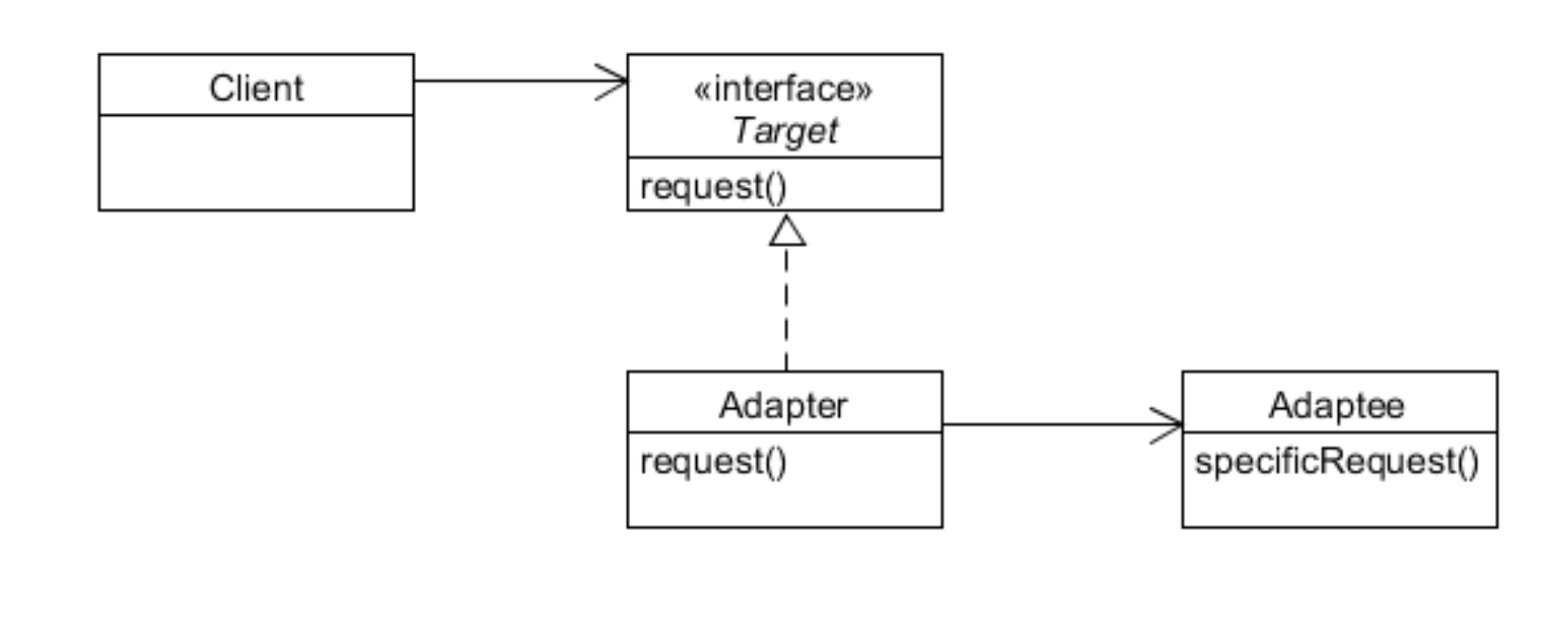
1. 왜 Adapter Pattern이 생겨났는가?
문제 상황
// ❌ 나쁜 예: 인터페이스 불일치로 사용 불가능
public class Application {
    public void processData() {
        // 우리는 Duck 인터페이스를 기대하는데...
        Duck duck = new Turkey();  // ❌ 컴파일 에러!
        duck.quack();
        duck.fly();
    }
}
문제점:
- 기존 시스템은 특정 인터페이스(Target)를 기대함
- 새로운 벤더 라이브러리는 다른 인터페이스(Adaptee)를 제공
- 소스 코드 수정이 불가능하거나 최소화하고 싶음
- 직접 사용하면 호환되지 않음 (강한 결합)
실제 상황 예시:
- 레거시 시스템에 새로운 결제 시스템 통합
- 구 버전 라이브러리(Enumeration)에서 신 버전(Iterator)로 마이그레이션
- 외부 API와 내부 시스템 인터페이스 불일치
2. Target Interface VS Adaptee Interface
1. Target Interface
- "클라이언트가 기대하는 인터페이스"
- 애플리케이션이 사용하고 싶어하는 표준 규격
- "클라이언트의 언어"
public interface Duck {
    void quack();  // 클라이언트는 이 메서드를 호출하고 싶음
    void fly();
}
왜 Target인가?
- 클라이언트 코드가 이미 이 인터페이스에 의존
- 변경할 수 없거나 변경하고 싶지 않음
- 애플리케이션의 기존 설계 유지
2. Adaptee Interface
- "실제 사용하려는 기능을 가진 클래스의 인터페이스"
- 벤더나 외부 라이브러리가 제공하는 실제 구현
- "제공자의 언어"
public interface Turkey {
    void gobble();  // 다른 이름의 메서드
    void fly();     // 같은 이름이지만 다른 동작
}
왜 Adaptee인가?
- 이미 구현되어 있고 기능은 우리가 원하는 것
- 하지만 인터페이스가 Target과 다름
- 직접 수정할 수 없는 경우가 많음
3. Object Adapter VS Class Adapter
Object Adapter (객체 컴포지션 방식)
특징:
- Adaptee 객체를 포함(Has-A)
- 런타임에 Adaptee 교체 가능
- Java에서 권장되는 방식 (다중 상속 불가)
장점:
1. 더 유연함 - Adaptee의 서브클래스도 Adapt 가능
2. 단일 Adapter로 여러 Adaptee 처리 가능
3. Composition over Inheritance 원칙 준수
// ✅ Object Adapter
public class TurkeyAdapter implements Duck {
    Turkey turkey;  // Adaptee를 포함

    public TurkeyAdapter(Turkey turkey) {
        this.turkey = turkey;  // 위임
    }

    public void quack() {
        turkey.gobble();  // 호출을 변환
    }
}
Class Adapter (상속 방식)
특징:
- Target을 구현하고 Adaptee를 상속(Is-A)
- 컴파일 타임에 결정됨
- 다중 상속이 필요 (Java에서는 불가능, C++에서 가능)
장점:
1. Adaptee의 메서드를 직접 오버라이드 가능
2. 추가 객체 생성 불필요
단점:
1. Java에서는 인터페이스만 다중 구현 가능 (클래스는 단일 상속)
2. 덜 유연함
4. Adapter Pattern 핵심 구조
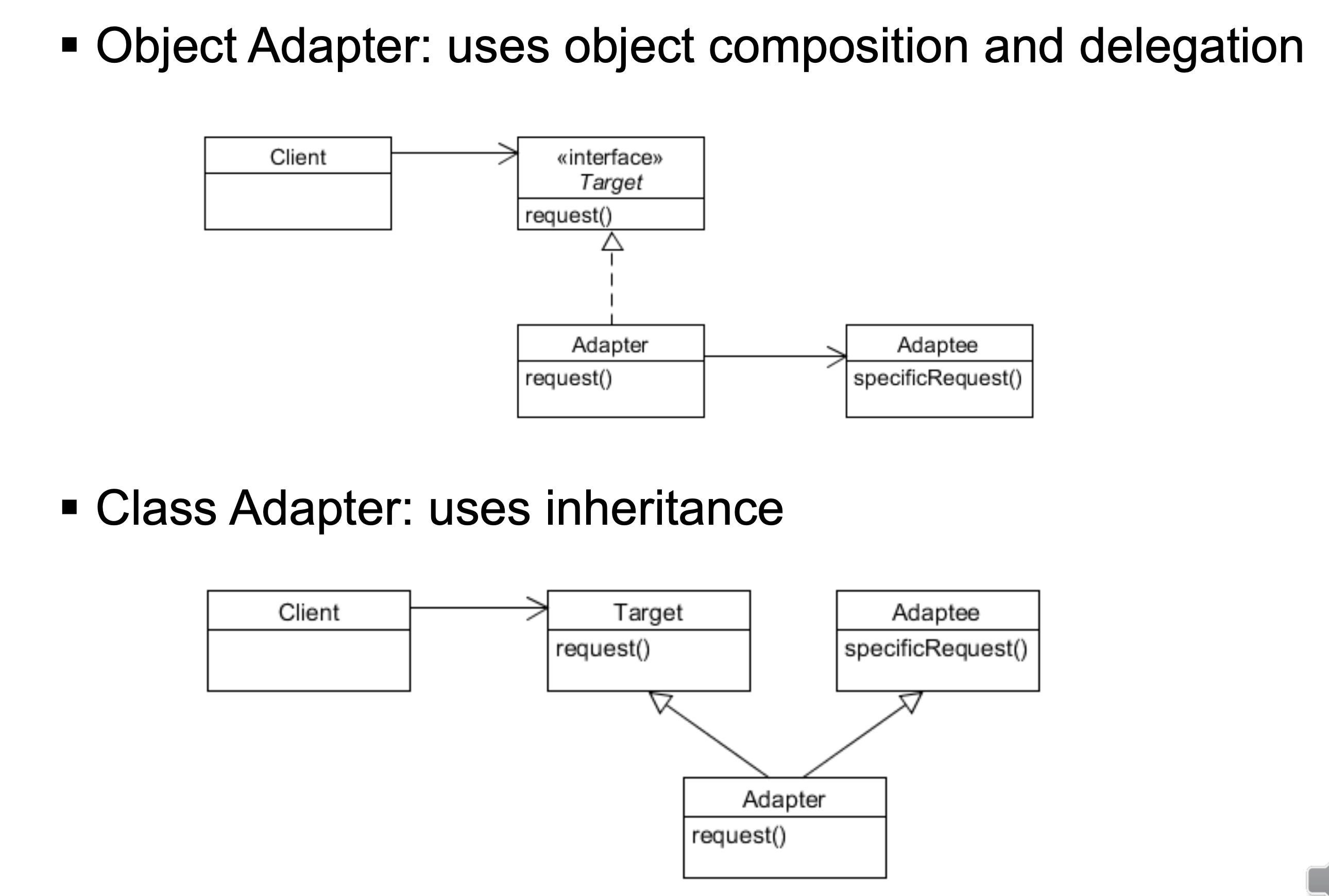
흐름
- Client가 Target 인터페이스로 요청
- Adapter가 요청을 받음
- Adapter가 Adaptee의 메서드로 변환
- Adaptee가 실제 작업 수행
핵심 개념:
- 변환(Translation): Target 호출 → Adaptee 호출
- 중개자(Wrapper): Client와 Adaptee 사이 중간 다리
- 투명성: Client는 Adapter 존재를 모름
5. 예시 코드
Step 1: 기존 인터페이스들 정의
// Target Interface - 클라이언트가 기대하는 인터페이스
public interface Duck {
    void quack();
    void fly();
}

// Target 구현체
public class MallardDuck implements Duck {
    public void quack() {
        System.out.println("Quack");
    }

    public void fly() {
        System.out.println("I am flying");
    }
}

// Adaptee Interface - 실제 사용하려는 클래스의 인터페이스
public interface Turkey {
    void gobble();  // quack과 다른 메서드명
    void fly();     // 짧은 거리만 날 수 있음
}

// Adaptee 구현체
public class WildTurkey implements Turkey {
    public void gobble() {
        System.out.println("Gobble Gobble");
    }

    public void fly() {
        System.out.println("I'm flying a short distance");
    }
}
Step 2: Adapter 구현 (Object Adapter)
// Turkey를 Duck처럼 보이게 하는 Adapter
public class TurkeyAdapter implements Duck {
    Turkey turkey;  // Adaptee를 포함

    // 생성자에서 Adaptee 주입
    public TurkeyAdapter(Turkey turkey) {
        this.turkey = turkey;
    }

    // Target 메서드를 Adaptee 메서드로 변환
    public void quack() {
        turkey.gobble();  // quack() → gobble()
    }

    // 동작 차이도 보정 가능
    public void fly() {
        // Turkey는 짧게만 날 수 있으므로 5번 반복
        for (int i = 0; i < 5; i++) {
            turkey.fly();
        }
    }
}
Step 3: 클라이언트 코드
public class DuckTestDrive {
    public static void main(String[] args) {
        // 일반 Duck
        Duck duck = new MallardDuck();

        // Turkey 객체
        Turkey turkey = new WildTurkey();

        // Turkey를 Duck으로 Adapt! (핵심!)
        Duck turkeyAdapter = new TurkeyAdapter(turkey);

        System.out.println("=== Turkey 원본 ===");
        turkey.gobble();
        turkey.fly();

        System.out.println("\n=== 일반 Duck ===");
        testDuck(duck);

        System.out.println("\n=== Adapter를 통한 Turkey ===");
        testDuck(turkeyAdapter);  // Turkey를 Duck처럼 사용!
    }

    // Duck 인터페이스만 받는 메서드
    static void testDuck(Duck duck) {
        duck.quack();
        duck.fly();
    }
}
출력 결과
=== Turkey 원본 ===
Gobble Gobble
I'm flying a short distance

=== 일반 Duck ===
Quack
I am flying

=== Adapter를 통한 Turkey ===
Gobble Gobble
I'm flying a short distance
I'm flying a short distance
I'm flying a short distance
I'm flying a short distance
I'm flying a short distance
6. 실전 예제: Enumeration → Iterator Adapter
문제 상황
- 구형 컬렉션(Vector, Hashtable): Enumeration 인터페이스 사용
- 신형 컬렉션(ArrayList, HashMap): Iterator 인터페이스 사용
- 구형 코드를 신형 인터페이스로 변환 필요
// Adaptee: 구형 인터페이스
public interface Enumeration<E> {
    boolean hasMoreElements();
    E nextElement();
}

// Target: 신형 인터페이스
public interface Iterator<E> {
    boolean hasNext();
    E next();
    void remove();  // Enumeration에는 없는 메서드!
}
Adapter 구현
public class EnumerationIterator<E> implements Iterator<E> {
    Enumeration<E> enumeration;  // Adaptee

    public EnumerationIterator(Enumeration<E> enumeration) {
        this.enumeration = enumeration;
    }

    // 메서드 이름만 변환
    public boolean hasNext() {
        return enumeration.hasMoreElements();
    }

    public E next() {
        return enumeration.nextElement();
    }

    // Adaptee가 지원하지 않는 기능!
    public void remove() {
        throw new UnsupportedOperationException(
            "Enumeration doesn't support remove()"
        );
    }
}
반대 방향 Adapter (Iterator → Enumeration)
public class IteratorEnumeration<E> implements Enumeration<E> {
    Iterator<E> iterator;

    public IteratorEnumeration(Iterator<E> iterator) {
        this.iterator = iterator;
    }

    public boolean hasMoreElements() {
        return iterator.hasNext();
    }

    public E nextElement() {
        return iterator.next();
    }
    // remove()는 Enumeration에 없으므로 무시
}
사용 예시
public class AdapterDemo {
    public static void main(String[] args) {
        // 구형 컬렉션
        Vector<String> vector = new Vector<>();
        vector.add("Apple");
        vector.add("Banana");
        vector.add("Cherry");

        // Enumeration → Iterator로 Adapt
        Enumeration<String> enumeration = vector.elements();
        Iterator<String> iterator = new EnumerationIterator<>(enumeration);

        // 이제 Iterator 인터페이스로 사용 가능!
        while (iterator.hasNext()) {
            System.out.println(iterator.next());
        }
    }
}
7. Adapter Pattern 구현 이슈
1. 얼마나 많은 변환이 필요한가?
간단한 변환:
- 메서드 이름만 다름 (
quack()→gobble()) - 매개변수 순서만 다름
- 간단한 데이터 타입 변환
public void quack() {
    turkey.gobble();  // 단순 위임
}
복잡한 변환:
- 완전히 다른 동작 (
fly()5번 반복) - 여러 메서드를 조합
- 복잡한 데이터 구조 변환
public void fly() {
    for (int i = 0; i < 5; i++) {
        turkey.fly();
    }
}
2. 양방향 투명성 (Two-way Adapter)
하나의 Adapter가 Target과 Adaptee 양쪽 인터페이스 모두 구현:
// 양방향 Adapter
public class TwoWayAdapter implements Duck, Turkey {
    Duck duck;
    Turkey turkey;

    // Duck으로도, Turkey로도 사용 가능!
    public void quack() {
        if (turkey != null) turkey.gobble();
        else if (duck != null) duck.quack();
    }

    public void gobble() {
        if (duck != null) duck.quack();
        else if (turkey != null) turkey.gobble();
    }

    public void fly() {
        if (duck != null) duck.fly();
        else if (turkey != null) turkey.fly();
    }
}
3. 지원하지 않는 기능 처리
Adaptee가 Target의 모든 기능을 지원하지 않을 때:
public void remove() {
    // 방법 1: 예외 던지기
    throw new UnsupportedOperationException();

    // 방법 2: 아무것도 안하기 (적절한 경우)
    // 방법 3: 기본 동작 제공
}
8. 핵심 정리
Adapter Pattern의 정의
Adapter Pattern은 한 클래스의 인터페이스를 클라이언트가 기대하는 다른 인터페이스로 변환합니다. 호환되지 않는 인터페이스 때문에 함께 동작할 수 없는 클래스들을 함께 작동하도록 만듭니다.
구성 요소
| 요소 | 역할 | 책임 |
|---|---|---|
| Target | 클라이언트가 사용하는 인터페이스 | 애플리케이션의 요구사항 정의 |
| Adapter | Target을 구현하고 Adaptee를 포함 | 인터페이스 변환 및 호출 위임 |
| Adaptee | 실제 기능을 가진 클래스 | 실제 작업 수행 |
| Client | Target 인터페이스 사용 | 비즈니스 로직 실행 |
언제 사용하는가?
- ✅ 레거시 코드 통합: 오래된 시스템과 새 시스템 연결
- ✅ 라이브러리 교체: 다른 벤더의 라이브러리로 전환
- ✅ 인터페이스 불일치: 사용하고 싶은 클래스의 인터페이스가 맞지 않을 때
- ✅ 재사용성 향상: 기존 코드를 수정하지 않고 새 기능 통합
- ✅ 표준 인터페이스 적용: 다양한 구현을 단일 인터페이스로 통일
Object Adapter vs Class Adapter
| 특성 | Object Adapter | Class Adapter |
|---|---|---|
| 구현 방식 | Composition (Has-A) | Inheritance (Is-A) |
| Java 지원 | ✅ 지원 | ❌ 다중 상속 불가 |
| 유연성 | 높음 (런타임 교체 가능) | 낮음 (컴파일타임 고정) |
| 권장도 | ⭐⭐⭐⭐⭐ | ⭐⭐ |
핵심 원칙
- 단일 책임: Adapter는 오직 인터페이스 변환만 담당
- 개방-폐쇄: 기존 코드 수정 없이 새 기능 추가
- 의존성 역전: Client는 추상화(Target)에만 의존
- 느슨한 결합: Client와 Adaptee는 Adapter를 통해서만 상호작용
장점 vs 단점
장점:
- 기존 코드 수정 없이 호환성 확보
- 재사용성 증가
- 단일 책임 원칙 준수
- 런타임에 Adapter 교체 가능 (Object Adapter)
단점:
- 전체 코드 복잡도 증가 (클래스 수 증가)
- 간단한 변환에도 새 클래스 필요
- 과도한 사용 시 코드 이해 어려움
실전 팁
// ✅ Good: 명확한 Adapter 이름
public class LegacyPaymentAdapter implements ModernPaymentGateway

// ❌ Bad: 모호한 이름
public class PaymentConverter

// ✅ Good: 변환 로직만 포함
public void pay(double amount) {
    legacySystem.makePayment(amount * 100);  // 달러 → 센트 변환
}

// ❌ Bad: 비즈니스 로직 포함
public void pay(double amount) {
    if (amount > 1000) sendEmail();  // Adapter 책임 초과!
    legacySystem.makePayment(amount * 100);
}
9. 관련 패턴
- Decorator: 인터페이스는 변경하지 않고 기능만 추가
- Facade: 복잡한 시스템을 단순한 인터페이스로 제공
- Proxy: 동일한 인터페이스로 접근 제어
- Bridge: 구현과 추상화를 분리
Adapter vs Decorator vs Proxy:
Adapter:   다른 인터페이스로 변환
Decorator: 같은 인터페이스, 기능 추가
Proxy:     같은 인터페이스, 접근 제어
다들 응원합니다.