tensorflow에서는 CTC loss가 내장되어 있어 CTC를 구현할 필요가 없었다.
pytorch에는 없는데 구현하기에는 까다롭고 필요성을 못느껴
Listen-Attend-and-Spell이라는 아키텍처의 OCR을 만들고자 한다.
물론, 이 글에서도 Recognition model만 해보고자 한다.
Listen-Attend-and-Spell
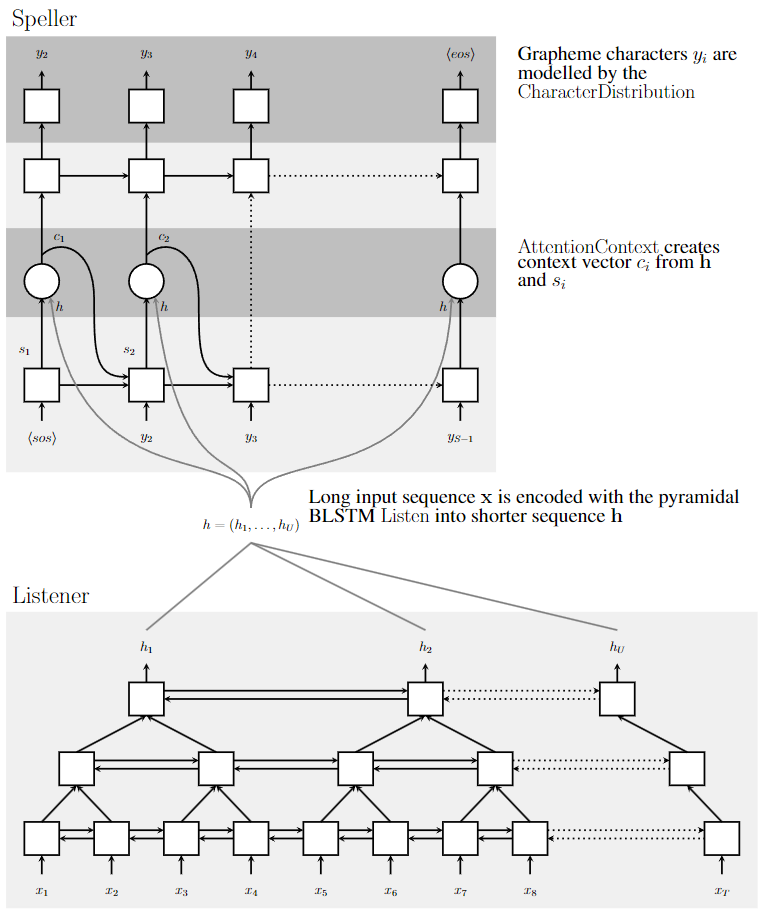
- Listen-Attend-and-Spell(LAS) 모델은 음성 인식 분야에서 사용되는 순환 신경망 기반 모델이다.
- End-to-End 방식으로 학습이 가능하여 사전 정의된 작업 단위 없이 음성을 직접 문자열로 변환할 수 있다.
- 이 모델은 세 가지 주요 단계로 구성되어 있다.
- Listen: 음성 입력을 받아 특징을 추출하는 단계입니다. 일반적으로 CNN, RNN 등의 모델이 사용된다.
- Attend: 추출된 특징에 주의(Attention) 메커니즘을 적용하여 관련 부분에 집중하는 단계이다.
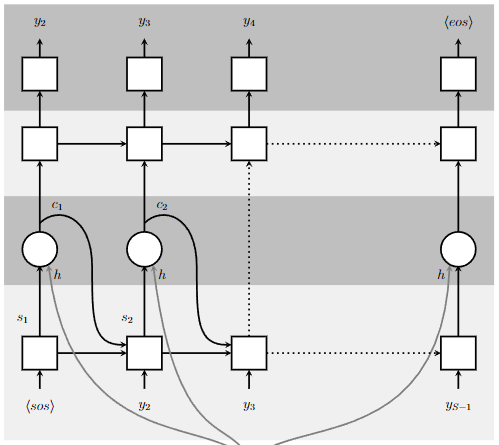
- Spell: 주의 집중된 특징을 통해 문자 시퀀스를 생성하는 단계이다. 디코더로 작동한다.
모델 구축
- LAS 모델 처럼 구축할 OCR 모델을 Encoder-Decoder 로 나눈다.
- LAS 모델과 다르게 입력은 이미지로 들어가므로 Encoder 모델은 CNN과 RNN을 조합한 형태로 만든다.
- Decoder 모델은 RNN과 Attention 메커니즘을 조합한 형태로 만들었다.
인코더
- RNN을 추가하고 양방향으로 바꾸고 나서 학습이 잘 진행 되었었다.
- 코드에서 RNN의 파라미터에서 batch_first=True
- CNN out의 채널 위치와 RNN out의 채널 위치가 다르기에 하단에 transpose를 주었다.
class ConvEncoder(nn.Module):
    def __init__(self, input_dim, output_dim=128):
        super().__init__()
        self.conv2d_1 = nn.Conv2d(input_dim, 32, kernel_size=3, padding=1)
        self.conv2d_2 = nn.Conv2d(32, 64, kernel_size=3, padding=1)
        self.conv2d_3 = nn.Conv2d(64, 64, kernel_size=3, padding=1)
        self.conv1d_1 = nn.Conv1d(1024, 256, kernel_size=3, padding=1)
        self.conv1d_2 = nn.Conv1d(256, 128, kernel_size=1)
        self.lstm = nn.LSTM(128, output_dim//2, batch_first=True, bidirectional=True)
        self.batch_norm2d = nn.BatchNorm2d(64)
        self.batch_norm1d = nn.BatchNorm1d(output_dim)

        self.max_pool = nn.MaxPool2d(kernel_size=3, stride=2, padding=1)
        self.activation = nn.LeakyReLU()
        self.dropout2d = nn.Dropout2d(p=0.1) # 채널에 대하여 dropout
        self.dropout1d = nn.Dropout1d(p=0.1) # 채널에 대하여 dropout

        nn.init.kaiming_normal_(self.conv2d_1.weight)
        nn.init.kaiming_normal_(self.conv2d_2.weight)
        nn.init.kaiming_normal_(self.conv2d_3.weight)
        nn.init.kaiming_normal_(self.conv1d_1.weight)
        nn.init.kaiming_normal_(self.conv1d_2.weight)
        nn.init.xavier_uniform_(self.lstm.weight_ih_l0)
        nn.init.xavier_uniform_(self.lstm.weight_hh_l0)

    def forward(self, images):
        # (batch, 3, 64, 512)
        x = self.conv2d_1(images)
        x = self.activation(x)
        x = self.max_pool(x)
        # (batch, 32, 32, 256)
        x = self.conv2d_2(x)
        x = self.activation(x)
        x = self.max_pool(x)
        # (batch, 64, 16, 128)
        x = self.conv2d_3(x)
        x = self.batch_norm2d(x)
        x = self.activation(x)
        x = self.dropout2d(x)
        # (batch, 64, 16, 128)
        x = x.view(x.size(0), -1, x.size(-1))
        # (batch, 1024, 128)
        x = self.conv1d_1(x)
        x = self.conv1d_2(x)
        x = self.batch_norm1d(x)
        x = self.activation(x)
        x = self.dropout1d(x)
        # (batch, 128, 128)
        x = x.transpose(2,1)
        # (batch, 128, 128)
        x, _ = self.lstm(x)
        # (batch, 128, 64*2)
        return x
디코더
- 이 코드에서 beam_search 메서드 부분은 페이지 절약을 위해 여기서는 지웠다.
- 자세한 코드는 글 아래 링크 참조
- loss로 NLL을 사용하기에 out을 logsoftamx를 사용하였다.
- loss로 CrossEntropy를 사용한다면 그냥 linear로 out을 사용해도 될 것이다.
- logsoftamx를 사용하면 beam_search 에서 score 계산하기 편하기도 하다.
- ground_truth가 주어지면 forward, 주어지지 않으면 기본으로 greedy_search로 진행한다.
import numpy as np
import torch.nn.functional as F

class Speller(nn.Module):
    def __init__(self, encoder_dim, target_dim, hidden_dim=128,
                 sos_id=13, eos_id=14, pad_id=15, max_len=20):
        super().__init__()
        self.rnn_layer = nn.LSTM(hidden_dim*2, hidden_dim, batch_first=True, num_layers=2, dropout=0.5)
        self.attention = nn.MultiheadAttention(hidden_dim, 4, batch_first=True)
        self.convertor_linear = nn.Linear(encoder_dim, hidden_dim)
        self.output_linear = nn.Linear(hidden_dim*2, target_dim)
        self.logsoftmax = nn.LogSoftmax(dim=-1)
        self.dropout = nn.Dropout(0.2)
        self.emb = nn.Embedding(16, hidden_dim)
        self.target_dim = target_dim
        self.hidden_dim = hidden_dim
        self.sos_id = sos_id
        self.eos_id = eos_id
        self.pad_id = pad_id
        self.max_len = max_len

        nn.init.xavier_uniform_(self.rnn_layer.weight_ih_l0)
        nn.init.xavier_uniform_(self.rnn_layer.weight_hh_l0)
        nn.init.xavier_uniform_(self.rnn_layer.weight_ih_l1)
        nn.init.xavier_uniform_(self.rnn_layer.weight_hh_l1)
        nn.init.xavier_uniform_(self.convertor_linear.weight)
        nn.init.xavier_uniform_(self.output_linear.weight)
        nn.init.xavier_uniform_(self.attention.in_proj_weight)
        nn.init.xavier_uniform_(self.attention.out_proj.weight)

    def forward_step(self, rnn_in, converted, hidden_state):
        # rnn_input : (batch, 1, hidden_dim*2)
        # converted : (batch, encoder_seq, hidden_dim)
        # rnn_out : (batch, 1, hidden_dim)
        # context : (batch, 1, hidden_dim)
        # att_score : (batch, 1, encoder_seq)
        # concat_out : (batch, 1, hidden_dim*2)
        # step_out : (batch, 1, target_dim)
        rnn_out, hidden_state = self.rnn_layer(rnn_in, hidden_state)
        context, att_score = self.attention(rnn_out, converted, converted)
        concat_out = torch.cat([rnn_out, context], dim=-1)

        x = self.dropout(concat_out)
        x = self.output_linear(x)

        step_out = self.logsoftmax(x)
        return step_out, hidden_state, context, att_score

    def greedy_search(self, encoder_outputs):
        device = encoder_outputs.device
        batch_size = encoder_outputs.size(0)
        converted = self.convertor_linear(encoder_outputs).tanh() # (batch, encoder_seq, hidden_dim)

        sos = torch.tensor(self.sos_id).tile(batch_size,1).to(device)
        rnn_in = torch.cat([self.emb(sos).tanh(), converted[:,0:1,:]], dim=-1) # (batch, 1, dim*2)
        hidden_state = None

        prob_log_seq = []
        target_idxs = []
        att_recode = []

        for i in range(self.max_len):
            step_out, hidden_state, context, att_score = self.forward_step(rnn_in, converted, hidden_state)
            argmax = step_out.max(dim=-1)[1] # (batch, 1)
            rnn_in = torch.cat([self.emb(argmax).tanh(), context], dim=-1) # (batch, 1, hidden_dim*2)
            prob_log_seq.append(step_out) # (batch, 1, target_dim)
            target_idxs.append(argmax)
            att_recode.append(att_score) # (batch, 1, encoder_seq)

        prob_log_seq = torch.cat(prob_log_seq, dim=1) # (batch, max_len, dim)
        target_idxs = torch.cat(target_idxs, dim=1) # (batch, max_len)
        att_recode = torch.cat(att_recode, dim=1) # (batch, max_len, encoder_seq)

        return prob_log_seq, target_idxs, att_recode

    def forward(self, encoder_outputs, target_idxs=None):
        if target_idxs is None:
            return self.greedy_search(encoder_outputs)
        # encoder_outputs : (batch, encoder_seq, encoder_dim)
        # target_idxs : (batch, max_len)
        device = encoder_outputs.device
        batch_size = encoder_outputs.size(0)
        converted = self.convertor_linear(encoder_outputs).tanh() # (batch, encoder_seq, hidden_dim)

        sos = torch.tensor(self.sos_id).tile(batch_size,1).to(device)
        rnn_in = torch.cat([self.emb(sos).tanh(), converted[:,0:1,:]], dim=-1) # (batch, 1, dim*2)
        hidden_state = None

        prob_log_seq = []
        att_recode = []

        for i in range(self.max_len):
            step_out, hidden_state, context, att_score = self.forward_step(rnn_in, converted, hidden_state)
            rnn_in = torch.cat([self.emb(target_idxs[:, i:i+1]).tanh(), context], dim=-1) # (batch, 1, hidden_dim*2)
            prob_log_seq.append(step_out) # (batch, 1, target_dim)
            att_recode.append(att_score) # (batch, 1, encoder_seq)

        prob_log_seq = torch.cat(prob_log_seq, dim=1) # (batch, max_len, dim)
        att_recode = torch.cat(att_recode, dim=1) # (batch, max_len, encoder_seq)

        return prob_log_seq, target_idxs, att_recode
모델 학습
- loss는 NLL(Negative-Log-Likelihood) loss를 사용하였고, class weight를 주었다.
- optimizer로 AdamW를 사용.
- scheduler로 ReduceLROnPlateau.
- early stopping을 넣었다.
- LAS의 특징으로 0.1 확률로 모델에 ground_truth가 주어지지 않는다.
- 추론환경과 학습환경 간의 불일치가 일어나서 성능저하 예방을 위해 필요하다고 한다.
from torch import optim
import numpy as np

# torch.autograd.set_detect_anomaly(True)

EPOCHS = 300

# class weight
_, cnts = np.unique(y_train.reshape(-1).tolist()+[SOS_ID], return_counts=True)
weight = torch.from_numpy(np.log(np.sum(cnts) / cnts)).float().cuda()

# 모델, 손실 함수, 옵티마이저 초기화
model = ImageLAS(sos_id=SOS_ID, eos_id=EOS_ID, pad_id=PAD_ID, max_len=MAX_LENGTH).cuda()
loss_fn = nn.NLLLoss(weight=weight, ignore_index=SOS_ID).cuda() # CrossEntropyLoss().cuda() # (logit, target)
optimizer = optim.AdamW(model.parameters(), lr=0.002)
# scheduler = CosineDecayRestarts(optimizer)
scheduler = optim.lr_scheduler.ReduceLROnPlateau(optimizer, factor=0.5, min_lr=1e-5, patience=20,)

# Early stopping을 위한 변수 초기화
best_val_loss = float('inf')
patience = 50  # 일정 기간 동안 성능이 개선되지 않으면 학습 중지
early_stopping_counter = 0

# history
loss_history = []
val_loss_history = []

# 학습 루틴
for epoch in range(EPOCHS):
    # 학습
    model.train()  # 모델을 학습 모드로 설정
    tra_loss = 0.0
    for inputs, target_idxs in train_dataloader:
    # for inputs, target_idxs in tqdm(train_dataloader, total=len(train_dataloader)):
        inputs, target_idxs = inputs.cuda(), target_idxs.cuda()
        optimizer.zero_grad()  # 그래디언트 초기화
        if 0.9 < np.random.random(): target_idxs = None
        outputs, target_idxs, _ = model(inputs, target_idxs) # 모델 출력 계산
        loss = loss_fn(outputs.permute(0,2,1), target_idxs)  # 손실 계산
        loss.backward()  # 역전파 수행
        optimizer.step()  # 최적화 수행
        tra_loss += loss.item()

    # 검증
    model.eval()  # 모델을 평가 모드로 설정
    val_loss = 0.0
    with torch.no_grad():
        for inputs, target_idxs in valid_dataloader:
            inputs, target_idxs = inputs.cuda(), target_idxs.cuda()
            outputs, _, _ = model(inputs, target_idxs)
            val_loss += loss_fn(outputs.permute(0,2,1), target_idxs).item()  # 검증 손실 누적

    # 출력
    tra_loss /= len(train_dataloader)
    val_loss /= len(valid_dataloader)
    loss_history.append(tra_loss)
    val_loss_history.append(val_loss)
    if (epoch+1)%5 == 0:
        print(f"Epoch {epoch+1:03d}\tTrain Loss: {tra_loss:.6f}" +
              f"\tValid Loss: {val_loss:.6f}\tlr: {optimizer.param_groups[0]['lr']:.6f}")

    # 스케줄러에게 현재 검증 손실을 전달하여 학습률 갱신
    scheduler.step(val_loss)

    # 검증 손실이 이전보다 크면 early stopping counter를 증가시킴
    if val_loss > best_val_loss:
        early_stopping_counter += 1
    else:
        best_val_loss = val_loss
        early_stopping_counter = 0
        if best_val_loss < 0.35:
            torch.save(model.state_dict(), './models/best.pt')

    # early stopping 조건 충족 시 학습 중지
    if early_stopping_counter >= patience:
        print("Early stopping! No improvement in validation loss.")
        print(f"Epoch {epoch+1:03d}\tTrain Loss: {tra_loss:.6f}" +
              f"\tValid Loss: {val_loss:.6f}\tlr: {optimizer.param_groups[0]['lr']:.6f}")
        print(f"Best_val_loss : {best_val_loss:.6f}")
        break

model = ImageLAS(sos_id=SOS_ID, eos_id=EOS_ID, pad_id=PAD_ID, max_len=MAX_LENGTH)
model.load_state_dict(torch.load('./models/best.pt'))
print("Restored to best model.")
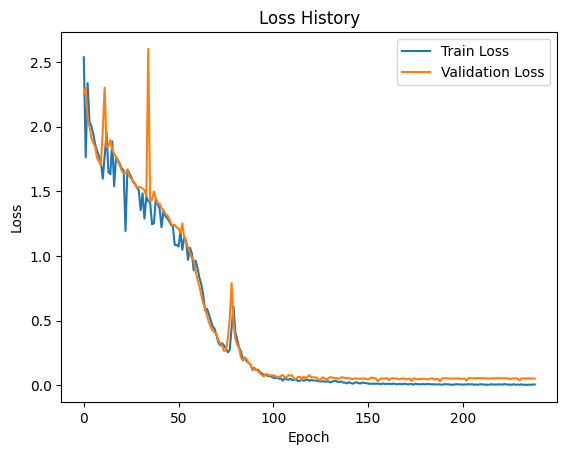
History 그래프
- Best loss :
Train Loss: 0.003741
Valid Loss: 0.038099
모델 테스트
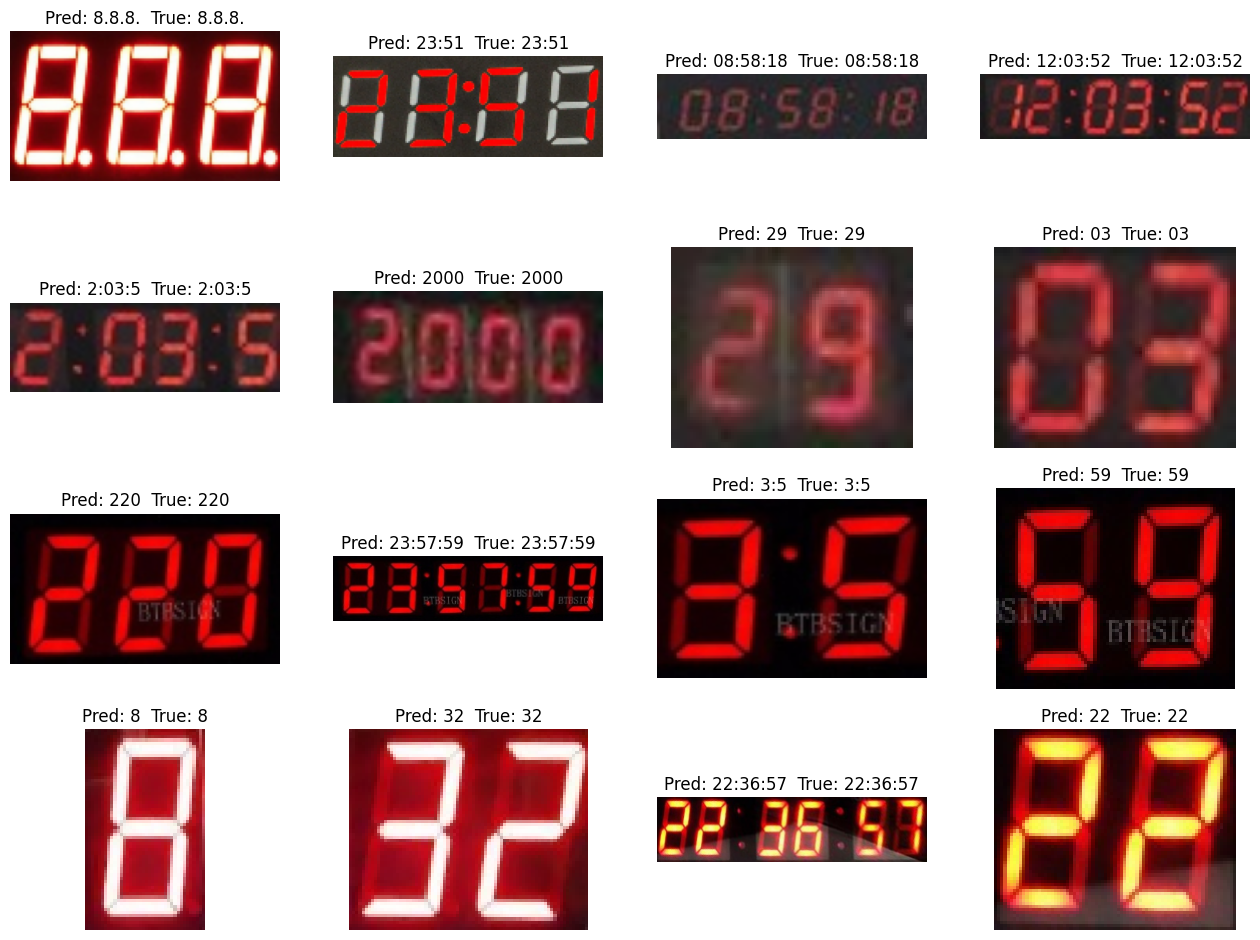
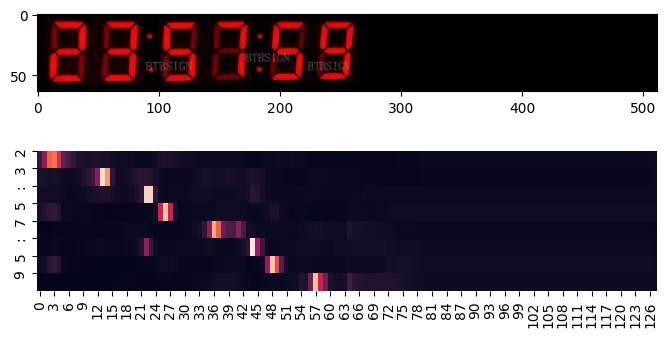
Attention Score 시각화