문자열 연산
- 문자열을 직접 할당할때 ==, equars 사용
- 하드코딩으로 String s1 = "hello"; 을 했을 때는 값을 true로 출력된다.
- String s2 = "hello";는 생성자로 생성하는게 원칙.
즉, s2 = new String("hello");로 선언한다.
package operatorex;

public class StringEx {

	public static void main(String[] args) {
		String s1 = "hello";
		String s2 = "hello";
		boolean result=false;

		// ==
		result = s1 == s2;
		System.out.println(result);

		// equal()
		result = s1.equals(s2);
		System.out.println(result);

//		참조변수로 해시코드를 알 수 있음
		System.out.println(System.identityHashCode(s1));
		System.out.println(System.identityHashCode(s2));
	}

}
결과값:
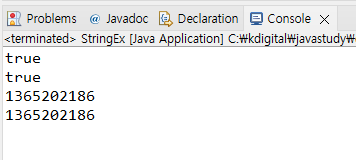
문자열 연산 2
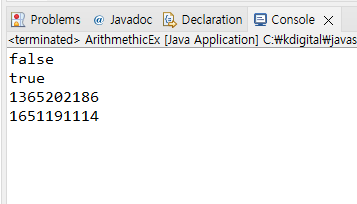
- s2 = new String("hello")로 문자열을 선언해보자.
- 하드코드로 했던 결과와는 다른 결과가 나오는 것을 확인해볼 수 있다.
- 참조형은 주소값이 들어가 있으므로 참조하여 결과값을 도출 할 수 있다.
package operatorex;

public class ArithmethicEx {

	public static void main(String[] args) {

		String s3 = new String("hello");
		String s4 = new String("hello");

		boolean result =false;
		// ==
		result = s3 == s4;
		System.out.println(result);

		// equal()
		result = s3.equals(s4);
		System.out.println(result);

//		참조변수로 해시코드를 알 수 있음
		System.out.println(System.identityHashCode(s3));
		System.out.println(System.identityHashCode(s4));

	}
}
결과값 :
추가실습 :
- 문자열 숫자 변환 => 정수로 변환, double: 실수로 변환
String iS = "100";
		String iS2 = "10";

		int i =Integer.parseInt(iS);
		int i2 =Integer.parseInt(iS2);
		double d =Double.parseDouble(iS2);
		System.out.println(i);
		System.out.println(i2);
		System.out.println(d);

개발기록장