
그래프란 무엇인가?
그래프는
정점과간선으로 이루어진 자료구조 입니다.
그래프와 트리는 굉장히 유사합니다. 트리와 차이점은 그래프는 Cyclic하고 트리는 UnCyclic 합니다.
Cyclic이 어떤 차이를 가져올까요?
트리는 한 노드에서 다른 노드로 향하는 방법이 1가지입니다. 그러나 그래프는 Cyclic 하기때문에 한 노드에서 다른 노드로 갈 수 있는 방법이 여러가지 존재할 수 있습니다.
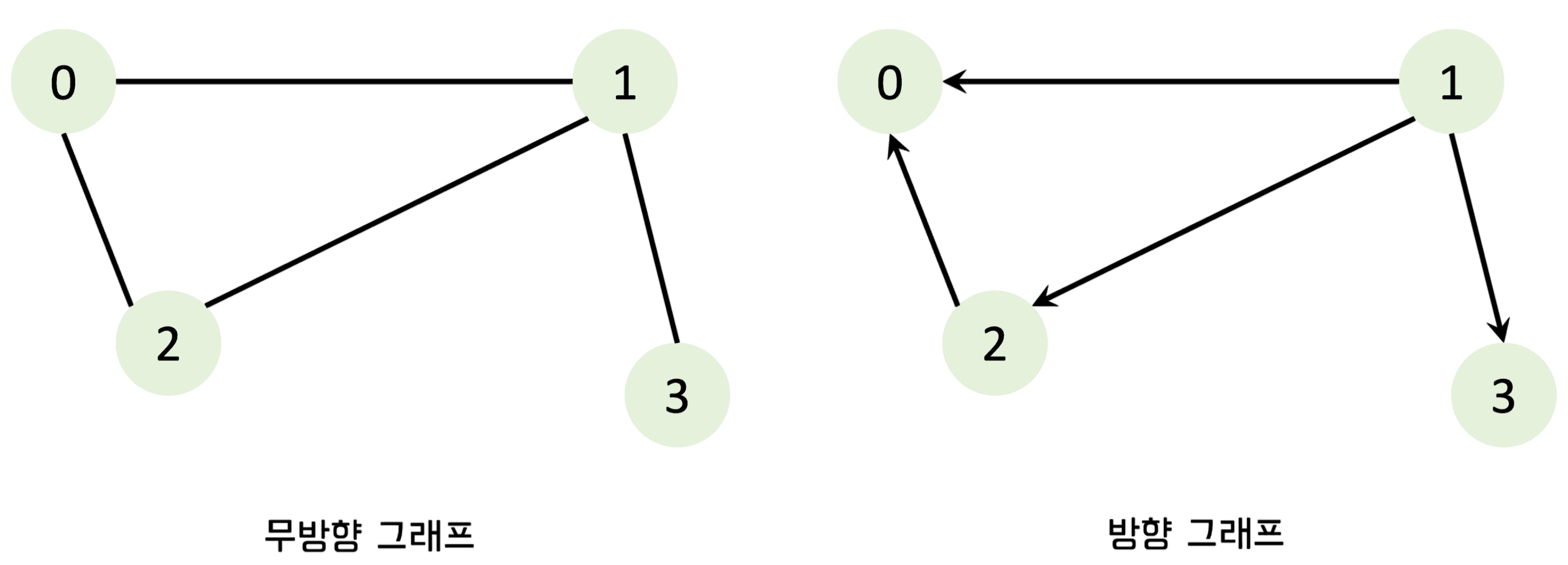
그래프는 무방향 그래프 와 방향 그래프 2가지 종류가 있습니다. 0 노드에서 1 노드로 갈 때 무방향 은 0 -> 1 , 1 -> 0 둘 다 가능합니다. 그러나 방향 그래프 는 1 -> 0 만 가능합니다.
그래프에 대해 깊은 학습을 위해 그래프 구조에 대해 알아보겠습니다.
그래프 구조
- 정점 : 각 노드에 해당합니다. (0, 1, 2, 3)이 해당합니다.
- 간선 : 노드와 노드를 연결하는 선입니다.
- 인접 정점 : 간선 하나를 두고 연결된 정점입니다. 0 을 기준으로 1, 2가 인접 정점입니다.
- 정점의 차수 : 무방향 그래프에서 하나의 정점에 인접한 정점의 수 입니다.
무방향 그래프의 모든 정점 차수의 합 = 그래프 간선 수의 2배 입니다. - 진입 차수 : 방향 그래프에서 외부에서 오는 간선의 수 입니다.
- 진출 차수 : 진입 차수와 반대로 외부로 나가는 간선의 수 입니다.
- 경로 길이 : 경로를 구성하는데 사용된 간선의 수 입니다.
1 -> 0으로 갈 때 1 -> 2 -> 0 은 길이가 2, 1 -> 0 은 길이가 1 입니다. - 단순 경로 : 경로 중에 반복되는 정점이 없는 경우 입니다.
만약 1 -> 2 -> 0 -> 1 -> 3 으로 진행할 수 있다고 할 때 1이 두번 반복되니 단순 경로가 아닙니다. - 사이클 : 단순 경로의 시작 정점과 끝 정점이 동일한 경우입니다.
그래프의 표현
-
무방향의 그래프는
A - B와B - A는 같습니다. 그리고 (A, B) 로 표현합니다. -
방향 그래프는
A -> B,B -> A는 서로 다릅니다. 표현은 <A, B> 로 합니다.
그래프의 구현
그래프 탐색 - DFS
각 노드에 방문했는지 여부를 체크할
배열과스택을 이용하여 구현합니다.
그래프 탐색 - BFS
각 노드에 방문했는지 여부를 체크할
배열과큐를 이용하여 구현합니다.
인접 행렬
간선 정보의
확인과업데이트가 빠릅니다O(1). 그러나메모리 공간을 차지합니다.
- 2차원 배열을 활용하여 구현합니다.
- 2차원 배열은 어떤 노드에서 어떤 노드로 향하는지 정보가 저장되어 있습니다.
- 간선 정보는 인덱싱을 통해 빠른 확인이 가능합니다.
인접 리스트
메모리 사용량이 상대적으로 적고, 노드의
추가삭제가 빠릅니다. 그러나확인이 상대적으로 오래 걸립니다.
인접 리스트 VS 인접 행렬
-
인접 행렬
노드의 개수가 적고 간선의 수가 많을 때는 인접행렬이 유리합니다. 밀집 그래프, 완전 그래프와 같은 형태가 유리합니다.
-
인접 리스트
노드의 개수가 많고 간선의 수가 적을 때 유리합니다. 희소 그래프와 같은 형태가 유리합니다.
그래프 구현
인접 행렬을 이용한 그래프 구현
class MyGraphMatrix {
    char[] vertices;
    int[][] adjMat;
    int elemCnt;

    public MyGraphMatrix(){}

    public MyGraphMatrix(int size){
        this.vertices = new char[size];
        this.adjMat = new int[size][size];
        this.elemCnt = 0;
    }

    public boolean isFull() {
        return this.elemCnt == this.vertices.length;
    }

    public void addVertex(char data) {
        if (isFull()) {
            System.out.println("Graph is Full!!!");
            return;
        }
        this.vertices[elemCnt++] = data;
    }

    public void addEdge(int x, int y) {
        this.adjMat[x][y] = 1;
        this.adjMat[y][x] = 1;
    }

    public void addDirectedEdge(int x, int y) {
        this.adjMat[x][y] = 1;
    }

    public void deleteEdge(int x, int y) {
        this.adjMat[x][y] = 0;
        this.adjMat[y][x] = 0;
    }

    public void deleteDirectedEdge(int x, int y) {
        this.adjMat[x][y] = 0;
    }

    public void printAdjacentMatrix() {
        System.out.print("  ");
        for (char item : this.vertices) {
            System.out.print(item + " ");
        }
        System.out.println();

        for (int i = 0; i < this.elemCnt; i++) {
            System.out.print(this.vertices[i] + " ");
            for (int j = 0; j < this.elemCnt; j++) {
                System.out.print(this.adjMat[i][j] + " ");
            }
            System.out.println();
        }
    }

}

public class Prac1 {

    public static void main(String[] args) {
        // TEST CODE
        MyGraphMatrix graph = new MyGraphMatrix(4);

        graph.addVertex('A');
        graph.addVertex('B');
        graph.addVertex('C');
        graph.addVertex('D');

        graph.addEdge(0, 1);
        graph.addEdge(0, 2);
        graph.addEdge(1, 2);
        graph.addEdge(1, 3);
        graph.addEdge(2, 3);

        graph.printAdjacentMatrix();
    }
}
인접리스트를 이용한 그래프 구현
class Node {
    int id;
    Node next;

    public Node(int id, Node next) {
        this.id = id;
        this.next = next;
    }
}

class MyGraphList {
    char[] vertices;
    Node[] adjList;
    int elemCnt;

    public MyGraphList() {}
    public MyGraphList(int size) {
        this.vertices = new char[size];
        this.adjList = new Node[size];
        this.elemCnt = 0;
    }

    public boolean isFull() {
        return elemCnt == this.vertices.length;
    }

    public void addVertex(char data) {
        if (isFull()) {
            System.out.println("Graph is Full!!");
            return;
        }
        this.vertices[elemCnt++] = data;
    }

    public void addEdge(int x, int y) {
        this.adjList[x] = new Node(y, this.adjList[x]);
        this.adjList[y] = new Node(x, this.adjList[y]);
    }

    public void addDirectedEdge(int x, int y) {
        this.adjList[x] = new Node(y, this.adjList[x]);
    }

    public void printDirectedEdge() {
        for (int i = 0; i < this.elemCnt; i++) {
            System.out.print(this.vertices[i] + " : ");

            Node cur = this.adjList[i];
            while (cur != null) {
                System.out.print(this.vertices[cur.id] + " ");
                cur = cur.next;
            }
            System.out.println();
        }
    }

}

public class Prac2 {
    public static void main(String[] args) {
        // Test Code
        MyGraphList graph = new MyGraphList(4);

        graph.addVertex('A');
        graph.addVertex('B');
        graph.addVertex('C');
        graph.addVertex('D');

        graph.addEdge(0, 1);
        graph.addEdge(0, 2);
        graph.addEdge(1, 2);
        graph.addEdge(1, 3);
        graph.addEdge(2, 3);

        graph.printDirectedEdge();
    }
}
인접행렬을 이용한 BFS, DFS
class MyGraphMatrix2 extends MyGraphMatrix {
    public MyGraphMatrix2(int size) {
        super(size);
    }

    public void dfs(int id) {
        boolean[] visited = new boolean[this.elemCnt];
        Stack<Integer> stack = new Stack<>();

        stack.push(id);
        visited[id] = true;

        while (!stack.isEmpty()) {
            int curId = stack.pop();
            System.out.print(this.vertices[curId] + " ");

            for (int i = this.elemCnt - 1; i >= 0; i--) {
                if (this.adjMat[curId][i] == 1 && visited[i] == false) {
                    stack.push(i);
                    visited[i] = true;
                }
            }
        }
        System.out.println();
    }

    public void bfs(int id) {
        boolean[] visited = new boolean[this.elemCnt];
        Queue<Integer> queue = new LinkedList<>();

        queue.offer(id);
        visited[id] = true;

        while (!queue.isEmpty()) {
            int curId = queue.poll();
            System.out.print(this.vertices[curId] + " ");

            for (int i = this.elemCnt - 1; i >= 0; i--) {
                if (this.adjMat[curId][i] == 1 && visited[i] == false) {
                    queue.offer(i);
                    visited[i] = true;
                }
            }
        }
        System.out.println();
    }
}
인접리스트를 이용한 BFS, DFS
class MyGraphList2 extends MyGraphList {

    public MyGraphList2(int size) {
        super(size);
    }

    public void dfs(int id) {
        boolean[] visited = new boolean[this.elemCnt];
        Stack<Integer> stack = new Stack<>();

        stack.push(id);
        visited[id] = true;

        while (!stack.isEmpty()){
            int cruId = stack.pop();
            System.out.print(this.vertices[cruId] + " ");

            Node cur = this.adjList[cruId];
            while (cur != null) {
                if (visited[cur.id] == false) {
                    stack.push(cur.id);
                    visited[cur.id] = true;
                }

                cur = cur.next;
            }
        }
        System.out.println();
    }

    public void bfs(int id) {
        boolean[] visited = new boolean[this.elemCnt];
        Queue<Integer> queue = new LinkedList<>();

        queue.offer(id);
        visited[id] = true;

        while (!queue.isEmpty()) {
            int cruId = queue.poll();
            System.out.print(this.vertices[cruId] + " ");

            Node cur = this.adjList[cruId];
            while (cur != null) {
                if (visited[cur.id] == false) {
                    queue.offer(cur.id);
                    visited[cur.id] = true;
                }
                cur = cur.next;
            }
        }
        System.out.println();
    }

}