pragma 전처리기
#include <stdio.h>
#include <string.h>
// typedef : 형 재선언
// 형재선언을 하면 구조체를 선언 및 정의를 할때 앞에 struct를 생략할수 있다.
// 구조체에서 왼쪽 피연사자가 포인터 변수이면 -> 를 사용하여 값을 대입해야한다.

#pragma pack(push,1) // 현재 맞춤 정보를 1Byte 단위로 설정
typedef struct MYData {
	char ch;
	 int nAge;
	double dData;
} MYData;


typedef struct UserData {
	char ch;
	int nAge;
}UserData;
#pragma pack(pop) // 맞춤 정보 설정 해제

 void GetUserData(UserData *pUser) {

	////%*c는 \n을 제거하기 위한것
	//scanf("%d%*c", &pUser->nAge);
	//gets_s(pUser->szName, sizeof(pUser->szName));
	//gets_s(pUser->szPhone, sizeof(pUser->szPhone));
}


int main(void) {

	printf("%d\n", sizeof(UserData));
	printf("%d\n", sizeof(MYData));


	return 0;
 }
비트 필드
바이트 단위가 아닌 비트 단위 데이터로 다루는 방법
#include <stdio.h>
#include <string.h>
// typedef : 형 재선언
// 형재선언을 하면 구조체를 선언 및 정의를 할때 앞에 struct를 생략할수 있다.
// 구조체에서 왼쪽 피연사자가 포인터 변수이면 -> 를 사용하여 값을 대입해야한다.

typedef struct DataFlag
{
	unsigned char main : 1; // 8 비트 중 오른쪽 1비트
	unsigned char left : 2; // 오른쪽 2~3번째 비트
	unsigned char right : 3; // 오른쪽 4~6번째 비트
	unsigned char top : 2;//오른쪽 7~8번째 비트(왼쪽 두 비트)


}DataFlag;


int main(void) {

	DataFlag flagSwitch = { 0,3,7,4 };
	printf("%d\n", flagSwitch.main);
	printf("%d\n", flagSwitch.left);
	printf("%d\n", flagSwitch.right);
	printf("%d\n", flagSwitch.top);

	printf("%X\n", *(unsigned char *)&flagSwitch);
	printf("%d\n", sizeof(flagSwitch));

	return 0;
 }
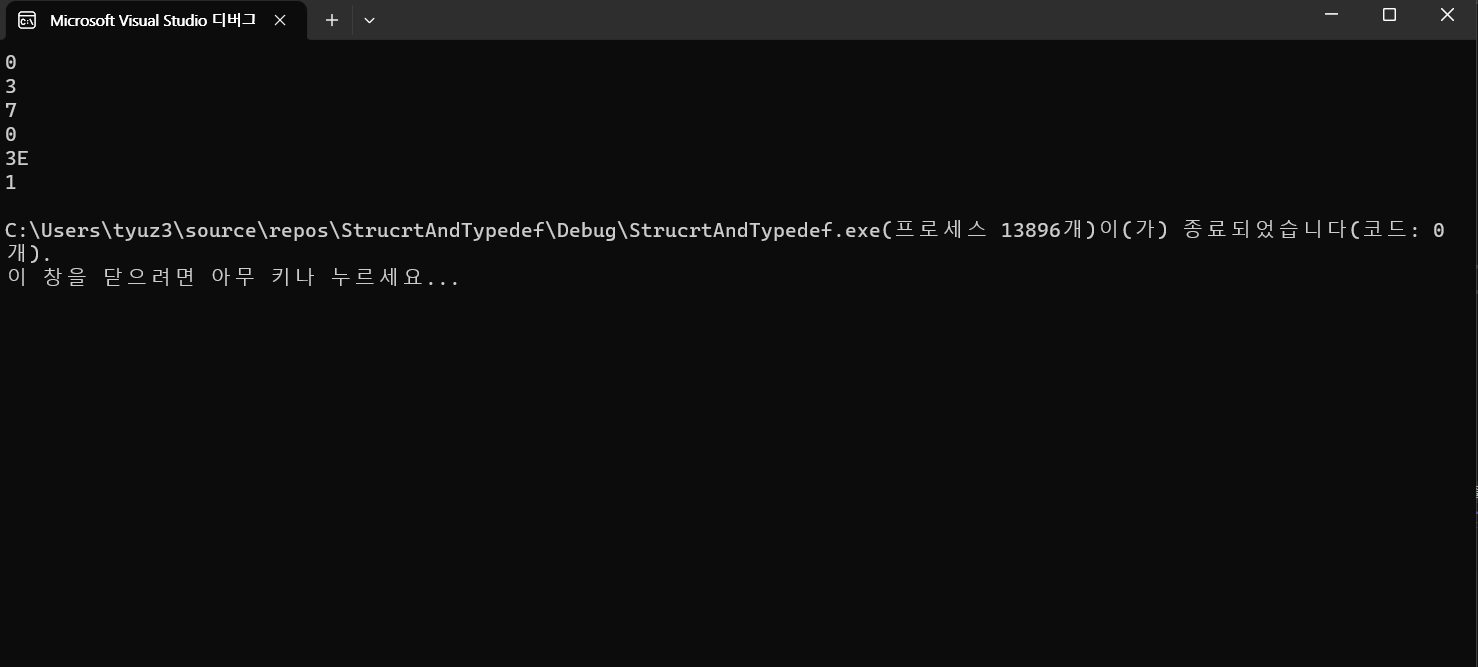
출력 결과

제 블로그를 방문해 주셔서 감사합니다