문제

풀이
여는 괄호와 닫는 괄호의 개수 비교?
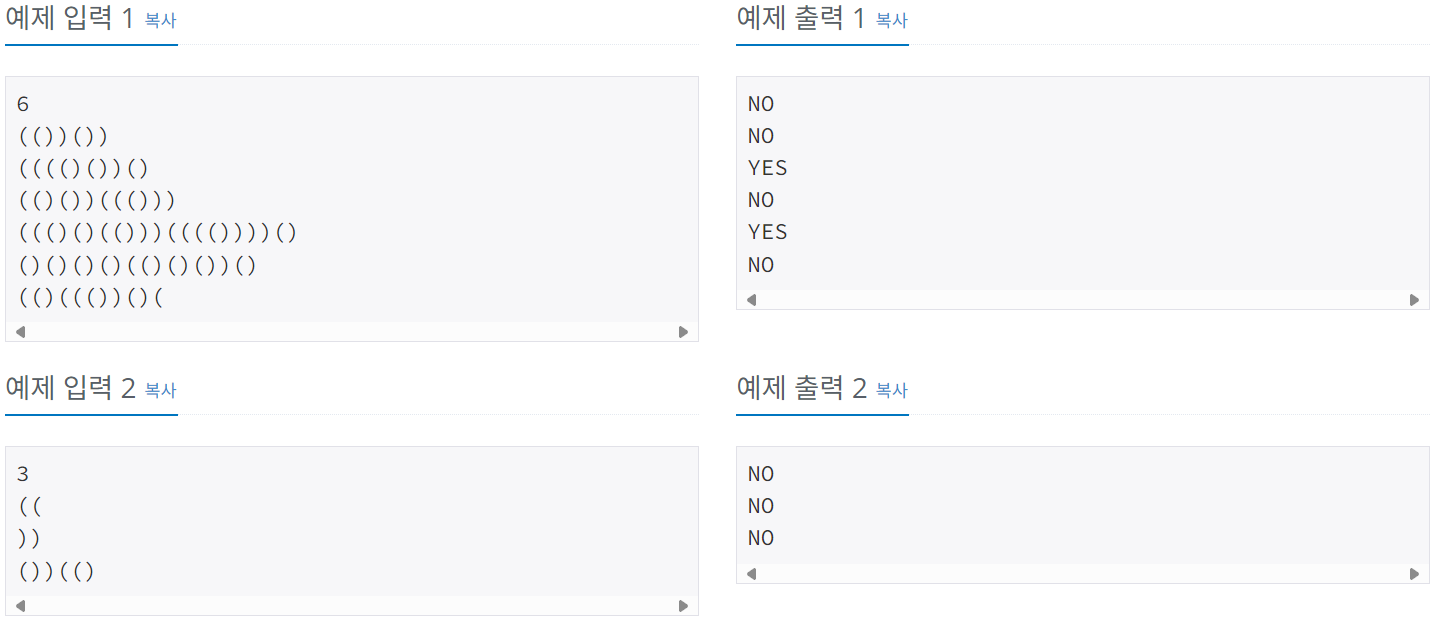
한 쌍의 괄호 기호"( )"의 개수를 구하는 문제이다. 처음엔 '(' 와 ')' 의 개수만 맞으면 된다고 생각하여 open과 close의 개수를 count해 동일한지 비교하는 형태로 진행했지만 VPS는 완성된 괄호형태의 개수를 말하는 것이었다.
스텍을 이용해 완성된 괄호의 개수 구하기
단순히 괄호들의 개수를 더하고 빼며 구하긴 힘들다고 생각했다. 하지만 스텍을 사용하면 '(' 가 항상 먼저 와야하는 문제를 해결할 수 있다.
public static boolean isValidParentheses(String input) {
        Stack<Character> stack = new Stack<>();
        for (char ch : input.toCharArray()) {
            if (ch == '(') {
                stack.push(ch);
            } else if (ch == ')') {
                if (stack.isEmpty() || stack.pop() != '(') {
                    return false;
                }
            }
        }
        return stack.isEmpty();
    }
')' 괄호는 push할 필요 없는가?
')' 를 따로 push할 필요는 없다. 닫는 괄호를 만났을 때 단순히 스텍에서 pop하여 짝을 확인하는 것이 목적이기 때문이다.
향상된 for문에 대하여
- char ch : 루프의 각 반복에서 현재 문자가 저장될 변수를 선언한다. 이때 ch라는 이름의 문자 변수가 선언된다.
- input.toCharArray(): 문자열인 input을 문자 배열로 변환한다. 이 메서드는 문자열을 구성하는 각 문자를 담고 있는 새로운 문자 배열을 반환한다.
그러므로 input 문자열의 각 문자를 순회하며 각 문자를 순서대로 ch 변수에 저장하고, 루프의 각 반복에서 ch 변수를 사용하여 작업을 수행한다.
전체코드
import java.util.Scanner;
import java.util.Stack;

public class beak_9012 {
    public static void main(String[] args) {
        Scanner sc = new Scanner(System.in);
        int T = sc.nextInt();
        sc.nextLine();

        for (int i = 0; i < T;i++) {
            String input = sc.nextLine();
            if (isValidParentheses(input)) {
                System.out.println("YES");
            } else {
                System.out.println("NO");
            }
        }
    }

    public static boolean isValidParentheses(String input) {
        Stack<Character> stack = new Stack<>();
        for (char ch : input.toCharArray()) {
            if (ch == '(') {
                stack.push(ch);
            } else if (ch == ')') {
                if (stack.isEmpty() || stack.pop() != '(') {
                    return false;
                }
            }
        }
        return stack.isEmpty();
    }
}

Back-End-Dev