문제 발생
Entity
// Post entity
package com.sparta.schedule.entity;

import com.fasterxml.jackson.annotation.JsonIgnore;
import com.sparta.schedule.dto.PostRequestDto;
import jakarta.persistence.Entity;
import jakarta.persistence.GeneratedValue;
import jakarta.persistence.*;
import lombok.Getter;
import lombok.NoArgsConstructor;
import lombok.Setter;
import org.springframework.data.annotation.CreatedDate;
import org.springframework.data.annotation.LastModifiedDate;

import java.time.LocalDateTime;
import java.util.ArrayList;
import java.util.List;

@Entity
@Getter
@Setter
@Table(name ="post")
@NoArgsConstructor

public class Post {
    @Id
    @GeneratedValue(strategy = GenerationType.IDENTITY)
    @Column(name = "POST_ID")
    private Integer postId;

    private String password;
    private String username;
    private String title;
    private String contents;

    @CreatedDate
    private LocalDateTime created_at;
    @LastModifiedDate
    private LocalDateTime updated_at;

    @OneToMany(mappedBy = "post")
    private List<Comment> commentList = new ArrayList<>();

    public void addCommentList(Comment comment){
        this.commentList.add(comment);
        comment.setPost(this);
    }

    public Post(PostRequestDto requestDto) { //데이터 저장
        this.password= requestDto.getPassword();
        this.title = requestDto.getTitle();
        this.username = requestDto.getUsername();
        this.contents = requestDto.getContents();
        this.created_at = LocalDateTime.now();
        this.updated_at = LocalDateTime.now();
    }

    public void update(PostRequestDto requestDto){
        this.title = requestDto.getTitle();
        this.contents = requestDto.getContents();
        this.updated_at = LocalDateTime.now();
    }

}
package com.sparta.schedule.entity;

import com.sparta.schedule.dto.CommentRequestDto;
import jakarta.persistence.*;
import lombok.Getter;
import lombok.NoArgsConstructor;
import lombok.Setter;
import org.springframework.data.annotation.CreatedDate;
import org.springframework.data.annotation.LastModifiedDate;

import java.time.LocalDateTime;

@Entity
@Getter
@Setter
@Table(name ="comment")
@NoArgsConstructor
public class Comment {
    @Id
    @GeneratedValue(strategy = GenerationType.IDENTITY)
    private Integer commentId;
    private String contents;
    private String username;

    @CreatedDate
    private LocalDateTime createdAt;
    @LastModifiedDate
    private LocalDateTime updatedAt;

    @ManyToOne
    @JoinColumn(name = "POST_ID")
    private Post post;


    public Comment(CommentRequestDto requestDto) {//데이터 저장
        this.contents = requestDto.getContents();
        this.createdAt = LocalDateTime.now();
        this.updatedAt = LocalDateTime.now();
        this.username = requestDto.getUsername();
    }

    public void update(CommentRequestDto requestDto) {
        this.contents = requestDto.getContents();
        this.updatedAt = LocalDateTime.now();
        this.username = requestDto.getUsername();
    }
}
controller와 service
//controller
@GetMapping("")
    public List<Comment> getAllComment(){
        return this.commentService.getComments();
    }

//service
public List<Comment>  getComments(){
        List<Comment> comment = commentRepository.findAll();
        return comment;
    }
오류발생
Post entity와 Comment entity를 양방향 매핑하면서 Postman으로 Post나 comment에 get요청을 하면

사진과 같은 오류가 발생했습니다. 오류의 원인을 읽어보면
Could not write JSON: Document nesting depth (1001) exceeds the maximum allowed (1000, from StreamWriteConstraints.getMaxNestingDepth())
그까이꺼 정신으로 대애충 해석해보자면 '1001이 넘는 깊이로 인해 JSON 생성에 실패했다'로 읽을 수 있겠군요 하핫
오류의 원인은 entity의 양방향 mapping이였습니다. 서로의 데이터를 참조하다 보니 Post entity불러오고 다시 comment entity를 불러오면서 무한재귀 데이터가 만들어졌습니다.
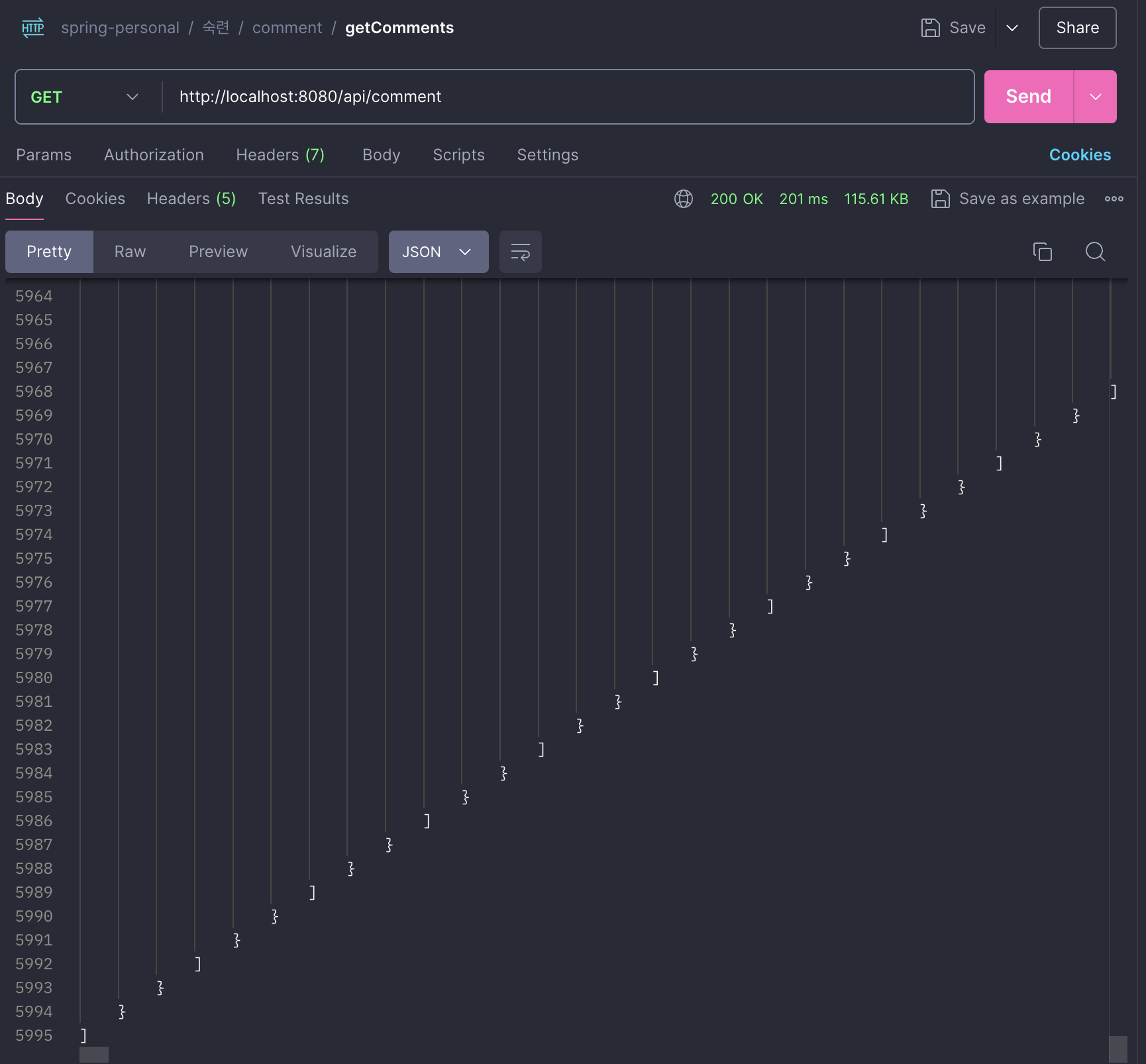
크아아악 저게 대체 뭐야
해결방법
- 참조하는 엔티티에서 재귀를 일으키는 필드에 @JsonIgnore를 붙여준다.
- RestController에서 엔티티를 바로 반환하지 않고, DTO를 사용한다.
Post entity에서 comment와 mapping된 entity에 @JsonIgnore 데코레이터를 추가하였습니다.
@JsonIgnore는 직렬화 및 역직렬화에 사용되는 논리적 속성을 무시하는데 사용되는 데코레이터입니다. getter, setter는 물론 field에서도 사용할 수 있습니다
라고 하는데 뭔말인지 잘 몰라 더 찾아봤습니다.
논리적 속성을 무시한다는 말은 직렬화/역직렬화할 경우 해당 column을 무시한다는 말이였습니다.
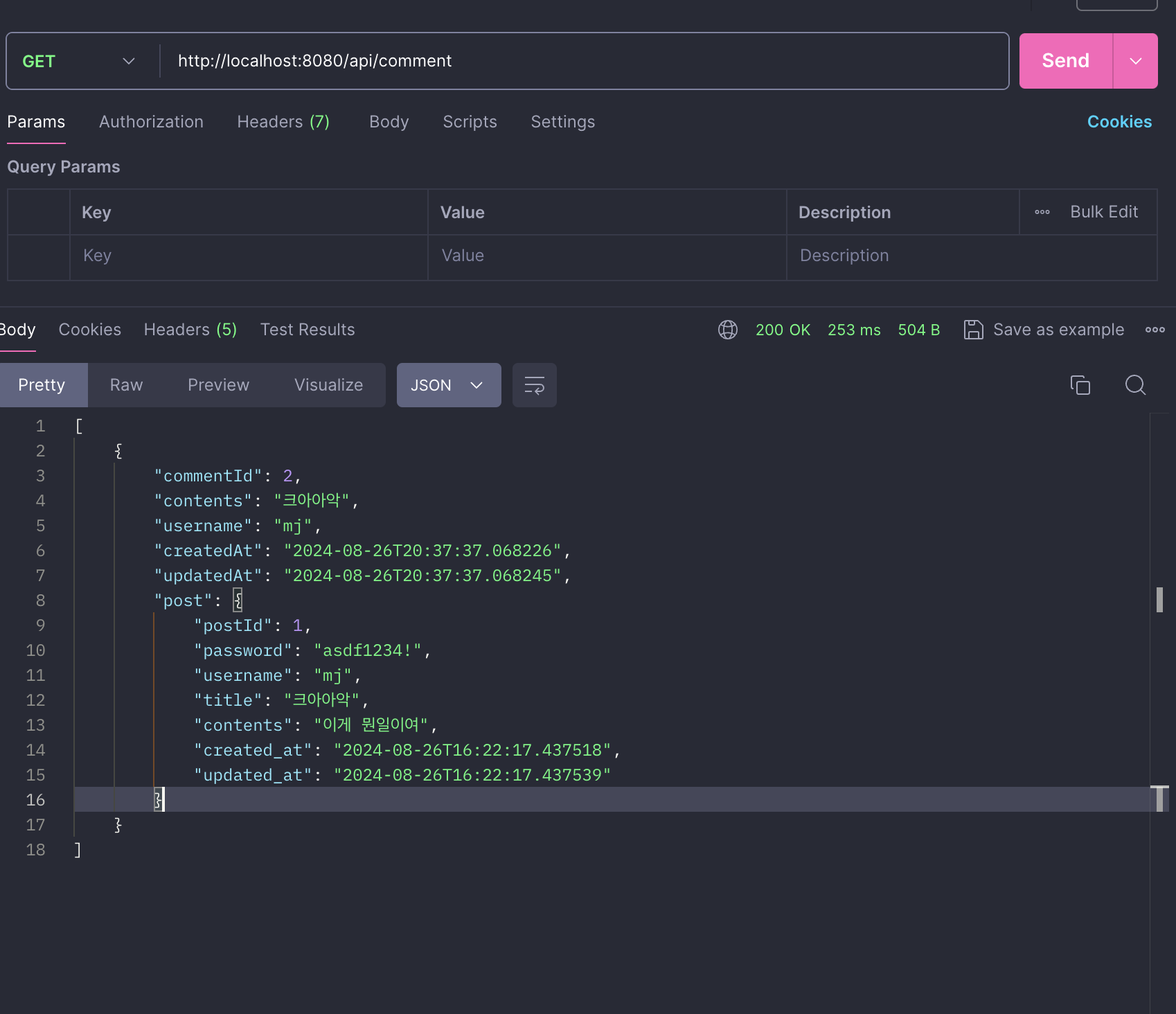
@JsonIgnore를 Post entity에서 comment를 참조하는 column에 생성하고 다시 get 요청을 하니 잘 데이터가 잘 넘어왔습니다.