💡Set 개념 정리
Set
📘 특정한 값들을 저장하는 추상자료형
-
Set 특징
- 중복 허용 하지 않음
- 인덱스 없음 (순서로 접근 불가)
- 값의 존재 여부 확인/추가/삭제 용도로 많이 사용
- HashSet 을 가장 많이 씀
-
기본 메서드
set.add("A") : 요소 추가
set.remove("A") : 요소 삭제
set.contains("A") : 포함 여부 확인
set.size() : 크기 반환
set.isEmpty() : 비어있는지 확인
set.clear() : 모든 요소 삭제
for(String s : set) : Iterator 반환
Set 종류
-
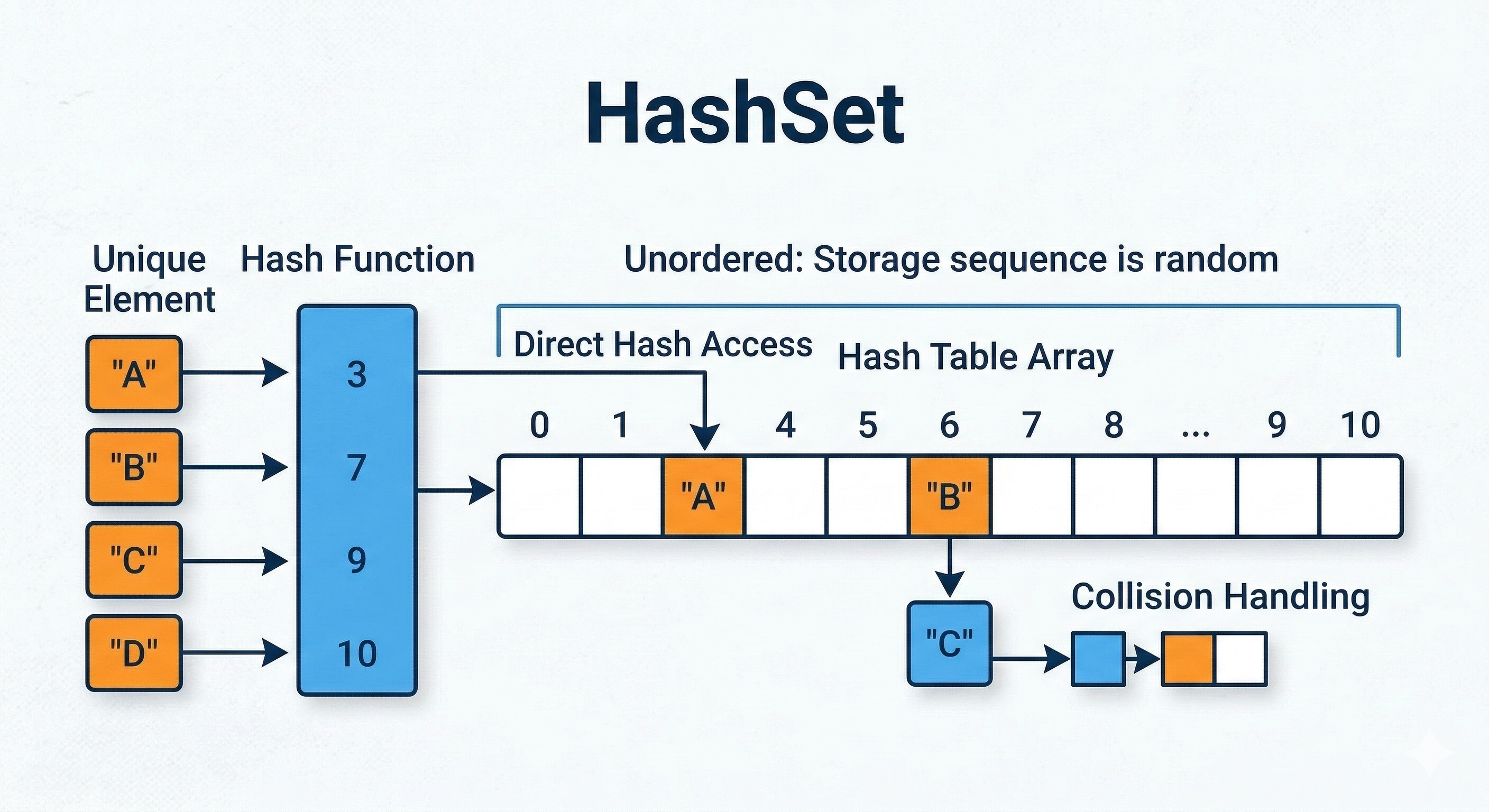
HashSet
- 순서 없음
- 중복 허용 X
- 내부적으로 HashMap 기반
- 추가/삭제/검색 속도 빠름
Set<String> set = new HashSet<>();
set.add("A");
set.add("B");
set.add("A");  // 중복 X
-
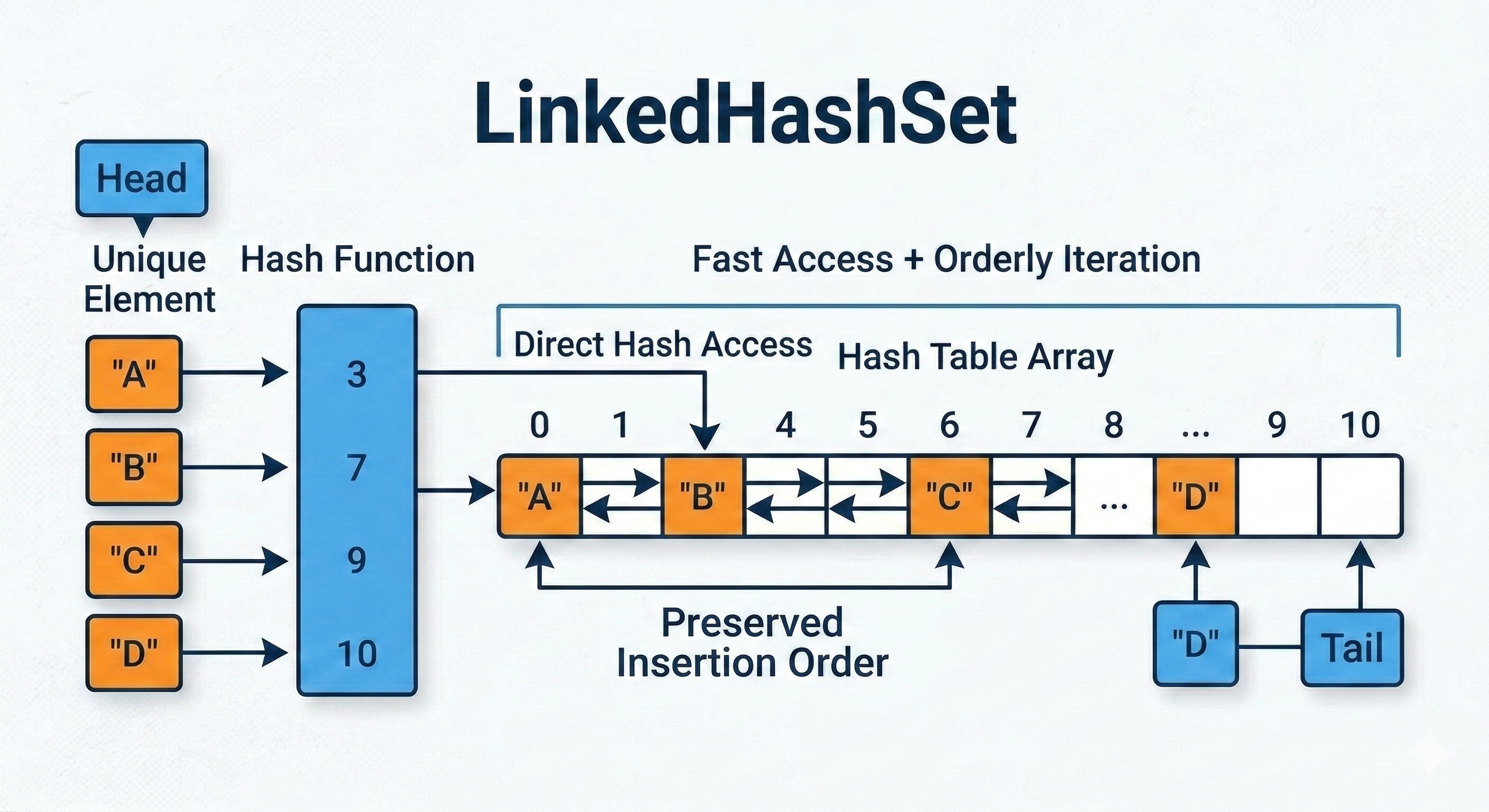
LinkedHashSet
- 입력 순서 유지
- 중복 허용 X
- 내부적으로 Linked List + HashSet
- 순서가 중요한 경우 사용
Set<String> set = new LinkedHashSet<>();
set.add("B");
set.add("A");
set.add("C");
// 순서: B → A → C
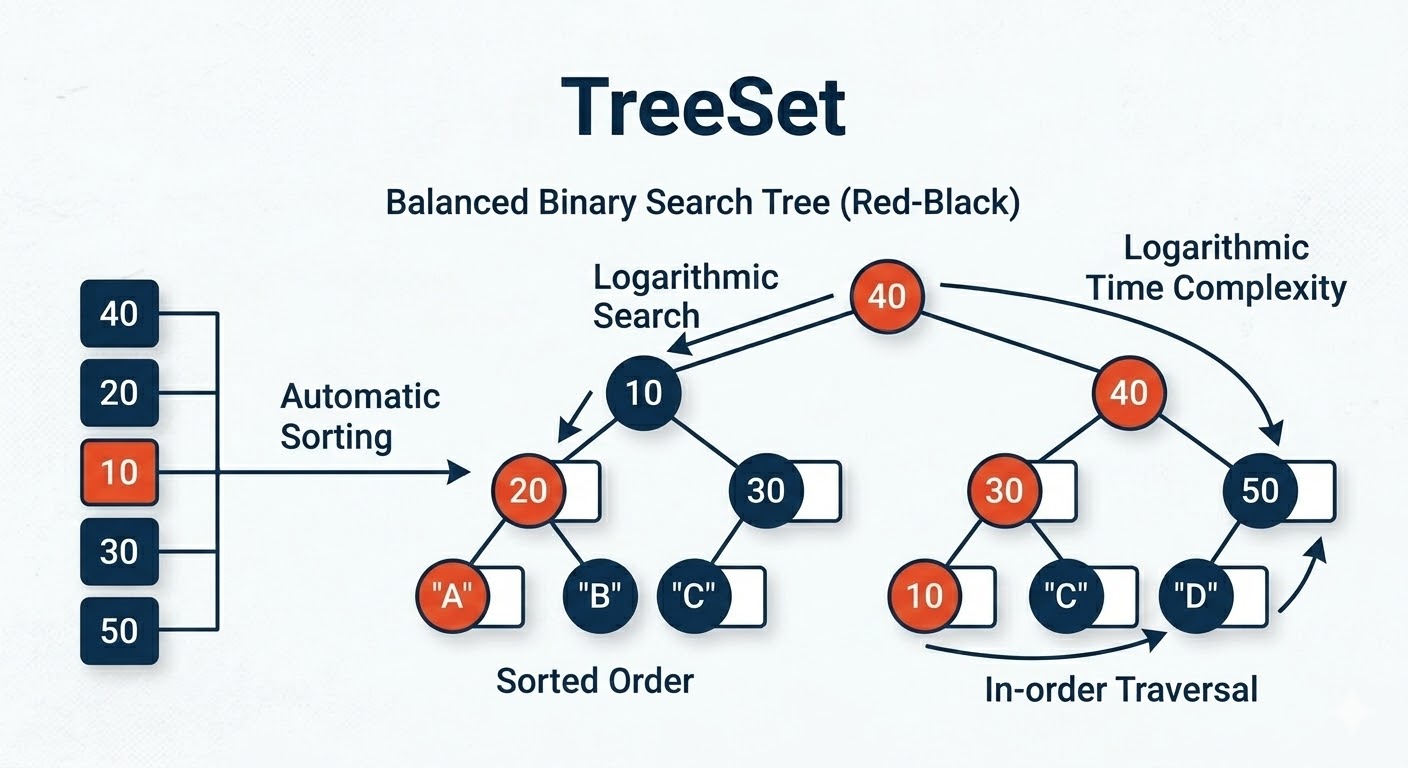
3. TreeSet
- 정렬된 상태로 저장
- 기본 오름차순 정렬
- 정렬된 Set이 필요할 때 사용
```java
Set<Integer> set = new TreeSet<>();
set.add(3);
set.add(1);
set.add(2);
// 자동 정렬: 1, 2, 3

first()	  // 가장 작은 값
last()	  // 가장 큰 값
higher(x)	// x보다 큰 값 중 가장 작은 값
lower(x)	// x보다 작은 값 중 가장 큰 값
```
예제 코드 및 기본 메서드
Set<String> set = new HashSet<>();

// 추가
set.add("Apple");
set.add("Banana");

// 중복 추가 (무시됨)
set.add("Apple");

// 삭제
set.remove("Banana");

// 포함 여부
System.out.println(set.contains("Apple"));  // true

// 크기
System.out.println(set.size());  // 1

// 비어있는지
System.out.println(set.isEmpty());  // false

// 전체 삭제
set.clear();

// 순회
set.add("A");
set.add("B");
for(String s : set){
    System.out.println(s);
}
기어 올라가는 개발