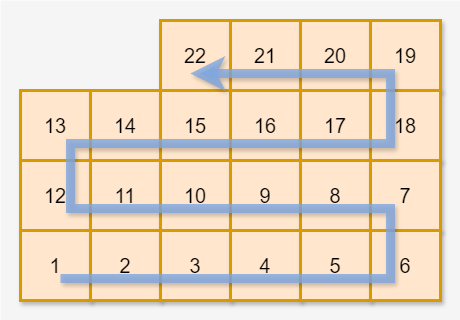
당신은 꺼내려는 상자 번호가 주어졌을 때, 꺼내려는 상자를 포함해 총 몇 개의 택배 상자를 꺼내야 하는지 알고 싶습니다. 창고에 있는 택배 상자의 개수를 나타내는 정수 n, 가로로 놓는 상자의 개수를 나타내는 정수 w와 꺼내려는 택배 상자의 번호를 나타내는 정수 num이 매개변수로 주어집니다. 이때, 꺼내야 하는 상자의 총개수를 return 하도록 solution 함수를 완성해 주세요.
첫 번째 시도 ❌
- (문제를 꼼꼼하게 숙지하지 않아서) 꺼내야 하는 상자들을 다 찾아야 된다고 생각함.
- deque로 구현
(코드를 날려서 없지만) 대략 이런 느낌
from collections import deque

def solution(n, w, num):
    q = deque(range(1, n + 1))

    # num의 열(col) 계산
    floor = (num - 1) // w
    if floor % 2 == 0:   # 왼 → 오
        col = (num - 1) % w
    else:                # 오 → 왼
        col = w - 1 - (num - 1) % w

    count = 0
    while q:
        box = q.pop()   # 위에서부터 꺼냄
        floor = (box - 1) // w

        if floor % 2 == 0:
            box_col = (box - 1) % w
        else:
            box_col = w - 1 - (box - 1) % w

        if box_col == col:
            count += 1
        if box == num:
            break

    return count
어떤 상자가 나오는지 상자 번호는 중요하지 않으니 방향을 틀었음
두 번째 시도 ⭕
# top 개수, 좌측 정렬, 우측 정렬
# num의 위치, 층
# 0-based
def solution(n, w, num):
    answer = 0
    n, num = n - 1, num - 1 # 0-based
    topflr = n // w + 1
    topcnt = n % w + 1# 맨 위에 원소 개수
    top = [0] * w
    if topflr % 2 == 1:
        for i in range(topcnt):
            top[i] = 1
    else:
        for i in range(w - 1, w - 1 - topcnt, -1):
            top[i] = 1

    tempflr = num // w + 1
    if tempflr % 2 == 1: tempidx = num % w
    else: tempidx = w - 1 - num % w

    answer = topflr - tempflr

    if top[tempidx] == 1: answer +=1

return answer- 여전히 코드가 깔끔한 느낌은 아님
- 층을 구해서 방향을 찾고 -> top 층에 있는 것을 flag화하고 -> 개수 카운트
👉 self-rating 인덱스 정의와 같은 디테일이 아직 모자란듯
세 번째 시도 ⭕
def solution(n, w, num):
    n -= 1
    num -= 1
    topflr, topcnt = n // w + 1, n % w + 1
    tempflr = num // w + 1

    top = [0] * w
    if topflr % 2 == 1: top[:topcnt] = [1] * topcnt
    else: top[w - topcnt:] = [1] * topcnt

    tempidx = num % w if tempflr % 2 == 1 else w - 1 - num % w

return topflr - tempflr + 1 if top[tempidx] == 1 else topflr - tempflr- 코드를 짧게 수정해봄
GPT 코드 분석
def solution(n, w, num):
    n -= 1
    num -= 1

    total_floor = n // w
    cur_floor = num // w

    # 현재 상자의 열 계산
    if cur_floor % 2 == 0:
        col = num % w
    else:
        col = w - 1 - (num % w)

    # 맨 위층 정보
    top_count = n % w + 1
    top_floor = total_floor

    # 맨 위층에서 해당 열에 상자가 있는지
    if top_floor % 2 == 0:
        exist_on_top = col < top_count
    else:
        exist_on_top = col >= w - top_count

    return total_floor - cur_floor + (1 if exist_on_top else 0)
맨 위층이
-
왼→오면col < top_count -
오→왼이면col ≥ w - top_count
👉 맨 위층 어디에 상자가 있는지 볼 필요 ❌ target에 해당하는 열에 있는지만 체크 ⭕