문제
46. Permutations
Medium
Given an array nums of distinct integers, return all the possible permutations. You can return the answer in any order.
Example 1:
Input: nums = [1,2,3]
Output: [[1,2,3],[1,3,2],[2,1,3],[2,3,1],[3,1,2],[3,2,1]]
Example 2:
Input: nums = [0,1]
Output: [[0,1],[1,0]]
Example 3:
Input: nums = [1]
Output: [[1]]
Constraints:
1 <= nums.length <= 6-10 <= nums[i] <= 10- All the integers of
numsare unique.
풀이
itertools 내장 모듈을 이용한 풀이
class Solution:
    def permute(self, nums: List[int]) -> List[List[int]]:

        result = itertools.permutations(nums, len(nums))

        return result
위의 문제는 중복되지 않는 모든 수열을 찾는 문제로서, Python의 내장모듈 itertools.permutations 메소드를 이용하여 쉽게 모든 순열의 리스트를 찾을 수 있다.
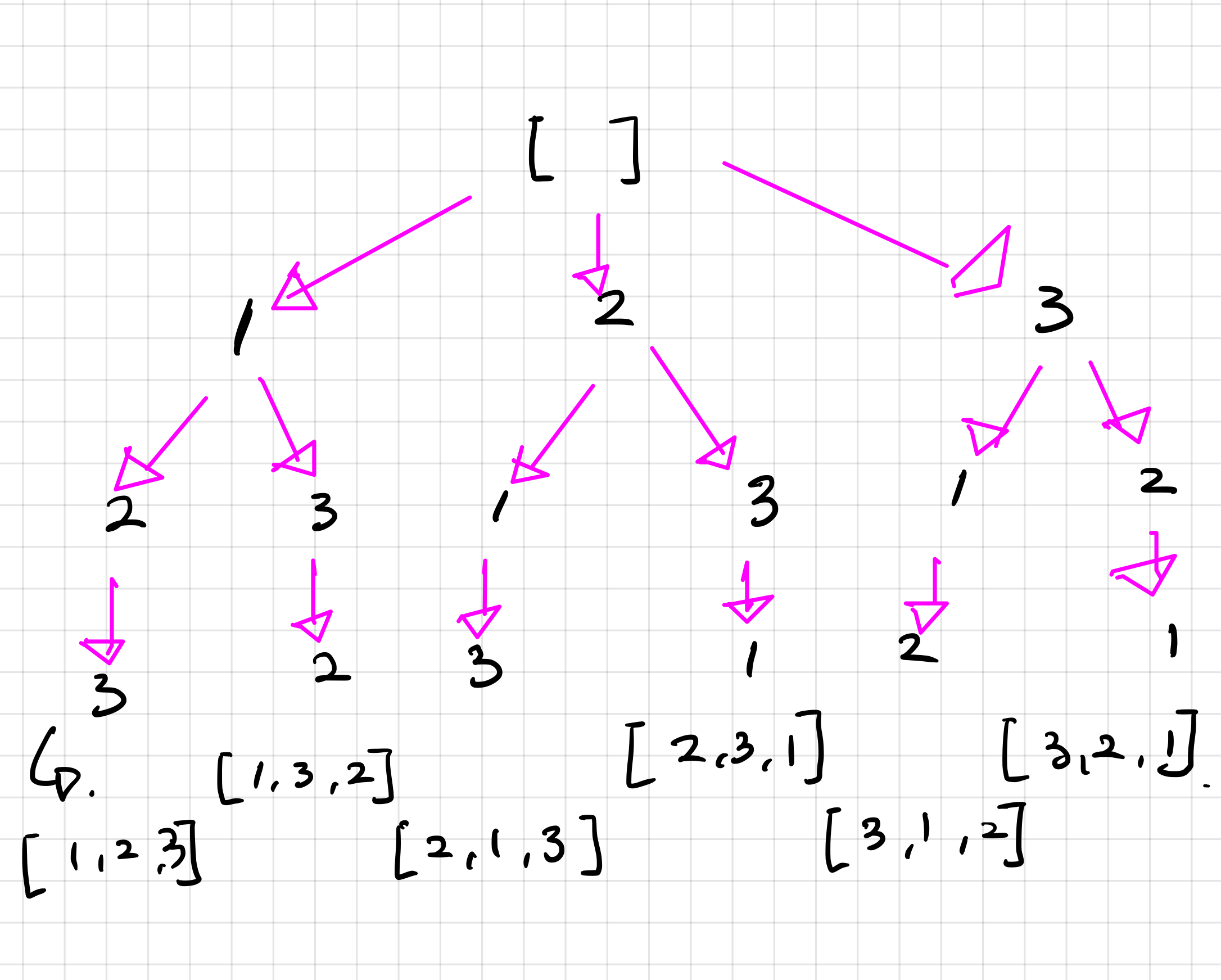
dfs의 백트래킹을 이용한 풀이
class Solution:
    def permute(self, nums: List[int]) -> List[List[int]]:
    	# 모든순열의 리스트 초기화
        result = []
        # 각 순열 리스트 초기화
        prev_lst = []

        # dfs 탐색
        def dfs(elements):
        	# base case
            if len(elements) == 0:
            	# prev_list를 append하면 prev_list의 결과값을 참조하는 것이 아니라
                # prev_list에 대한 참조가 추가된다.
                # 그래서 prev_list를 카피떠서 추가한다.
                result.append(prev_lst[:])
                return

            for e in elements:
                next_elements = elements[:]
                next_elements.remove(e)

                prev_lst.append(e)
                dfs(next_elements)
                prev_lst.pop()

        dfs(nums)

return result- dfs탐색과 백트래킹을 이용하여 모든 순열을 찾는 풀이이다.

게으른 개발자
안녕하세요! 혹시 리트코드를 쓰시는 이유가 있을까요? 영어라서 쓸까말까 고민중인데 쓸만한가 해서요