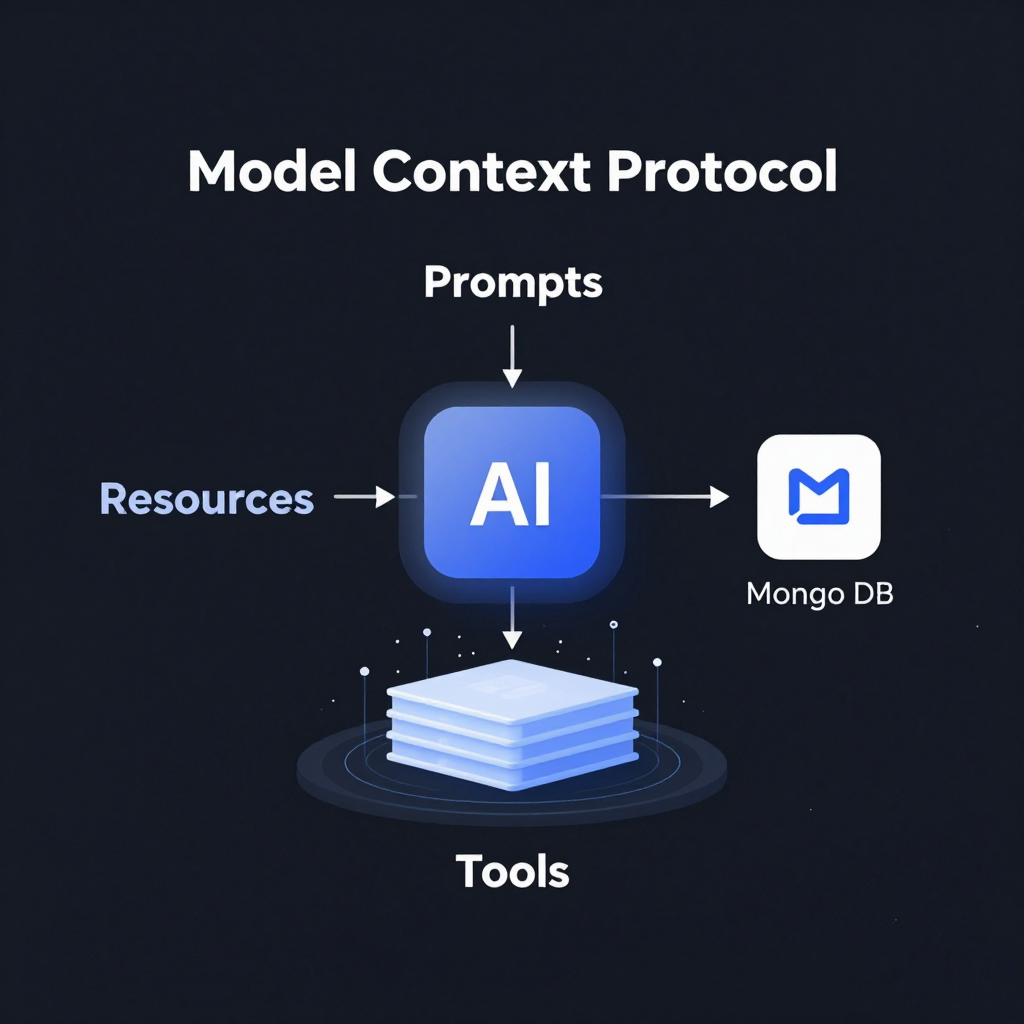
다음 코드는 Claude와 연동하여 사용하는 MCP 서버입니다.
MCP(Model Context Protocol)는 단순히 AI와 외부 시스템을 연결하는 인터페이스를 넘어, AI가 외부 세계를 어떻게 인식하고, 이해하며, 조작할 것인지에 대한 상호작용 표준을 정의하는 프로토콜입니다.
MCP 서버는 자신의 기능을 AI에게 노출하기 위해 세 가지 표준화된 Capability를 제공합니다:
Prompts: AI의 역할, 사고 프레임, 사용 흐름을 정의하는 의미적 인터페이스
Resources: AI가 읽고 이해할 수 있는 외부 세계의 구조화된 정보 모델
Tools: AI가 실제로 외부 시스템에 영향을 미칠 수 있는 실행 인터페이스
이 세 가지 Capability는 AI가 외부 세계와 안전하고 일관된 방식으로 상호작용할 수 있도록 하는 MCP의 핵심 추상 계층입니다.
그러나 아래 코드에서는 이 세 가지 구조가 개념적으로 명확하게 분리되어 드러나지 않아, MCP 설계 의도가 코드 구조에 충분히 반영되지 않고 있습니다.
기존 기능은 유지하거나 향상시키면서,
Prompts, Resources, Tools가 코드 레벨에서 명확하게 구분되고 역할이 드러나도록
아키텍처를 개선한 MCP 서버 코드를 작성해 주세요.
수정된 코드 전문 (테스트 완료)
# 이모지 삭제 후 정상 작동 (260207)

"""
MongoDB Aggregation MCP Server (Structured & Fixed Version)

이 서버는 MCP의 세 가지 핵심 Capability를 명확하게 구현합니다:
- Prompts   : AI에게 서버 목적과 사용 흐름을 설명
- Resources : AI가 읽을 수 있는 데이터 구조 및 메타정보 제공
- Tools     : MongoDB Aggregation 실행 기능 제공
"""

import json
import os
from datetime import datetime
from typing import Any, Sequence
from bson import ObjectId
from dotenv import load_dotenv
from pymongo import MongoClient
from pymongo.errors import ConnectionFailure, OperationFailure

from mcp.server import Server
from mcp.types import (
    Tool,
    TextContent,
    Resource,
    Prompt,
    PromptMessage,
    GetPromptResult
)
import mcp.server.stdio

# ═════════════════════════════════════════════════════════════════════
# SECTION 1: Environment & MongoDB Configuration
# ═════════════════════════════════════════════════════════════════════

load_dotenv()

MONGODB_URI = os.getenv("MONGODB_URI", "mongodb://localhost:27017/")
DATABASE_NAME = "TerryDB"
COLLECTION_NAME = "DailyLog"

mongo_client = None
db = None
collection = None


# ═════════════════════════════════════════════════════════════════════
# SECTION 2: Domain Schema (Resource Data)
# ═════════════════════════════════════════════════════════════════════

DAILYLOG_SCHEMA = {
    "collection": "DailyLog",
    "database": "TerryDB",
    "description": "일일 건강 및 활동 로그",
    "fields": {
        "date": {"type": "date", "description": "기록 날짜"},
        "sleep": {
            "type": "object",
            "fields": {
                "hours": {"type": "float"},
                "quality": {"type": "string"}
            }
        },
        "inbody": {
            "type": "object",
            "fields": {
                "weight": {"type": "float"},
                "muscle": {"type": "float"},
                "fatper": {"type": "float"}
            }
        },
        "study": {
            "type": "array",
            "items": {
                "subject": {"type": "string"},
                "minutes": {"type": "int"}
            }
        },
        "bloodpressure": {
            "type": "object",
            "fields": {
                "systolic": {"type": "int"},
                "diastolic": {"type": "int"},
                "bpm": {"type": "int"}
            }
        },
        "expenses": {
            "type": "array",
            "items": {
                "category": {"type": "string"},
                "amount": {"type": "float"}
            }
        },
        "exercise": {
            "type": "array",
            "items": {
                "subject": {"type": "string"},
                "steps": {"type": "int", "optional": True},
                "count": {"type": "int", "optional": True}
            }
        },
        "food": {
            "type": "array",
            "items": {
                "type": {"type": "string"},
                "menu": {"type": "string"}
            }
        },
        "mood": {"type": "string"}
    },
    "example_queries": [
        {
            "description": "지난 7일 평균 수면 시간",
            "pipeline": [
                {"$match": {"date": {"$gte": "2026-01-19"}}},
                {"$group": {"_id": None, "avg_sleep": {"$avg": "$sleep.hours"}}}
            ]
        },
        {
            "description": "카테고리별 총 지출",
            "pipeline": [
                {"$unwind": "$expenses"},
                {"$group": {"_id": "$expenses.category", "total": {"$sum": "$expenses.amount"}}},
                {"$sort": {"total": -1}}
            ]
        },
        {
            "description": "과목별 총 공부 시간",
            "pipeline": [
                {"$unwind": "$study"},
                {"$group": {"_id": "$study.subject", "total_minutes": {"$sum": "$study.minutes"}}},
                {"$sort": {"total_minutes": -1}}
            ]
        }
    ]
}


# ═════════════════════════════════════════════════════════════════════
# SECTION 3: Infrastructure Utilities
# ═════════════════════════════════════════════════════════════════════

def initialize_mongodb():
    """MongoDB 연결 초기화"""
    global mongo_client, db, collection
    try:
        mongo_client = MongoClient(MONGODB_URI, serverSelectionTimeoutMS=5000)
        mongo_client.admin.command("ping")
        db = mongo_client[DATABASE_NAME]
        collection = db[COLLECTION_NAME]
        print(f" MongoDB 연결 성공: {DATABASE_NAME}.{COLLECTION_NAME}")
    except ConnectionFailure as e:
        print(f" MongoDB 연결 실패: {e}")
        raise


def serialize_mongo(obj: Any) -> Any:
    """MongoDB 결과를 JSON 직렬화 가능한 구조로 변환"""
    if isinstance(obj, ObjectId):
        return str(obj)
    if isinstance(obj, datetime):
        return obj.isoformat()
    if isinstance(obj, dict):
        return {k: serialize_mongo(v) for k, v in obj.items()}
    if isinstance(obj, list):
        return [serialize_mongo(v) for v in obj]
    return obj


# ═════════════════════════════════════════════════════════════════════
# SECTION 4: MCP Server Initialization
# ═════════════════════════════════════════════════════════════════════

app = Server("mongodb-aggregation-server")


# ═════════════════════════════════════════════════════════════════════
# CAPABILITY 1️: PROMPTS
# → AI에게 이 MCP 서버의 목적과 사용 흐름을 설명
# ═════════════════════════════════════════════════════════════════════

@app.list_prompts()
async def list_prompts() -> list[Prompt]:
    """사용 가능한 프롬프트 목록 반환"""
    return [
        Prompt(
            name="mongodb_analytics_assistant",
            description="DailyLog MongoDB 컬렉션에 대해 분석 질문을 수행하는 전문가 AI 역할",
            arguments=[]
        )
    ]


@app.get_prompt()
async def get_prompt(name: str, arguments: dict[str, str] | None = None) -> GetPromptResult:
    """특정 프롬프트의 상세 내용 반환"""
    if name == "mongodb_analytics_assistant":
        return GetPromptResult(
            description="DailyLog 데이터 분석을 위한 MongoDB 전문가 AI",
            messages=[
                PromptMessage(
                    role="user",
                    content=TextContent(
                        type="text",
                        text=(
                            "You are an analytics assistant connected to a MongoDB database.\n"
                            "Your job is to help users analyze their DailyLog data.\n\n"
                            "**Workflow:**\n"
                            "1. First, read the collection schema using the resource: dailylog://schema\n"
                            "2. Understand the data structure and available fields\n"
                            "3. Design an appropriate MongoDB aggregation pipeline\n"
                            "4. Execute it using the execute_aggregation tool\n"
                            "5. Interpret and explain the results clearly\n\n"
                            "**Important:**\n"
                            "- Always examine the schema before writing pipelines\n"
                            "- Use example queries in the schema as reference\n"
                            "- Explain your aggregation logic to the user\n"
                            "- Handle errors gracefully and suggest corrections\n\n"
                            "Now, help the user analyze their DailyLog data!"
                        )
                    )
                )
            ]
        )

    raise ValueError(f"Unknown prompt: {name}")


# ═════════════════════════════════════════════════════════════════════
# CAPABILITY 2️: RESOURCES
# → AI가 읽을 수 있는 외부 세계의 데이터 구조와 메타정보
# ═════════════════════════════════════════════════════════════════════

@app.list_resources()
async def list_resources() -> list[Resource]:
    """사용 가능한 리소스 목록 반환"""
    return [
        Resource(
            uri="dailylog://schema",
            name="DailyLog Collection Schema",
            description="DailyLog MongoDB 컬렉션의 필드 구조, 타입, 예시 쿼리 정보",
            mimeType="application/json"
        ),
        Resource(
            uri="dailylog://stats",
            name="DailyLog Collection Statistics",
            description="DailyLog 컬렉션의 문서 수 및 최신 샘플 데이터",
            mimeType="application/json"
        )
    ]


@app.read_resource()
async def read_resource(uri: str) -> str:
    """특정 리소스의 내용 반환"""
    if uri == "dailylog://schema":
        return json.dumps(DAILYLOG_SCHEMA, indent=2, ensure_ascii=False)

    if uri == "dailylog://stats":
        stats = {
            "document_count": collection.count_documents({}),
            "sample_document": None,
            "date_range": None
        }

        # 최신 문서 샘플
        sample = collection.find_one(sort=[("date", -1)])
        if sample:
            stats["sample_document"] = serialize_mongo(sample)

        # 날짜 범위
        oldest = collection.find_one(sort=[("date", 1)])
        newest = collection.find_one(sort=[("date", -1)])
        if oldest and newest:
            stats["date_range"] = {
                "oldest": serialize_mongo(oldest.get("date")),
                "newest": serialize_mongo(newest.get("date"))
            }

        return json.dumps(stats, indent=2, ensure_ascii=False)

    raise ValueError(f"Unknown resource URI: {uri}")


# ═════════════════════════════════════════════════════════════════════
# CAPABILITY 3️: TOOLS
# → AI가 실제로 실행할 수 있는 외부 세계 조작 인터페이스
# ═════════════════════════════════════════════════════════════════════

@app.list_tools()
async def list_tools() -> list[Tool]:
    """사용 가능한 도구 목록 반환"""
    return [
        Tool(
            name="execute_aggregation",
            description=(
                "Execute a MongoDB aggregation pipeline on the DailyLog collection.\n\n"
                "**Before using this tool:**\n"
                "- Read dailylog://schema resource to understand the data structure\n"
                "- Review example queries in the schema\n\n"
                "**Supported stages:**\n"
                "$match, $group, $sort, $project, $unwind, $limit, $skip, $lookup, $addFields\n\n"
                "**Example:**\n"
                "```json\n"
                "{\n"
                '  "pipeline": [\n'
                '    {"$match": {"date": {"$gte": "2026-01-01"}}},\n'
                '    {"$group": {"_id": null, "avg_sleep": {"$avg": "$sleep.hours"}}}\n'
                "  ]\n"
                "}\n"
                "```"
            ),
            inputSchema={
                "type": "object",
                "properties": {
                    "pipeline": {
                        "type": "array",
                        "description": "MongoDB aggregation pipeline (array of stage objects)",
                        "items": {"type": "object"}
                    },
                    "limit": {
                        "type": "number",
                        "description": "Maximum number of results to return (default 100, max 1000)",
                        "default": 100,
                        "minimum": 1,
                        "maximum": 1000
                    }
                },
                "required": ["pipeline"]
            }
        )
    ]


@app.call_tool()
async def call_tool(name: str, arguments: Any) -> Sequence[TextContent]:
    """도구 실행"""
    if name != "execute_aggregation":
        return [TextContent(
            type="text",
            text=json.dumps({
                "success": False,
                "error": f"Unknown tool: {name}"
            }, ensure_ascii=False)
        )]

    try:
        pipeline = arguments.get("pipeline", [])
        limit = min(arguments.get("limit", 100), 1000)

        # 입력 검증
        if not isinstance(pipeline, list):
            return [TextContent(
                type="text",
                text=json.dumps({
                    "success": False,
                    "error": "pipeline must be an array of stage objects"
                }, ensure_ascii=False)
            )]

        if len(pipeline) == 0:
            return [TextContent(
                type="text",
                text=json.dumps({
                    "success": False,
                    "error": "pipeline cannot be empty"
                }, ensure_ascii=False)
            )]

        # 파이프라인 실행
        pipeline_with_limit = pipeline + [{"$limit": limit}]
        results = list(collection.aggregate(pipeline_with_limit))
        serialized = serialize_mongo(results)

        response = {
            "success": True,
            "pipeline": pipeline,
            "result_count": len(serialized),
            "results": serialized
        }

        return [TextContent(
            type="text",
            text=json.dumps(response, indent=2, ensure_ascii=False)
        )]

    except OperationFailure as e:
        return [TextContent(
            type="text",
            text=json.dumps({
                "success": False,
                "error": f"MongoDB operation failed: {str(e)}",
                "error_type": "OperationFailure"
            }, indent=2, ensure_ascii=False)
        )]
    except Exception as e:
        return [TextContent(
            type="text",
            text=json.dumps({
                "success": False,
                "error": f"Unexpected error: {str(e)}",
                "error_type": type(e).__name__
            }, indent=2, ensure_ascii=False)
        )]


# ═════════════════════════════════════════════════════════════════════
# SECTION 5: Server Entrypoint
# ═════════════════════════════════════════════════════════════════════

async def main():
    """서버 시작"""
    initialize_mongodb()
    async with mcp.server.stdio.stdio_server() as (read_stream, write_stream):
        await app.run(read_stream, write_stream, app.create_initialization_options())


if __name__ == "__main__":
    import asyncio
    asyncio.run(main())```
Hello, I'm Terry! 👋 Enjoy every moment of your life! 🌱 My current interests are Signal processing, Machine learning, Python, Database, LLM & RAG, MCP & ADK, Multi-Agents, Physical AI, ROS2...