정렬
정렬이란 데이터를 순서대로 나열하는 방법을 의미한다.
버블 정렬
작은 숫자, 큰 숫자 순서로 있으면 내버려두고
큰 숫자, 작은 숫자 순서로 있으면 둘의 위치를 변경한다.
    for i in range(5 - 1):
		for j in range(5 - i - 1):
		    print(j)
실행결과
0123 012 01 0
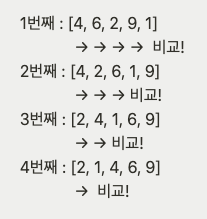
input = [4, 6, 2, 9, 1]


def bubble_sort(array):
    n = len(array)
    for i in range(n):
        for j in range(n - i - 1):
            if array[j] > array[j + 1]:
                array[j], array[j + 1] = array[j + 1], array[j]
    return array

bubble_sort(input)
print(input)
선택 정렬
구하고자하는 값이 최솟값일때 최솟값을 선택해서 정렬한다.
for i in range(5 - 1):
		for j in range(5 - i):
		    print(i + j)
실행 결과
01234 1234 234 34
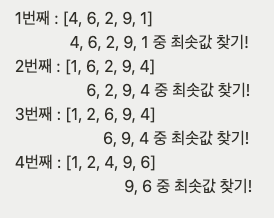
input = [4, 6, 2, 9, 1]


def selection_sort(array):
    n = len(array)

    for i in range(n-1):
        min_index = i
        for j in range(n-i):
            if array[i+j] < array[min_index]:
                min_index = i + j
        array[i], array[min_index] = array[min_index], array[i]

    return


selection_sort(input)
print(input)
삽입 정렬
전체에서 하나씩 올바른 위치에 삽입하는 방식이다.
선택정렬은 현재 데이터의 상태와 상관없이 항상 비교하고 위치를 바꾸지만,
삽입 정렬은 필요할 때만 위치를 변경하므로 더 효율적인 방식이다.
for i in range(1, 5):
    for j in range(i):
        print(i - j)
실행 결과
1 21 321 4321
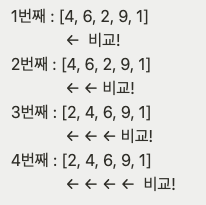
input = [4, 6, 2, 9, 1]


def insertion_sort(array):
    n = len(array)

    for i in range(1, n):
        for j in range(i):
            if array[i-j-1] > array[i-j]:
                array[i-j-1], array[i-j] = array[i-j], array[i-j-1]
            else:
                break

    return


insertion_sort(input)
print(input)
병합 정렬(merge)
병합 정렬은 배열의 앞부분과 뒷부분의 두 그룹으로 나누어 각각 정렬한 후 병합하는 작업을 반복하는 알고리즘이다.
예를 들어
A 라고 하는 배열이 1, 2, 3, 5 로 정렬되어 있고,
B 라고 하는 배열이 4, 6, 7, 8 로 정렬되어 있다면
이 두 집합을 합쳐가면서 정렬하는 방법이다.
array_a = [1, 2, 3, 5]
array_b = [4, 6, 7, 8]


def merge(array1, array2):
    result = []
    array1_index = 0
    array2_index = 0
    while array1_index < len(array1) and array2_index < len(array2):
        if array1[array1_index] < array2[array2_index]:
            result.append(array1[array1_index])
            array1_index += 1
        else:
            result.append(array2[array2_index])
            array2_index += 1

    if array1_index == len(array1):
        while array2_index < len(array2):
            result.append(array2[array2_index])
            array2_index += 1

    if array2_index == len(array2):
        while array1_index < len(array1):
            result.append(array1[array1_index])
            array1_index += 1

    return result


print(merge(array_a, array_b))
mergeSort()
분할 정복은 문제를 작은 2개의 문제로 분리하고 각각을 해결한 다음, 결과를 모아서 원래의 문제를 해결하는 전략이다.
array = [5, 3, 2, 1, 6, 8, 7, 4]


def merge_sort(array):
    if len(array) <= 1:
        return array
    mid = len(array) // 2
    left_array = array[:mid]
    right_array = array[mid:]
    print(array)
    print('left_arary', left_array)
    print('right_arary', right_array)
    return merge(merge_sort(left_array), merge_sort(right_array))


def merge(array1, array2):
    result = []
    array1_index = 0
    array2_index = 0
    while array1_index < len(array1) and array2_index < len(array2):
        if array1[array1_index] < array2[array2_index]:
            result.append(array1[array1_index])
            array1_index += 1
        else:
            result.append(array2[array2_index])
            array2_index += 1

    if array1_index == len(array1):
        while array2_index < len(array2):
            result.append(array2[array2_index])
            array2_index += 1

    if array2_index == len(array2):
        while array1_index < len(array1):
            result.append(array1[array1_index])
            array1_index += 1

    return result


print(merge_sort(array))
[5][3] 을 병합하면 [3, 5] 로
[2][1] 을 병합하면 [1, 2] 로
[6][8] 을 병합하면 [6, 8] 로
[7][4] 을 병합하면 [4, 7] 로
그러면 다시!
[3, 5] 과 [1, 2]을 병합하면 [1, 2, 3, 5] 로
[6, 8] 와 [4, 7]을 병합하면 [4, 6, 7, 8] 로
그러면 다시!
[1, 2, 3, 5] 과 [4, 6, 7, 8] 를 병합하면 [1, 2, 3, 4, 5, 6, 7, 8] 이 됩니다.
스택(stack)
한쪽 끝으로만 자료를 넣고 뺄 수 있는 자료 구조.(Cmd + Z)
push(data) : 맨 앞에 데이터 넣기
pop() : 맨 앞의 데이터 뽑기
peek() : 맨 앞의 데이터 보기
isEmpty(): 스택이 비었는지 안 비었는지 여부 반환해주기
class Node:
    def __init__(self, data):
        self.data = data
        self.next = None


class Stack:
    def __init__(self):
        self.head = None

    # head
    def push(self, value):
        new_head = Node(value)
        new_head.next = self.head
        self.head = new_head

    def pop(self):
        if self.is_empty():
            return "Stack is empty"
        delete_head = self.head
        self.head = self.head.next
        return delete_head

    def peek(self):
        if self.is_empty():
            return "Stack is Empty"
        return self.head.data

    # is_empty 기능 구현
    def is_empty(self):
        return self.head is None
큐(queue)
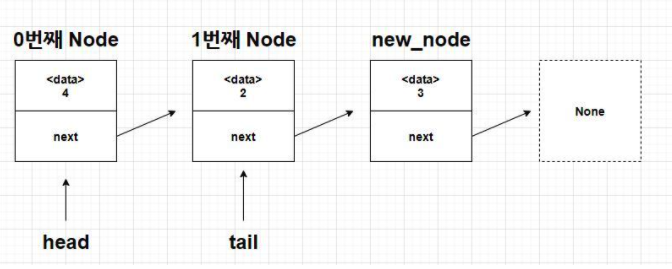
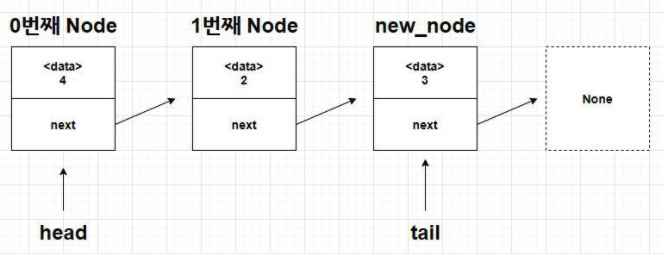
한쪽 끝으로 자료를 넣고, 반대쪽에서는 자료를 뺄 수 있는 선형구조.
enqueue(data) : 맨 뒤에 데이터 추가하기
dequeue() : 맨 앞의 데이터 뽑기
peek() : 맨 앞의 데이터 보기
isEmpty(): 큐가 비었는지 안 비었는지 여부 반환해주기
class Node:
    def __init__(self, data):
        self.data = data
        self.next = None


class Queue:
    def __init__(self):
        self.head = None
        self.tail = None

    def enqueue(self, value):
        new_node = Node(value)
        if self.is_empty():
            self.head = new_node
            self.tail = new_node

        self.tail.next = new_node
        self.tail = new_node
        return

    def dequeue(self):
        if self.is_empty():
            return "Queue is empty"
        delete_head = self.head
        self.head = self.head.next
        return delete_head.data

    def peek(self):
        if self.is_empty():
            return "Queue is empty"
        return self.head.data
        return

    def is_empty(self):
        return self.head is None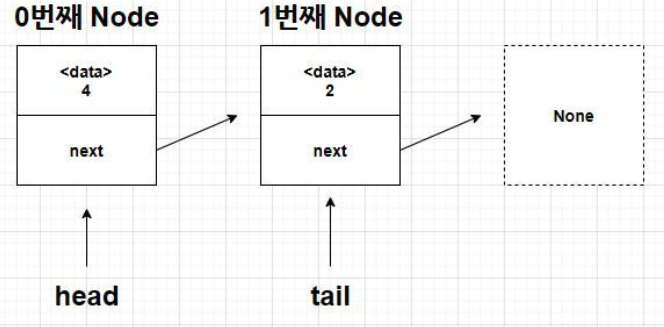
해쉬(hash)
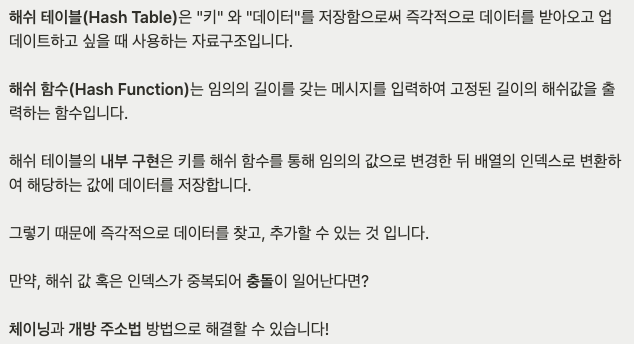
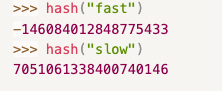
컴퓨팅에서 키를 값에 매핑할 수 있는 구조인, 연관 배열 추가에 사용되는 자료 구조이다. 해시 테이블은 해시 함수를 사용하여 색인(index)을 버킷(bucket)이나 슬롯(slot)의 배열로 계산한다. 데이터를 다루는 기법 중에 하나로 데이터의 검색과 저장이 아주 빠르게 진행된다.
키를 통해 바로 데이터를 받아올 수 있으므로, 속도가 획기적으로 빨라진다.
put(key, value) : key에 value저장하기
get(key) : key에 해당하는 value가져오기
class Dict:
    def __init__(self):
        self.items = [None] * 8

    def put(self, key, value):
        index = hash(key) % len(self.items)
        self.items[index] = value
        return

    def get(self, key):
        index = hash(key) % len(self.items)
        return self.items[index]

my_dict = Dict()
my_dict.put("test", 3)
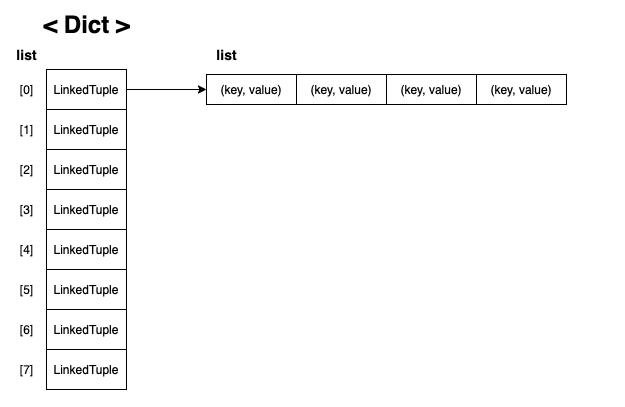
print(my_dict.get("test"))- 충돌 해결
class LinkedTuple:
    def __init__(self):
        self.items = list()

    def add(self, key, value):
        self.items.append((key, value))

    def get(self, key):
        for k, v in self.items:
            if key == k:
                return v

class LinkedDict:
    def __init__(self):
        self.items = []
        for i in range(8):
            self.items.append(LinkedTuple())

    def put(self, key, value):
        return

    def get(self, key):
        index = hash(key) % len(self.items)

        self.items[index].add(key, value)
        return self.items[index].get(key)