Why Many Candidates Fail RICS APC - And How the Right Help Prevents It
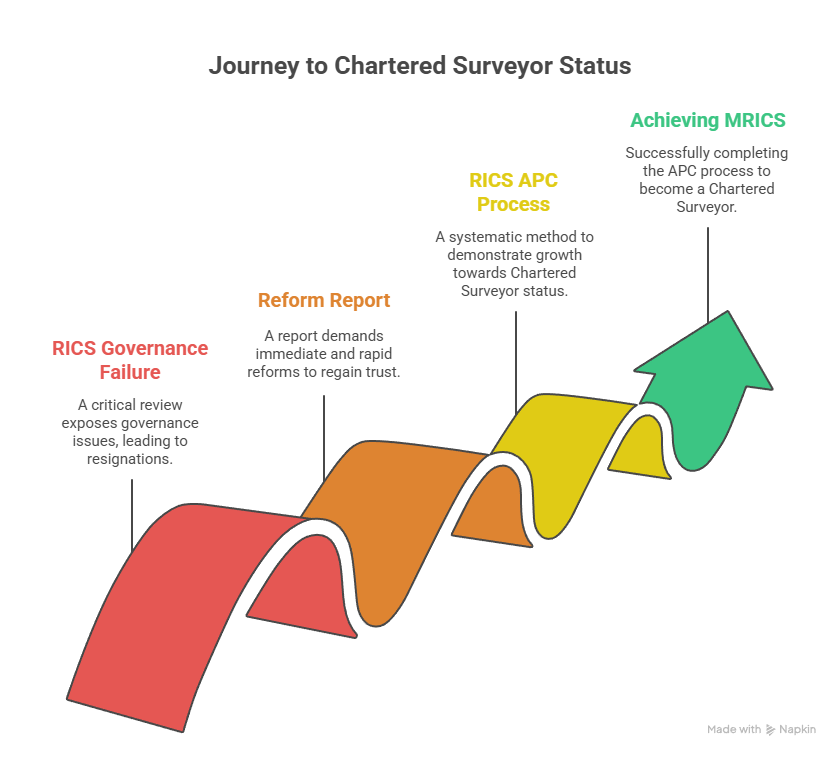
For many professionals, achieving Chartered status through the RICS Assessment of Professional Competence (APC) is a career-defining goal. Yet every year, a significant number of capable candidates fail — often repeatedly. The reasons are rarely about intelligence or experience. More often, failure comes down to misunderstanding the assessment and preparing in the wrong way.
This article explores the real reasons candidates fail the RICS APC and explains how targeted, expert support can dramatically improve success rates.
Understanding the Reality of the RICS APC
The APC is not an academic exam. It is a professional assessment designed to evaluate whether a candidate can:
Apply knowledge in real-world scenarios
Act ethically and professionally
Communicate clearly and confidently
Demonstrate competence at the required level
Many candidates approach the APC as a paperwork exercise, rather than a holistic professional evaluation — and that’s where problems begin.
The Most Common Reasons Candidates Fail
1. Experience That Is Not Evidence
One of the most frequent issues is that candidates describe their job, rather than demonstrate competence. Assessors are looking for:
What you personally did
Why you did it
What standards or guidance you applied
The outcome and learning achieved
Without this structure, even strong experience can appear weak.
- Misalignment with RICS Language and Standards
RICS assessors expect candidates to use RICS terminology, professional standards, and guidance notes. Candidates often fail because they:
Use informal or employer-specific language
Do not reference RICS guidance
Fail to align experience with competency levels
This creates doubt about professional understanding.
- Underestimating Ethics and Professionalism
Ethics is not just a mandatory module — it underpins the entire assessment. Many candidates:
Learn ethics theoretically but cannot apply it practically
Struggle with scenario-based ethical questions
Fail to demonstrate professional judgment under pressure
Assessors pay close attention to how candidates think, not just what they know.
- Poor Interview Performance
Strong written submissions do not guarantee success. In the final assessment interview, candidates often:
Panic under questioning
Give long, unfocused answers
Fail to justify decisions
Lack confidence when challenged
The interview is designed to test credibility and decision-making — not memory.
- Inadequate or Generic Support
Some candidates rely solely on workplace supervisors or generic study materials. While helpful, these often lack:
Up-to-date assessor insight
Detailed feedback on submissions
Realistic mock interview pressure
Without specialist APC support, candidates may not realize their weaknesses until it’s too late.
How the Right Help Makes the Difference
✔ Targeted APC Coaching
Working with experienced APC coaches — especially former assessors — helps candidates understand:
What assessors actually look for
How to structure competency evidence properly
How to avoid common submission mistakes
This insight is difficult to gain alone.
✔ Structured Writing Reviews
Professional APC reviewers refine submissions to ensure:
Clear alignment with competencies
Concise, evidence-based writing
Proper use of RICS standards and guidance
This often transforms borderline submissions into strong ones.
✔ Realistic Mock Interviews
High-quality mock interviews replicate the pressure of the real assessment and provide:
Honest, assessor-style feedback
Guidance on improving answers
Confidence-building through repetition
Candidates who undertake multiple mock interviews typically perform far better.
✔ Long-Term Preparation Strategy
Successful candidates plan months ahead, using:
Timelines and milestones
Early feedback loops
Continuous improvement
The right support keeps candidates accountable and focused.
Final Thoughts
Most RICS Membership APC failures are avoidable. Candidates do not fail because they lack experience — they fail because they fail to present, explain, and defend that experience in the way RICS requires.
With the right guidance, preparation, and insight into assessor expectations, success becomes far more achievable.
If you are preparing for the APC, remember: doing the work is not enough — you must prove your competence.
