How XDigitalMedia Runs Facebook and Instagram Ads That Convert
XDigitalMedia approaches Facebook and Instagram advertising the same way it approaches every other channel — starting with the business outcome and building the campaign strategy backward from there.
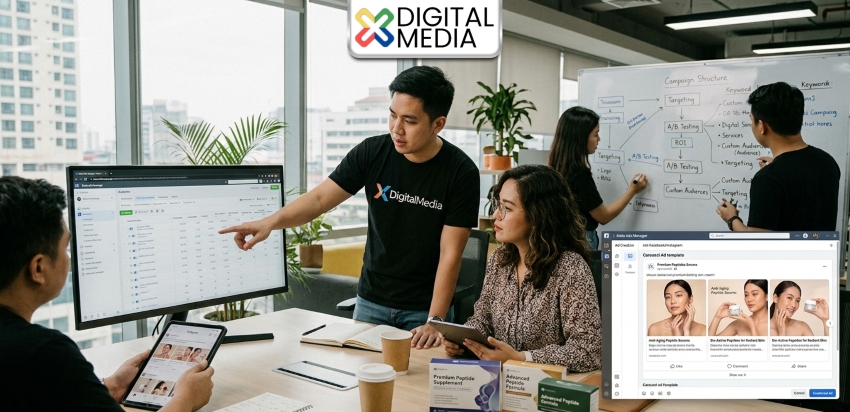
Most paid social campaigns in the Philippine market are built around reach and impressions. An ad gets shown to a large audience, engagement metrics look active, and the report shows thousands of views. What it rarely shows is how many of those views turned into leads, sales, or revenue — because the campaign was optimized for visibility, not conversion.
The difference between a paid social campaign that produces business results and one that produces dashboard activity comes down to how the campaign is structured, who it targets, what it asks people to do, and how it measures success. This post explains exactly how XDigitalMedia approaches each of those decisions.
Why Most Facebook and Instagram Campaigns Underperform
Paid social underperformance in the Philippines follows a consistent pattern. Campaigns get launched quickly — a boosted post, a broad audience, a generic creative, a link to the homepage. The spend produces reach. The reach produces little else.
The structural problems that cause this are identifiable:
Audience targeting too broad to convert. Reaching everyone in a demographic produces impressions from people with no interest in the offer. Effective paid social targets audiences based on demonstrated behavior, expressed interest, and similarity to existing customers — not just age range and location.
Creative that announces rather than converts. Most ad creative describes what a business offers. Effective ad creative addresses a specific problem the target audience has and presents the offer as the solution — with enough specificity that the right person immediately recognizes it as relevant to them.
Landing pages that don't match the ad. A visitor who clicks an ad expecting a specific offer and lands on a generic homepage has their expectation broken immediately. The match between ad message and landing page message determines whether the click converts — and most campaigns break this match by sending all traffic to the same destination.
Optimization toward the wrong objective. Meta's algorithm optimizes campaigns toward whatever objective is set. A campaign optimized for link clicks produces link clicks. A campaign optimized for leads produces leads. The two are not the same — and most campaigns that report strong engagement metrics were optimized for engagement rather than conversion.
No testing discipline. A single creative run at scale produces one data point. A structured testing approach — multiple audiences, multiple creatives, multiple offers — produces a compounding understanding of what works for a specific business and a specific audience that improves performance over time.
How XDigitalMedia Structures Paid Social Campaigns
XDigitalMedia's paid social approach builds every campaign around a clear conversion objective — and structures the campaign architecture to optimize toward that objective specifically.
Campaign architecture by funnel stage Effective paid social campaigns don't push cold audiences directly to a purchase or consultation request. They move audiences through three stages — awareness, consideration, and conversion — with different creative, different messaging, and different objectives at each stage.
-
Awareness campaigns introduce the business to people who don't know it yet — through content that addresses the problem the business solves, without asking for anything in return. The objective is reach and brand recognition among a precisely defined audience.
-
Consideration campaigns retarget people who engaged with awareness content — showing them more specific information about the offer, social proof, and reasons to trust the business. The objective is traffic to a specific landing page or lead form.
-
Conversion campaigns retarget people who visited the landing page or engaged with consideration content — with a specific, time-relevant offer and a clear CTA. The objective is a completed action: a form submission, a consultation booking, a purchase.
This three-stage structure produces significantly better cost-per-lead than campaigns that push cold audiences directly to conversion — because it warms audiences before asking them to act.
Audience strategy XDigitalMedia builds audience strategy around three layers that work in sequence. Cold audiences — built from interest targeting, behavioral targeting, and lookalike audiences modeled on existing customers — fill the top of the funnel. Warm audiences — retargeting people who engaged with content, visited the website, or interacted with previous ads — carry the middle. Hot audiences — retargeting people who completed a specific action like visiting a pricing page or starting a form — carry the bottom.
Each layer gets different creative and different messaging because the relationship between the business and the audience is different at each stage.
Creative built around the audience's problem Every ad creative XDigitalMedia produces for a client starts with the specific problem the target audience is experiencing — not the features of the service. A potential client doesn't care that a business offers "comprehensive digital marketing solutions." They care that their website isn't generating leads and they don't know why.
The creative addresses the problem first. The offer is the solution. The CTA is the next step.
Landing page alignment Every campaign gets a dedicated landing page — or a specific existing page — that matches the ad's message exactly. The headline mirrors the ad copy. The offer is immediately visible. The CTA is specific and frictionless. There's no navigation to distract the visitor from the conversion action.
How XDigitalMedia Measures Paid Social Performance
XDigitalMedia's Meta ads strategy reports on the metrics that connect to business outcomes — not the metrics that make campaigns look active regardless of results.
The reporting framework covers:
- Cost per lead — what each qualified inquiry costs across campaigns, ad sets, and individual creatives
- Lead quality by audience segment — which audiences produce leads that convert at the highest rate downstream
- Creative performance — which ad concepts, formats, and messages produce the lowest cost per lead and the highest conversion rate
- Return on ad spend — revenue or pipeline value attributed to paid social relative to total spend
- Audience saturation signals — when frequency increases and performance decreases, indicating an audience needs refreshing
This data drives the optimization decisions that compound performance over time. The campaigns that produce the strongest results at month six are the ones built on a testing framework that started at month one — not campaigns launched at scale and left to run unchanged.
Key Takeaways
-
Most Facebook and Instagram campaigns underperform because they're optimized for reach and impressions rather than conversion — producing dashboard activity without business results.
-
Effective paid social is structured across three funnel stages — awareness, consideration, and conversion — with different creative, different targeting, and different objectives at each stage.
-
Audience strategy works in three layers: cold audiences built from targeting, warm audiences from retargeting engaged users, and hot audiences from retargeting high-intent visitors.
-
Creative that addresses the audience's specific problem — not the features of the service — consistently outperforms creative built around product announcements.
-
Landing page alignment between ad message and destination is one of the highest-impact conversion levers available — and one of the most commonly broken in Philippine paid social campaigns.
Frequently Asked Questions
How much does it cost to run Facebook and Instagram ads in the Philippines? Ad spend varies significantly based on industry, audience size, and campaign objective. Most Philippine business campaigns start at a minimum of ₱10,000 to ₱20,000 per month in ad spend to generate enough data for meaningful optimization. Below that threshold, the data volume is too low to make confident decisions. Agency management fees are separate from ad spend.
How long before Facebook and Instagram ads produce results? Unlike SEO, paid social can produce leads from the first week of a campaign. The first month is primarily a learning phase — the algorithm is optimizing toward the conversion objective and data is being collected. Most campaigns reach stable cost-per-lead by month two to three, with performance improving as creative testing and audience refinement compound over time.
Should a business run Facebook ads or Google ads — or both? They serve different functions. Google ads capture active demand — people who are already searching for what the business offers. Facebook and Instagram ads create demand — reaching people who fit the target profile but aren't actively searching yet. Businesses with strong search demand benefit most from Google ads first. Businesses with visually demonstrable products or services, or those building brand recognition in a new market, benefit most from paid social. Most growing businesses benefit from both running in coordination.
What types of businesses work best with Facebook and Instagram advertising? Any business where the target customer spends time on Meta platforms — which in the Philippines is most consumer-facing businesses. The approach works particularly well for local service businesses, e-commerce, professional services, hospitality, education, and any business with a visual product or transformation that can be demonstrated in creative. B2B businesses targeting senior decision-makers often find LinkedIn more effective than Meta for their core audience.