How an SEO Agency Builds the Right Strategy — Local, National, or Global
Choosing the right SEO agency means more than finding someone who knows how to rank a website.
It means finding a team that understands which type of strategy your business actually needs — because local, national, and global SEO are not the same discipline. The tactics differ. The timelines differ. The content, the keywords, the link building approach — all of it shifts depending on the geographic scope of the business.
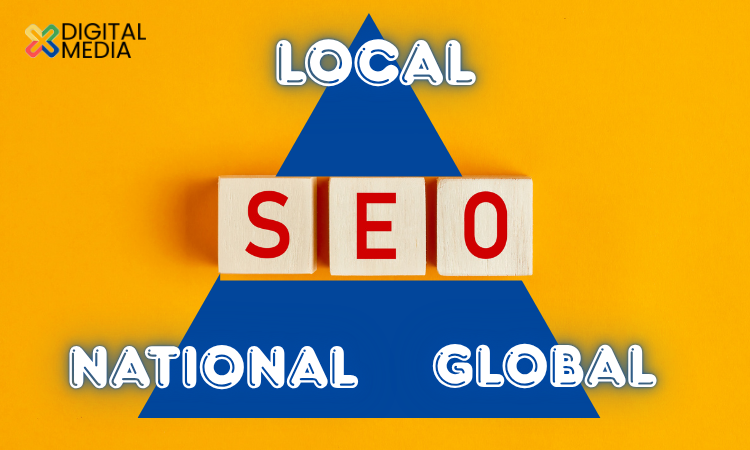
Get this wrong at the start and months of work go toward ranking for searches that don't produce customers. This post breaks down how each strategy type works, when each one applies, and what a good agency does to figure out which one fits.
Why the Scope of Your SEO Strategy Matters More Than Most Businesses Realize
A plumbing business in Cebu and a SaaS company selling across Southeast Asia both need SEO. But they need completely different versions of it.
The plumber needs to show up when someone nearby searches "emergency plumber Cebu" or "pipe repair near me." Broad national keywords don't help — the customer base is geographically defined. Every tactic should be building visibility within a specific radius.
The SaaS company, on the other hand, needs to rank for product-level and problem-level queries across multiple markets. Local pack rankings are irrelevant. Domain authority, multilingual content, and international link building are what move the needle.
Most SEO failures happen when the strategy scope doesn't match the business model. A local business chasing national keywords wastes budget on traffic that will never convert. A national brand over-investing in local tactics misses the broader opportunity entirely.
Local SEO: When Geography Is the Strategy
Local SEO is the right approach for any business whose customers are defined by location. That includes retail shops, restaurants, clinics, law firms, contractors, and any service business operating within a specific city or region.
The core components of a local strategy are distinct from general SEO:
-
Google Business Profile optimization — The profile needs to be complete, actively maintained, and populated with photos, service descriptions, and regular posts.
-
Local keyword targeting — Pages and content are built around searches that combine a service with a location: "accounting firm Makati," "web design agency Davao."
-
Local citations — Consistent name, address, and phone number listings across directories signal geographic relevance to Google.
-
Review generation — A steady stream of genuine reviews builds local prominence, which directly influences map pack rankings.
-
Location-specific content — Blog posts and service pages that reference the local area, local issues, and local customer concerns outperform generic content for local searches.
Local SEO produces results faster than national campaigns in most cases — the competition is narrower and the intent behind local searches is typically higher. Someone searching "dentist near me" is ready to book, not just browsing.
National SEO: When the Whole Country Is the Market
National SEO applies when a business serves customers across an entire country without a geographic restriction. E-commerce stores, online service providers, and businesses with multiple locations across different cities all fall into this category.
The challenge at the national level is competition. The same keywords are being targeted by hundreds or thousands of other sites simultaneously.
Breaking through requires:
- Strong domain authority — Built through consistent, high-quality link acquisition over time
- Comprehensive content coverage — Covering the full topic landscape relevant to the business, not just a handful of target keywords
- Technical scalability — Site architecture that handles large volumes of pages cleanly, without duplicate content or crawl issues
- Conversion-optimized pages — National traffic is meaningless without a clear path from landing page to purchase or inquiry
National campaigns take longer to show results than local ones. The payoff is proportional — a site that ranks nationally for high-volume commercial keywords generates consistent lead volume at a scale local rankings can't match.
Global SEO: When the Market Has No Borders
Global SEO is for businesses operating across multiple countries or language markets simultaneously. It's the most technically complex of the three approaches and the one most businesses don't need — until they do.
The key elements that make global SEO distinct:
- Hreflang implementation — Technical tags that tell Google which version of a page to serve based on a user's language and location
Country-specific domains or subfolders — Structural decisions about how different markets are organized on the site affect how Google indexes and ranks them - Localized content — Translation alone isn't enough. Content needs to be adapted to reflect how different markets search, not just what language they speak
- International link building — Authority needs to be built within each target market, not just from a home-country perspective
Most businesses in the Philippines don't need global SEO yet. But the ones that do — export businesses, remote service providers, and tech companies scaling across ASEAN — need an agency that understands the technical complexity involved.
How the Right SEO Agency Decides Which Strategy Fits
The right SEO agency doesn't pitch one approach to every business. It asks the right questions first.
Where do current customers come from? Is the business model location-dependent or location-agnostic? Which markets are being targeted in the next 12 months? What does an ideal customer look like — and where are they searching?
The answers to those questions determine the strategy. A business that serves three cities needs local SEO done well across all three before it considers national expansion. A national brand that hasn't optimized its Google Business Profile for its physical locations is leaving a significant visibility gap unaddressed.
Good strategy starts with an honest assessment of where the business actually is — not where it eventually wants to be.
Key Takeaways
- Local, national, and global SEO are fundamentally different disciplines. Applying the wrong scope to a business wastes budget and produces traffic that doesn't convert.
- Local SEO suits any business with a geographically defined customer base. It typically produces results faster than national campaigns and targets higher-intent searches.
- National SEO requires stronger domain authority, broader content coverage, and more technical scalability than local campaigns.
- Global SEO adds language and country-specific technical complexity that most businesses don't need until they're actively expanding into multiple international markets.
- A reliable SEO agency determines which strategy fits by asking about the business model, customer geography, and growth targets — not by pitching the same package to everyone.
Frequently Asked Questions
- How do I know if my business needs local or national SEO? Ask one question: do your customers need to be in a specific location to buy from you? If yes — local SEO. If the business can serve anyone regardless of location — national SEO. Many businesses need elements of both, particularly those with physical locations and an online service offering.
- Can an SEO agency handle multiple strategy types at once? Yes, but it requires clear prioritization. A business with physical locations and an e-commerce arm typically starts with local SEO for the locations and national SEO for the online store simultaneously, with separate keyword strategies and content plans for each.
- How long does it take to see results from each strategy type? Local SEO typically shows ranking movement within 2 to 4 months. National campaigns usually take 6 to 12 months for meaningful traction. Global SEO timelines vary significantly depending on the number of markets being targeted and the technical starting point of the site.
- What should I look for when hiring an SEO agency for a local business? Prioritize agencies that ask about your specific service area, have experience with Google Business Profile management, and can show results from comparable local campaigns. An agency that leads with national keyword volume without asking where your customers come from isn't the right fit for a location-dependent business.
The scope of an SEO strategy isn't a detail to figure out later. It's the foundation everything else is built on. Getting it right at the start determines whether the work compounds in the right direction — or produces activity without results.
The businesses that grow through search are the ones that matched their strategy to their market from day one. Not the ones that chased the biggest keywords and hoped the customers would follow.
If the current strategy isn't producing the right kind of traffic — local customers, national buyers, or the international market the business is moving into — the scope is worth revisiting before the next dollar is spent.