
이진 탐색
탐색 범위를 반으로 나누어서 찾는 값을 포함하는 범위를 좁혀나가는 방식의 알고리즘이다
주로 오름차순으로 정렬되어 있는 상태에서 사용해야한다
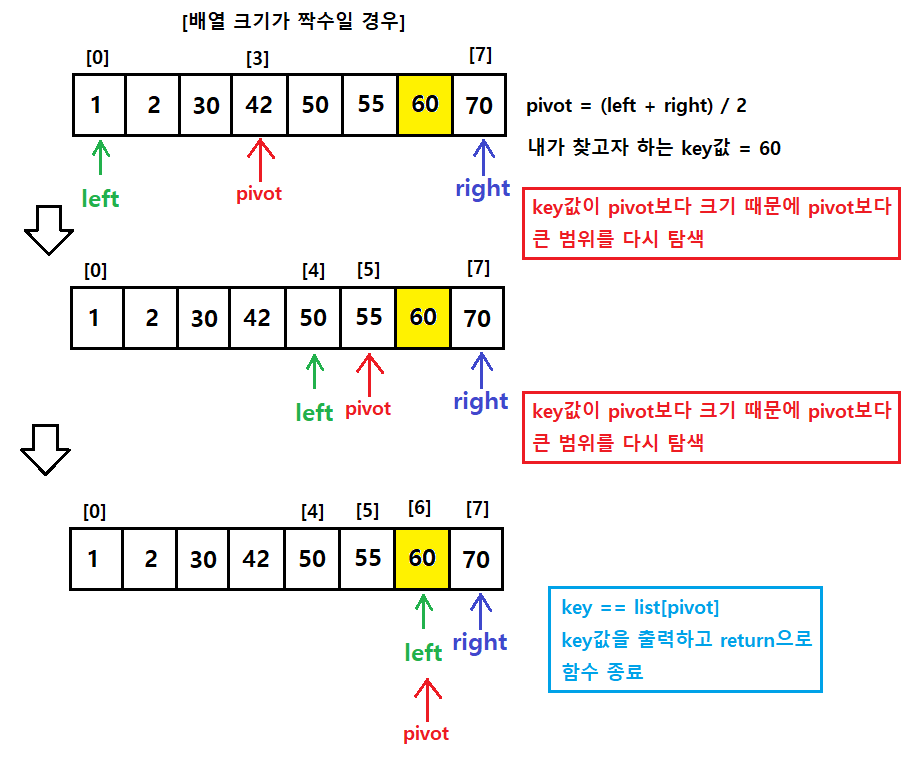
- 맨 처음 배열에서 left값은 [0]를, right값은 [SIZE -1] 을 가리킨다
- pivot은 (left + right) / 2;를 가리킨다
-> 연산자 우선순위 까먹지 말자!!
1. 반복문을 사용
#include <iostream>
#define SIZE 8
using namespace std;

void BinarySearch(int list[], int key)
{
	int left = 0;
	int right = SIZE - 1;

	while (left <= right)
	{
		int pivot = (left + right) / 2;

		if (key == list[pivot])
		{
			cout << "Key Found : " << list[pivot];
			return;
		}
		else if (key > list[pivot])
		{
			left = pivot + 1;
		}
		else if (key < list[pivot])
		{
			right = pivot - 1;
		}
	}
	cout << "Not Key Found" << endl;
}

// 재귀사용방식

int main()
{
#pragma region 이진 탐색

	// right < left면 값을 못찾은 상태 (엇갈림)

	int list[SIZE] = { 1,2,30, 42,50, 55, 60,70 };

	BinarySearch(list, 30);

#pragma endregion


	return 0;
}
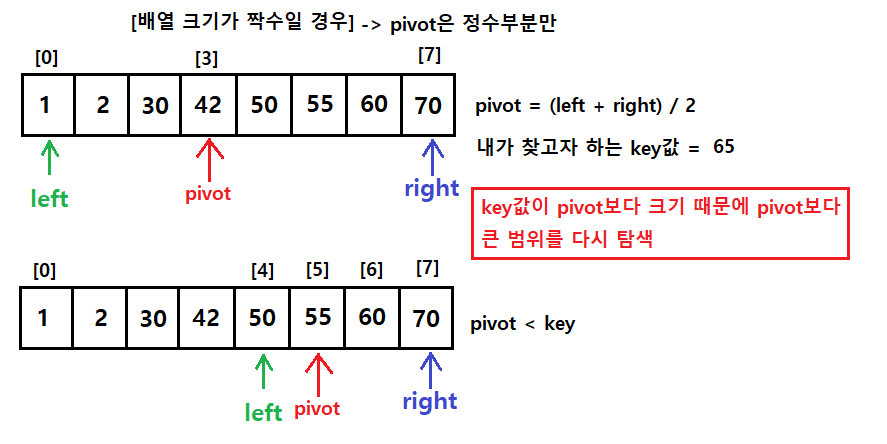
반복문의 조건이 while (left <= right) 인 이유
만약 내가 원하는 key값을 이 조건이 종료될 때까지 발견 못할 경우를 예로 들어보자
-
위와 같은 배열에서 찾고자 하는 key값을 65로 설정
-
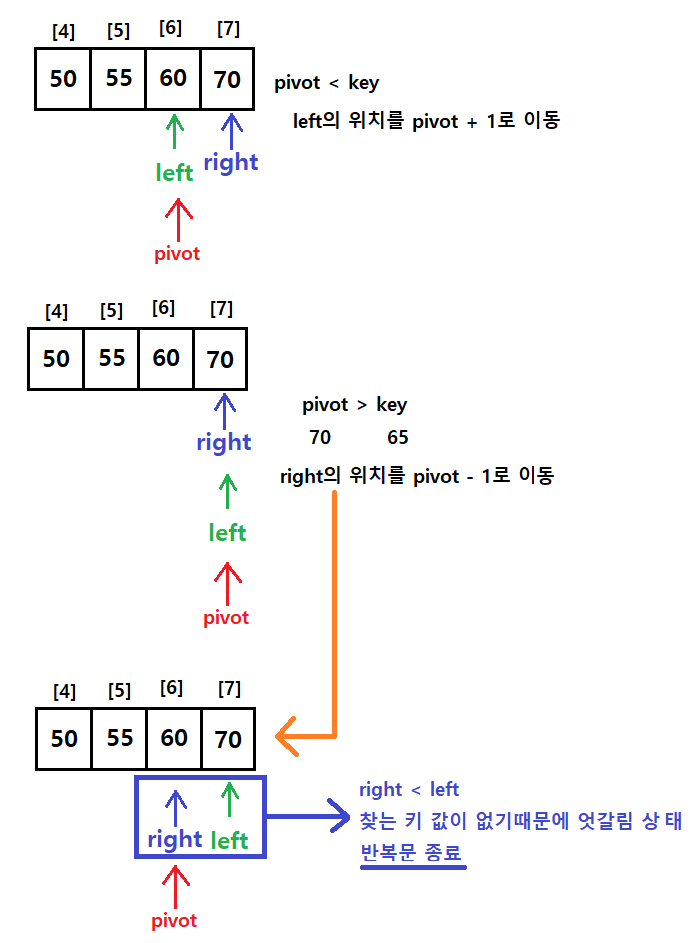
pivot과 key값을 비교하며 left와 right의 위치를 이동
-
left와 right의 위치가 같아졌고 pivot의 위치도 같아졌을때, right와 left가 엇갈리는 경우가 있다
-> 이 경우는 key값이 없기때문
-
현재 경우는 pivot이 key값보다 작은 경우이고, 반대로 pivot이 key값보다 큰 경우는 오른쪽 범위에서 비슷하게 작동한다
이진탐색 다시 해보기
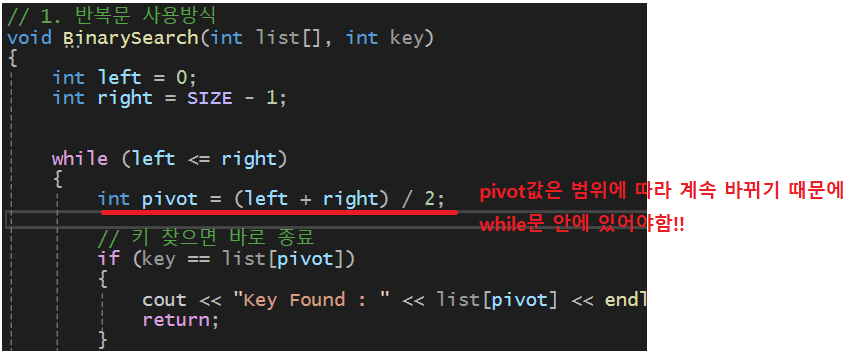
- 다시 코드를 짰을때, 실행에 제대로 안된다.
-> 이유는 pivot 변수의 위치였다..!!!
#include <iostream>
using namespace std;
#define SIZE 8

// 이진탐색
// 배열의 크기는 8
// 오름차순 정렬로 되어있는 상태로 탐색
//
// 매개변수로 배열과 찾고자 하는 key값을 받는다

// 1. 반복문 사용방식
void BinarySearch(int list[], int key)
{
    int left = 0;
    int right = SIZE - 1;


    while (left <= right)
    {
        int pivot = (left + right) / 2;
        // 키 찾으면 바로 종료
        if (key == list[pivot])
        {
            cout << "Key Found : " << list[pivot] << endl;
            return;
        }
        else if (key > list[pivot])
        {
            left = pivot + 1;
        }
        else if (key < list[pivot])
        {
            right = pivot - 1;
        }
    }
    // 반복문이 종료되어도 찾지 못했으면 찾는key값이 없는 것
    cout << "Not Key Found" << endl;
}


int main()
{
    int list[SIZE] = { 1,2,30, 42,50, 55, 60,70 };
    BinarySearch(list, 30);

    return 0;
}- pivot의 위치값은 이진탐색을 하면서 배열의 범위가 반씩 줄어들때마다 pivot값도 계속 바뀌기 때문에 반복문 안에 선언해주어야함
이진탐색 재귀로 구현해보기
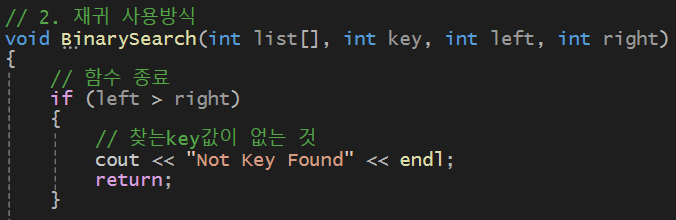
- 재귀로 구현할 경우, 함수를 빠져나갈 수 있는 조건을 가장 위에 설정해두어야 한다
- 기존 반복문을 사용하던 방식과 동일하게 left가 right보다 커지는 경우(엇갈림)가 발생하면 함수를 종료한다
#include <iostream>
using namespace std;
#define SIZE 8

// 이진탐색
// 배열의 크기는 8
// 오름차순 정렬로 되어있는 상태로 탐색
//
// 매개변수로 배열과 찾고자 하는 key값을 받는다

// 2. 재귀 사용방식
void BinarySearch(int list[], int key, int left, int right)
{
    // 함수 종료
    if (left > right)
    {
        // 찾는key값이 없는 것
        cout << "Not Key Found" << endl;
        return;
    }

    int pivot = (left + right) / 2;

    // 키 찾으면 바로 종료
    if (key == list[pivot])
    {
        cout << "Key Found : " << list[pivot] << endl;
        return;
    }
    else if (key > list[pivot])
    {
        left = pivot + 1;
        BinarySearch(list, key, left, right);
    }
    else if (key < list[pivot])
    {
        right = pivot - 1;
        BinarySearch(list, key, left, right);
    }
}
int main()
{
    int list[SIZE] = { 1,2,30, 42,50, 55, 60,70 };

    int left = 0;
    int right = SIZE - 1;

    BinarySearch(list, 30, left, right);

    return 0;
}
이진탐색의 시간복잡도
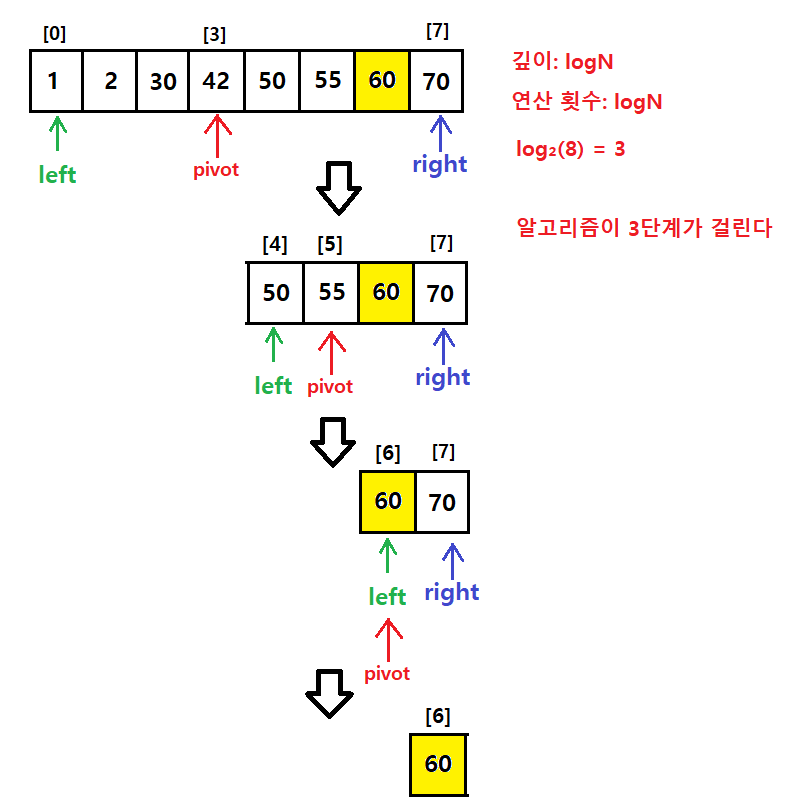
시간복잡도 O(logN)
-> 탐색범위가 N/2, N/4, N/8씩 반으로 줄어들기 때문이다
-
혹시나 잊어버릴까봐 다시 정리
-> 이진탐색은 탐색범위를 반씩 줄여나간다 (깊이가 logN이 되는 것)
-> 나머지 반은 탐색하지 않는다 (연산도 logN이 되는 것) -
예를 들어, 배열의 크기가 8이면 3단계에 걸쳐 크기가 1이 된다
즉, log₂8 = 3 이다
컴퓨터 과학에서 O(logN)은 O(log₂N)을 줄여서 부르는 말이다
자세한 건 시간복잡도 포스트에 설명되어있다 (보고오자)

뉴비 개발자