1. Exception Hierarchy
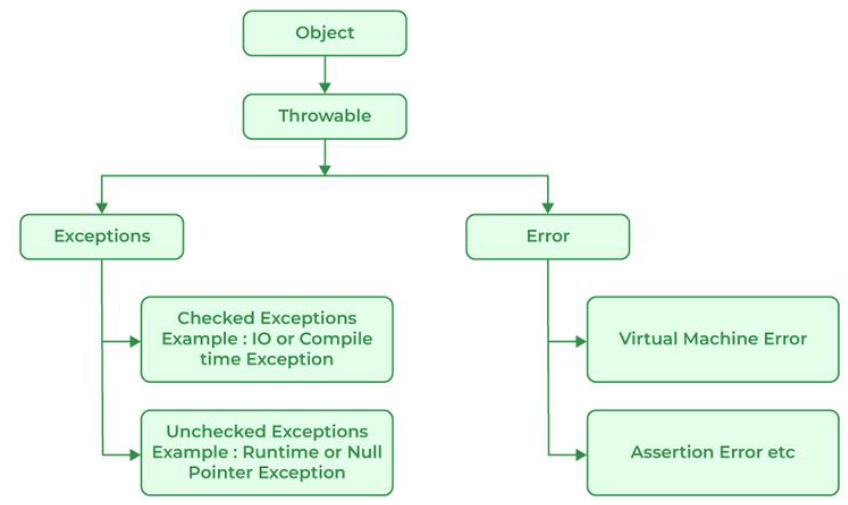
Throwable
-
Error와 Exception의 상위 클래스
-
Throwable
- Error
OutOfMemoryErrorStackOverflowErrorVirtualMachineError- etc.
- Exception
RuntimeExceptionNullPointerExceptionArrayIndexOutOfBoundsExceptionClassCastException- etc.
IOExceptionSQLException- etc.
- Error
Error 클래스
- 컴퓨터에 영향을 줄 수 있어서 발생. JVM이 찾아냄
- 환경에 다뤄야 하는 부분
ex) OutOfMemoryError, StackOverflowError, VirtualMachineError
Exception 클래스
- 런타임 중에 발생. 직접 체크해야하는 부분
- Checked :
try-catch구문으로 예외를 처리해야 하는 부분- IOException, SQLException, ClassNotFoundException
- Unchecked : 코드 수정으로 처리해야 하는 부분
- NullPointerException, ArrayIndexOutOfBoundsException
- 예외의 상하 관계
ex) FileNotFoundException < IOException < Exception
2. Try-Catch Block and Throw Clause
Try-Catch 블럭
try {
	// 예외를 찾을 수 있는 코드 넣기
} catch (ExceptionType2 e1) {
	// 오류 발생 시 실행할 구문
} catch (ExceptionType2 e2) {
	// 한 try에 여러 catch 사용 가능
} finally {
	// 오류 발생 여부 관계 없이 반드시 실행
}- try에서 예외가 발생되는 순간 바로 catch로 넘어간다. 예외 발생 시점 이후의 try 구문은 무시된다.
- catch에 들어가는 예외는 작은 → 큰 순으로 적어야 한다.
- Exception 클래스는 모든 예외의 상위 클래스, 어떤 예외라도 받을 수 있다.
Throw clause
- 특정 메소드가 exception을 throw 할 수 있다고 경고하는 것
public void myMethod() throws IOException {

}- exception에 대한 경고가 있는 메소드는 반드시 try-catch로 처리해야한다.
- 처리 위치는 상관이 없으나, 처리 안할시 오류 발생
3. Custom Exception
- 사용자가 직접 만드는 예외
- 클래스 정의 & 생성자로 예외 생성
→ Exception 클래스 상속 받기public class MyCustomException extends Exception { public MyCustomException(String Message){ // 생성자 super(message); } - 예외가 들어갈 메소드 만들기 & 예외 던지기
public class TestCustomException { public void myMethod() thorws MyCustomException{ throw new MyCustomException("Custom error message"); } } - main : 예외가 들어간 메소드 실행 & 예외 처리
public static void main(String[] args) {
	TestCustomException test = new TestCustomException();
 	try{
 		test.myMethod();
 	} catch (MyCustomException e) {
 		System.out.println("Caught custom exception: " + e.getMessage());
 	}
}
- 클래스 정의 & 생성자로 예외 생성

컴공 대학생의 공부기록