WebUtils를 사용한 세션 값 설정, 값얻기
- session과 cookie를 쉽게 사용하기위해서 제공하는 interface
- org.springframework.web.util 패키지에서 제공하는 abstract 클래스.
- 사용법 )
- HttpServletRequest를 매개변수로 선언
@GetMapping(...) public String method(HttpServletRequest request){ - WebUtils의 method 호출
- 세션에 값 설정
WebUtils.setSessionAttribute(request,"이름",값); - 세션에 값 얻기
WebUtils.getSessionAttribute(request,"이름");
- 세션에 값 설정
- HttpServletRequest를 매개변수로 선언
Cookie
- 접속자의 정보를 접속자 HDD에 File로 저장하는 기술.(문자열만 저장가능)
- @CookieValue annotation을 사용, WebUtils.getCookie()
- 쿠키심기
- 기존의 코드를 그대로 사용.
- HttpServletResponse를 매개변수로 선언
public String mehtod( HttpServletResponse response ){ - 쿠키 생성
Cookie cookie = new Cookie("이름","값"); - 생존시간 설정
cookie.setMaxAge( 초 ); - 쿠키 심기
response.addCookie( cookie )
- HttpServletResponse를 매개변수로 선언
- 기존의 코드를 그대로 사용.
- 쿠키 값 얻기
-
annotation사용 (method의 매개변수 앞에 선언)
-
사용법)
@CookieValue(value="쿠키의이름", defaultValue="쿠키가 없을 때 설정될 값")

@GetMapping(...)
public String method(@CookieValue(value="이름",defaultValue="기본값") String name)
-
- WebUtils사용
- HttpServletResponse를 매개변수로 선언
public String method( HttpServletResponse request){ - WebUtils를 사용하여 쿠키 값 얻기
String value=WebUtils.getCookie(request,"이름").getValue();
- HttpServletResponse를 매개변수로 선언
AJAX(Asynchronous JavaScript & XML)
- 화면 일부분을 갱신하여 보여줄 때
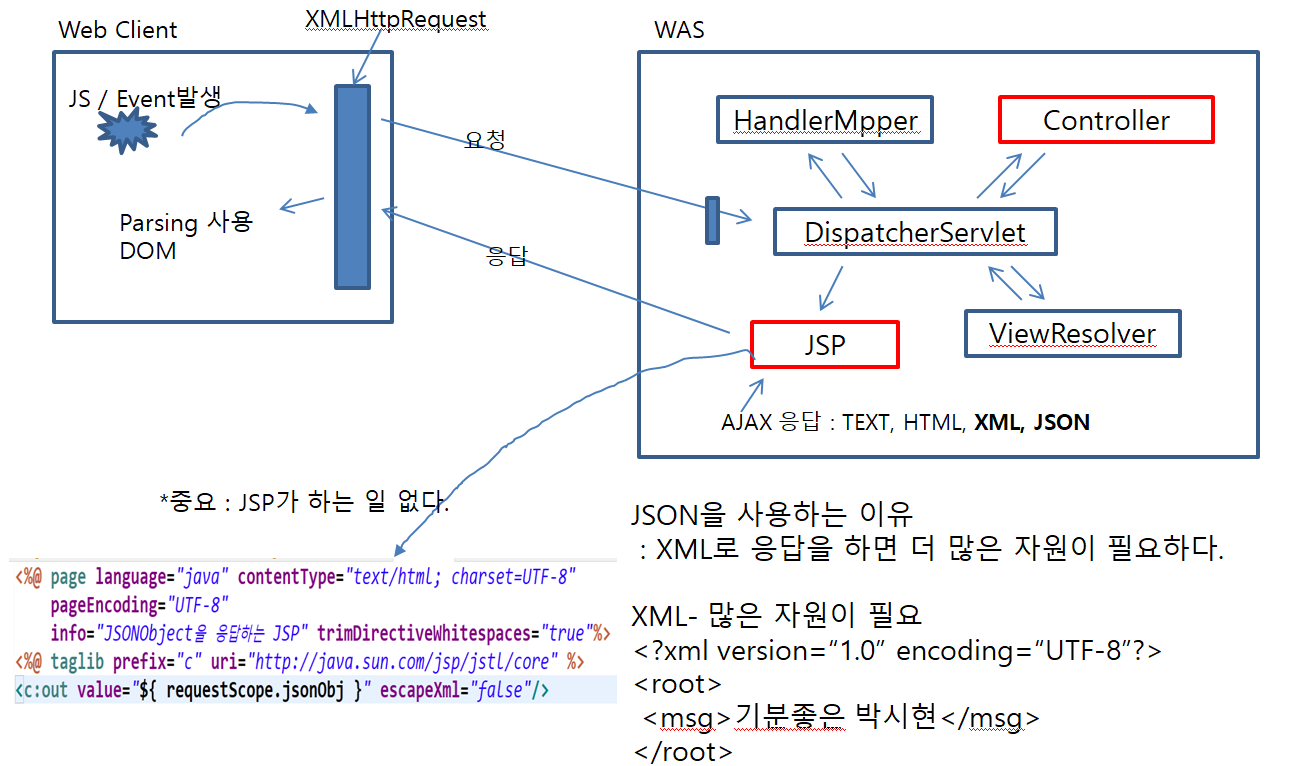
@ResponseBody
- 응답 JSP없이 Controller에서 발생한 데이터를 접속자에게 그대로 응답할 때 사용하는 annotation -> JSP를 만들 필요가 없다.!
- 사용법 )
- method 위에 @ResponseBody 정의

- 응답되는 한글이 깨진다면 @RequestMapping에 produces="application/json;charset=UTF-8" 선언
@RequestMapping(value="요청URL",method=GET,produces="application/json;charset=UTF-8")
@ExceptionHandler
-
Controller method에서 예외가 발생되고, throws로 예외가 던져지면 DispatcherServlet이 예외를 잡아서 처리한다.
- 개발자는 예외가 발생한 이후에 페이지를 지정할 수 없다.(개발자가 호출한 것이 아니기 때문에)
- 문제 : 예외 메시지가 그대로 노출된다. : DD의 <error-page>설정으로 처리할 수도 있다.
-
Controller안에서 다른 method의 예외를 처리할 수 있는 method를 정의할 때 사용
-
사용법 )
- 예외를 throws 하는 요청 method를 정의한다.
- 예외 처리 method
- @ExceptionHandler(예외처리클래스.class)를 method위에 선언
- method의 매개변수로 예외처리클래스를 선언.
- method안에서 예외가 발생했을 때 처리할 코드를 기술.
- ModelAndView를 생성하여 예외처리객체와 view페이지명을 설정하여 반환.
- 예외 처리 method
- 예외를 throws 하는 요청 method를 정의한다.
-
같은 종류의 예외를 여러 method에서 발생하더라도 하나의 @ExceptionHandler를 정의 method로 통합되어 처리된다.
@Controller
public class TestController(){
		//요청 method가 달라도 하나의 처리 method로 통합되어 예외가 처리된다.
    @GetMapping(...)
    public String methodA() throws SQLException{
        예외발생예상코드
    }//methodA

    @GetMapping(...)
    public String methodB() throws SQLException{
        예외발생예상코드
    }//methodB

    @ExceptionHandler(SQLException.class)
    //@ExceptionHandler에 정의된 예외만 잡고 다른예외는 잡지않는다.
    //ExceptionHandler에 정의된 예외는 DispatcherServlet에서 잡지 않는다.
    public ModelAndView exceptionMethod(SQLException se){
        예외처리코드
        ModelAndView mav = new ModelAndView();
        //ModelAndView는 예외처리할때 아니면 잘 사용하지 않는다.
        mav.setViewName("view명");
        mav.addObject("이름",view페이지 전달할 예외의 정보);

        return mav;
    }
}