
Java에서 this는 자주 보이지만 제대로 이해하지 못하는 경우가 많았다.. (까먹어서..)
이 글에서는 this가 어떤 의미인지, 어떻게 쓰이는지 예제로 정리해보겠다!
this란?
this는 현재 객체를 가리킨다.
| 용도 | 예시 | 설명 |
|---|---|---|
| 인스턴스 변수 참조 | this.x = x; | 매개변수와 인스턴스 변수 이름이 같을 때 구분 |
| 같은 클래스의 다른 생성자 호출 | this(값); | 오버로딩된 생성자 호출 |
| 람다 표현식 내부에서 외부 객체 참조 | ClassName.this | 외부 클래스 참조 시 사용 |
인스턴스 변수 참조
Class
class MyClass {
    int a;

    MyClass(int a) {
        a = a;  // 둘 다 매개변수 a를 가리킴
    }

    void print() {
        System.out.println(a);
    }
}
Main
public class Main {
    public static void main(String[] args) {
        MyClass obj = new MyClass(10);
        obj.print();
    }
}
이런 코드가 있을 때, 출력 결과는 어떻게 될까?
00이 나온다.
this를 사용하지 않으면,
a는 둘다 매개변수 a를 가리키기 때문이다.
그래서 아래와 같이 this.a라고 해서 자기 자신 객체의 인스턴스 변수를 가리켜서 저장해야 한다.
    MyClass(int a) {
          // 인스턴스 변수 a
          // ↓
        this.a = a;  // 인스턴스 변수 a에 매개변수 a를 대입
        	  // ↑
			  // 매개변수 a
    }
그렇게 하면 아래와 같이 매개변수 a로 초기화된 값 10이 제대로 나온다!
super와의 관계
- super는 부모 클래스의 생성자나 멤버를 참조할 때 사용된다.
- this()와 super()는 동시에 사용할 수 없다. 생성자 내에서 가장 첫 줄에만 한 번 사용할 수 있다.
Class
class Parent {
    int x;

    Parent() {
        this(1);  // 같은 클래스 내 다른 생성자 호출
        System.out.println("2. Parent Class의 기본 생성자 호출");
    }

    Parent(int x) {
        this.x = x;
        System.out.println("1. this()를 통한 Parent Class 생성자 호출, x = " + x);
    }
}

class Child extends Parent {
    int x;

    Child() {
        this(3);  // 자식 클래스의 다른 생성자 호출
        System.out.println("4. Child() 생성자 호출");
    }

    Child(int x) {
        super();     // 부모 클래스 기본 생성자 호출
        this.x = x;
        System.out.println("3. this()를 통한 Child Class 생성자 호출, x = " + x);
    }

    int getX() {
        return this.x;
    }

    int getParentX() {
        return super.x;
    }
}
main
class Main {
    public static void main(String[] args) {
        Child c = new Child();
        System.out.println("Child x: " + c.getX());
        System.out.println("Parent x: " + c.getParentX());
    }
}
이때 출력은 어떻게 될까?
한 번 코드 흐름을 따라가면서 출력을 예상해보자!
출력 결과
1. this()를 통한 Parent Class 생성자 호출, x = 1
2. Parent Class의 기본 생성자 호출
3. this()를 통한 Child Class 생성자 호출, x = 3
4. Child() 생성자 호출
Child x: 3
Parent x: 1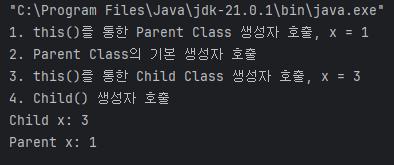
코드 흐름을 한 번 따라가보자
실행 순서
Child() -> this(3)
Child(int x(3)) -> super()
Parent() -> this(1)
Parent(int x(1))
1. Child c = new Child();
Child() 호출
-> 내부에서 this(3) 호출
-> Child(int x) 생성자 실행
2. Child(int x) 내부
super() 호출
-> Parent() 생성자 실행
3. Parent() 내부
this(1) 호출
-> Parent(int x) 생성자 실행
-> this.x = x; Parent의 인스턴스 변수 x에 매개변수로 넘겨 받은 1 저장
-> System.out.println("1. this()를 통한 Parent Class 생성자 호출, x = " + x); 출력
4. Parent() 생성자 내부
System.out.println("2. Parent Class의 기본 생성자 호출"); 출력
5. Child(int x) 생성자 내부
this.x = x; Child의 인스턴스 변수 x에 매개변수로 넘겨 받은 3 저장
-> System.out.println("3. this()를 통한 Child Class 생성자 호출, x = " + x); 출력
6. Child() 생성자 내부
System.out.println("4. Child() 생성자 호출"); 출력
그리고 3, 5 단계에서 인스턴스 변수에 저장한 x의 값들을 각각 메서드를 통해서 출력한다
🙄부모 생성자가 두 번 호출되지는 않는가?
자식 생성자 내부에서 super()로 직접 호출했기 때문에 부모 생성자가 자동으로 또 호출되지 않는다.
이 글에서 부모 클래스 생성자의 자동 호출에 대해서 다뤄놓았다.