이진 트리 탐색 => 탐색을 효율적으로 할 수 있도록 트리로 구축 (자식 노드가 최대 2)
이진 탐색 트리 구축 방법 -> 특정한걸 찾는거
(탐색 트리의 대상) 데이터가 3 -> 4 -> 2 -> 8 -> 9 -> 7 -> 1 순서로 들어온다고 생각하고 이를 (이진탐색트리) 구축하시요.
이진 탐색 트리는 데이터 크기를 따져서 나열한다.
(왼쪽 자식노드에는 데이터가 작은것, 오른쪽 자식 노드에는 데이터가 큰것) 부모노드 기준!!!
기준 : 3 -> 4 -> 2 -> 8 -> 9 -> 7 -> 1
1. 최초의 데이터는 루트 노드가 된다. 3을 이진트리에 루트 노드에 추가

- 삽입하는 데이터가 4이다. 루트(부모)노드 보다 크므로 오른쪽
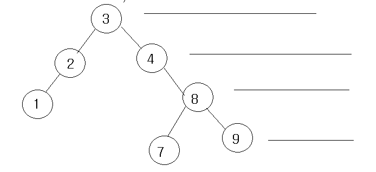
이진트리 탐색은 시간 복잡도면에서 효율적이다.
시간 복잡도 문제는 정렬인 경우가 많다.
완전(균형) 이진 탐색 트리 => AVL 트리, 레드-블랙 트리 등으로 구분하여 부른다.
예상 대진표 문제
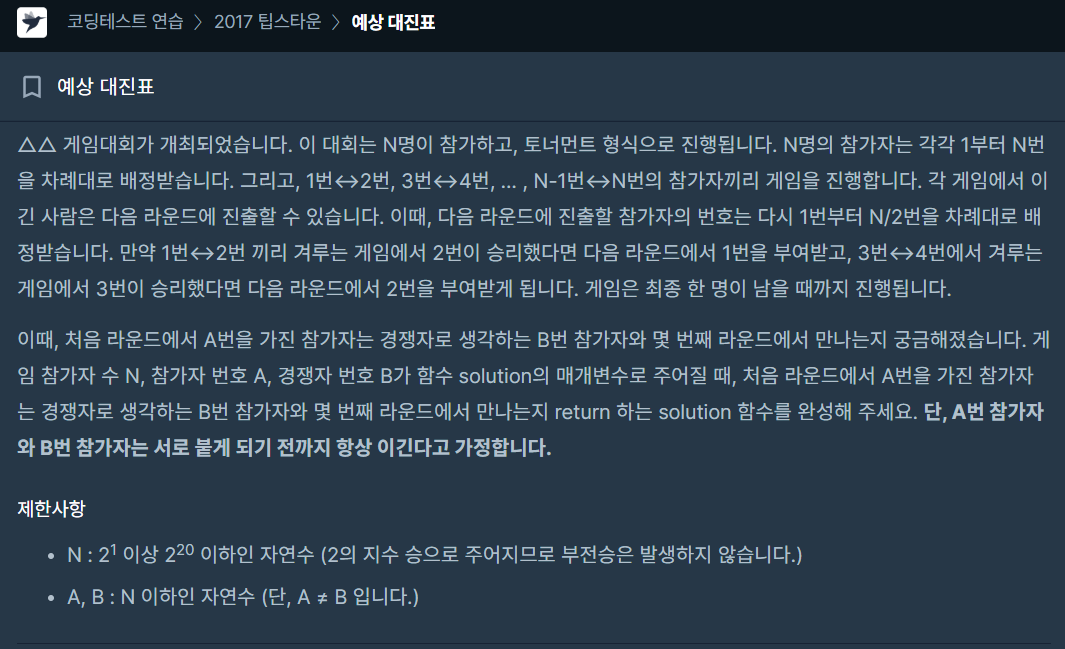
확률 구하는 문제인듯?? 토너먼트 최종이니 삼각형 모형으로 이진트리로 예측할 수 있다.
N = 1 2 3 4 5 6 7 8
A = 4
B = 7
import java.lang.reflect.Array;
import java.util.*;
class Main {
    public int solution(int n , int a, int b){
        int count = 0;
        while (a != b){
            a = (a/2) + (a % 2);
            b = (b/2) + (b % 2);
            count++;
        }
        return count;
    }

    public static void main(String[] args){
        Main T = new Main();
        Scanner kb = new Scanner(System.in);
        int n=kb.nextInt();
        int a=kb.nextInt();
        int b=kb.nextInt();
        System.out.print(T.solution(n, a, b));
    }
}- a/2 + a%2의 의미
이 연산은 다음 라운드에서 참가자가 받을 번호를 계산하는 방법이다.
코딩테스트 연습 - 길찾기 게임
이 문제는 전위순회/ 후위순회한 결과를 반환하면된다.
이건 긴말 생략 계속 반복 학습하면서 트리 노드 구하는거 이해해야될것 같다..
import java.util.*;

class Main {
    int[][] result;
    int idx;
    public int[][] solution(int[][] nodeInfo) {
        //노드 배열을 초기화하고 각 노드를 입력받는다.
        Node[] node = new Node[nodeInfo.length];
        for (int i = 0; i < nodeInfo.length; i++) {
            node[i] = new Node(nodeInfo[i][0], nodeInfo[i][1], i+1, null, null);
        }
        // y값 큰 순서대로, y값 같다면 x 값 작은 순서대로 정렬
        // -> 이진트리의 형태 구성하는 문제이기에 y값(높이) 기준으로 내림차순
        // y값이 클수록 해당 노드는 트리에서 상위 레벨에 위치하기 위해
        Arrays.sort(node, new Comparator<Node>() {
            @Override
            public int compare(Node n1, Node n2) {
                if(n1.y == n2. y) return n1.x - n2.x;
                else{
                    return n2.y - n1.y;
                }
            }
        });

        // 트리를 만든다.
        Node root = node[0];
        for (int i = 1; i < node.length; i++) {
            insertNode(root, node[i]);
        }
        result = new int[2][nodeInfo.length];
        idx = 0;
        preorder(root); // 전위 순회
        idx =0;
        postorder(root); // 후위 순회
        return result;
    }

    public void insertNode(Node parent, Node child){
        if(parent.x > child.x){
            // 부모의 x 값이 자식의 x 값보다 크다면 왼쪽 서브트리로 삽입
            if(parent.left == null) parent.left = child;
            else insertNode(parent.left, child); // 왼쪽 서브트리로 재귀 호출
        }else{
            // 부모의 x 값이 자식의 x 값도 크지 않다면 오른쪽 서브트리로 삽입
            if(parent.right == null) parent.right = child;
            else insertNode(parent.right, child); // 오른쪽 서브트리로 재귀 호출
        }
    }
    public void  preorder(Node root){
        if(root != null){
            result[0][idx++] = root.value;
            preorder(root.left);
            preorder(root.right);
        }
    }

    public void postorder(Node root){
        if(root != null){
            postorder(root.left);
            postorder(root.right);
            result[1][idx++] = root.value;
        }
    }

    public static void main(String[] args) {
        Main T = new Main();
        int[][] nodeInfo = {
                {5,3},{11,5},{13,3}, {3,5}, {6,1},
                {1,3}, {8,6}, {7,2}, {2,2}
        };
        int[][] resultArrays = T.solution(nodeInfo);
        // solution 메소드 호출
        System.out.println(Arrays.deepToString(resultArrays));
    }
    public class Node{
        int x;
        int y;
        int value;
        Node left;
        Node right;

        public Node(int x, int y, int value, Node left, Node right){
            this.x = x;
            this.y = y;
            this.value = value;
            this.left = left;
            this.right= right;
        }
    }
}
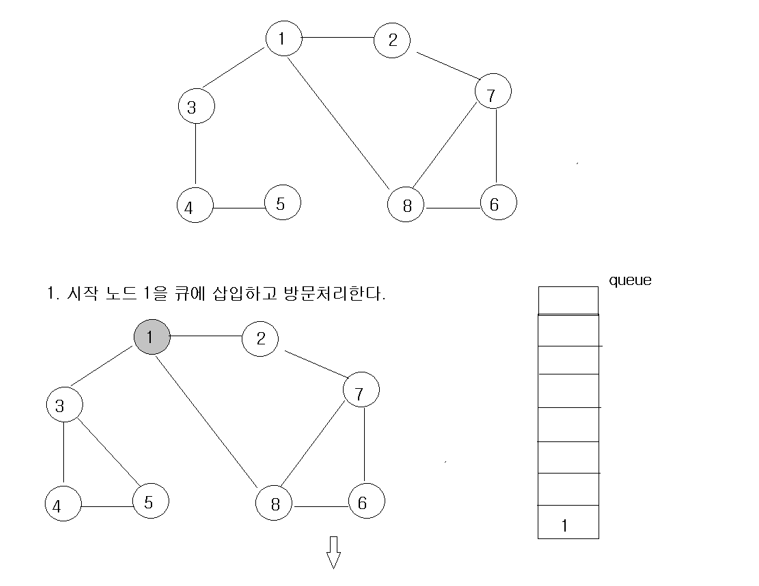
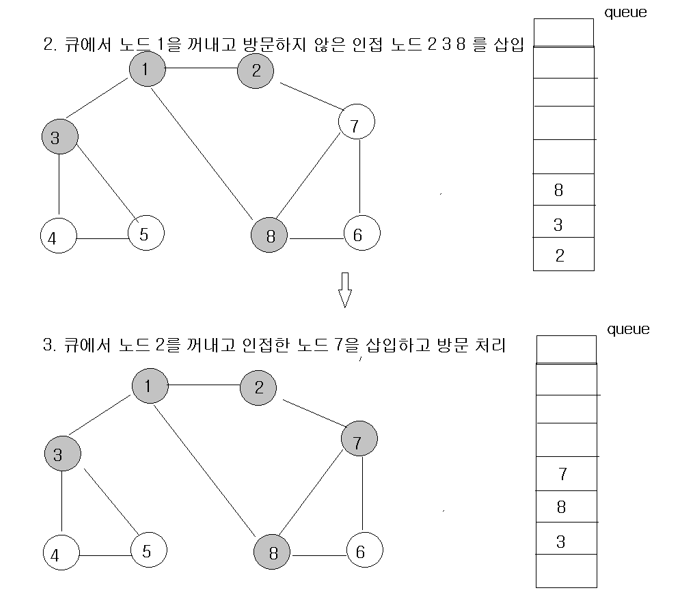
BFS (너비 우선 탐색 => 가까운 노드부터 탐색하는 알고리즘)
(* DFS => 최대한 멀리 있는 노드를 우선으로 탐색하는 방법)
- 탐색 시작 노드를 큐에 삽입 (비어있는 큐 생성!!!)
- 큐에서 노드를 꺼내서 해당 노드의 인접 노드 중에서 방문하지 않은 노드를 모두 큐에 삽입
- 위의 2번 과정을 반복적으로 더 이상 수행할 수 없을 때까지 반복한다.
너비는 인접 모드 다 넣는다!!!
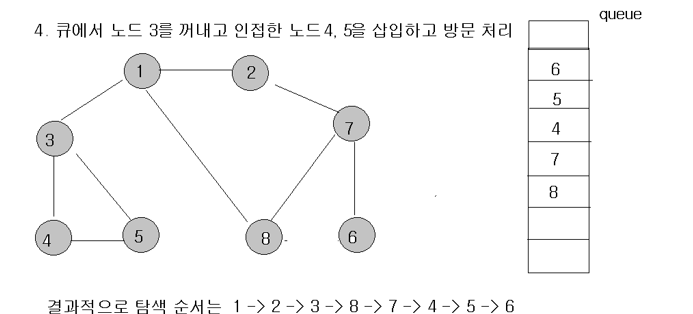
import java.util.ArrayDeque;
import java.util.ArrayList;

public class Solution {
    private static ArrayList<Integer>[] addList;
    private static boolean[] visited;
    private static  ArrayList<Integer>  answer;

    public static void main(String[] args) {

    }
    private static int[] solution(int[][] graph, int start, int n){
    addList = new ArrayList[n + 1];
        for (int i = 0; i < addList.length; i++) {
            addList[i] = new ArrayList<>();
        }
        for (int[] edge: graph) {
            addList[edge[0]].add(edge[1]);
        }

        visited = new boolean[n +1];
        answer = new ArrayList<>();
        bfs(start);

        return  answer.stream().mapToInt(Integer::intValue).toArray();
    }
    private static void bfs(int start){
        ArrayDeque<Integer> queue = new ArrayDeque<>();
        queue.add(start);
        visited[start] = true;

        while (!queue.isEmpty()){
            int now = queue.poll();
            answer.add(now);

            for (int next: addList[now] ){
                if(!visited[next]){
                    queue.add(next);
                    visited[next] = true;
                }
            }
        }
    }
}

짧고 강력하게!