- python3
📎 Problem
Given a reference of a node in a connected undirected graph.
Return a deep copy (clone) of the graph.
Each node in the graph contains a value (int) and a list (List[Node]) of its neighbors.
class Node {
    public int val;
    public List<Node> neighbors;
}
Test case format:
For simplicity, each node's value is the same as the node's index (1-indexed). For example, the first node with val == 1, the second node with val == 2, and so on. The graph is represented in the test case using an adjacency list.
An adjacency list is a collection of unordered lists used to represent a finite graph. Each list describes the set of neighbors of a node in the graph.
The given node will always be the first node with val = 1. You must return the copy of the given node as a reference to the cloned graph.
Example 1:
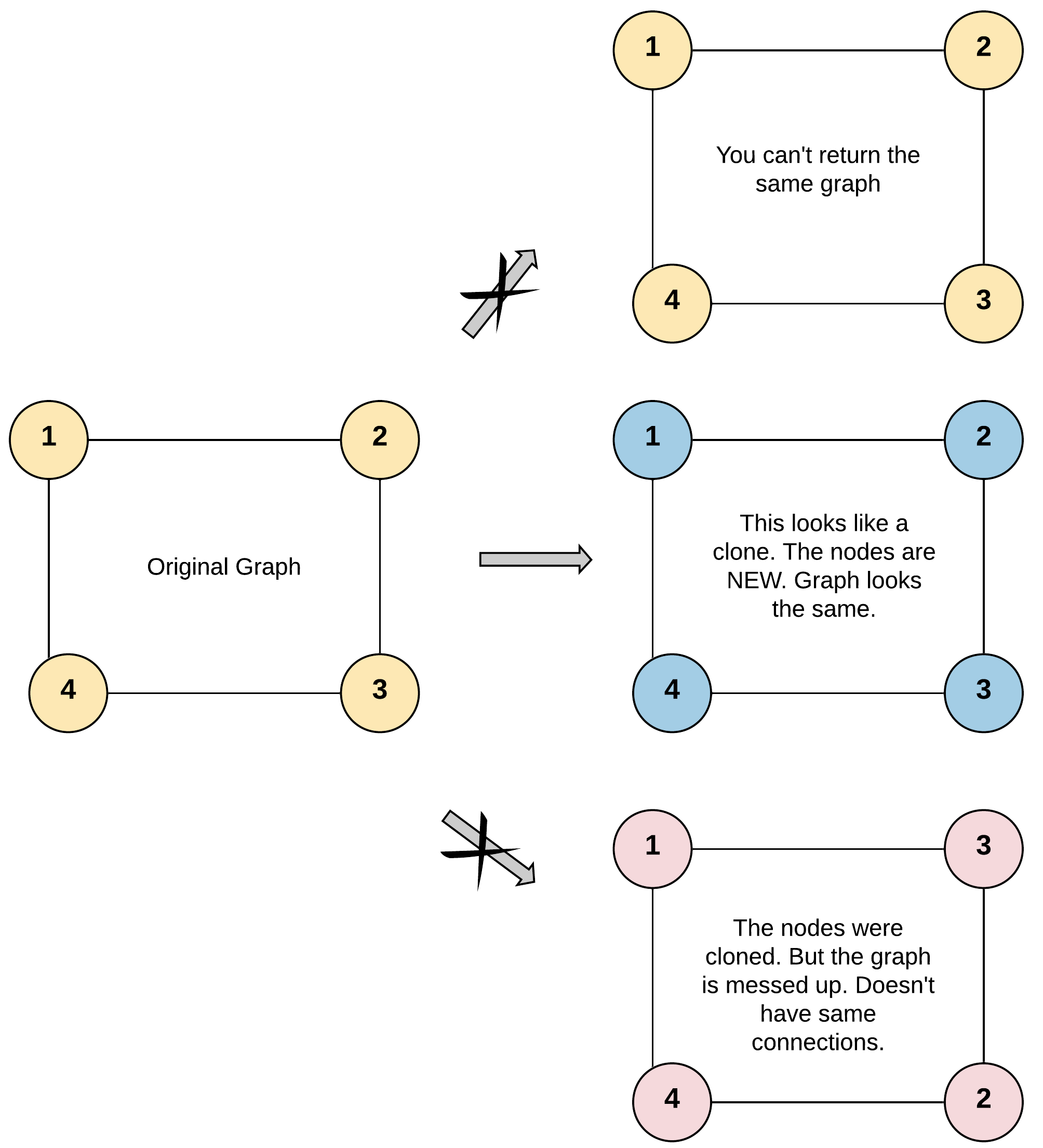
Input: adjList = [[2,4],[1,3],[2,4],[1,3]]
Output: [[2,4],[1,3],[2,4],[1,3]]
Explanation: There are 4 nodes in the graph.
1st node (val = 1)'s neighbors are 2nd node (val = 2) and 4th node (val = 4).
2nd node (val = 2)'s neighbors are 1st node (val = 1) and 3rd node (val = 3).
3rd node (val = 3)'s neighbors are 2nd node (val = 2) and 4th node (val = 4).
4th node (val = 4)'s neighbors are 1st node (val = 1) and 3rd node (val = 3).
Example 2:
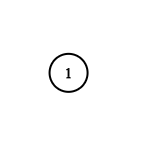
Input: adjList = [[]]
Output: [[]]
Explanation: Note that the input contains one empty list. The graph consists of only one node with val = 1 and it does not have any neighbors.
Example 3:
Input: adjList = []
Output: []
Explanation: This an empty graph, it does not have any nodes.
Constraints:
- The number of nodes in the graph is in the range [0, 100].
- 1 <= Node.val <= 100
- Node.val is unique for each node.
- There are no repeated edges and no self-loops in the graph.
- The Graph is connected and all nodes can be visited starting from the given node.
Plan Solution
Code
"""
# Definition for a Node.
class Node:
    def __init__(self, val = 0, neighbors = None):
        self.val = val
        self.neighbors = neighbors if neighbors is not None else []
"""

from typing import Optional
class Solution:
    def cloneGraph(self, node: Optional['Node']) -> Optional['Node']:

        if not node: return node

        # 큐에 주어진 그래프 노드 넣기
        # 딕셔너리에 루트 노드 넣기
        q, clones = deque([node]), {node.val: Node(node.val, [])}

        while q:
            # 큐에서 노드 꺼내기
            cur = q.popleft()
            # clones에서 현재값을 인덱스로 Node 가져오기
            cur_clone = clones[cur.val]

            # 노드의 이웃 방문
            for ngbr in cur.neighbors:
                # 이웃이 clone 값에 없다면 클론에 새로 노드 추가
                # 방문할 큐에 이웃 넣기
                if ngbr.val not in clones:
                    clones[ngbr.val] = Node(ngbr.val, [])
                    q.append(ngbr)

                # 현재 클론의 이웃에 새로 만든 이웃 노드를 넣기
                cur_clone.neighbors.append(clones[ngbr.val])

        # 만든 클론의 첫 루트 노드를 리턴
        return clones[node.val]
Result
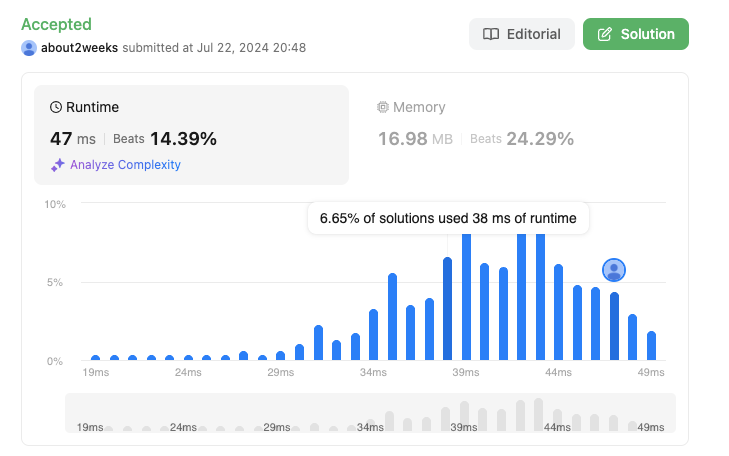
- Time Complexity : O(V+E), V for vertices and E for edges.
- Space Complexity : O(V+E)

알쏭달쏭혀요