- python3
Probelm
Given head, the head of a linked list, determine if the linked list has a cycle in it.
There is a cycle in a linked list if there is some node in the list that can be reached again by continuously following the next pointer. Internally, pos is used to denote the index of the node that tail's next pointer is connected to. Note that pos is not passed as a parameter.
Return true if there is a cycle in the linked list. Otherwise, return false.
Example 1:
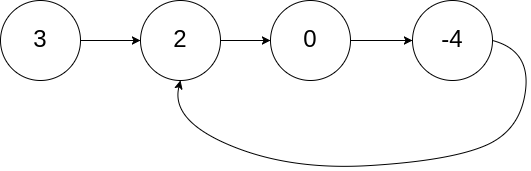
Input: head = [3,2,0,-4], pos = 1
Output: true
Explanation: There is a cycle in the linked list, where the tail connects to the 1st node (0-indexed).
Example 2:
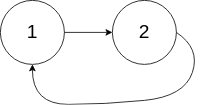
Input: head = [1,2], pos = 0
Output: true
Explanation: There is a cycle in the linked list, where the tail connects to the 0th node.
Example 3:

Input: head = [1], pos = -1
Output: false
Explanation: There is no cycle in the linked list.
Constraints:
- The number of the nodes in the list is in the range [0, 104].
- -105 <= Node.val <= 105
- pos is -1 or a valid index in the linked-list.
Follow up: Can you solve it using O(1) (i.e. constant) memory?
Pseudocode
First Solution
- Set two Pointers: one for the slow pointer which is move one step and one for the fast pointer which is move two steps.
- If there is a cycle, fast pointer and slow pointer will meet someday. Then return True.
- Else, return False.
Second Solution
- Make hash.
- Move and add visit node to hash.
- If this node is visited, return True. Else, return False.
Code
First Solution
# Definition for singly-linked list.
# class ListNode:
#     def __init__(self, x):
#         self.val = x
#         self.next = None

class Solution:
    def hasCycle(self, head: Optional[ListNode]) -> bool:

        if head is None:
            return False
        if head.next is None:
            return False

        slowCurrent = head
        fastCurrent = head.next

        while fastCurrent.next!=slowCurrent.next:
            if fastCurrent.next is None:
                return False
            if fastCurrent.next.next is None:
                return False
            slowCurrent = slowCurrent.next
            fastCurrent = fastCurrent.next.next


        return True
# Definition for singly-linked list.
# class ListNode:
#     def __init__(self, x):
#         self.val = x
#         self.next = None

class Solution:
    def hasCycle(self, head: Optional[ListNode]) -> bool:

        slowCurrent = head
        fastCurrent = head

        while fastCurrent and fastCurrent.next:
            slowCurrent = slowCurrent.next
            fastCurrent = fastCurrent.next.next
            if slowCurrent == fastCurrent:
                return True

        return False
Second Solution
# Definition for singly-linked list.
# class ListNode:
#     def __init__(self, x):
#         self.val = x
#         self.next = None

class Solution:
    def hasCycle(self, head: Optional[ListNode]) -> bool:

        visited_nodes = set()
        current_node = head
        while current_node:
            if current_node in visited_nodes:
                return True
            visited_nodes.add(current_node)
            current_node = current_node.next
        return False
Result
First Solution

- Time Complexity: O(n)
- Space Complexity : O(1)
Second Solution
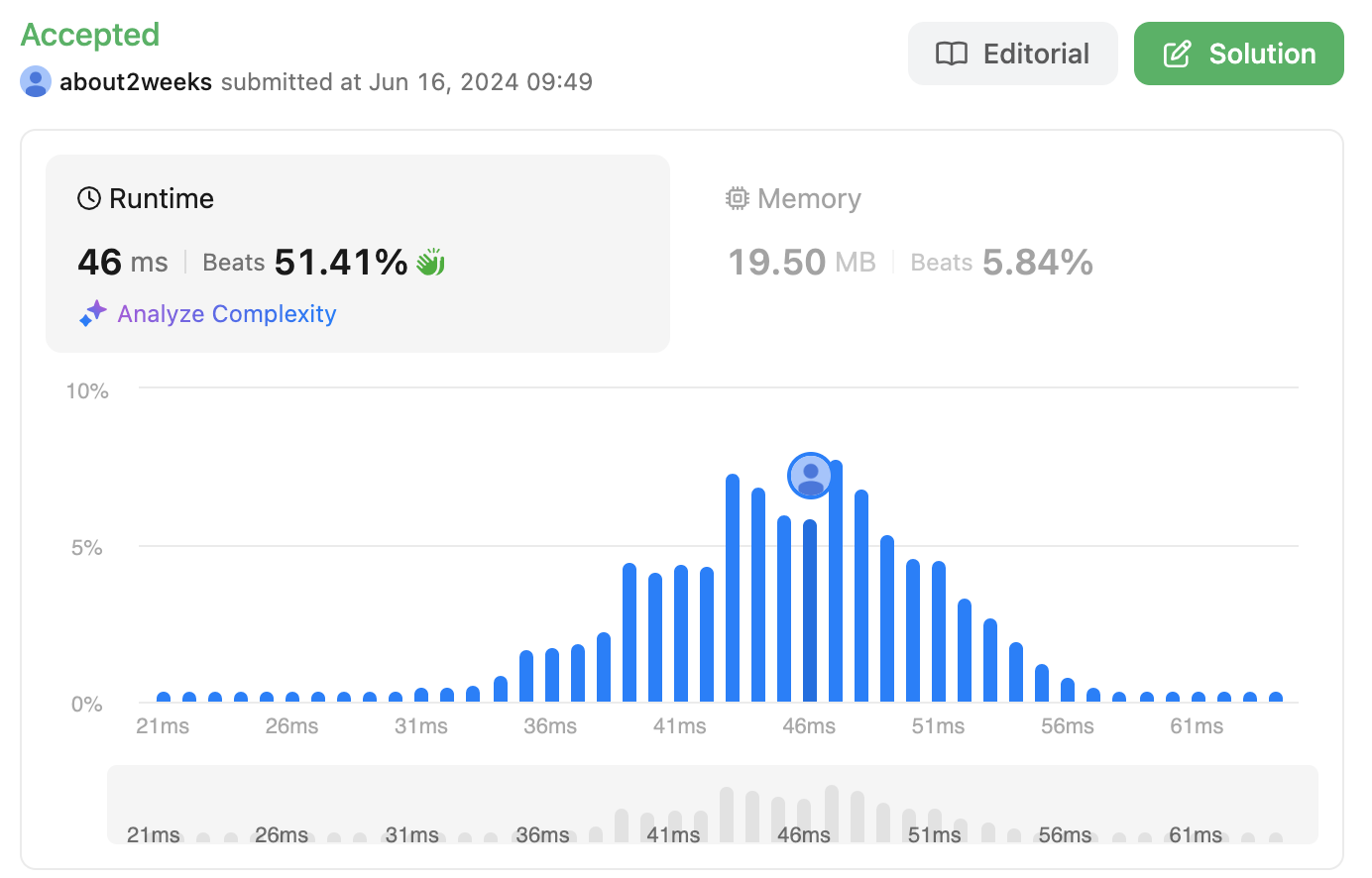
- Time Complexity : O(n)
- Space Complexity : O(n)

알쏭달쏭혀요