AWS Regions & AZ

AWS Global Infrastructure
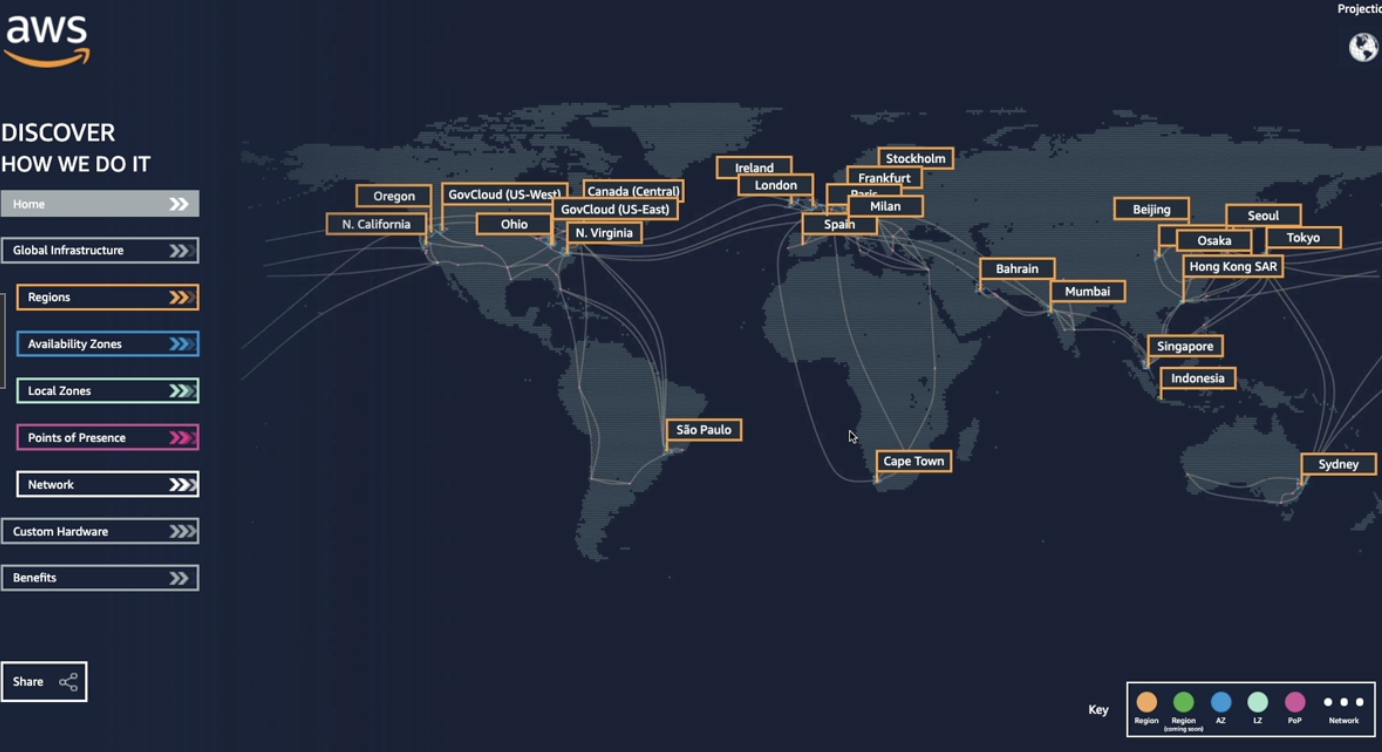
- AWS Regions
- AWS Availability Zones
- AWS Data Centers
- AWS Edge Locations / Points of Presence
AWS Regions
- AWS has Regions all around the world
- A region is a cluser of data centers
- Most AWS services are region-scoped
Choosing AWS Regions
Where should I launch a new application?
Compliance
- Data governance and legal requirements
- Keep data local so that it does not leave a region without my explicit permission
Proximity
- Keep it close to customers to reduce latency
Available services
- New services are not available in every region
Pricing
- Pricing varies region to regions
AWS Availability Zones
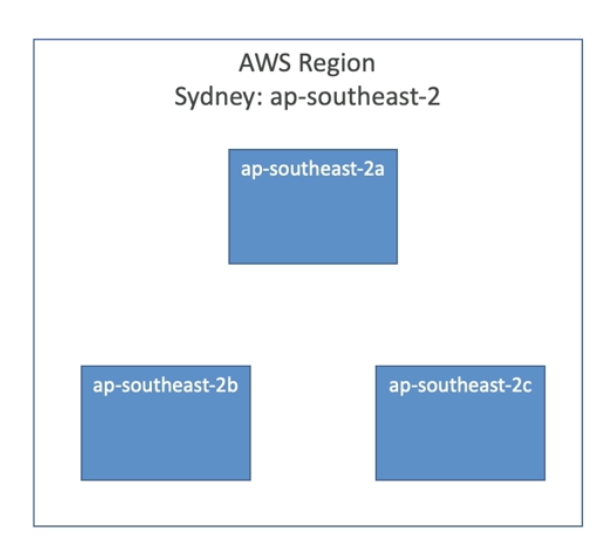
- Each regions has many availability zones (3 to 6)
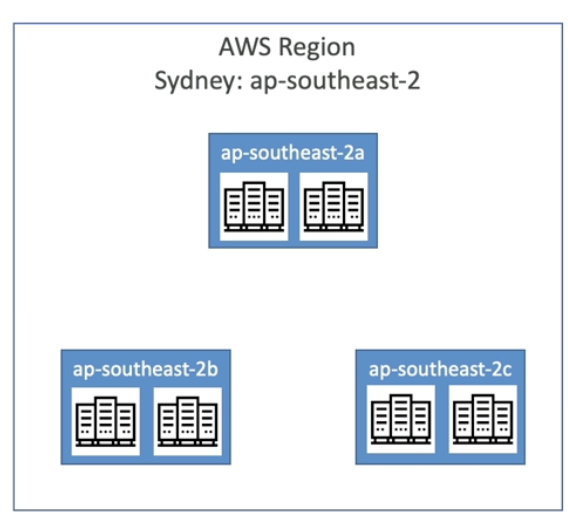
- Each AZ is one or more discrete data centers with power, netwokring, connectivity
- AZs are separate for each other, so isolated from disasters
- AZs are connected with high bandwidth, ultra-low latency networking forming a region
Region : AZ : Data Centers = 1 : N : M
AWS Points of Presence (Edge Locations)
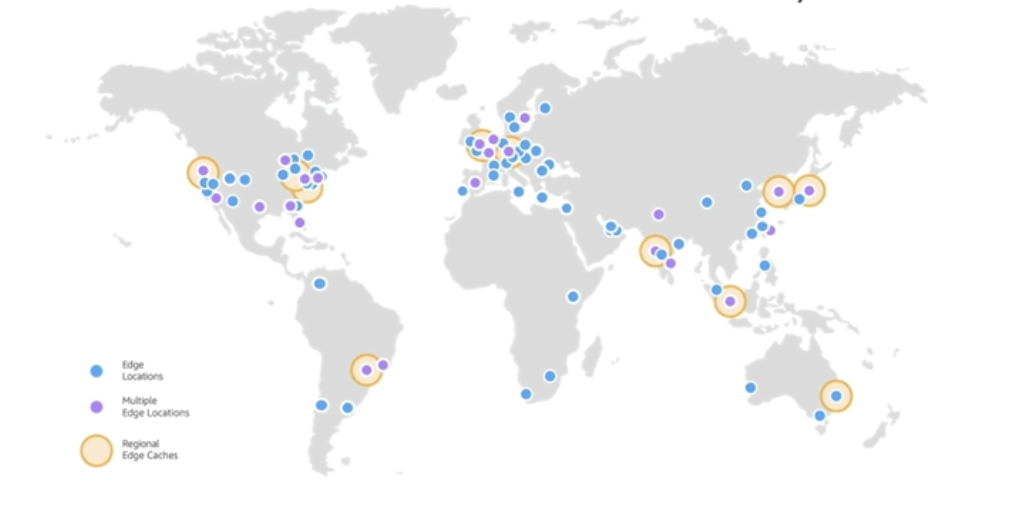
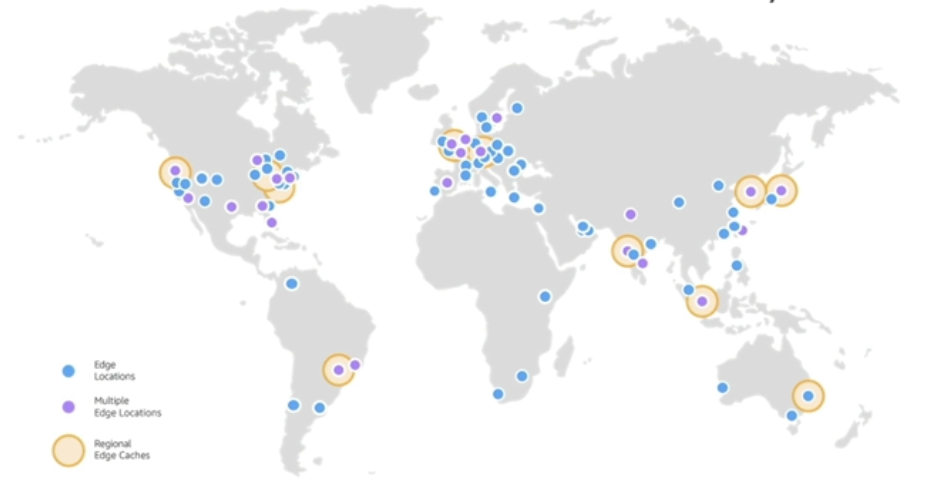
- 400+ Points of Presence (400+ Edge Locations & 10+ Regional Caches) in 90+ cities across 40+ countries
- Cache server of CDN services like CloudFront and Route 53 irregardless of Region and Availability zones
- Content is delivered to end users with low latency
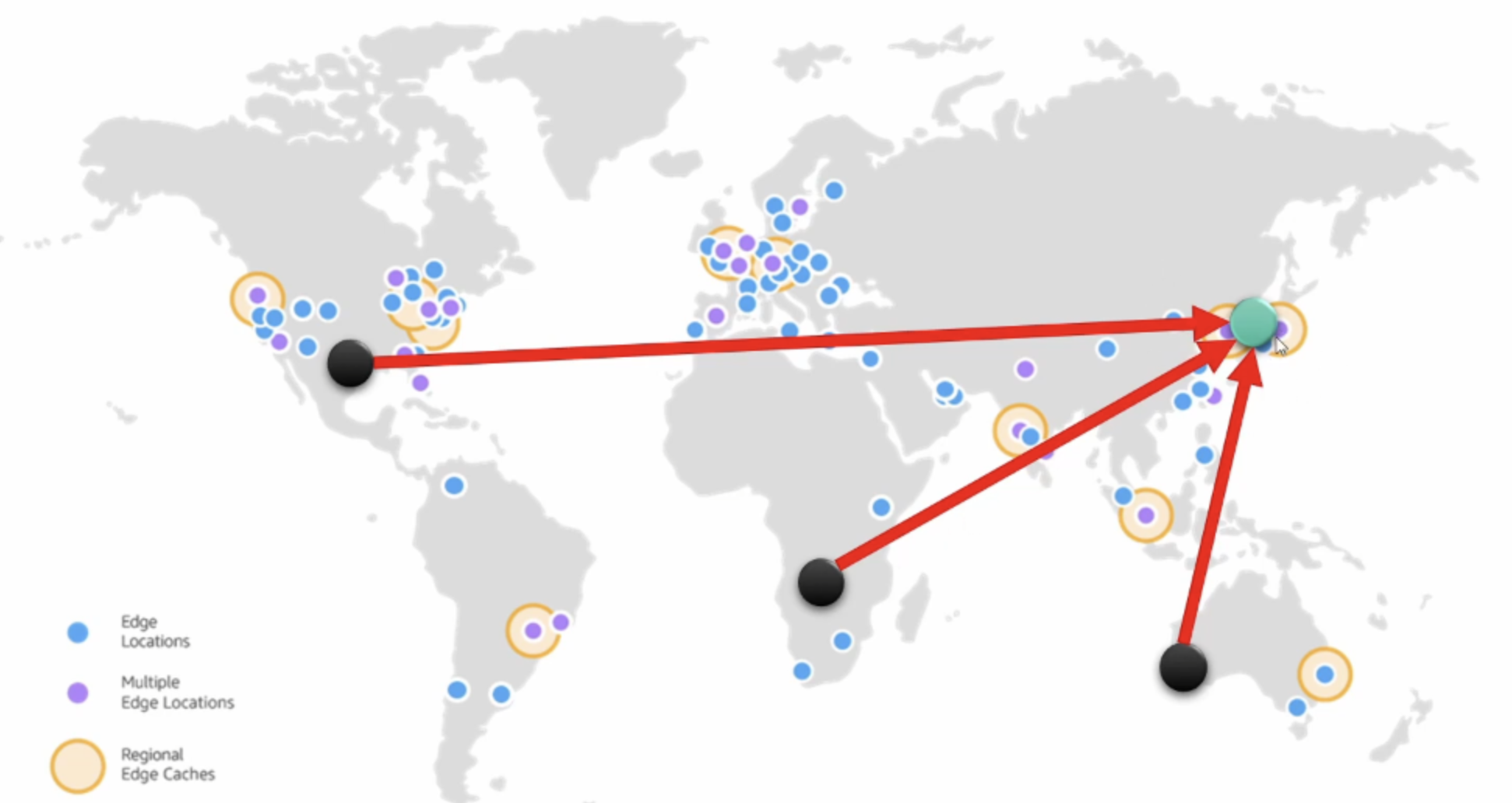
- It's too far for people in America, South Africa, and Australia too reach Korea Region
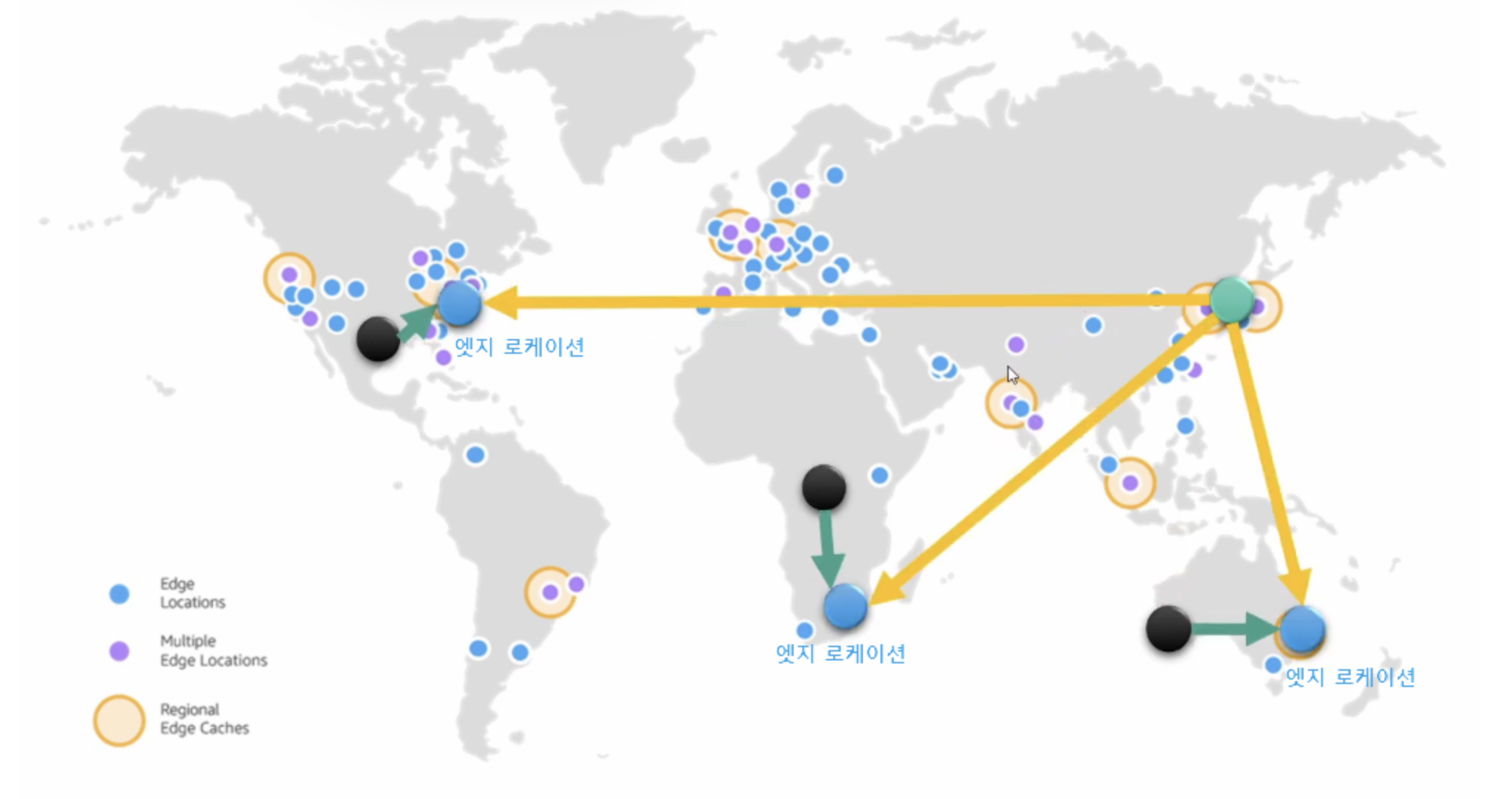
- Place edge locations (temporary data center) in those regions so that requested data are cached or copied
- Edge locations are physically close to people in those regions so contents are delivered fastly
Global Services
- IAM
- Route 53
- CloudFront
- WAF
Region-Scoped Services
- EC2
- EBS
- Lambda
- Rekognition

2023.08.21~