❓ 문제
정수를 저장하는 덱을 구현한 다음, 입력으로 주어지는 명령을 처리하는 프로그램을 작성하시오.
명령은 총 여덟 가지이다.
- 1 X: 정수 X를 덱의 앞에 넣는다. (1 ≤ X ≤ 100,000)
- 2 X: 정수 X를 덱의 뒤에 넣는다. (1 ≤ X ≤ 100,000)
- 3: 덱에 정수가 있다면 맨 앞의 정수를 빼고 출력한다. 없다면 -1을 대신 출력한다.
- 4: 덱에 정수가 있다면 맨 뒤의 정수를 빼고 출력한다. 없다면 -1을 대신 출력한다.
- 5: 덱에 들어있는 정수의 개수를 출력한다.
- 6: 덱이 비어있으면 1, 아니면 0을 출력한다.
- 7: 덱에 정수가 있다면 맨 앞의 정수를 출력한다. 없다면 -1을 대신 출력한다.
- 8: 덱에 정수가 있다면 맨 뒤의 정수를 출력한다. 없다면 -1을 대신 출력한다.
✔ 제한 사항
- 시간 제한 : 2초
- 메모리 제한 : 1024MB
📌 입출력 예 및 입출력 설명
-
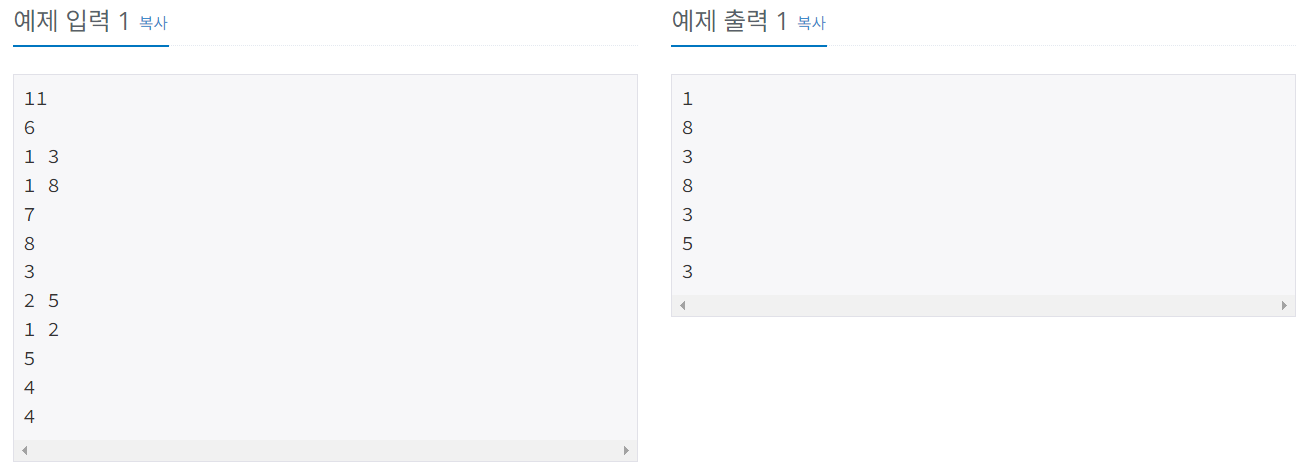
입력 : 첫째 줄에 명령의 수 N이 주어진다. (1 ≤ N ≤ 1,000,000)
둘째 줄부터 N개 줄에 명령이 하나씩 주어진다.
출력을 요구하는 명령은 하나 이상 주어진다. -
출력 : 출력을 요구하는 명령이 주어질 때마다 명령의 결과를 한 줄에 하나씩 출력한다.
💡 풀이 방법
- deque의 메소드를 이용하여 풀이
- 각각의 명령어와 맞는 메소드를 찾아서 로직을 구현함
🔑 코드
import java.io.*;
import java.util.*;

public class Main {
    public static void main(String[] args) throws IOException {
        BufferedReader br = new BufferedReader(new InputStreamReader(System.in));

        int n = Integer.parseInt(br.readLine());
        Deque<Integer> q = new LinkedList();
        StringBuilder sb = new StringBuilder();

        for(int i = 0; i<n; i++) {
            StringTokenizer stz = new StringTokenizer(br.readLine());
            int command = Integer.parseInt(stz.nextToken());

            if(command==1) {
                int pushNum = Integer.parseInt(stz.nextToken());
                q.push(pushNum);
            } else if(command==2) {
                int pushNum = Integer.parseInt(stz.nextToken());
                q.addLast(pushNum);
            } else if(command==3) {
                if(q.isEmpty()) {
                    sb.append(-1).append('\n');
                } else sb.append(q.pollFirst()).append('\n');
            } else if(command==4) {
                if(q.isEmpty()) {
                    sb.append(-1).append('\n');
                } else sb.append(q.pollLast()).append('\n');
            } else if(command==5) {
                sb.append(q.size()).append('\n');
            } else if(command==6) {
                if(q.isEmpty()) {
                    sb.append(1).append('\n');
                } else sb.append(0).append('\n');
            } else if(command==7) {
                if(q.isEmpty()) {
                    sb.append(-1).append('\n');
                } else sb.append(q.peek()).append('\n');
            } else if(command==8) {
                if(q.isEmpty()) {
                    sb.append(-1).append("\n");
                } else sb.append(q.peekLast()).append("\n");
            }
        }

        System.out.println(sb);
    }
}