목차
- 연산을 통해 새로운 Column 만들기
- 사칙연산, 합계와 평균, 데이터 갯수, 최솟값과 최댓값
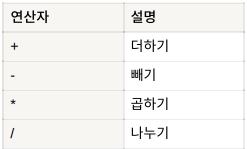
사칙연산
종류
예시
	select food_preparation_time,
	    delivery_time,
	    food_preparation_time + delivery_time as total_time
		// 두 값을 더한 값을 total_time이라는 Column으로 부르기
	from food_orders
합계와 평균
합계
- 사용 방법
sum(컬럼)평균
- 사용 방법
avg(컬럼)예시
	select sum(food_preparation_time) as total_food_preparation_time,
		   // 합계를 total_food_preparation_time이라는 Column으로 부르기
		avg(delivery_time) as avg_food_preparation_time
		// 평균을 avg_food_preparation_time이라는 Column으로 부르기
	from food_orders
데이터 갯수세기 : count(컬럼)
사용하는 경우
- 테이블 안의 모든 데이터의 개수를 구하고 싶을 경우 사용
사용 방법
count(1) 혹은 count(*) 사용예시
- count_of_orders : 전체 주문 수
- count_of_customers : 주문한 손님의 수
	select count(1) as count_of_orders,
		count(distinct customer_id) as count_of_customers
		// customer_id의 종류의 개수를 count_of_customers라는 Column으로 부르기
		// customer_id의 전체 개수가 아닌 종류의 개수를 구하고 싶을 때 distinct 사용
	from food_orders
데이터 중복 제거하기 : Distinct
- 중복을 제거하려고 할 때 사용
최솟값과 최댓값
최솟값
- 사용 방법
min(컬럼)최댓값
- 사용 방법
max(컬럼)예시
	select min(price) as min_price,
	       max(price) as max_price
	from food_orders
참고사항
- select에서 연산을 수행할 값을 사용할 경우
해당 Query에서 사용 가능한 Column이 생성되는데 as를 통해 별명을 지정해주지 않으면
이름은 연산식으로 되므로 가급적 별명을 지어주자

공부 기록 보관소