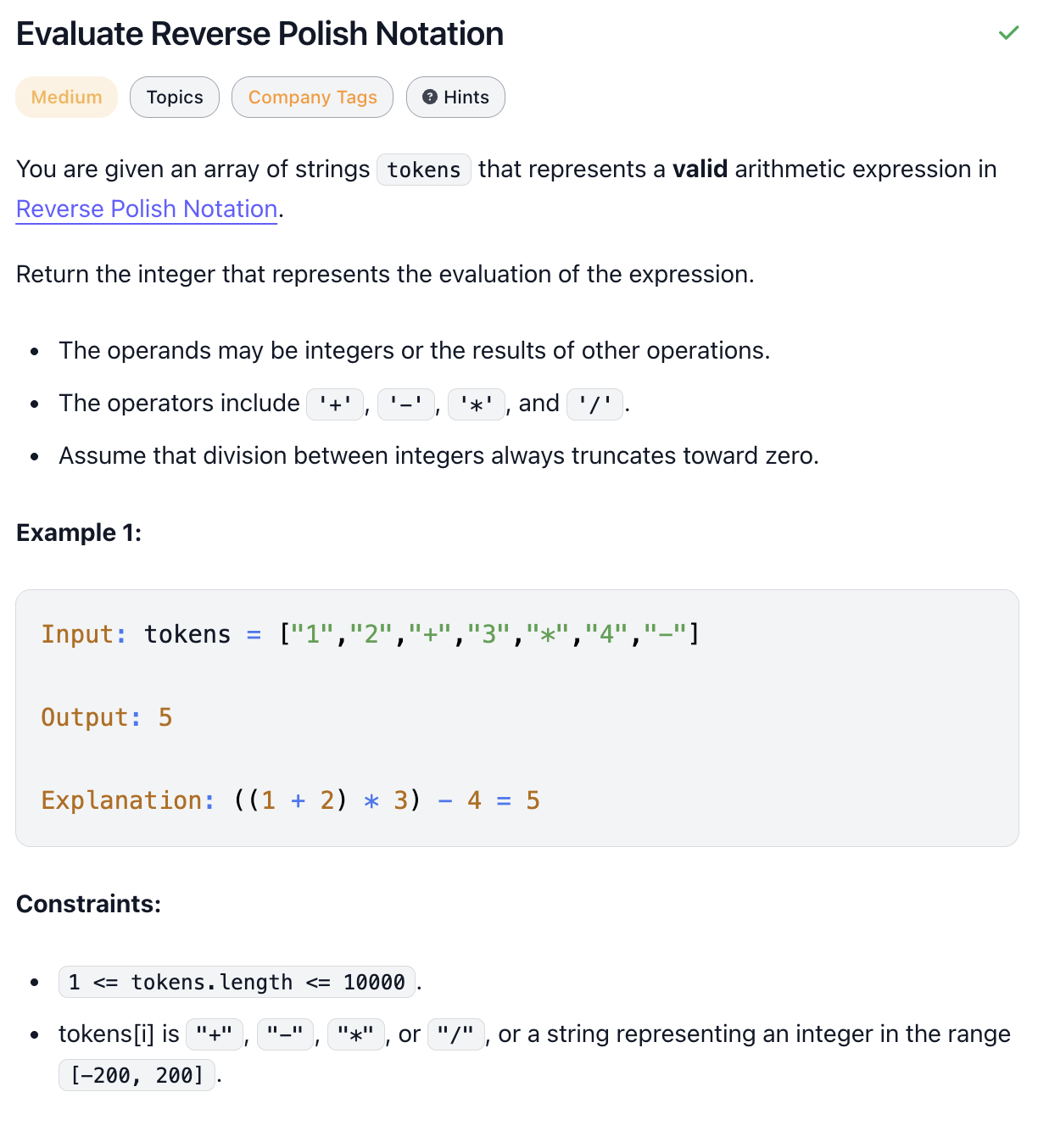
문제
C++ 정리
String/char Number
"7": 문자열 (String)'7': 문자 (Char)
| 변환 | 함수 / 연산식 | 비고 |
|---|---|---|
| String Int | std::stoi(str) | 문자열을 정수(int)로 변환 (String To Integer) |
| String Long Long | std::stoll(str) | 문자열을 큰 정수(long long)로 변환 (String To Long Long) |
| String Float | std::stof(str) | 문자열을 단정밀도 실수(float)로 변환 (String To Float) |
| String Double | std::stod(str) | 문자열을 배정밀도 실수(double)로 변환 (String To Double) |
| Number String | std::to_string() | 정수, 실수 등의 숫자를 문자열로 변환 |
| Char Number | c - '0' | 숫자 문자의 ASCII 값에서 '0'(48)을 빼서 정수로 변환 |
| Number Char | num + '0' | 0~9 사이의 정수에 '0'(48)을 더해 숫자 문자로 변환 |
최종 코드
class Solution {
public:
    int evalRPN(vector<string>& tokens) {
        stack<int> st;
        int x1, x2;

        for (auto& c : tokens) {
            if (c == "*" || c == "/" || c == "+" || c == "-") {
                x2 = st.top(); st.pop();
                x1 = st.top(); st.pop();
                if (c == "*") st.push(x1*x2);
                else if (c == "/") st.push(x1/x2);
                else if (c == "+") st.push(x1+x2);
                else if (c == "-") st.push(x1-x2);
            }
            else st.push(stoi(c));
        }

        return st.top();
    }
};
풀이
- 스택 사용해서 왼 → 오 읽기
- 숫자는 스택에 push
- 연산자일 경우
- 스택에서 숫자 2개 pop
- 연산 결과를 다시 스택에 넣기 - 스택의 top 이 최종 연산 결과가 됨
코드 개선하기
class Solution {
public:
    int evalRPN(vector<string>& tokens) {
        stack<int> st;
        int x1, x2;

        for (const auto& c : tokens) {
            if (c == '*' || c == '/' || c == '+' || c == '-') {
                x2 = st.top(); st.pop();
                x1 = st.top(); st.pop();

                switch (c) {
                    case '*': st.push(x1*x2); break;
                    case '/': st.push(x1/x2); break;
                    case '+': st.push(x1+x2); break;
                    case '-': st.push(x1-x2); break;
                }
            }
            else st.push(stoi(token));
        }

        return st.top();
    }
};
for (auto& c : tokens)대신for (const auto& token : tokens)를 사용: 문자열 복사 비용 방지(읽기 전용 reference)switch문 사용:if-else중복 검사를 줄이고 가독성 좋아짐
기록하는 블로그
데구리님 for 문 안에는 switch 안쓰는게 좋긴해여.
왜냐구요?