패스트 캠퍼스 컴퓨터 공학 all in one 패키지. C
동적 메모리 할당
동적 메모리 할당의 개념
- 일반적으로 C언어에서 배열의 경우 사전에 적절한 크기만큼 할당해 주어야 한다.
- 우리가 원하는 만큼만 메모리를 할당해서 사용하고자 한다면 동적 메모리 할당을 사용한다.
3.동적이라는 말의 의미는 '프로그램 실행도중에'라는 의미이다.
동적 메모리 할당 함수
- C언어에서는 malloc()함수를 이용해 원하는 만큼의 메모리 공간을 확보할 수 있다.
- malloc()함수는 메모리 할당에 성공하면 주소를 반환하고, 그렇지 않으면 NULL을 반환한다.
- malloc()함수는 <stdlib.h>라이브러리에 정의되어 있다.
- 동적 메모리 할당을 수행할 때마다 할당되는 포인터의 주소는 변칙적이다. 우리 컴퓨터 메모리 상에서 남아있는 공간을 알아서 할당해주기 때문이다.
#include <stdio.h>
#include <stdlib.h>

int main(int argc, const char * argv[]) {
    int *a = malloc(sizeof(int));   //sizeof(int)는 4바이트.
    // 할당에 성공했다면 성공된 값을 a라는 변수에 넣겠다는 의미. 할당에 실패하면 null값이 들어감.
    printf("%d\n",a);
    a = malloc(sizeof(int));
    printf("%d\n",a);
    return 0;
}
결과
-1455400448
-1455400432- 동적으로 할당되는 함수는 <힙영역>에 저장된다.
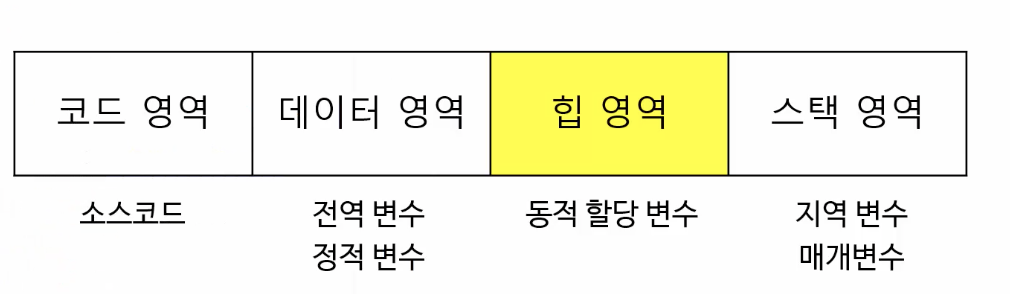
동적 메모리 할당함수
- 전통적인 C언어에서는 스택에 선언된 변수는 따로 메모리 해제를 해주지 않아도 된다.
- 반면에 동적으로 할당된 변수는 반드시
free()함수로 메모리 해제를 해주어야 한다. - 메모리 해제를 하지 않으면 메모리 내의 프로세스 무게가 더해져 언젠가는 오류가 발생한다.
- 메모리 누수(Memory Leak) 방지는 코어 개발자의 핵심 역량이다.
- 할당한 메모리를 해제 한 뒤에 다시 할당
- 이 경우 동일한 메모리 주소를 할당 받을 가능성이 높다.
#include <stdio.h>
#include <stdlib.h>

int main(int argc, const char * argv[]) {
    int *a = malloc(sizeof(int));
    printf("%d\n",a);
    free(a);
    a = malloc(sizeof(int));
    printf("%d\n",a);
    free(a);
    return 0;
}
결과
-2067768832
-2067768832
동적 메모리 할당의 다양한 예제
#include <stdio.h>
#include <stdlib.h>


int main(int argc, const char * argv[]) {
    int** p = (int**)malloc(sizeof(int*) * 3);
    for(int i = 0; i < 3; i++){
        *(p+i) = (int*) malloc(sizeof(int) * 3);
    }
    for(int i=0; i < 3; i++){
        for(int j=0; j < 3; j++){
            *(*(p + i) + j) = i * 3 + j;
        }
    }
    for( int i = 0; i < 3; i++){
        for(int j = 0; j < 3; j++){
            printf("%d ", *(*(p + i) + j));
        }
        printf("\n");
    }
    return 0;
    // 일반적으로 프로그램이 종료되는 순간, 프로그램 안에 사용되었던 모든 내용들은 다
    // 메모리 해제가 이루어 지니깐, 이렇게 간단한 예제를 다룰 때에는 일일이 free()함수를 이용하지 않아도 된다.
    // 하지만 실제 상용프로그램을 개발하고자 할 때는, 항상 free()함수를 이용해 메모리 해제를 해주어야 한다.
}
결과
0 1 2
3 4 5
6 7 8 
임재현입니다.