모음사전
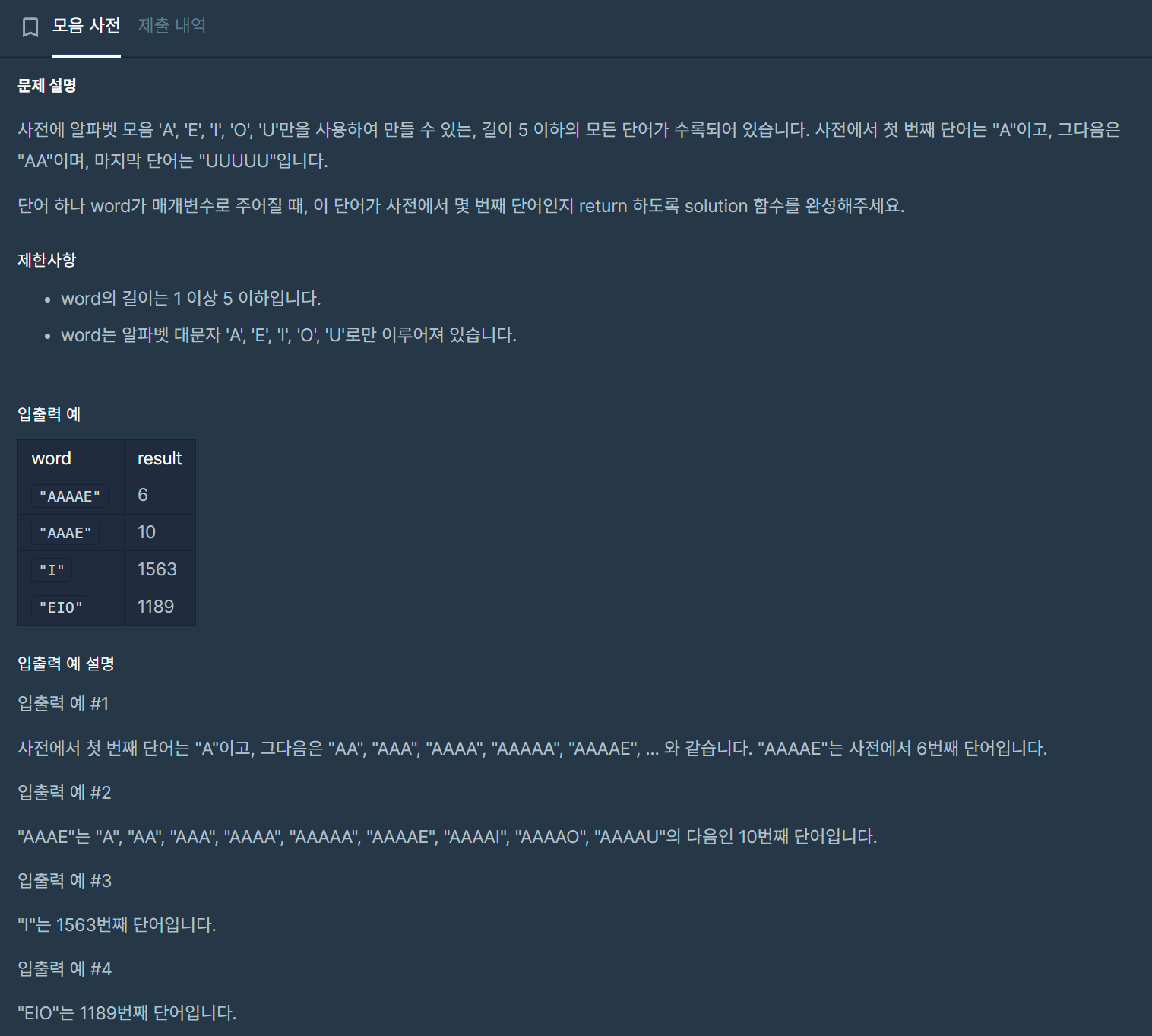
풀이
완전탐색문제이고, 문제를 보니 재귀로 풀어도 깊이 문제가 생기지 않을 것이라고 확신했기에 재귀로 풀었다.
따라서 for 문을 사용한 재귀를 사용하였고, 프로그래머스 문제의 특성상 global을 많이 사용하게 되어 머리가 잠시 삐로롱 되었지만, 금방 풀 수있었다.
초기에 필요한 변수들을 초기화해주고, solution에서도 초기화 과정을 거쳐준다.
그리고 aeiou에 매개변수로 string의 length인 number, 문자열, 찾고 있는 문자열로 3개의 매개변수를 이용했다.
aeiou를 for문으로 돌면서 모음사전인 vowel_dictionary에 추가 시키기로 했다.(지금보니 안해도 되는 과정이었다.)
그리고 index를 +1 해주면서, 몇 번째에 찾는 단어가 현재의 단어인지 확인하는 과정을 추가했다.
그리고 if문을 이용해 찾는 단어를 찾았으면, return하도록 설계했다.
이 때 한 번만 return하게 되면 재귀함수의 완전종료가 안되기 때문에, 확실히 종료하기 위해, for문 밖과 for문 안에도 find_word가 False일때만 작동하도록 만들었다.
if string+vowel[i] == find and not find_word:
	find_word = True
	return
재귀함수를 완전히 빠져나왔을때, 기록된 index값을 solution에서 반환하도록 하여 정답을 도출했다.
# 사전에 AEIOU 만을 사용하여 만들 수 있는 길이 5이하의 모든 단어가 수록
vowel = ['A', 'E', 'I', 'O', 'U']
index = 0
vowel_dictionary = []
find_word = False
def aeiou(number,string, find):
    global vowel
    global vowel_dictionary
    global index
    global find_word

    # 단어길이가 5 이상이면 넘어갈 것.
    if number >= 5:
        return
    # 단어길이가 5 미만이고 index 못찾았으면 진행
    if not find_word:
        for i in range(5):
            if not find_word:
                vowel_dictionary.append(string+vowel[i])
                index += 1
                if string+vowel[i] == find and not find_word:
                    find_word = True
                    return
                aeiou(number+1, string+vowel[i], find)
    return

def solution(word):
    global vowel
    global vowel_dictionary
    global index
    global find_word
    index = 0
    vowel_dictionary = []
    find_word = False
    aeiou(0,'', word)

    return index
다른 사람 풀이
def solution(word):
    answer = 0
    for i, n in enumerate(word):
        answer += (5 ** (5 - i) - 1) / (5 - 1) * "AEIOU".index(n) + 1
    return answer
아래는 5중 for문 방법!
def solution(word):
    answer = 0
    alpha  = ["A","E","I","O","U",""]
    ans = []
    for i in alpha:
        for j in alpha:
            for k in alpha:
                for l in alpha:
                    for m in alpha:
                        w = i+j+k+l+m
                        if w not in ans: ans.append(w)
    ans.sort()
    answer = ans.index(word)
    return answer
아니... 인간승리인 코드도 봤지만, 그건 차마 들고오지 못했다 ㄷㄷㄷ

반드시 결승점을 통과하는 개발자