How to cook lion’s mane: the simple way to get crisp edges and a juicy center
How to cook lion’s mane well comes down to one core skill: manage moisture first, then brown it hard. Lion’s mane (often labeled Hericium erinaceus) holds a lot of water—so if you add oil too early, it can steam and turn soft. The Mushroom Council specifically recommends a dry sauté step: cook in a hot skillet until water releases and edges brown, then add fat and seasonings.
This guide gives beginner-friendly methods (stovetop “steaks,” roasting, and crispy “crab-style” cakes), plus safe handling basics—especially if you’re new to specialty mushrooms.
What is lion’s mane and what does it taste like?
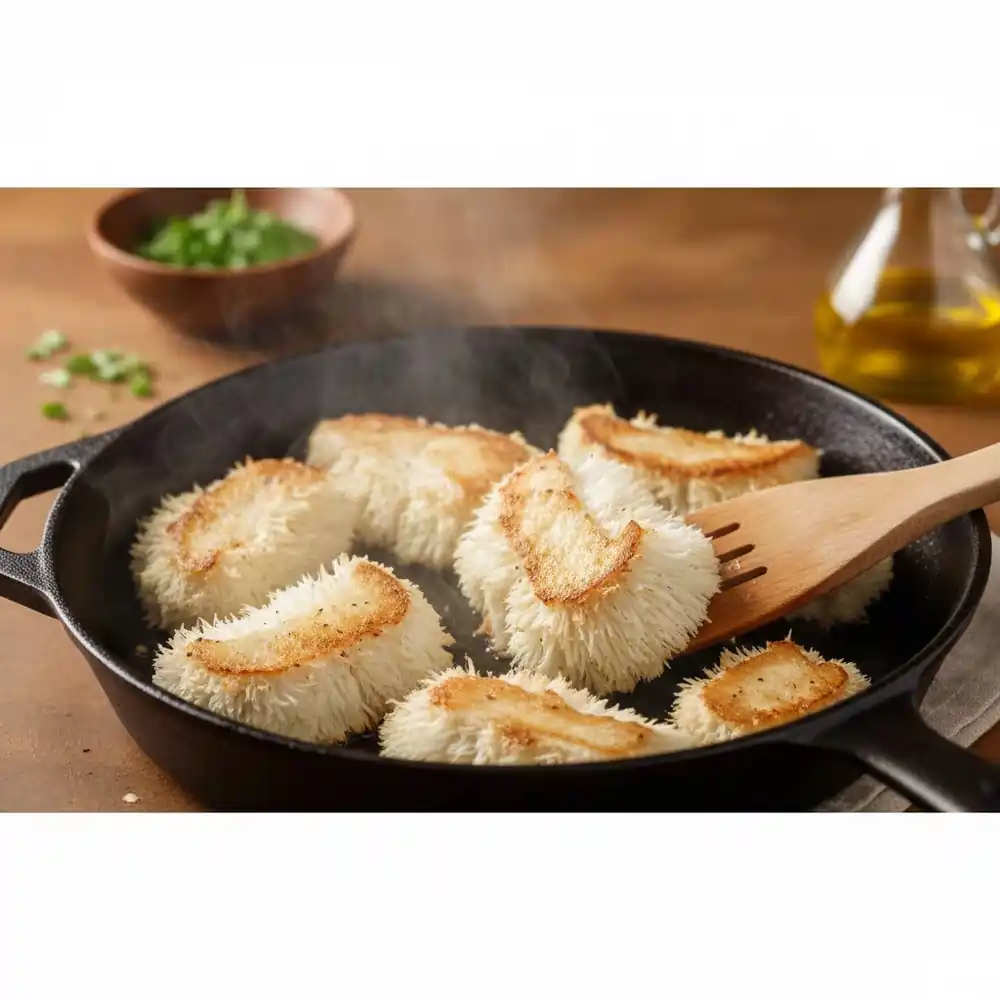
Lion's mane is a white, shaggy mushroom often described as having seafood-like notes and a slightly chewy, tender texture when cooked.
That texture is why many recipes mimic crab cakes, scallops, or pulled seafood---without needing complicated techniques.
Stat block: what's in it (per 100 g, raw)
Nutrition data varies by database and growing conditions, but a common reference point is:
-
35 calories per 100 g (Mushroom Council).\
Another database lists: -
43 calories, about 2.5 g protein, ~7.7 g carbs, and ~89.5% water per 100 g.
Use these as general food stats, not as "results" claims.
How do you buy and store lion's mane for best cooking results?
Fresh lion's mane cooks best when it's dry-looking, springy, and clean-smelling (mild, not sour). If it's slimy, overly wet, or browning with a strong odor, skip it.
Storage basics that help browning
-
Keep it dry and breathable (paper bag or container with paper towel).
-
Avoid sealing it wet in plastic---trapped moisture speeds spoilage and ruins browning.
(These are practical kitchen norms; they also align with the idea that mushroom moisture control is key to quality browning.)
How do you clean lion's mane without making it soggy?
Lion's mane has tiny "teeth" that can hold debris.
Fast cleaning steps
-
Brush off visible dirt with a soft brush or paper towel.
-
If needed, quick rinse and pat very dry immediately.
-
Let it sit uncovered for 5--10 minutes to air-dry before cooking.
Tip: The drier the surface, the faster you get browning.
How do you cut lion's mane for different textures?
Cutting decides whether you get "steak," "scallop," or "crab" texture.
-
Steaks: Slice into 1--1.5 inch slabs (or keep a smaller cluster whole).
-
Scallops/bites: Cut into thick coins or chunks.
-
Crab-style: Tear into strands with your hands (better than slicing for "pulled" texture).
Tearing preserves irregular edges that crisp well.
The key technique: dry sauté (why it works)
Lion's mane releases water early in cooking. Dry sautéing drives off that water first, so you can brown in fat after.
The Mushroom Council's guidance is direct: dry sauté in a hot skillet until water releases and edges brown, then add butter and seasonings.
What you should see
-
At first: sizzling + moisture pooling
-
Then: moisture reduces
-
Finally: edges begin to brown and tighten
When you reach that last stage, add oil/butter.
Method 1: Pan-seared lion's mane "steaks" (best beginner result)
This is the most reliable way to get crisp edges.
Steps
-
Preheat a heavy skillet (cast iron works great) until hot.
-
Add lion's mane dry (no oil yet). Cook 3--5 minutes, letting water release.
-
Flip and repeat until the mushroom looks drier and lightly browned.
-
Add butter or oil, then sear 1--2 minutes per side for deeper color.
-
Season: salt + pepper. Finish with lemon, garlic, or soy glaze.
A common "steak" approach uses pressing/compressing during sear to help release liquid and improve browning; several popular recipes demonstrate this technique.
Flavor upgrades (choose one)
-
Garlic + thyme butter
-
Soy + maple + chili glaze (tiny amount goes far)
-
Lemon + capers for a seafood-like finish
Method 2: Oven-roasted lion's mane (easy, hands-off)
Roasting is good when you want even drying and browned edges without babysitting.
Steps
-
Heat oven to 425°F / 220°C.
-
Tear into medium pieces (more edges = more crisp).
-
Toss lightly with oil + salt.
-
Roast 15--20 minutes, flipping once.
Tip: Spread in a single layer with space. Crowding steams.
(High-heat roasting principles for moisture-heavy foods are broadly consistent across cooking references.)
Method 3: "Crab-style" lion's mane cakes (best for picky eaters)
Lion's mane's texture works well when torn and seasoned like crab.
Basic formula
-
Torn, cooked lion's mane (start with dry sauté)
-
Binder: egg or plant binder
-
Flavor: Old Bay-style spice, Dijon, lemon, scallion
-
Crunch: breadcrumbs or crushed crackers
Steps
-
Dry sauté torn mushroom until moisture is mostly gone.
-
Mix with binder + seasoning + crumbs.
-
Form patties and chill 10 minutes (helps set).
-
Pan-fry until golden.
This method is about texture and flavor, not promises.
Method 4: Quick sauté for weeknight bowls and stir-fries
If you just want something fast:
-
Dry sauté slices in a hot pan until water releases and reduces.
-
Add oil/butter + aromatics (garlic/ginger).
-
Add soy sauce or a pinch of salt at the end.
A simple sauté approach around ~10 minutes total cook time is common in recipe guidance.
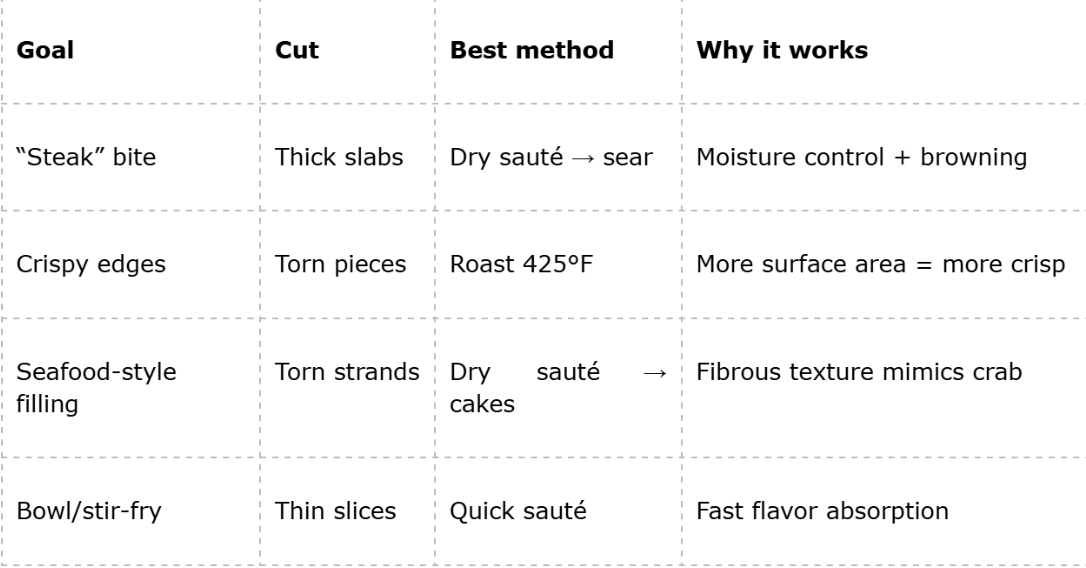
Cooking comparison table
Food safety notes you should actually follow
If you buy from a store or farm, lion's mane is commonly eaten as food. If you forage, take safety seriously.
University extension guidance for wild mushrooms emphasizes:
-
Be sure of identification.
-
Do not eat mushrooms raw.
-
Try a small amount the first time because individual reactions can happen.
And foraging safety resources stress learning with experts and reliable references to reduce serious risk.
Checklist: perfect lion's mane, every time
-
Start with dry, fresh mushrooms (not slimy).
-
Brush clean; if rinsed, pat very dry.
-
Cut for the result you want: slabs (steaks) or torn strands (crab-style).
-
Use dry sauté first until water releases and edges brown.
-
Add oil/butter after moisture drops.
-
Don't crowd the pan; cook in batches.
-
Season at the end for cleaner browning.
-
First-time eating: try a small portion.
How to cook lion's mane | FAQ
1) How do you cook lion's mane so it's not soggy?
Dry sauté it first until water releases and edges brown, then add oil or butter and sear.
2) Do you need to wash lion's mane mushroom?
Brush it clean. If you rinse, do it quickly and dry thoroughly before cooking so it browns.
3) How long should you cook lion's mane?
Most quick methods take about 10--15 minutes total, depending on thickness and moisture.
4) Can you eat lion's mane raw?
Food-safety guidance for wild mushrooms advises not eating mushrooms raw. Cook it.
5) What does lion's mane taste like when cooked?
It's often described as seafood-like, with a tender, slightly chewy texture.
6) What's the easiest beginner recipe?
Pan-sear "steaks": dry sauté, then sear in butter with salt and pepper, finish with lemon.
Glossary
-
Hericium erinaceus: Scientific name commonly used for lion's mane.
-
Dry sauté: Cooking in a hot pan without oil first to drive off moisture.
-
Maillard browning: The browning reaction that creates deep savory flavor.
-
Umami: Savory taste often strong in cooked mushrooms.
-
Cast iron skillet: Heavy pan that holds heat for better searing.
-
Foraging: Collecting wild mushrooms; requires expert identification.
-
Spines/teeth: The shaggy structure on lion's mane that can trap debris.
-
Batch cooking: Cooking in smaller amounts to prevent steaming.
How to cook lion's mane | Conclusion
To cook lion's mane well, dry sauté first, then sear or roast for browning---that's the difference between soggy and restaurant-level texture.
Sources
-
Mushroom Council --- "Lion's Mane" (prep + nutrition). Year: n/a (accessed 2026).\
Link: https[:]//www.mushroomcouncil.org/all-about-mushrooms/lions-mane/ -
Ohio State University Extension --- "Wild Mushrooms: Edible or Poisonous?" (2019).\
Link: https[:]//u.osu.edu/browncounty/2019/04/24/wild-mushrooms-edible-or-poisonous/ -
University of New Hampshire Extension --- "Foraged Mushrooms Safety and Quality" (2023).\
Link: https[:]//extension.unh.edu/blog/2023/10/foraged-mushrooms-safety-quality -
University of Kentucky Plant Pathology --- "Don't Eat Those Wild Mushrooms" PDF (2016).\
Link: https[:]//plantpathology.mgcafe.uky.edu/files/ppfs-gen-14.pdf -
MyFoodData --- "Nutrition Facts for Mushroom, lion's mane" (database; accessed 2026).\
Link: https[:]//tools.myfooddata.com/nutrition-facts/1750344/100g -
Feasting At Home --- "What is Lion's Mane and How to Cook It" (2025).\
Link: https[:]//www.feastingathome.com/what-is-lions-mane-and-how-to-cook-it/ -
FungiWoman --- "Sautéed Lion's Mane Mushroom" (2021).\
Link: https[:]//fungiwoman.com/blogs/blog/sauteed-lions-mane-mushroom -
Epicurious --- "How to Roast Vegetables" (roasting principles; 2020).\
Link: https[:]//www.epicurious.com/expert-advice/how-to-roast-vegetables-article
