학원에서 학습한 내용을 개인정리한 글입니다.
수업
다형성
- 객체지향 프로그래밍의 3개 특징 중 하나
- 하나의 행동으로 여러 가지의 일을 수행
- 부모 타입으로 부터 파생된 여러가지 타입의 자식 객체를 부모 클래스 타입 하나로 다룰 수 있는 기술
public void basicTest() {
				A_Parent parent = new A_Parent();
		A_Child child = new A_Child();
		A_Child2 child2 = new A_Child2();

		//부모 클래스 타입의 변수는 자식 객체를 저장할 수 있다?
		parent = new A_Child();
		//X 상속관계가 아님!
//		parent = new_A_Child();
		//X 자식클래스 타입의 변수에 부모 객체를 저장할 수 있다?
//		child = new A_Parnet();
	}
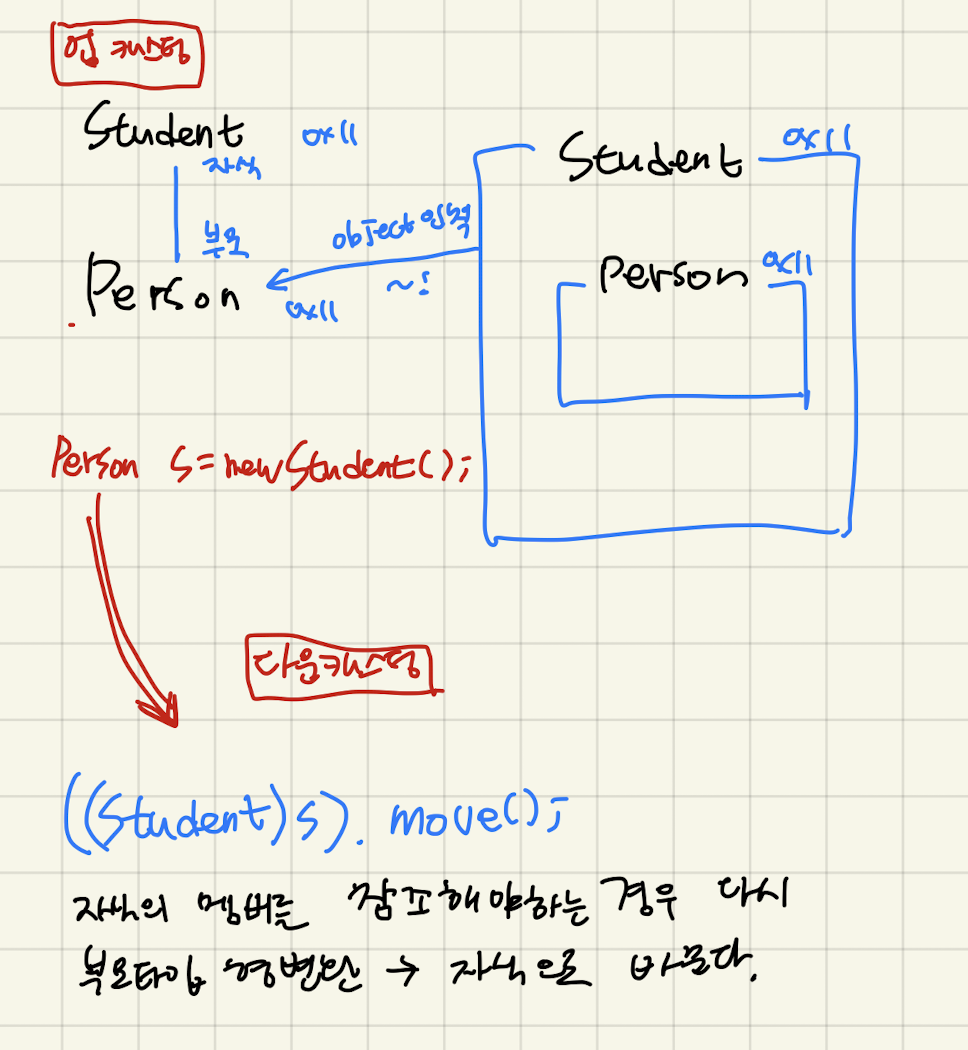
업캐스팅
- 상속 관계에 있는 부모, 자식 클래스 간에 “부모 타입의 참조형 변수”가 모든 자식 타입의 객체 주소를 받을 수 있음.
//Sonata 클래스는 Car 클래스의 후손
Car c = new Sonata();
//Sonata클래스형에서 Car클래스형으로 바뀜
다운캐스팅
- 자식의 멤버를 다시 참조해야하는 경우 업캐스팅 된 부모타입 형변환을 자식으로 바꾼다.
//Sonata 클래스는 Car 클래스의 후손
Car c = new Sonata();
((Sonata)c).moveSonata();
업캐스팅 다운캐스팅 예제
//Parent Class
public class A_Parent {
	private String parentData;

	public A_Parent() {

	}

	public A_Parent(String parentData) {
		super();
		this.parentData = parentData;
	}

	public String getParentData() {
		return parentData;
	}

	public void setParentData(String parentData) {
		this.parentData = parentData;
	}

	@Override
	public String toString() {
		return "parentData=" + parentData;
	}
	public void dynamicTest() {
		System.out.println("부모 메소드");
	}
}
//Child Class
public class A_Child extends A_Parent {
	private int childAge;
	public A_Child() {

	}
	public A_Child(String parentData, int childAge) {
		super(parentData);
		this.childAge = childAge;
	}

	public int getChildAge() {
		return childAge;
	}

	public void setChildAge(int childAge) {
		this.childAge = childAge;
	}

	@Override
	public String toString() {
		return "child=" + childAge;
	}

	public void dynamicTest() {
		System.out.println("자식 메소드");
	}
}
//Controller

//부모 클래스 타입의 변수에 자식 객체가 저장됐을 때,
//부모에 설정된 내용만 접근이 가능
System.out.println(parent);

parent.setParentData("부모");
System.out.println(parent.getParentData());

//원본 자식객체로 변경하려면 강제형변환을 해야한다
child = (A_Child)parent;
System.out.println(child.getParentData());
((A_Child)parent).setChildAge(100);;
System.out.println(((A_Child)parent).getChildAge());
Object 클래스
//Object 클래스 타입의 변수는 자바에서 사용하는 모든 객체를 저장할 수 있다
Object o;
o = new String("test");
o = new Scanner(System.in);
o = new A_Parent();
o = new A_Child();
객체 배열
//객체배열 이용하기
Employee[] employee = new Employee[5];
Teacher[] teacher = new Teacher[5];
A_Person[] person = new A_Person[10];

person[0] = new Employee("ㅇㅇㅇ", 28, '여', 100, "개발");
person[1] = new Teacher("ㅁㅁㅁ", 28, '여', "영어", 3);
person[2] = new Employee("ㅅㅅㅅ", 28, '여', 100, "개발");
person[3] = new Student("ㅁㅁㅁ", 28, '여', new String[] {"자바"}, 3);
instanceof 연산자
- 참조형 변수가 어떤 클래스 형의 객체 주소를 참조하고 있는지 확인할 때 사용
- 맞으면 true, 틀리면 false
int sCount = 0, eCount = 0, tCount = 0;
		int addResult = 0, totalCount = 0;
		for (int i = 0; i <person.length; i++) {
			//각 타입에 맞춰서 데이터 출력
			//instanceof 연산자 이용
			if(person[i] == null) {
				continue;
			}

			if(person[i] instanceof Employee) {
				Employee e = (Employee)person[i];
				System.out.println(e.toString());
				eCount++;
			} else if (person[i] instanceof Teacher){
				Teacher t = (Teacher)person[i];
				System.out.println(t.toString());
				tCount++;

				if(t.getMajor().equals("영어")) {
					System.out.println("선생이고 영어과목: " + t.toString());
				}

			} else if (person[i] instanceof Student) {
				Student s = (Student)person[i];
				System.out.println(s.toString());
				sCount++;
			}
			addResult += person[i].getAge();
			totalCount ++;
		}
바인딩
- 이 함수는 코드랑 연결된다 라고 정해주는 것
- 형변환 하지 않고 그냥 가져와서 쓸 수 있다
동적 바인딩
- 그때그때 바뀌는 약속
- 상속 & 오버라이딩 된 메서드
- 실행 중에 어떤 메소드를 사용할지 정하는 것
public A_Person makePerson(String title) {
		switch(title) {
		case "student":
			return new Student();
		case "teacher":
			return new Teacher();
		case "employee":
			return new Employee();
		default:
			return null;
		}
	}
정적 바인딩
- 미리 정해진 약속
- 일반 메서드 호출
- 실행되기 전에 메소드가 어떤 객체와 연결될 지 정함
abstract 추상
추상 클래스
- 몸체 없는 메소드를 포함한 클래스
- 미완성인 클래스
- 자체적인 객체 생성 불가
- 반드시 상속하여 객체 생서앻야함
- 참조형 변수 타입으로는 사용 가능
- 구현부가 없음
- 일관된 인터페이스 제공
- 꼭 필요한 기능 강제화?
추상 메소드
- 몸에 없는 메소드
- 구현부를 만듬 (오버라이드)
//추상 클래스 이용
		//생성이 불가능함
//		_AbstractParent ap = new B_AbstractParent();

		//타입으로 선언은 가능
		//자기 자신은 생성이 불가능
		//자식은 선언 가능
		B_AbstractParent ap;

		//추상 클래스는 자식클래스가 상속해서 이용하는 클래스
		ap = new B_AbstractParentChild();
		System.out.println(ap.getTest());

		//클래스에 선언된 메소드 중 추상메소드가 있으면
		//반드시 추상클래스로 선언해야한다
추상 메소드 예시
package com.poly.model.vo;

public abstract class B_AbstractIncludeAbstractMethod {
	public abstract void test();
}
- abstract를 상속받았을 때 abstract가 선언한 메소드를 무조건 포함해야한다.
- 상속 강제?
public class B_AbstractImplement2 extends B_AbstractIncludeAbstractMethod{
	@Override
	public void test() {
		// TODO Auto-generated method stub
		System.out.println("2에서 구현!");
	}
}
package com.poly.model.vo;

public class B_AbstractImplement extends B_AbstractIncludeAbstractMethod{
	@Override
	public void test() {
		System.out.println("구현내용~");
	}
- 아래처럼 쓸 수 있다.
B_AbstractIncludeAbstractMethod aiam;
aiam = new B_AbstractImplement();
aiam.test();
aiam = new B_AbstractImplement2();
aiam.test();

public void testCheck(B_AbstractIncludeAbstractMethod param) {
	param.test();
}
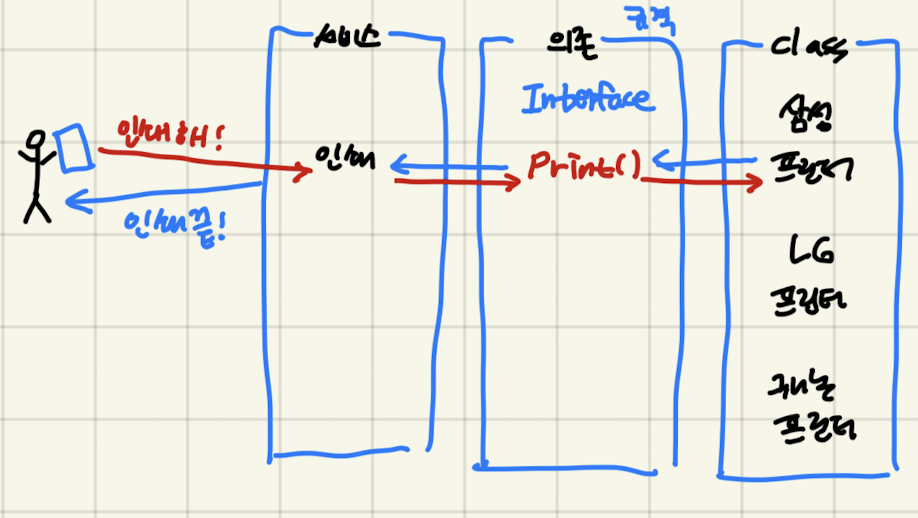
Interface 인터페이스
- 추상화와 비슷함
- 상수형 필드와 추상 메소드만을 작성할 수 있는 추상 클래스의 변형체
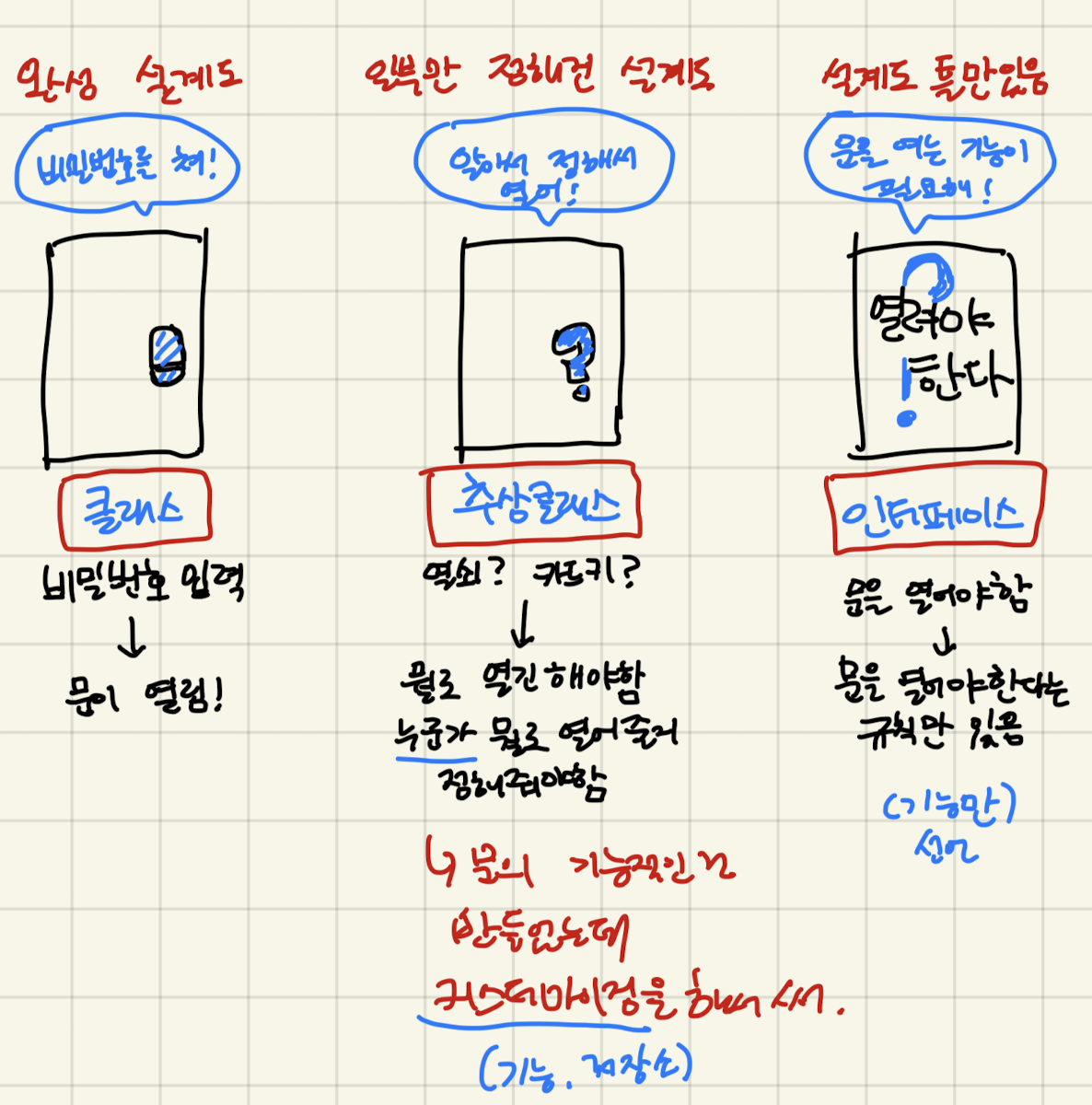
- 인터페이스 다중 상속이 가능
- 인터페이스 구현 클래스는 다수의 인터페이스 구현이 가능
익명 클래스
- 이름 없이 즉석에서 정의하여 사용하는 클래스
- 일회용 객체를 만들때 사용하고, 인터페이스나 추상 클래스를 구현할 때 유용함
Functional Interface
- 인터페이스에 선언된 추상메소드가 한개인 경우 람다 표현식으로 처리가 가능
() -> {} ==> public void ooo(){}
() -> {return 10} ==> public int ooo{}
Data()-> {} ==> public void ooo(paran){}
MyFunctionalInter test = new MyFunctionalInter() {
	@Override
	public boolean test(String a) {
		return a.length()>5;
	}
};

test = (msg) -> {return msg.charAt(0) == '자';};
testString((s) -> s.charAt(0) == 't');
public void testString(MyFunctionalInter func) {
	if(func.test("test")) {
		System.out.println("yes");
	}else {
		System.out.println("no");
	}
}
기본 API
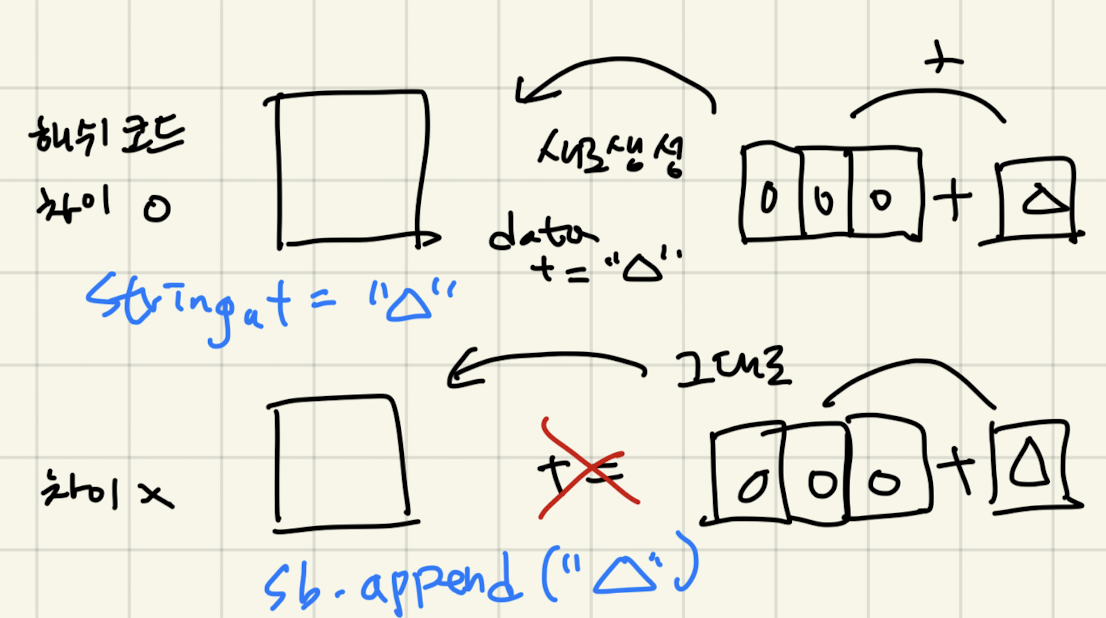
String
- 기본 자료형처럼 사용하는 클래스
- 대입연산 가능, 불변
StringBuffer StringBuilder
- 대입연산자를 이용해서 문자열을 저장할 수 없다
- 클래스가 제공하는 메소드를 이용해서 문자열을 저장, 관리
미리 준비
- 다음거 정리.. string, date
- 실습과제, 학생관리프로그램 업그레이드
느낀점
- 계속 프로젝트를 빨리하고싶다는 생각만 하고있다.......ㅠㅠ

250304~