TCP/IP Five-Layer Model Summary
Application Layer
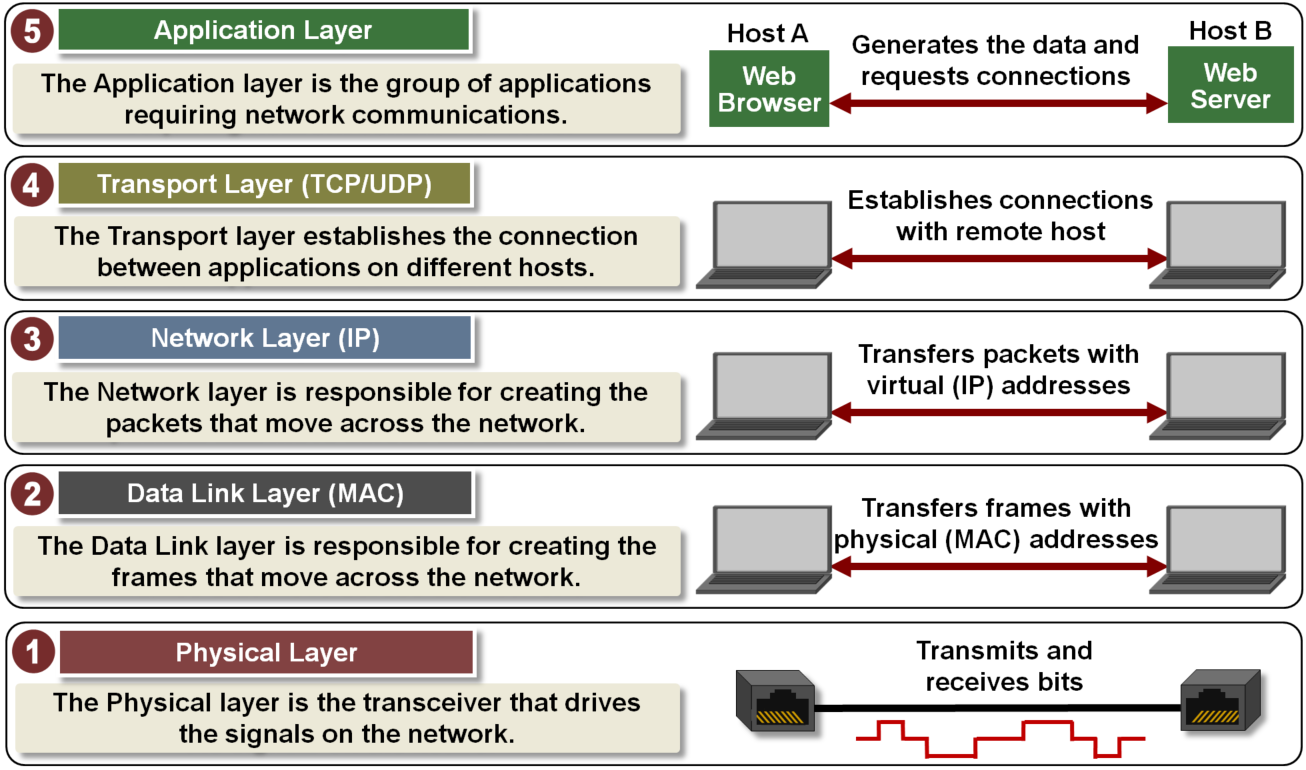
As you might have guessed, the Application layer is where applications requiring network communications live. Examples of these applications include email clients and web browsers. These applications use the Transport Layer to send requests to connect to remote hosts.
Transport Layer
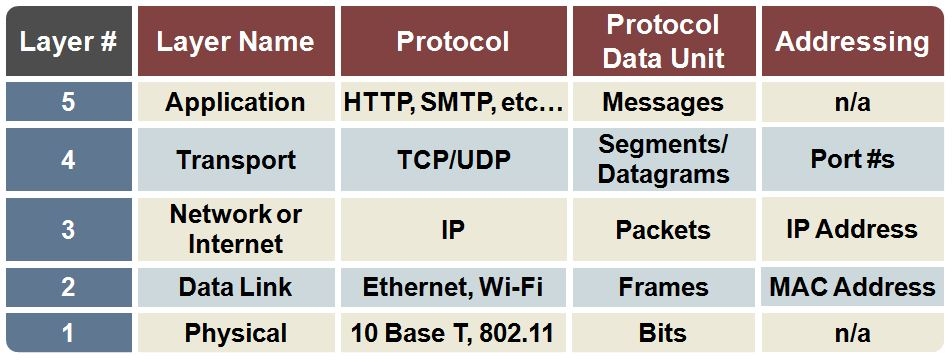
The Transport layer establishes the connection between applications running on different hosts. It uses TCP for reliable connections and UDP for fast connections. It keeps track of the processes running in the applications above it by assigning port numbers to them and uses the Network layer to access the TCP/IP network.
Network Layer
The Network layer is responsible for creating the packets that move across the network. It uses IP addresses to identify the packet’s source and destination.
Data Link Layer
The Data Link layer is responsible for creating the frames that move across the network. These frames encapsulate the packets and use MAC addresses to identify the source and destination.
Physical Layer
The Physical layer encodes and decodes the bits found in a frame and includes the transceiver that drives and receives the signals on the network.
reference
https://microchipdeveloper.com/tcpip:tcp-ip-five-layer-model