
개요
자료구조론에서 빼놓을 수 없는 개념이 스택과 큐이다. 두 자료구조의 차이는 일방통행이냐 양방통행이냐의 차이이다.
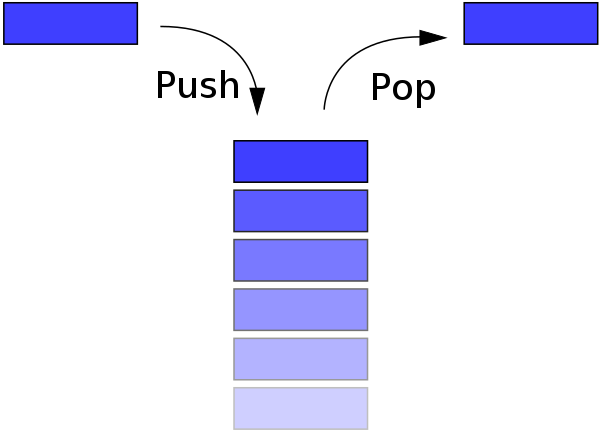
그러므로, 일방통행인 스택의 경우는 처음에 들어간 element가 계속 쌓이는LIFO(Last in First Out) 구조이기 때문에 Postfix 연산에 적합하다고 생각해서 작년에 배운 자료구조론 복습 겸 LinkedList로 스택 구조를 만드는 방법도 연습하기 위해 시작하게 되었다.
참고
1. Stack
- 주요한 연산으로는 3가지가 있다.
1. PUSH(S,x)
: Stack S에 element x를 집어넣는 과정
2. Pop(S)
: Stack S의 top위치에 있는 값을 stack 밖으로 빼는 과정
3. Top(S)
: Stack S에서 제일 위에 있는 element로 stack에 element가 없는 경우 default 값이 -1이다.2. Postfix
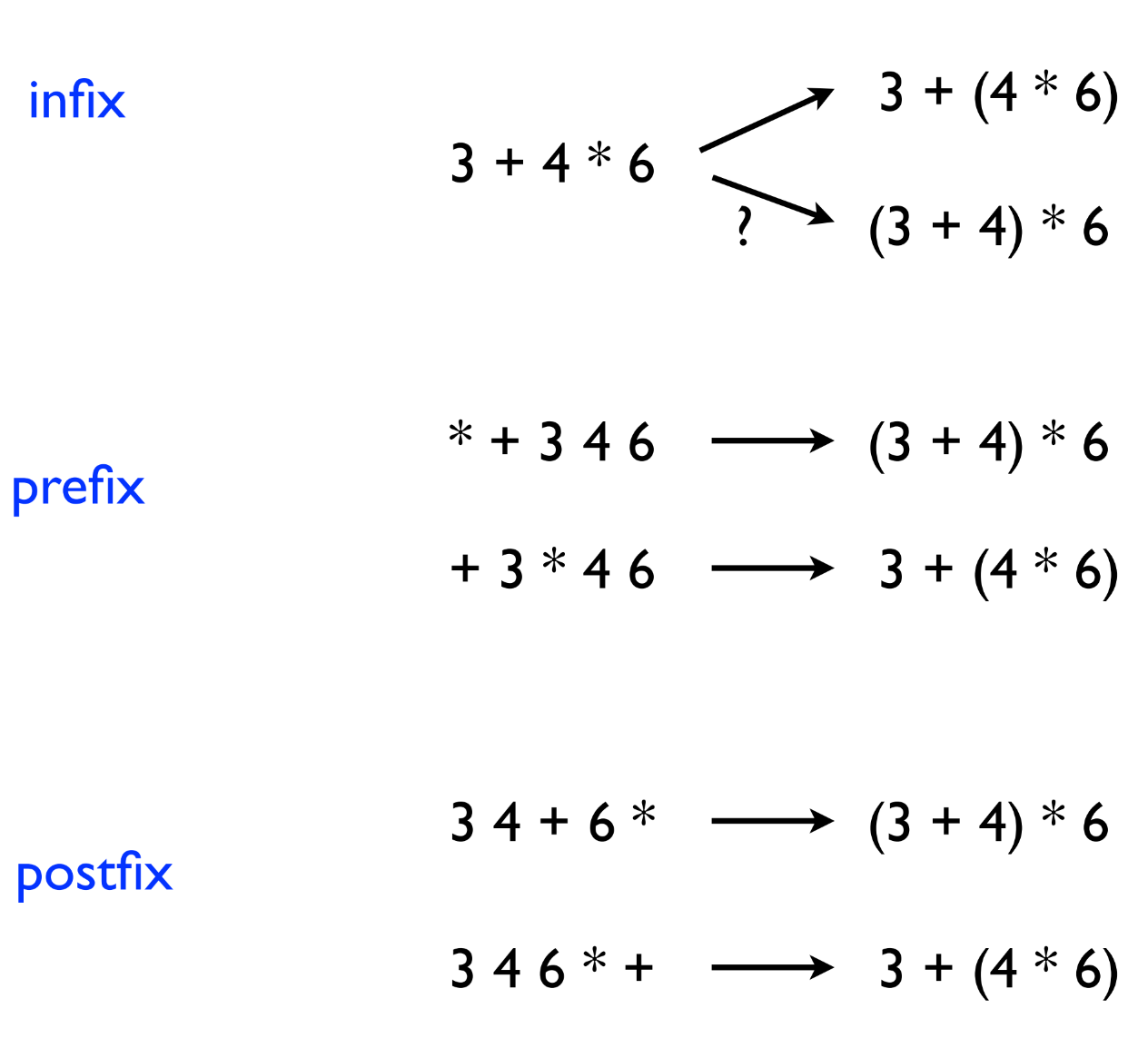
Postfix를 살펴보기 전에 3가지의 연산 방법을 비교해보면,
- infix의 경우는 연산자가 중앙에 있는 흔히 아는 사칙연산이랑 똑같은 형태이다.
- prefix의 경우는 앞에 붙은 접두어
pre로 유추할 수 있듯이 연산자가 앞쪽에 온다.
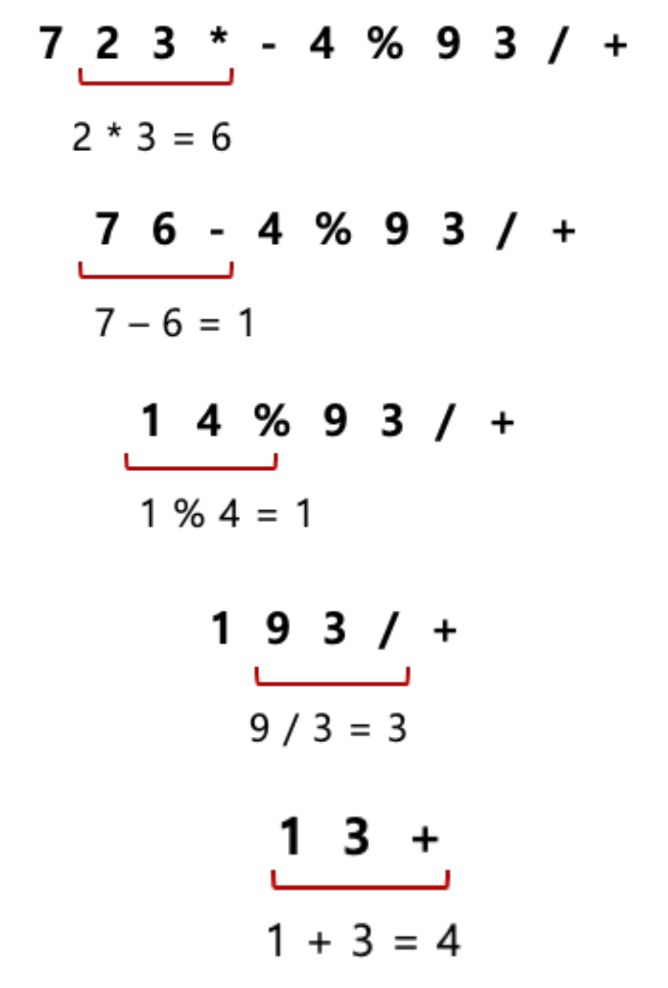
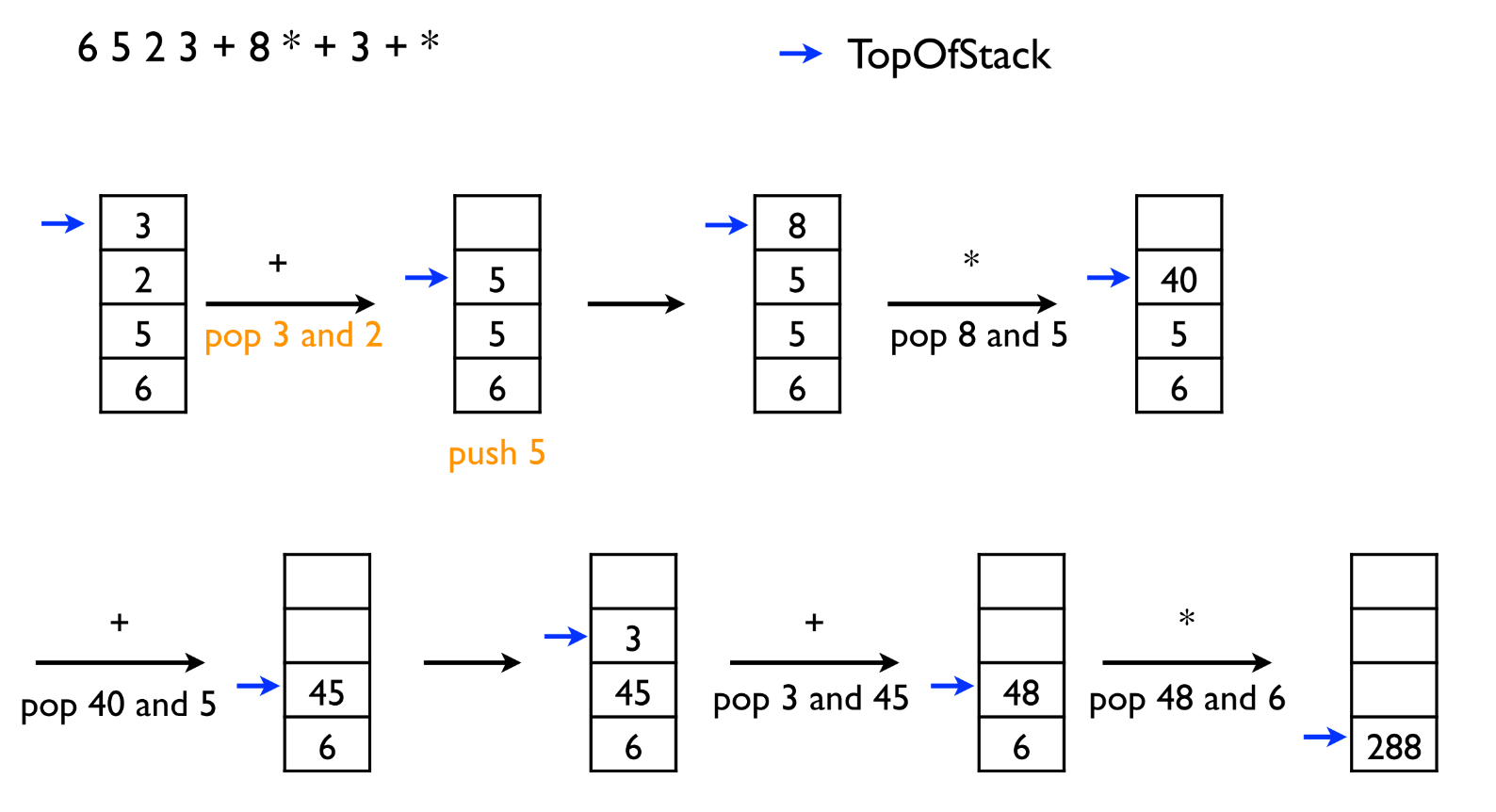
예를 들어,*+346의 경우+34가 먼저 만나기 때문에 7이 계산되고 그 다음에*76에 의해42가 결과 값으로 도출되게 된다.- postfix도 마찬가지로 앞의 접두어를 통해 연산자가 뒤쪽에 온다는 것을 알 수 있다. 그렇기 때문에 postfix를 stack에 적용하게 되면 숫자가 먼저 들어가고 연산자가 그 다음에 들어가기 때문에 연산자를 Pop한 뒤 Pop 되는 연속된 2개의 수를 연산해주면 되기 때문에 적합하다고 생각했다.
이런 식으로 연산이 진행되는데, 또 다른 예시를 Stack에 적용해보면 다음과 같다.
LinkedList Stack
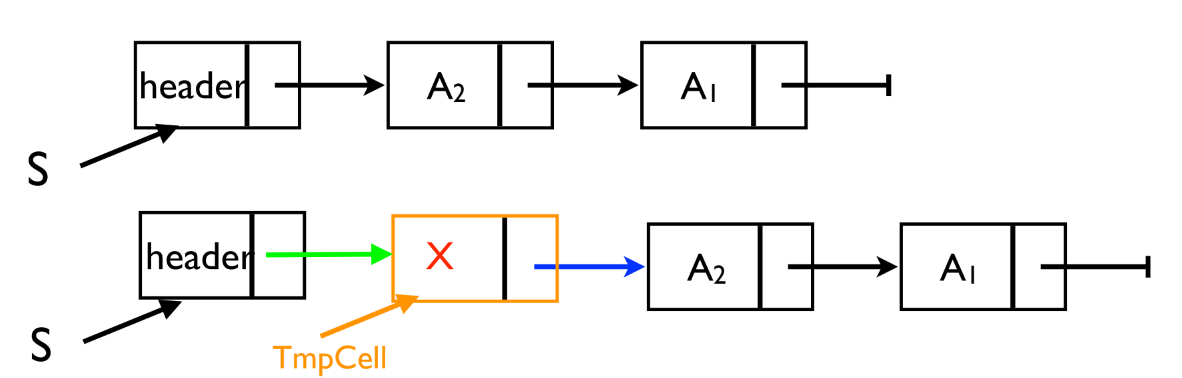
LinkedList stack의 경우 약간 주의 깊게 봐야할 점이 있다.
위의 사진은 push의 연산인데Element=x인 TmpCell을 만들어서 노드와 포인터들을 조정해주어야한다.void Push(Stack S, ElementType x){ PtrToNode tmpCell=malloc(sizeof(struct Node)); if(tmpCell==NULL) return; else{ tmpCell->Element=x; tmpCell->Next=S->Next; S->Next=tmpCell; } }코드로 보면 else 부분의 연산이 핵심이라는 것을 알 수 있다.
먼저 tmpcell의 element를 x로 설정한 뒤, 기존의 노드가 가리키고 있던 포인터 위치를 TmpCell의 포인터가 가리키도록 설정해주고 자리를 뺏긴 이전 노드의 포인터를 TmpCell을 가리키게 해주면 LinkedList를 유지하면서 TmpCell을 끼워넣을 수 있다.
그 다음으로 Pop 연산인데, Pop 연산도 포인터를 조정해주어야 하기 때문에 조금 까다롭다.int Pop(Stack S){ PtrToNode FirstCell; if(IsEmpty(S)){ return 0; }else{ FirstCell=S->Next; S->Next=S->Next->Next; int poppedElement = FirstCell->Element; free(FirstCell); return poppedElement; } }else 부분을 보면 이전 노드가 갖고 있는 포인터가 FirstCell을 가리키게 하고
S->Next=S->Next->Next이 부분을 통해 S의 포인터가 FirstCell이 가리키고 있던 노드를 가리키게 한 다음 return 값을 FirstCell이 갖고 있던 element로 설정해주면 된다.기존의 Stack의 Push/Pop 연산보다는 약간 복잡하게 느껴질 수 있지만, LinkedList의 구성원리를 이해하고 있다면 충분히 구현할 수 있다.

소스 코드
1. Stack.C
#include <stdio.h>
#include <stdlib.h>
#define MAX_STACK_SIZE 10
typedef struct StackRecord{
int* key; // element
int top; // 제일 마지막 element가 있는 위치
int Capacity; // Stack의 용량
}*Stack;
Stack CreateStack(int maxElements);
void Push(Stack S, int x);
int Pop(Stack S);
int Top(Stack S);
void DeleteStack(Stack S);
int IsEmpty(Stack S);
int IsFull(Stack S);
void PostFix(Stack S, char c);
int main(int argc, char* argv[]){
FILE *fi = fopen(argv[1], "r"); // file을 읽기 모드로 불러오기
Stack stack = CreateStack(MAX_STACK_SIZE); // 스택 생성
char c;
printf("Top numbers: ");
while (fscanf(fi, "%c", &c) != EOF){ // 파일의 끝까지 scanf 수행
if(c == '#')
break;
PostFix(stack, c);
printf("%d ",Top(stack));
}
printf("\n");
printf("Evaluation result: %d\n", Pop(stack)); // 마지막 결과 출력
fclose(fi);
DeleteStack(stack);
return 0;
}
Stack CreateStack(int maxElements){
Stack S = (Stack)malloc(sizeof(struct StackRecord));
S->key=malloc(sizeof(int)*maxElements);
S->top=-1;
S->Capacity=maxElements;
if (S == NULL || S->key == NULL){
exit(1);
}
return S;
}
void Push(Stack S, int x){
if(IsFull(S))
return;
S->key[++S->top]=x; // top이 있던 위치의 한 칸 위에 x 삽입
}
int Pop(Stack S){
if(IsEmpty(S))
return -1;
return S->key[S->top--]; // top 위치의 element를 반환하고 top의 위치를 한 칸 내림
}
int Top(Stack S){
if(IsEmpty(S))
return -1;
return S->key[S->top]; // top 위치에 있는 element 반환
}
void DeleteStack(Stack S){
free(S->key);
free(S);
}
int IsEmpty(Stack S){
return S->top==-1; // stack이 빈상태 (default=-1)
}
int IsFull(Stack S){
return S->top==S->Capacity-1; // stack이 가득 찬 상태 (최대 용량-1)
}
// Postfix이기 때문에 연산자를 확인한 뒤 x,y를 pop해서 연산 결과를 다시 stack에 push
void PostFix(Stack S, char c){
int x, y;
switch(c){
case '+':
y=Pop(S);
x=Pop(S);
Push(S, x+y);
break;
case '-':
y=Pop(S);
x=Pop(S);
Push(S,x-y);
break;
case '*':
y=Pop(S);
x=Pop(S);
Push(S,x*y);
break;
case '/':
y=Pop(S);
x=Pop(S);
if(y!=0){
Push(S, x/y);
}else{
break;
}
break;
case '%':
y=Pop(S);
x=Pop(S);
Push(S,x%y);
break;
default:
Push(S,c-'0');
break;
}
}
2. LinkedList_stack.c
#include <stdio.h>
#include <stdlib.h>
#define MAX_STACK_SIZE 10
typedef struct Node *PtrToNode;
typedef PtrToNode List;
typedef PtrToNode Stack;
typedef int ElementType;
struct Node{
ElementType Element; // Node에 있는 Element
PtrToNode Next; // Node가 갖고 있는 Pointer
};
Stack CreateStack(int maxElements);
void MakeEmpty(Stack S);
void Push(Stack S, ElementType x);
int Pop(Stack S);
ElementType Top(Stack S);
int IsEmpty(Stack S);
void PostFix(Stack S, char c);
// main함수는 동일
int main(int argc, char *argv[]){
FILE *fi = fopen(argv[1], "r");
Stack stack = CreateStack(MAX_STACK_SIZE);
char c;
printf("Top numbers: ");
while(fscanf(fi, "%c", &c) != EOF){
if (c == '#')
break;
PostFix(stack, c);
printf("%d ", Top(stack));
}
printf("\n");
printf("Evaluation result: %d\n", Pop(stack));
fclose(fi);
free(stack);
return 0;
}
Stack CreateStack(int maxElements){
Stack S=(Stack)malloc(sizeof(struct Node));
if(S==NULL)
exit(1);
S->Next=NULL;
return S;
}
void MakeEmpty(Stack S){
if(S==NULL){
return;
}else{
while(!IsEmpty(S))
Pop(S);
}
}
void Push(Stack S, ElementType x){
    PtrToNode tmpCell=malloc(sizeof(struct Node));
    if(tmpCell==NULL)
        return;
    else{
        tmpCell->Element=x;
        tmpCell->Next=S->Next;
        S->Next=tmpCell;
    }
}
ElementType Top(Stack S){
if(!IsEmpty(S)){
return S->Next->Element;
}else{
printf("Empty Stack\n");
return 0;
}
}
int Pop(Stack S){
    PtrToNode FirstCell;
    if(IsEmpty(S)){
        return 0;
    }else{
        FirstCell=S->Next;
        S->Next=S->Next->Next;
        int poppedElement = FirstCell->Element;
        free(FirstCell);
        return poppedElement;
    }
}
int IsEmpty(Stack S){
return S->Next==NULL;
}
void PostFix(Stack S, char c){
int x, y;
switch (c){
case '+':
y = Pop(S);
x = Pop(S);
Push(S, x + y);
break;
case '-':
y = Pop(S);
x = Pop(S);
Push(S, x - y);
break;
case '*':
y = Pop(S);
x = Pop(S);
Push(S, x * y);
break;
case '/':
y = Pop(S);
x = Pop(S);
if (y != 0){
Push(S, x / y);
}else{
break;
}
break;
case '%':
y = Pop(S);
x = Pop(S);
Push(S, x % y);
break;
default:
Push(S, c - '0');
break;
}
}
3. input.txt
4736%+*42/-9+23*-#결과

2개의 파일 모두 input.txt를 집어넣으면 위의 이미지와 같은 결과가 출력된다.
따라서 LinkedList도 Stack의 기능을 한다는 것을 알 수 있다.
결론
Stack은 자료구조 뿐만 아니라 코테나 전공지식 면접 등에서 자주 등장하는 개념이기 때문에 상당히 중요하다고 할 수 있다. 특히나 LinkedList로 Stack의 기능을 구현할 수 있다는 점을 알아두면 상당히 도움이 될 것 같다.