[CycleTracker 3] service workers
첫 번째 PWA 만들기 - CycleTracker 3
CycleTracker: service workers
https://mdn.github.io/pwa-examples/cycletracker/
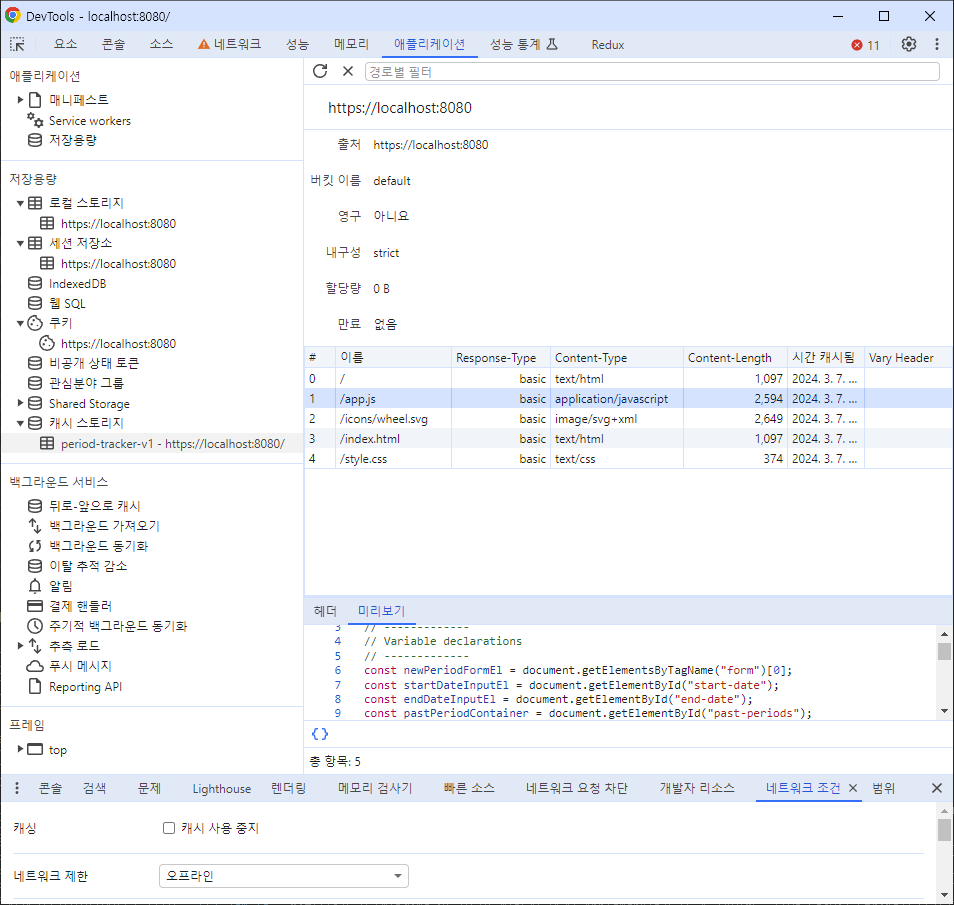
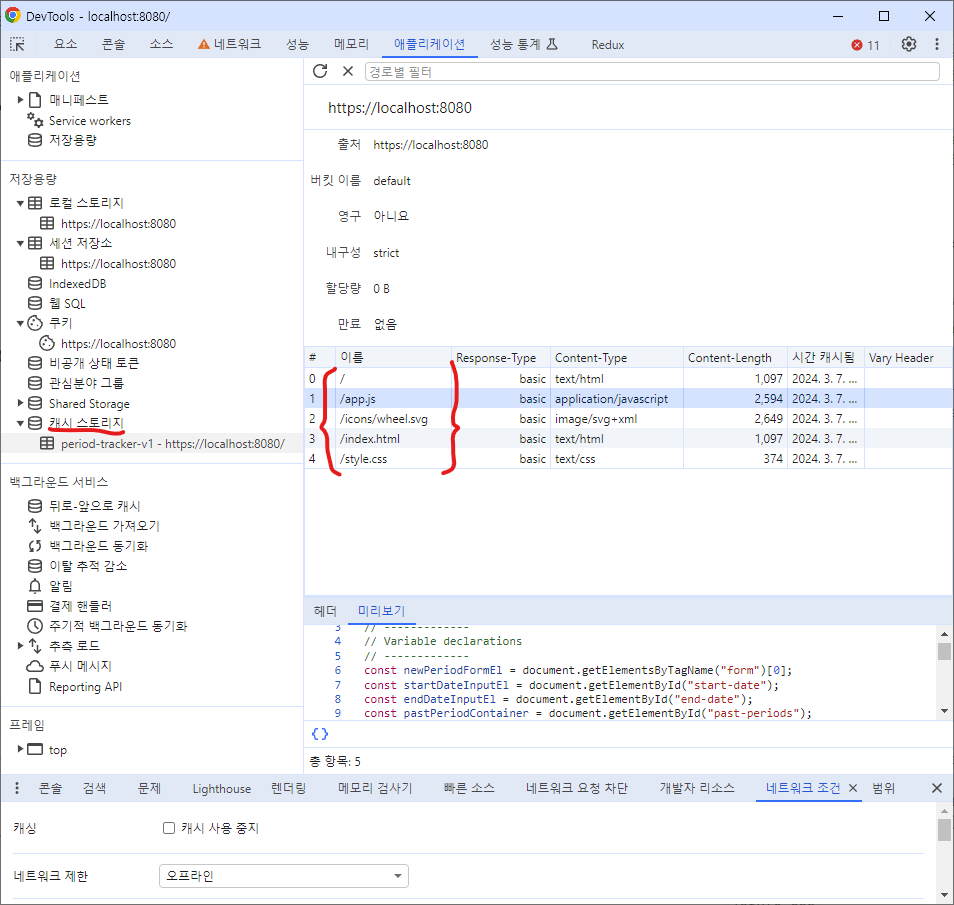
캐시에 APP_STATIC_RESOURCES들이 추가된 부분을 확인할 수 있음
index.html
<!doctype html>
<html lang="en-US">
  <head>
    <meta charset="utf-8" />
    <meta name="viewport" content="width=device-width" />
    <title>Cycle Tracker</title>
    <link rel="stylesheet" href="style.css" />
    <link rel="manifest" href="cycletracker.json" />
    <link rel="icon" href="icons/circle.svg" />
  </head>
  <body>
    <h1>Period tracker</h1>
    <form id="new-period">
      <fieldset>
        <legend>Enter your period start and end date</legend>
        <p>
          <label for="start-date">Start date</label>
          <input type="date" id="start-date" required />
        </p>
        <p>
          <label for="end-date">End date</label>
          <input type="date" id="end-date" required />
        </p>
      </fieldset>
      <p>
        <button type="submit">Add Period</button>
      </p>
    </form>
    <section id="past-periods"></section>
    <script src="app.js" defer></script>
    <!-- 추가됨 -->
    <script>
      if ("serviceWorker" in navigator) {
        navigator.serviceWorker.register("sw.js");
      }
    </script>
  </body>
</html>
sw.js
// The version of the cache.
const VERSION = "v1";

// The name of the cache
const CACHE_NAME = `period-tracker-${VERSION}`;

// The static resources that the app needs to function.
const APP_STATIC_RESOURCES = [
  "/",
  "/index.html",
  "/app.js",
  "/style.css",
  "/icons/wheel.svg",
];

// On install, cache the static resources
self.addEventListener("install", (event) => {
  event.waitUntil(
    (async () => {
      const cache = await caches.open(CACHE_NAME);
      cache.addAll(APP_STATIC_RESOURCES);
    })()
  );
});

// delete old caches on activate
self.addEventListener("activate", (event) => {
  event.waitUntil(
    (async () => {
      const names = await caches.keys();
      await Promise.all(
        names.map((name) => {
          if (name !== CACHE_NAME) {
            return caches.delete(name);
          }
        })
      );
      await clients.claim();
    })()
  );
});

// On fetch, intercept server requests
// and respond with cached responses instead of going to network
self.addEventListener("fetch", (event) => {
  // As a single page app, direct app to always go to cached home page.
  if (event.request.mode === "navigate") {
    event.respondWith(caches.match("/"));
    return;
  }

  // For all other requests, go to the cache first, and then the network.
  event.respondWith(
    (async () => {
      const cache = await caches.open(CACHE_NAME);
      const cachedResponse = await cache.match(event.request);
      if (cachedResponse) {
        // Return the cached response if it's available.
        return cachedResponse;
      }
      // If resource isn't in the cache, return a 404.
      return new Response(null, { status: 404 });
    })()
  );
});
더 오래하면 돼.