An Android Messaging Readiness Guide for Field and Mobile Teams
|
A device-readiness workflow for teams that depend on Android messaging while traveling, working on job sites, or operating under variable battery, storage, network, and notification conditions. |
A messaging app can install successfully and still fail in real field conditions. Notifications may arrive late, background work may stop, mobile data may be restricted, storage may fill during a shift, or a dual-SIM device may confuse the registration and recovery process.
Field readiness therefore has to test the complete communication path—from approved installation to recovery—rather than treating the app icon as proof that the device is ready.
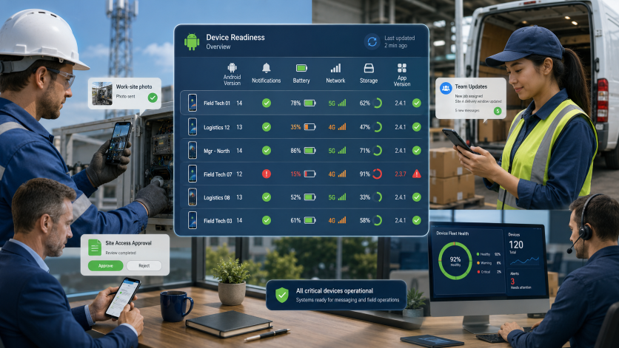
Figure 1. Readiness combines device inventory, notification tests, battery health, network behavior, and support ownership.
Create a Representative Device Inventory
Do not test only the newest phone in the office. Select devices that represent the real fleet: older Android versions, manufacturer-specific interfaces, work profiles, dual-SIM phones, low-storage devices, and models used in weak-network areas.
|
Inventory field |
Why it matters |
|
Manufacturer and model |
Battery and permission behavior can vary by vendor |
|
Android version |
Menu paths and background limits change over time |
|
Work profile or personal profile |
Notifications and file access may be separated |
|
SIM configuration |
Registration and roaming decisions may depend on the active line |
|
Free storage |
Low space can stop downloads and updates |
|
Support owner |
Each failed device needs an accountable follow-up path |
Verify the Installation Source First
The deployment process should begin with one approved source. Teams using a documented telegram 安卓下载 entry should record the expected package name, update method, and the person responsible for maintaining the internal instruction. Users should not install forwarded APK files or packages obtained from unrelated download pages.
After installation, confirm the application appears under the expected publisher identity, receives updates through the approved channel, and does not request permissions unrelated to the team’s intended workflow.
Configure Permissions by Workflow, Not Convenience
Grant only the permissions required for the role. A field technician who sends site photographs may need camera and file access; a coordinator who only receives messages may not. Avoid the habit of approving every prompt without documenting why the permission is needed.
|
Permission |
Typical business use |
Validation |
|
Notifications |
Urgent messages and assignments |
Send a timed test while the screen is locked |
|
Camera |
Site photos and QR workflows |
Capture and send a non-sensitive test image |
|
Files and media |
Documents, images, and downloads |
Open a test file and confirm storage location |
|
Microphone |
Voice messages or calls |
Record a short test and review playback |
|
Contacts |
Optional discovery or calling |
Confirm the role genuinely requires it |
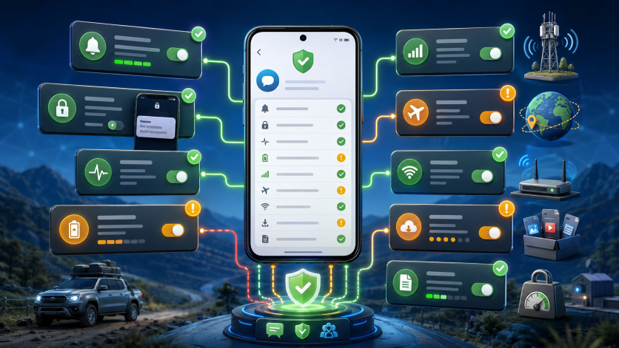
Figure 2. Messaging readiness depends on several Android controls that must work together under real network conditions.
Test Notifications Under Four Conditions
- App open and device unlocked.
- App in the background with the screen unlocked.
- Device locked for at least ten minutes.
- Battery-saver mode enabled or the device below the team’s low-battery threshold.
Record both delivery time and alert behavior. A message that appears only after the user opens the app is not a successful notification test. Check sound, vibration, lock-screen privacy, badge count, and the escalation path for missed alerts.
Review Battery and Background Controls
Some Android builds aggressively suspend background activity. Excluding every app from battery optimization is not a sustainable policy, so use a role-based exception: only devices that must receive time-sensitive alerts should receive the least restrictive setting compatible with the organization’s battery policy.
- Confirm the app is not placed in a sleeping-app list.
- Test after a device restart.
- Test after the screen has been off for an extended period.
- Check whether a work profile pauses outside scheduled hours.
- Document any manufacturer-specific menu path.
Simulate Network and Roaming Conditions
A field workflow should be tested on office Wi-Fi, mobile data, a weak signal, and—where relevant—roaming. Confirm that text messages, images, and small documents behave predictably when the network drops and returns.
|
Scenario |
Test |
Pass condition |
|
Wi-Fi to mobile handoff |
Send a message during the transition |
Message delivers without duplicate action |
|
Weak signal |
Send text and a compressed image |
Queued items resume when connectivity returns |
|
Data restriction |
Disable background data temporarily |
User receives a clear support explanation |
|
Roaming |
Use an approved test plan |
No unexpected download behavior |
|
Offline period |
Create a draft while disconnected |
User understands what is queued and what is not |
Control Storage and Downloads
Field devices accumulate photographs, voice messages, videos, and duplicated downloads. Set a minimum free-space threshold, define which file types can download automatically, and provide a safe cleanup path that does not remove files still needed for work.
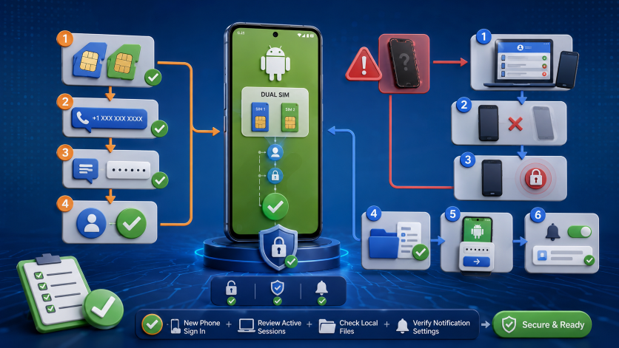
Figure 3. A secure mobile onboarding sequence covers SIM selection, sign-in, prior sessions, local files, notifications, and final verification.
Test Recovery Before the Device Is Lost
Recovery should be tested while the user still has access to the device. Confirm the registered phone number, alternate contact process, approved method for receiving codes, and the procedure for closing old sessions. Never instruct users to share verification codes with support staff.
|
Android readiness checklist · The device and Android version are recorded. · The app was installed from the approved source. · Required permissions are documented by role. · Notifications were tested with the screen locked and battery controls active. · Wi-Fi, mobile data, and weak-network behavior were validated. · Free storage and download settings meet the team threshold. · Recovery and old-session removal procedures are understood. |
Conclusion
Android readiness is a combination of installation integrity, device policy, network resilience, and support ownership. A short representative-device test is far more valuable than assuming that one successful installation proves the entire mobile fleet is prepared.