래퍼(wrapper) 클래스
래퍼(wrapper)클래스를 이용하면 기본형 값을 객체로 다룰 수 있다.
래퍼 클래스의 생성자
| 기본형 | 래퍼클래스 | 생성자 |
|---|---|---|
| boolean | Boolean | Boolean (boolean value) Boolean (String s) |
| char | Character | Character (char value) |
| byte | Byte | Byte (byte value) Byte (String s) |
| short | Short | Short (short value) Short (String s) |
| int | Integer | Integer (int value) Integer (String s) |
| long | Long | Long (long value) Long (String s) |
| float | Float | Float (double value) Float (float value) Float (String s) |
| double | Double | Double (double value) Double (String s) |
래퍼 클래스들은 equals(), toStinrg()이 오버라이딩되어 있다. 또한, 래퍼 클래스들은 MAX_VALUE, MIN_VALUE, SIZE, BYTES, TYPE 등의 static상수를 공통적으로 가지고 있다.
오토박싱 된다고 해도 Integer객체에 비교연산자를 사용할 수 없고, 대신 compareTo()를 제공한다.
Number클래스
추상클래스로 내부적으로 숫자를 멤버변수로 갖는 래퍼 클래스들의 조상
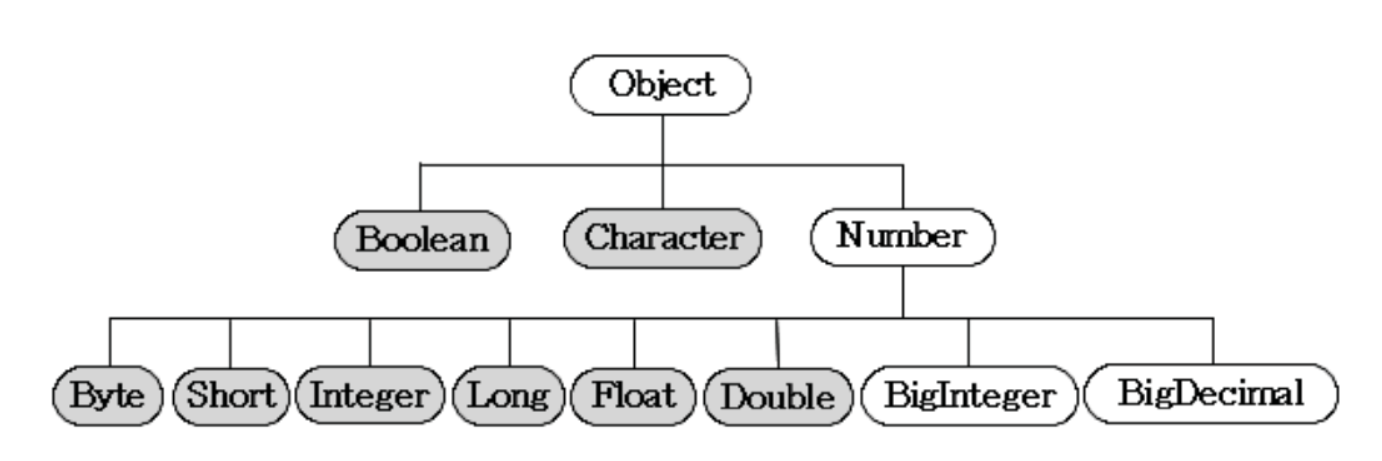
기본형 중 숫자와 관련된 래퍼 클래스들은 모두 Number클래스의 자손이다. Number클래스 자손으로 BigInteger와 BigDecimal 등이 있는데, BigInteger는 long으로도 다룰 수 없는 큰 범위의 정수를, BigDecimal은 double로도 다룰 수 없는 큰 범위의 부동 소수점수를 처리하기 위한 것으로 연산자의 역할을 대신하는 다양한 메서드를 제공한다.
오토박싱 & 언박싱(autoboxing & unboxing)
오토박싱(autoboxing) : 기본형 값을 래퍼 클래스의 객체로 자동 변환해주는 것
언박싱(unboxing) : 래퍼클래스의 객체를 기본형 값으로 자동 변환해주는 것 ArrayList<Integer> list = new ArrayList<integer>();
list.add(10); // (오토박싱) 10 -> new Integer(10)
int value = list.get(0); // (언박싱) new Integer(10) -> 10 java.util.Random클래스
💡 Math.random()을 이용한 메서드
- 배열 arr을 from과 to범위의 값들로 채워서 반환한다.
public static int[] fillRand(int[] arr, int from, int to) {
    for (int i = 0; i < arr.length; i++)
        arr[i] = getRand(from, to);

    return arr;
}- 배열 arr을 배열 data에 있는 값들로 채워서 반환한다
public static int[] fillRand(int[] arr, int[] data) {
    for (int i = 0; i < arr.length; i++)
        arr[i] = data(getRand(0, data.length - 1));

    return arr;
}- from과 to범위의 정수(int)값을 반환한다. from과 to 모두 범위에 포함된다.
public static int getRand(int from, int to) {
    return (int)(Math.random() * (Math.abs(to - from) + 1))
    											+ Math.min(from, to);
}
정규식(Regular Expression) - java.util.regex패키지
정규식이란 텍스트 데이터 중에서 원하는 조건(패턴, pattern)과 일치하는 문자열을 찾아내기 위해 사용하는 것으로 미리 정의된 기호와 문자를 이용해서 작성한 문자열을 말한다.
정규식을 정의하고 데이터를 비교하는 과정
- 정규식을 매개변수로 Pattern클래스의 static메서드인 Pattern copmile(String regex)을 호출하여 Pattern인스턴스를 얻는다.
Pattern p = Pattern.compile("c[a-z]*"); - 정규식으로 비교할 대상을 매개변수로 Pattern클래스의 Matcher matcher(CharSequence input)를 호출해서 Matcher인스턴스를 얻는다.
Matcher m = p.matcher(data[i]); - Matcher인스턴스에 boolean matches()를 호출해서 정규식에 부합하는지 확인한다.
if(m.matches())
참고 자료
- 자바의 정석 3판

지연_로딩