How Production Automation Software Is Revolutionizing Modern Manufacturing
Introduction
The manufacturing world is changing faster than ever. Gone are the days when manual labor and paper-based tracking ruled production floors. Today, production automation software is at the heart of a new industrial era, one defined by intelligence, connectivity, and precision.
In simple terms, production automation software refers to digital systems that manage, monitor, and optimize every stage of manufacturing. From machine scheduling to quality checks, these tools allow manufacturers to work smarter, faster, and more efficiently.
The Shift Toward Smart Manufacturing
Manufacturing has evolved from manual processes to intelligent automation driven by Industry 4.0, the digital revolution, integrating IoT, AI, and real-time analytics.
Smart factories now operate as connected ecosystems where machines communicate with each other, making independent decisions based on data. This transformation helps companies reduce costs, enhance product quality, and stay competitive in a global market.
Core Components of Production Automation Software
Process Control Systems
These systems handle core production operations, ensuring that machines perform tasks with precision and consistency
Robotics and Machine Integratio
Automated robots carry out repetitive and hazardous tasks with minimal supervision, improving safety and efficiency
Data Analytics and AI Insight
Automation software uses AI algorithms to analyze production data, detect inefficiencies, and optimize performance in real time
Key Benefits of Production Automation Softwar
- Enhanced Efficiency and Productivity
Automation reduces production time and eliminates repetitive manual tasks, allowing companies to meet growing demand with ease
- Reduction in Human Error
Machines follow set parameters, minimizing the risk of costly mistakes and ensuring consistent output
- Improved Product Quality
With precise monitoring and automated inspection, the quality of products remains uniform across batches
- Cost Reduction and Energy Optimization
Automated systems identify waste and optimize energy use, resulting in significant cost savings over time.
Real-Time Monitoring and Predictive Maintenanc
Production automation software uses IoT sensors to track machine performance continuously. When abnormalities arise, the system triggers alerts before breakdowns occur
This predictive maintenance approach reduces downtime, extends machine life, and ensures uninterrupted production cycles.
Data-Driven Decision Making
Automation isn’t just about machines; it’s about smart decision-making.
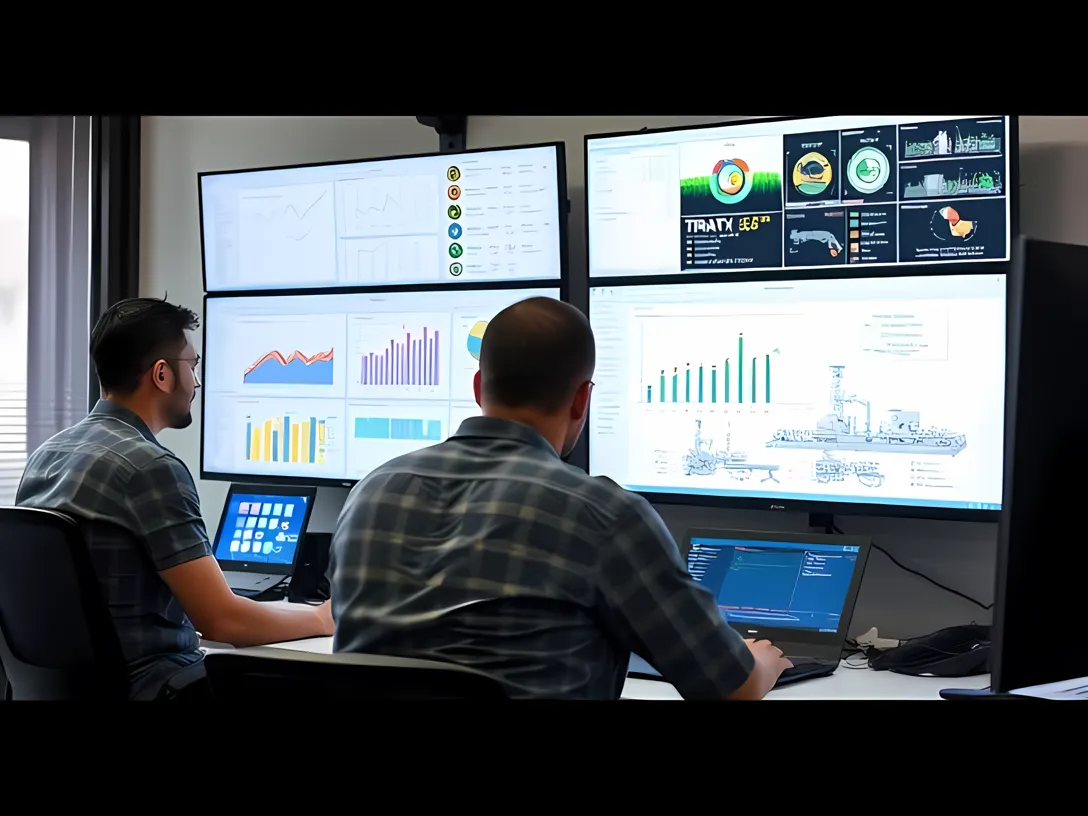
By integrating automation software with ERP (Enterprise Resource Planning) and MES (Manufacturing Execution Systems), managers gain access to live dashboards that highlight bottlenecks and performance trends, leading to data-backed decisions that improve output.
Customization and Scalability
Every manufacturing process is unique. Modern automation software offers modular designs, allowing companies to customize solutions based on production needs. As a business grows, these systems can scale, adding new features, machines, or even facilities without major reengineering.
Impact on Workforce and Skill Development
Automation doesn’t eliminate jobs, it transforms them.
Workers shift from repetitive tasks to roles that require creativity, critical thinking, and digital skills. Companies are investing in reskilling programs to prepare employees for the digital manufacturing landscape.
Sustainability Through Automation
Automation software promotes sustainability by optimizing energy use and reducing waste. Smart sensors detect inefficiencies in processes, while AI algorithms adjust machine operations to minimize environmental impact.
In essence, automation not only improves profits but also supports a greener future for manufacturing.
Case Studies in Modern Manufacturing
Automotive Industry
Car manufacturers use robotics for assembly lines, improving precision and reducing defects.
Electronics and Semiconductors
Automation ensures accuracy in micro-level production and cleanroom environments.
Food and Beverage
From automated packaging to quality checks, production software ensures hygiene and consistency in every batch.
Overcoming Challenges in Automation Adoption
Implementation Costs and ROI
While the initial investment may seem high, long-term savings from efficiency and reduced waste quickly justify the cost.
Integration with Legacy Systems
Modern software is designed to integrate seamlessly with older equipment, protecting existing investments.
Cybersecurity Concerns
Manufacturers must prioritize data security to protect connected systems from cyber threats.
The Role of Artificial Intelligence and Machine Learning
AI and ML play vital roles in predicting demand, scheduling production runs, and detecting defects automatically. These technologies enable adaptive manufacturing systems that learn from data and continuously improve performance.
Future Trends in Production Automation
Autonomous Factories
Fully automated plants capable of self-optimization and self-correction are on the horizon.
Edge Computing and 5G
With faster data transfer and local processing, manufacturers can make real-time adjustments without delays.
Human-Robot Collaboration
Collaborative robots (“cobots”) are designed to work safely alongside humans, combining precision with flexibility.
Conclusion
Production automation software is redefining modern manufacturing. It bridges the gap between humans and machines, transforming factories into intelligent, data-driven ecosystems. As technology continues to evolve, automation will remain the foundation for efficient, sustainable, and resilient manufacturing across industries.
FAQs
- What industries benefit most from production
automation software?
Industries such as automotive, electronics, pharmaceuticals, and food processing benefit the most due to their high precision and volume requirements
- Can small manufacturers afford automation solutions?
Yes. Many scalable and affordable automation tools are designed specifically for small and medium-sized enterprises (SMEs).
- How does automation improve product quality?
Automation ensures consistent production parameters, reducing defects and variations in product quality.
- What is the future of human jobs in automated industries?
Automation shifts the workforce toward higher-skill roles like programming, data analysis, and system maintenance.
- How to choose the right automation software for your business?
Assess your production goals, scalability needs, and integration compatibility before selecting a vendor or platform.