Top Use Cases of Automation Solutions in Manufacturing
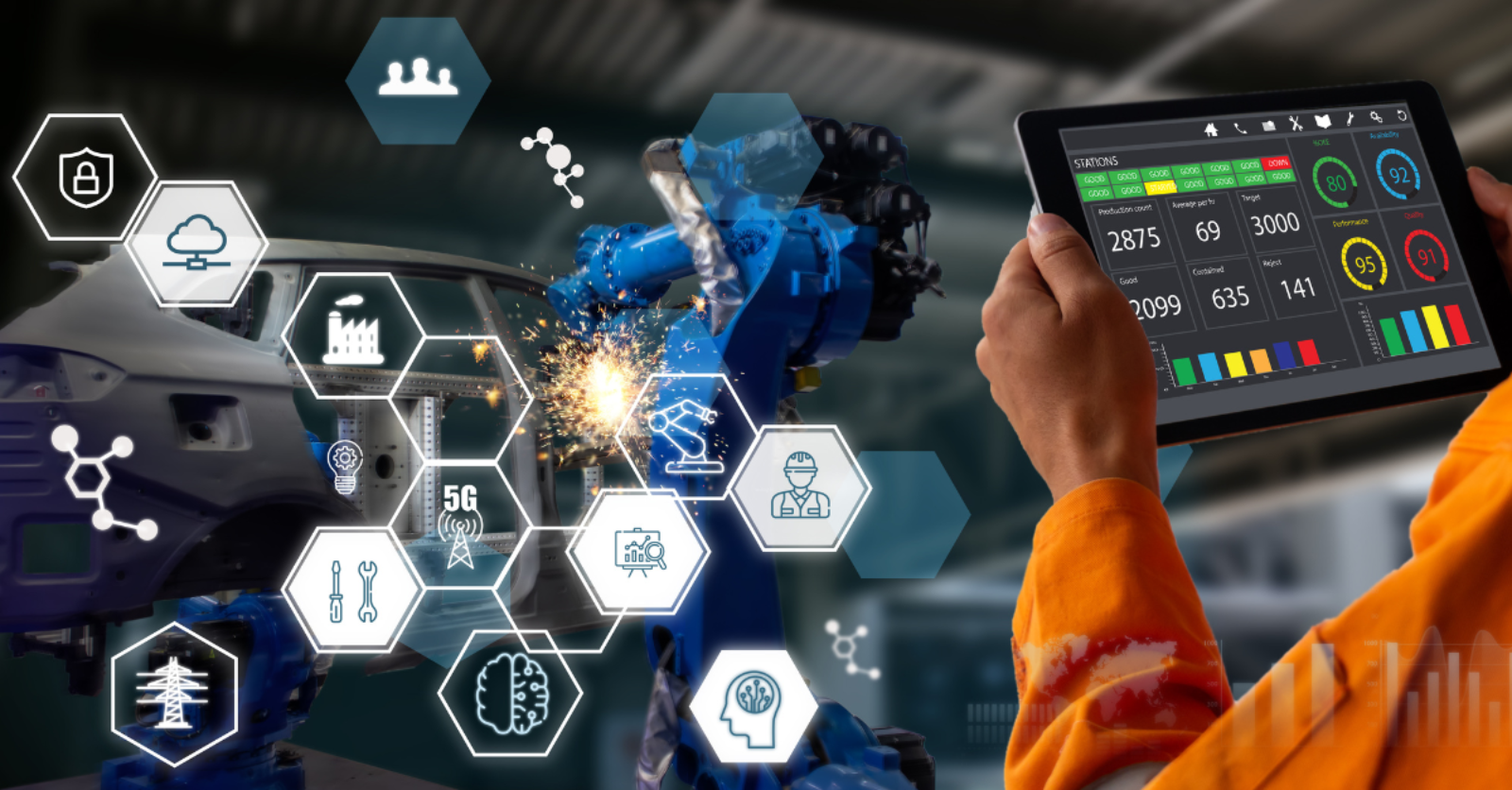
Manufacturers worldwide are racing to automate as labor costs rise, supply chains globalize, and quality demands tighten. The global industrial automation market is projected to reach $226.8 billion in 2025, with Asia Pacific alone contributing ~39% of this revenue. Companies in North America, Europe and Asia are adopting a mix of mature and emerging automation tools from robots to AI analytics to boost throughput, cut costs, and ensure product quality. The following sections survey the leading categories of manufacturing automation, with real-world examples and quantified benefits. Key use cases span automotive, electronics, food and beverage, chemicals and more, illustrating how smart factories on three continents gain competitive edge.
1. Robotics and Cobots
Industrial robots and collaborative robots (“cobots”) handle high-volume, repetitive tasks with speed and precision, freeing human workers for complex jobs.
Global examples: In Asia, Toyota Motor Hokkaido (Japan) deployed Universal Robots (UR) cobots to load differential-pinions, raising line utilization from 92% to 98%. Another Japanese firm, Yokoyama Kogyo, paired a UR5 robot with a gripper for parts loading and saw a 35% cost reduction in machining. In Europe, German glass-maker Hofmann Glastechnik uses eight UR cobots to tend glass lathes, stabilizing quality and gaining 25% higher.
productivity with payback under 12 months. In North America, Task Force Tips (USA), a firefighting-equipment maker, installed vision-guided UR5/UR10 cobots on CNC machines. The robots replaced four of seven machine operators, running unattended ~21 hours per day. As a result, spindle uptime is continuous, product quality has “gone to a whole other level”, and the robots paid for themselves in just 34 production days.
Cobots excel at machine tending, assembly, welding, material handling and bin-picking. For example, an Indiana plant uses two UR5s in tandem to feed lathes, achieving a 34-day ROI. By contrast, traditional heavy robots perform bulk welding and casting tasks but require safety cages. Cobots’ advantages include easy reprogramming and safety sensors, making them ideal for small/medium enterprises. Across industries, robotics (fixed and mobile) deliver tangible benefits: shorter cycle times, consistent quality and reduced work-in-progress. For instance, Chinese and Korean auto plants use articulated robots for spot welding and painting, achieving double-digit throughput gains and uniformity.
In automotive OEMs in Europe and North America, robots perform body assembly and chassis welds. Even non-auto factories employ robots: electronics manufacturers use 6-axis robots for PCB handling, and food companies use them for high-speed packaging. In each case, the business rationale is clear: robots extend “lights out” operation, improve ergonomics, and shrink per-part labor costs.
2. Predictive Maintenance (AI/ML)
Predictive maintenance uses sensors and machine learning to foresee equipment failures before they occur. By continuously monitoring vibration, temperature, oil and electrical signals, AI models detect early fault patterns that humans would miss. Executives value this approach because even a small reduction in downtime yields big savings.
Quantified impact: Studies report 18–25% lower maintenance costs and up to 50% less unplanned downtime after switching to predictive strategies.
Global use cases: An automotive assembly plant (North America) applied AI analytics to its welding robots and cutting machinery. Before PDM, the line suffered ~4.7 hours of unplanned downtime per week. After deploying AI models, downtime plunged to ~0.8 hours/week – an 83% reduction while maintenance costs dropped 47% and product quality improved 23%. In Europe, itsybizz Industry integrated IIoT sensors and its MindSphere platform across plants. Real-time data lets itsybizz flag performance bottlenecks and schedule service just-in-time, which has measurably boosted overall equipment effectiveness (OEE) and productivity.
In Asia, leading consumer-packaged-goods plants in Japan and China install wireless vibration sensors on pumps and motors; one case study (Asia’s sugar industry) showed 8+ hours of downtime averted per month. Aerospace and energy firms (e.g. GE Aviation) use predictive analytics on turbines and engines. GE reports its digital-twin engines cut unscheduled (reactive) maintenance by 40% and markedly increased uptime.
The business case for predictive maintenance is compelling worldwide. For a typical $10M plant, avoiding just a single week of major downtime can save many times the cost of the sensors and AI software. Multinationals often realize ROI in under a year. In discrete manufacturing, predictive alerts allow scheduling repairs during planned downtime or off-peak shifts, minimizing disruption. Strategic benefits also accrue: by extending machine life and reducing spare-parts inventory, companies strengthen resilience and capitalize on IoT/AI initiatives to stay ahead of competitors.
3. Quality Inspection and Vision Systems
Vision systems equipped with cameras and AI/ML inspect parts continuously for defects far faster and more accurately than humans. This automation is deployed globally in sectors like automotive, electronics, pharmaceuticals and food.
Key examples: BMW (Germany) uses AI-driven vision on its paint lines to catch scratches and dust on finished bodies; defects per panel dropped by ~40%. A major steel producer implemented an AI image-inspection system for slab cracks: accuracy jumped from ~70% (manual) to >98%, precision ~99.8%, saving $2 million annually. Coca-Cola’s bottling plants (North America/Europe) use deep-learning vision to detect label misprints and fill-level errors at high line speeds, virtually eliminating recalls.
Quantified outcomes: Modern AI vision tools commonly achieve 98–99% defect detection accuracy. In automotive component lines, AI vision has cut defect rates ~37–40% and boosted OEE by ~20–22%. One combined outcome is a 15–20% reduction in quality-related costs (scrap, rework, rejects) within 1–2 years. Crucially, vision automation also lowers labor costs: automated inspection replaces tedious manual checks, saving 15–20% on inspection labor. Global manufacturers report rapid payback: for example, a US plant’s AI system achieved ROI in under a year, with a 1900% ROI cited in a steel plant after one year.
Application domains: Beyond obvious tasks (detecting surface defects on machined parts or missing solder on electronics), vision systems handle gauging and sorting in pharma (vial fill-level and cap inspection), food packaging (bottle and can checks), semiconductor wafer and solar-cell yield monitoring, and print/thread verification in aerospace. The strategic appeal is strong: better quality means higher yield, less waste, fewer recalls and better brand reputation. In high-volume markets (Asia’s electronics fabs, European car lines, North American food plants), automated vision enables “100% inspection” at full production speed, which is virtually impossible manually. And with edge computing and AI accelerators, these systems can be rapidly trained on new product models, keeping pace with flexible manufacturing demands.
4. Material Handling and AGVs
Automated Guided Vehicles (AGVs) and Autonomous Mobile Robots (AMRs) transport materials and goods around factories and warehouses. This use case spans multiple continents: from Asian electronics plants to Western automotive factories and e-commerce distribution centers.
Examples: Toyota (Asia) deployed MasterMover autonomous tugs to carry heavy car-body subassemblies. Prior to automation, a worker spent all day manually ferrying resin door backings across the shop; after installing a MasterMover AGV, that operator was freed, and Toyota “delivered a return on investment within the first run”. Amazon’s US warehouses famously use thousands of Kiva robotic carts to shuttle shelves, speeding order fulfillment and cutting walking distance by up to 70% (third-party analysis). In Europe, BMW’s plants use AGVs to sequentially deliver just-in-time parts to lines.
Benefits: AGVs run continuously, improving throughput. One industry survey notes AGVs can boost throughput by up to 25% by eliminating forklift idle time. They also greatly improve safety by taking heavy lifting off humans, and by using onboard LIDAR/vision to avoid collisions. Cost-wise, each AGV can replace one or more operators (or eliminate overtime); typical ROI periods are often under a year. For instance, Toyota’s AGV freed a full-time position, and Amazon reported each warehouse robot reduced operating costs per item shipped.
AGVs are used in heavy industries as well. At a North American steel mill, AGVs haul mold cores and ingots; in aerospace (Europe/USA), AGVs move large fuselage sections on the assembly line. Global logistics/3PL firms are retrofitting AGVs into existing warehouses to handle pallets and kitting. Emerging mid-market players in China, India and Southeast Asia are adopting smaller, more flexible AGVs as their factories scale up. In summary, by automating internal logistics, manufacturers cut material-handling labor, shave floor space (fewer buffers), and smooth line feeding – all translating into higher OEE and lower unit costs.
5. Smart Sensors and IIoT (Industrial Internet of Things)
The backbone of modern automation is a network of smart sensors and IoT connectivity. These range from simple temperature/vibration sensors on a motor to RFID tags on a workpiece, all linked via Ethernet, 5G or wireless fieldbuses into analytics software. By instrumenting machinery and processes globally, manufacturers gain real-time visibility into every asset.
For example, Siemens outfitted its factories with IoT sensors feeding data to the MindSphere cloud. Dashboards now show KPIs like equipment health and yield across sites, which has led Siemens to identify inefficiencies and raise OEE. In North America, energy-intensive plants use smart meters and condition sensors to control power usage and avoid quality deviations. Asian conglomerates deploy massive sensor networks: a Chinese auto parts maker installed thousands of sensors on presses and conveyors, using edge-ML to predict jams before they happen.
The quantified impact of IIoT is considerable. A McKinsey study notes that digital monitoring can reduce maintenance costs by roughly 20% and uptime lost by up to 50%, consistent with the figures cited for predictive maintenance. Beyond maintenance, IIoT enables adaptive control: if a sensor detects a viscosity change in a chemical tank, the process controller can automatically adjust flow rates. This leads to better yield and less scrap. In pharma manufacturing, connected sensors tied to MES ensure each batch meets conditions (temperature, humidity) at every step, reducing failures.
Emerging 5G networks further amplify IIoT: modern private 5G can link thousands of wireless sensors and robots in a factory with low latency. For example, a major Asian semiconductor fab uses Wi-Fi 6 and 5G to connect wafer-probers and AGVs, achieving sub-second feedback loops. The net result of pervasive sensing is strategic: executives can implement enterprise-wide dashboards, enact predictive strategies, and integrate OT (operational technology) data into ERP and analytics. Companies report multi-point ROI: lower energy use, higher throughput, tighter supply integration and new business models (like performance-as-a-service) all come from sensor-driven IIoT.
6. Digital Twins and Simulation
A digital twin is a real-time virtual model of a physical system a machine, production line or entire factory that mirrors operations and allows “what-if” analysis. This technology is used worldwide to optimize design and operations before actual deployment.
Industry examples: Siemens’ Amberg Electronics Plant (Germany) maintains a digital twin of its PLC assembly line. By simulating changes in the virtual model, Siemens increased its production flexibility by 30% and productivity by 20%, while also improving space utilization 40%.
GE Aviation (USA) equips every jet engine with a digital twin updated by IoT data. This twin predicted maintenance needs, cutting reactive (crisis) repairs by 40% and extending engine life. In automotive manufacturing, BMW (Europe) uses digital twins of vehicle assembly lines to plan line ramps: simulations help reduce physical retooling, lowering defect rates.
Boeing (USA) is famous for its full-aircraft digital twin: by virtualizing each plane’s assembly, software reports claim an 80% reduction in assembly time and 50% faster software developmen. (Even if numeric claims vary, the trend is clear: digital twins dramatically shrink engineering lead times.)
Beyond big OEMs, smaller firms benefit too. Food producers, for instance, simulate new packing lines before installation, spotting conveyor jams or bottlenecks virtually. Process industries use process simulators as twins of reactors or pipelines to fine-tune control settings. The return on digital twin investments comes from accelerated time-to-market and error avoidance: a minor flaw caught in simulation might prevent millions in lost production. One global OEM reported that virtual commissioning of a new plant cut startup costs by ~15%. In summary, digital twins enable continuous improvement and agile response: if customer demand shifts, manufacturers can tweak the virtual plant and then implement changes on the floor with confidence, knowing throughput or quality targets will be met.
7. Process Control and MES Integration
This category covers control systems (PLCs, DCS, SCADA) and Manufacturing Execution Systems (MES) that tie shop-floor operations to business systems. Modern plants integrate automated control with data-rich execution software to achieve lean, traceable production.
Use cases: In the automotive supply chain, MES is ubiquitous. For example, Tier-1 auto suppliers (globally) use platforms like Ignition (Inductive Automation) to bridge PLC/SCADA with MES. One North American supplier linked their machine-floor PLCs into the MES to eliminate manual logbooks; this real-time data flow drastically cut unexpected downtime and errors. Ford (USA) uses integrated control/MES to schedule maintenance – when a sensor shows rising vibration, the MES alert leads to a pre-shift inspection. This predictive step “slashes downtime” and extends equipment life. Toyota (Japan) has standardized PLC/HMI interfaces across factories so that operators use the same dashboards everywhere, reducing training time and further boosting OEE.
In pharmaceuticals, MES ensures every batch meets regulatory standards. An East Asian drug manufacturer implemented MES dashboards tracking temperatures on clean-room equipment; real-time alerts and automatic recording gave 100% data integrity for audits, while also speeding up cycle times. Similarly, semiconductor fabs in Taiwan use MES/SCADA integration to coordinate wafer lots through multi-step processes, improving yield.
Quantified benefits: Companies report typically a 5–15% boost in OEE after MES integration, due to fewer scheduling delays and better uptime. One case saw a production line’s cycle time fall by 12% via MES-driven analytics. Traceability gains are enormous: defects can be traced to exact machine settings or material lots, reducing recalls. Overall, process control plus MES forms the digital “nervous system” of the factory, enabling continuous monitoring, analytics and coordination from the device level up to ERP. Executives leverage this integration to align production with demand, minimize WIP inventory, and make data-driven improvements all of which translate to the bottom line
For More Details Vist: https://itsybizz.com/Real-Time-Production-Automation-Software