
Intro Context
An Alternative to Props is Context
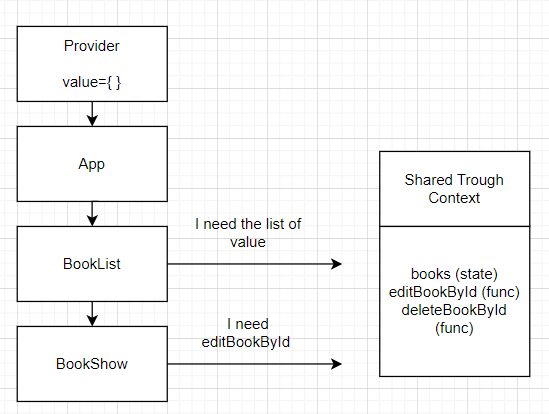
Context is not a replacement for Props , Redux
Using context
- Create the Context
import { createContext} from "react";

const BooksContext = createContext();
BookContext(App)
- Proviser = Component used to specify what data we want to share
< BooksContext.Provider />- Comsumer = Component used to get access to data
- Specity the data that will be shared
    <BooksContext.Provider value={valueToShare}>
      {children}
</BooksContext.Provider>-
value = 'value' props is special. This is what will be shared with rest app
-
{valueToShare} = Data being shared could be any (number, string, array , object)
-
{children} = This component can now access the value shared in context
- Consume the data
import {useContext } from "react";
import BooksContext from "../context/books";

function App() {
  const { num } = useContext(BooksContext);
  return
  <>{num}</>
  }
Changing Context Value
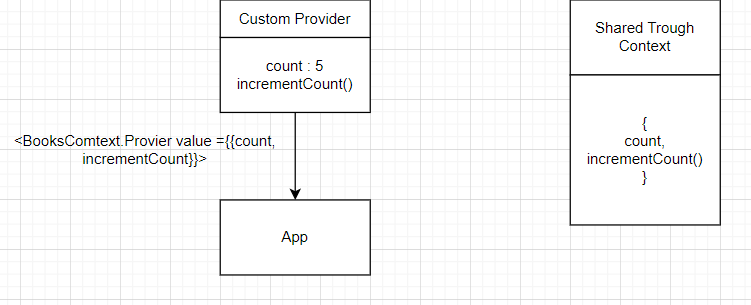
import { createContext, useState, useCallback } from "react";

const BooksContext = createContext();

function Provider({ children }) {
// custom Provider
  const [books, setBooks] = useState([]);

    const valueToShare = {
    books,
    deleteBookById,
    editBookById,
    createBook,
    fetchBooks,
  };

  return (
    <BooksContext.Provider value={valueToShare}>
    // valueToShare object we want to share
      {children}
    </BooksContext.Provider>
  );
}
When 'books' state is updated, this component will rerender along with all its component.
Application VS Component state
Application state : Data that is used by many different components
Component State : Data that is used by very few component
=> Both of those are still the same exact "state" we're been working on
=> These terms are a way to figure out how to hest design your state
Reusable Hooks
Hooks = Func that add additional features to a component.
useState, useEffect...
custom Hooks = functions we write to make reusable bits of logis
import {useContext } from "react";
import BooksContext from "../context/books";

function App() {
  const { fetchBooks } = useContext(BooksContext);
  // we always use those two togethre useContext(BooksContext)