1. JavaDoc
Java 소스 코드에서 HTML 형식의 API 문서를 생성하기 위해 사용되는 문서 생성기
-
다른 API를 하이퍼링크를 통해 접근할 수 있음
-
사용 목적
- 개발자들이 소스 코드에 대한 별도의 문서를 작성하지 않고 소스코드와 문서를 하나의 파일로 관리하기 위해 사용함
-
생성 방법
- Java 코드 → 어노테이션
- IDE → /** ⇒ javadoc.exe 실행하면 html 파일 생성됨
-
ex
package org.example.javadoc;

/**
 * javadoc 테스트
 */
public class Test {

    /**
     * 테스트 메소드
     * @param a 전달받은 매개변수
     * @return 'a test'
     */
    public String testMethod(int a) {
        return a + " test";
    }
}
javadoc -d docs Test.java-
-d docs
- 생성된 문서를 docs 폴더에 저장
-
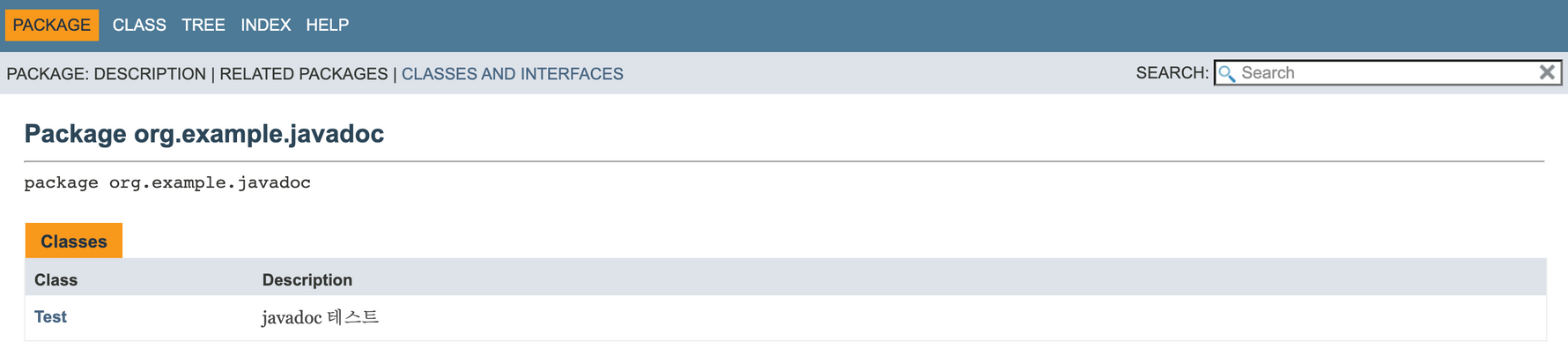
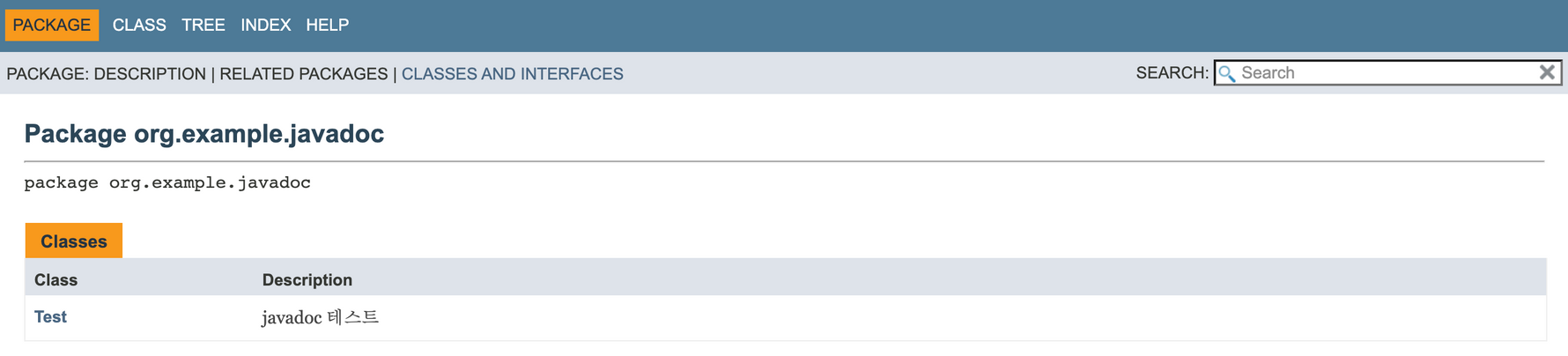
docs/index.html
- Test 링크
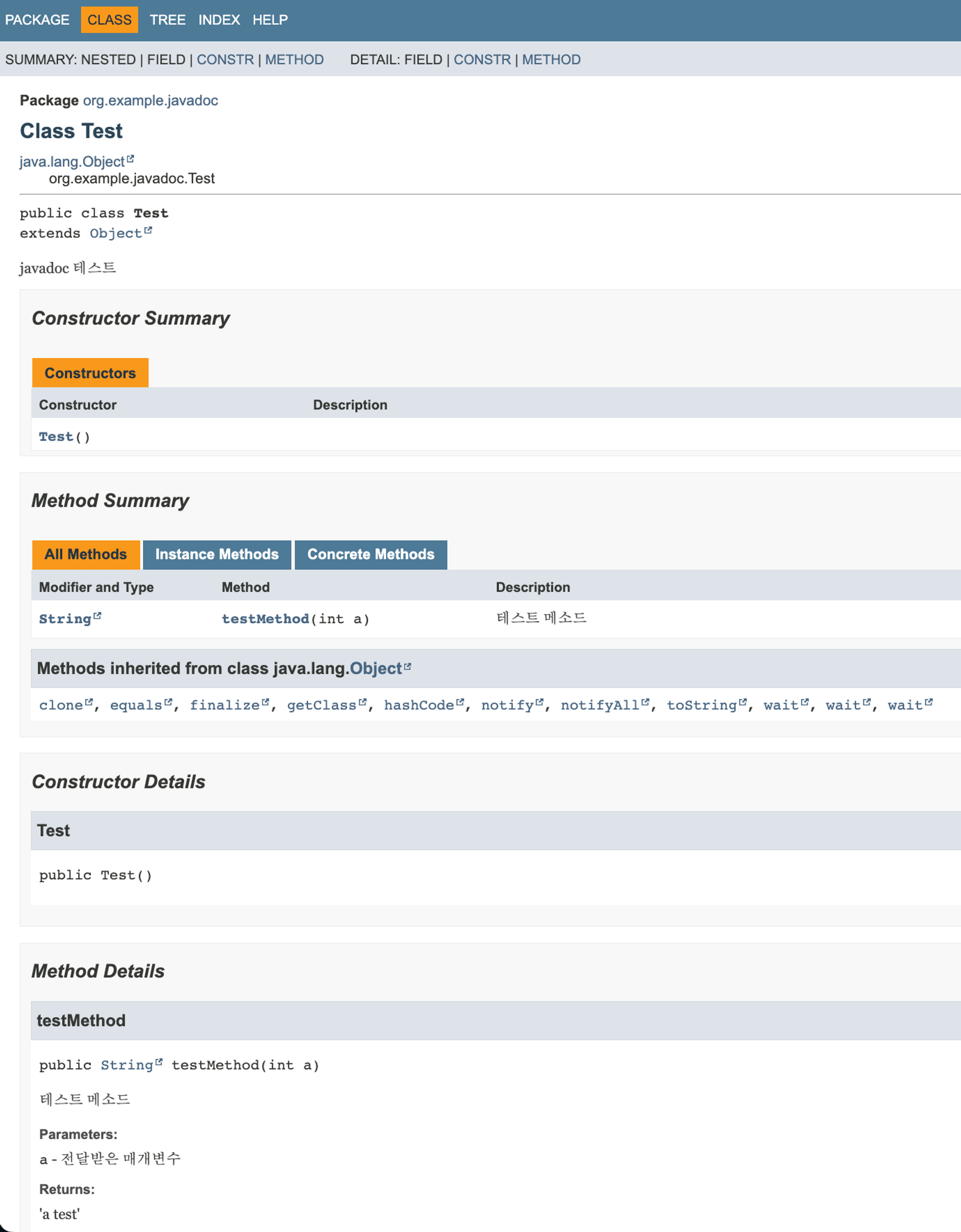
- Test 링크
-
JavaDoc Tag
- JavaDoc 문서를 작성하기 위해 필요한 tag
- 종류
- @param
- @return
- @see
- 다른 필드나 메소드에 대한 참조를 나타내고 싶을 때
- 인터페이스에서 구현된 메소드의 javadoc을 상속받고 싶을 때
- @author
- @deprecated
- @exception
- @serial
- @serialDate
- @serialField
- @since
- @throws
- @version
2. 어노테이션
자바 소스코드에 추가하여
코드에 대한 정보를 제공하는메타 데이터
⭐ 백기선님 라이브 스터디
어노테이션은 주석이다.
런타임 시 필요한 중요한 정보는 안들어간다.
컴파일러 수준에서 사용하는 정적인 정보들이다. 그 정보들로 문서를 만들 수 있다.
따라서 어노테이션에는 변수 자체가 들어갈 수 없다. 정적인 데이터이기 때문에 (static final은 들어갈 수 있음)
- 컴파일 & 런타임 시 코드를
어떻게 컴파일하고 처리할 것인지알려줌 - 모든 어노테이션은 java.lang.annotation.Annotation을 상속받음
- 어노테이션은 다른 어노테이션 상속 불가
- Annotation
package java.lang.annotation; /** * The common interface extended by all annotation types. Note that an * interface that manually extends this one does <i>not</i> define * an annotation type. Also note that this interface does not itself * define an annotation type. * * More information about annotation types can be found in section 9.6 of * <cite>The Java™ Language Specification</cite>. * * The {@link java.lang.reflect.AnnotatedElement} interface discusses * compatibility concerns when evolving an annotation type from being * non-repeatable to being repeatable. * * @author Josh Bloch * @since 1.5 */ public interface Annotation { boolean equals(Object obj); int hashCode(); String toString(); Class<? extends Annotation> annotationType(); }
- 용도
-
코드
문법 에러 체크를하도록 정보를 제공 (제약 사항 선언)ex) @Override, @Deprecated, @NotNull
-
빌드 툴이
코드를 자동 생성할 수 있도록 정보를 제공ex) Lombok - @Getter @Setter
-
런타임 시
특정 기능을 수행하도록 정보를 제공ex) Spring - @RequestMapping, @Autowired
-
- 사용하는 이유
- 어노테이션이 없을 때는
프로그램 관련 설정을 XML이나 properies라는 파일에 지정했음- 설정이 복잡해지면 파일이 커지고 복잡해져 이해하기 힘든 단점이 있었음
- 어노테이션을 사용하면서 설정이 필요한 위치에 어노테이션이 위치하기 때문에
가독성이 매우 좋아짐 - 추가로
롬복(lombok)이라는 툴을 이용하면 개발자가 필요한 작업을 어노테이션만으로 처리할 수 있기 때문에코드를 줄이고개발을 편하게할 수 있게 해줌
- 어노테이션이 없을 때는
3. 표준 어노테이션
자바 코드에서 사용하기 위해 정해져 있는 어노테이션
3.1 @Override
오버라이딩 한 메소드 앞에 붙이는 어노테이션
- 어떤 메소드가 오버라이딩 되었는지 알아보기 쉬움
- 오버라이딩 할 메소드와
메소드 시그니처또는리턴 타입이 다른 경우컴파일 에러남 → 제대로 오버라이딩 되었는지 확인할 수 있음
3.2 @Deprecated
자바 버전이 올라가면서 더 이상 사용되지 않는 클래스, 메소드에 붙이는 어노테이션
- Deprecated가 선언된 것을 사용하면 -Xlint:deprecation 옵션을 사용하라는 메세지가 나옴
- 해당 옵션으로 컴파일하면
경고와 함께 정상적으로 컴파일 됨 (에러x)
- 해당 옵션으로 컴파일하면
- 불필요한 클래스나 메소드를 당장 삭제하면 참조하고 있는 부분에서 문제가 생길 수 있기 때문에
하위 호환성을 위해 사용함
3.3 @SuppressWarnings
컴파일러에게 경고가 발생하지 않도록 명시하기 위해 사용하는 어노테이션
3.4 @FunctionalInterface
Functional Interface임을 명시하는 어노테이션
- Functional Interface
- 구현해야 할 추상 메소드가 1개인 인터페이스
- 해당 어노테이션을 인터페이스에 붙이면 추상 메소드가 1개임을 보장해줌
- 아닐 시 컴파일 에러 발생
+ 메타 어노테이션
4. 메타 어노테이션
어노테이션을 위한 어노테이션
❗ 개발자가 직접 어노테이션을 정의하고 사용할 일은 많지 않으므로 보고 이해할 수 있을 정도로만 파악하자
4.1 @Target
어노테이션 대상을 지정
- @Target을 생략하는 경우 모든 선언에서 사용할 수 있음
- ElementType
public enum ElementType { /** Class, interface (including annotation type), or enum declaration */ TYPE, /** Field declaration (includes enum constants) */ FIELD, /** Method declaration */ METHOD, /** Formal parameter declaration */ PARAMETER, /** Constructor declaration */ CONSTRUCTOR, /** Local variable declaration */ LOCAL_VARIABLE, /** Annotation type declaration */ ANNOTATION_TYPE, /** Package declaration */ PACKAGE, /** * Type parameter declaration * * @since 1.8 */ TYPE_PARAMETER, /** * Use of a type * * @since 1.8 */ TYPE_USE, /** * Module declaration. * * @since 9 */ MODULE }- TYPE_PARAMETER
- 제네릭의 타입 (타입 매개변수) 선언 시 사용 가능
public class MyClass<@MyAnnotation T> {
    // Class code...
}

public <@MyAnnotation T> void myMethod(T param) {
    // Method code...
}
- 제네릭의 타입 (타입 매개변수) 선언 시 사용 가능
- TYPE_USE
- 타입 선언시 사용되는 모든 곳에서 사용 가능
package org.example.annotation;

@MyAnnotation
public class TestClass<@MyAnnotation T> {

    @MyAnnotation("hi")
    int a;

    public<@MyAnnotation TT> @MyAnnotation String test(@MyAnnotation int a, T t, TT tt) {
        return "hi";
    }
}
- 타입 선언시 사용되는 모든 곳에서 사용 가능
- TYPE_PARAMETER
4.2 @Retension
어노테이션의
유지 시간(유지 정책)지정
- 유지 정책 종류
-
SOURCE- 소스 파일에만 존재
- 컴파일 시 사용할 수 없는 정보
- 바이트 코드에 존재하지 않음
- 주석처럼 보이는 용으로 쓰려고 하는 것 ex) Override → 오버라이딩 한 메소드임을 명시하고 타입 체크를 해줌
- 주석처럼 보이는 용으로 쓰려고 하는 것 ex) Override → 오버라이딩 한 메소드임을 명시하고 타입 체크를 해줌
- 거의 사용되지 않고 디버깅 목적으로 사용됨 ex) @Override, @SuppressWarnings
- 소스 파일에만 존재
-
CLASS-default- 클래스 파일에 정보가 저장됨
- 컴파일 시 사용할 수 있는 정보
- 바이트코드에 어노테이션 정보가 포함되어 있음
- but,
JVM 로딩 시에는 어노테이션정보가 누락됨 → 리플렉션을 사용할 수 없음
- 컴파일러에게 정보를 제공하기 위해 사용됨
- ex) 롬복(@Setter, @Getter), AOP
- 클래스 파일에 정보가 저장됨
-
RUNTIME
- 클래스 파일에 정보가 저장됨
- 실행 시 리플렉션을 통해 클래스 파일에 저장된 어노테이션 정보를 읽어서 처리함
- 이 때부터 리플렉션이 가능함public enum RetentionPolicy { /** * Annotations are to be discarded by the compiler. */ SOURCE, /** * Annotations are to be recorded in the class file by the compiler * but need not be retained by the VM at run time. This is the default * behavior. */ CLASS, /** * Annotations are to be recorded in the class file by the compiler and * retained by the VM at run time, so they may be read reflectively. * * @see java.lang.reflect.AnnotatedElement */ RUNTIME }
-
⭐ SOURCE → CLASS → RUNTIME
4.3 @Documented
어노테이션에 대한 정보가 JavaDoc 문서로 포함되도록 함
4.4 @Inherited
어노테이션이 자식 클래스에 상속되도록 함
- 부모 클래스에 있는 어노테이션을 자식 클래스에서도 동일하게 붙인 효과
4.5 @Native
네이티브 메소드가 참조하는 상수 필드에 붙임
5. 어노테이션 정의하는 방법
- @interface를 사용하여 선언
publicordefault
- 필드 (요소)
- 리턴 타입이 있고 매개변수가 없는
추상 메소드의 형태 - 무조건
public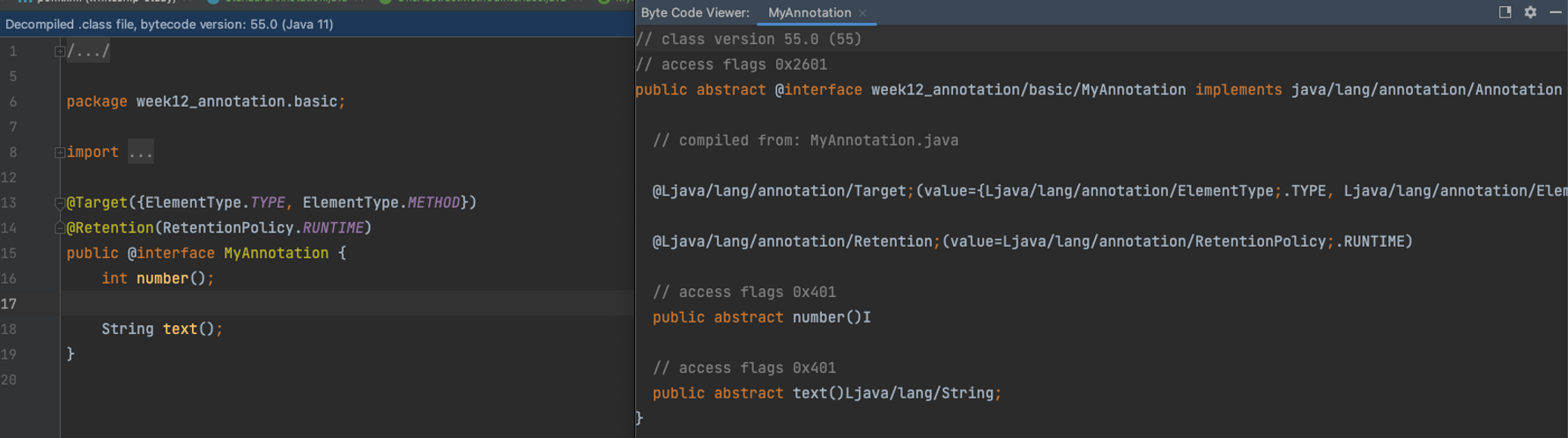
- number, text → public이 붙었음을 확인
- 여러 개의 요소가 존재할 수 있지만 어노테이션 사용 시 반드시 값을 입력해야 함
- 매개변수로 값을 넣어주지 않을거면 반드시 default로 기본값을 설정해놔야 함
- 리턴 타입이 있고 매개변수가 없는
- value()
- 어노테이션 매개변수의 기본값을 정의
- 매개변수로 특정 값을 지정하지 않고 값을 입력하면 value로 지정됨
- ex
@Target(ElementType.FIELD)
@Retention(RetentionPolicy.RUNTIME)
public @interface MyAnnotation {
    String value() default "value";

    String exp() default "exp";
}
package org.example.annotation; public class TestClass { @MyAnnotation("hi") int a; }package org.example.annotation; import java.lang.reflect.Field; public class AnnotationMain { public static void main(String[] args) throws NoSuchFieldException { TestClass testClass = new TestClass(); Field a = testClass.getClass().getDeclaredField("a"); MyAnnotation annotation = a.getAnnotation(MyAnnotation.class); System.out.println("annotation.value() = " + annotation.value()); System.out.println("annotation.exp() = " + annotation.exp()); } }annotation.value() = hi annotation.exp() = exp
5.1 어노테이션 요소의 규칙
- 요소의 타입은
기본형,String,enum,class,어노테이션만 허용 - () 내부에
매개변수 선언 불가 예외 선언 불가- 요소를
타입 매개변수(제네릭)로 정의 불가
5.2 선언한 어노테이션을 확인하는 방법
- 리플렉션 사용
@Target({ElementType.TYPE, ElementType.METHOD})
@Retention(RetentionPolicy.RUNTIME)
public @interface MyAnnotation {
    public int number();

    public String text();
}
public class UseMyAnnotation { @MyAnnotation(number = 3, text = "hi") void sampleMethod() { } public static void main(String[] args) throws NoSuchMethodException { Method method = UseMyAnnotation.class.getDeclaredMethod("sampleMethod"); MyAnnotation annotation = method.getAnnotation(MyAnnotation.class); int number = annotation.number(); String text = annotation.text(); System.out.println("입력받은 text를 number만큼 반복시키는 어노테이션"); for (int i = 0; i < number; i++) { System.out.print(text); } } } - 어노테이션 바이트 코드
public abstract @interface week12_annotation/basic/MyAnnotation implements java/lang/annotation/Annotation { // compiled from: MyAnnotation.java @Ljava/lang/annotation/Target;(value={Ljava/lang/annotation/ElementType;.TYPE, Ljava/lang/annotation/ElementType;.METHOD}) @Ljava/lang/annotation/Retention;(value=Ljava/lang/annotation/RetentionPolicy;.RUNTIME) // access flags 0x401 public abstract number()I // access flags 0x401 public abstract text()Ljava/lang/String; }- java.lang.annotation.Annotation 인터페이스를 구현함
- 어노테이션을 사용한 클래스의 바이트코드 (디컴파일 버전)
public class UseMyAnnotation { public UseMyAnnotation() { } @MyAnnotation( number = 3, text = "hi" ) void sampleMethod() { } public static void main(String[] args) throws NoSuchMethodException { Method method = UseMyAnnotation.class.getDeclaredMethod("sampleMethod"); MyAnnotation annotation = (MyAnnotation)method.getAnnotation(MyAnnotation.class); int number = annotation.number(); String text = annotation.text(); System.out.println("입력받은 text를 number만큼 반복시키는 어노테이션"); for(int i = 0; i < number; ++i) { System.out.print(text); } } }- 메소드에 붙은 어노테이션의 정보를 저장하고 있음
- @Override 어노테이션
-
@Retention(
RetentionPolicy.*SOURCE*)
- 어노테이션 정보가 바이트코드에 남아있지 않음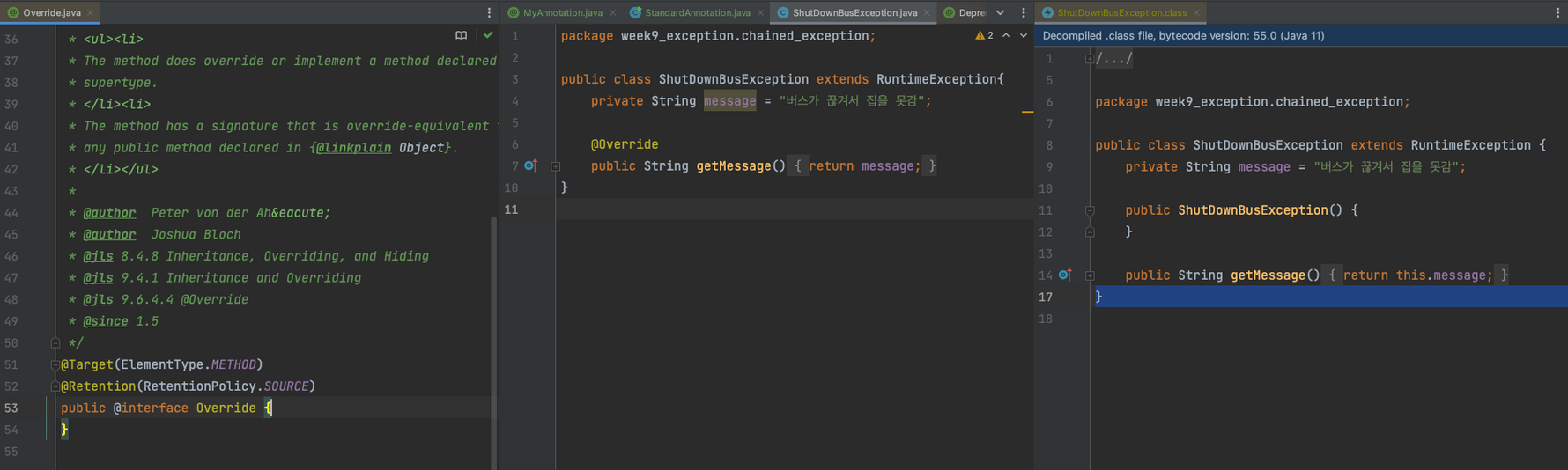
-
6. 어노테이션 프로세서
컴파일 시어노테이션을 읽고처리하는 프로그램
- 컴파일 시 특정 어노테이션이 있으면
사용자 지정 코드를 실행할 수 있음- 기존 코드를 검사, 수정 ex) @Override
- 새로운 코드를 생성 ex) Lombok - @Getter, @Setter, @Builder…
- 기존 코드를 검사, 수정 ex) @Override
컴파일 중에만 작동하고여러 개의 어노테이션 프로세서가 등록되어 사용됨- META-INF/services에 등록
- 어노테이션 프로세서를 직접 만들려면 javax.annotation.processing.
AbstractProcessor인터페이스를 구현해야 함- AbstractProcessor
package javax.annotation.processing; public abstract class AbstractProcessor implements Processor { ... public Set<String> getSupportedAnnotationTypes() { ... } ... /** * {@inheritDoc} */ public abstract boolean process(Set<? extends TypeElement> annotations, RoundEnvironment roundEnv); ... }-
getSupportedAnnotationTypes()
- 어떤 어노테이션에 대한 처리인지 판단
- 어노테이션_타입.getClass().getName()을 Set에 넣어서 리턴
-
process()
- 해당 어노테이션이 있는 경우 처리할 로직을 작성
- 클래스 (바이트코드) 생성 가능
- 소스 코드와 별개의 리소스 생성 가능⇒ 필요한 경우 자세히 찾아보기
-
- AbstractProcessor
- 장점
- 컴파일 시점에 조작하기 때문에 런타임 비용이 들지 않음
ServiceLoader
런타임 시 인터페이스 구현 클래스를 로드하고 인스턴스화 하여 주입해주는 유틸리티 클래스
java.lang.ServiceLoader
- 인터페이스만 제공하고 구현체만 바꿔 끼울 때 사용
- 각 제조사에서 다양한 구현체(jar) 생성했다고 가정했을 때 ServiceLoader가 jar 파일 내에 해당 인터페이스에 대한 구현체를 가져와서 개발자에게 제공함
- 그럼 특정 인터페이스를 구현한 구현체를 jar에서 어떻게 찾는가??
- ServiceLoader가 인스턴스화 될 때
META-INF/services/인터페이스 풀네임에서 해당 구현체를 찾고 클래스 로드를 함
- ServiceLoader가 인스턴스화 될 때
Reference
javadoc
어노테이션 프로세서 만들기