(paper) https://arxiv.org/abs/1505.07818
-
2016년 JMLR(Journal of Machine Learning Research)발표 논문.
-
이 논문은 Train과 test의 data distribution이 다른 경우, Domain Adaptation을 효과적으로 할 수 있는 새로운 접근방법을 제시.
1.Domain Adaptation
-
training distribution과 test distribution 간에 차이가 있을 때 classifier 또는 predictor의 학습 문제를 다루는 연구 분야.
-
train과 test분포가 약간 다른 환경에서 효율적인 학습을 진행하려는 과정이 Domain Adaptation(DA).
-
source(training time)과 target(test time) 사이의 mapping을 통해 source domain에서 학습한 classifier가 target domain에서도 효과적으로 동작하는 것을 목표.
-
두 가지의 domain(source domain and target domain)에 대하여 한 쪽의 domain을 다른 쪽으로 조정/맞추려(adapt)하는 것.
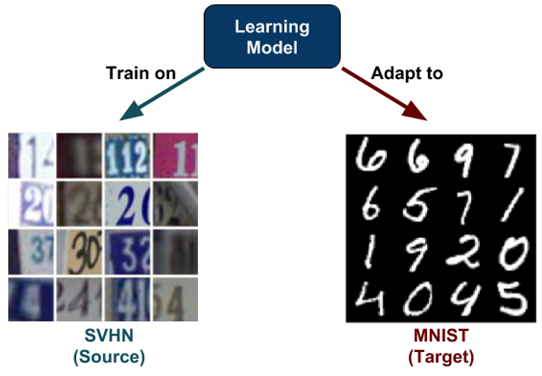
- 위 그림을 참고할 때, SVHN숫자 dataset에서 training시킨 네트워크로 전혀 다른 style을 갖는 MNIST 숫자 dataset을 분류하는 데에 쓰고 싶을 때 두 domain의 간격을 줄여주는 방법(=domain adaptation).
용어 정리
- train dataset : source dataset
- test dataset : target dataset
- train domain : source domain
- test domain : target domain
- Multi source domain adaptation : 다양한 domain이 source domain으로 주어짐
- Multi target domain adaptation : 다양한 domain이 target domain으로 주어짐
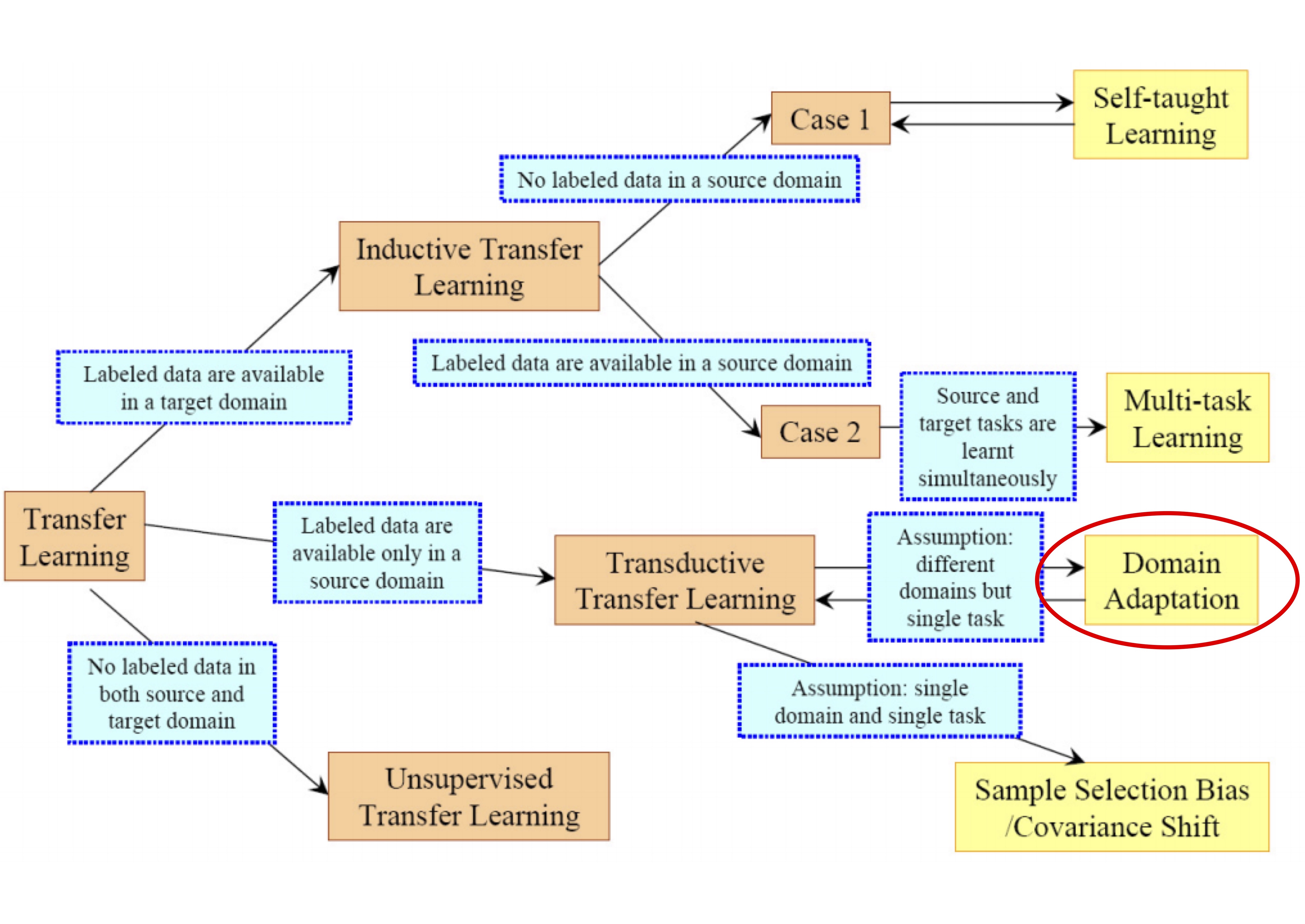
- Domain Adaptation은 Transfer learning에 속하며, source domain에서만 label data가 존재하는 경우를 다룬다.
2.Domain Adaptation(DA) 이론적 배경
-
DA의 이론적 배경은 논문 “Analysis of Representations for Domain Adaptation”에 기반한다.
Analysis of Representations for Domain Adaptation, S.Ben-David, 2006
(paper) https://webee.technion.ac.il/people/koby/publications/nips06.pdf -
본 논문에서 풀고자하는 문제는, input space X에서 label의 집합인 Y={0, ... , L-1} 로의 classification task이다.

-
제안하는 알고리즘의 목표는 target domain의 label에 대한 정보가 없더라도 target risk가 낮도록 classifier η 를 만드는 것이다.
-
목적은 target domain error를 줄이는 것이다.
target domain error는 source domain error + domain divergence로 upper bound를 정할 수 있다.
즉, source domain에서 classify를 잘하고, source domain과 target domain의 거리가 가깝다면 target error가 작을 것 이다.
-
두 domain간의 거리는 아래 식과 같이 H-divergence로 계산할 수 있다.
(H-Divergence는 Domain Divergence를 정의하기위해 나온 개념 중 하나) -
S.Ben-David는 H-divergence를 다음과 같이 정의했다.
H-divergence
: 여러 domain classifier를 원소로하는 classifer η 집합을 hypothesis class H라고 정의했을 때, H-divergence란 두 도메인을 잘 구분하는 classifier η 를 얼마나 담을 수 있는지는 뜻하기에 domain을 구분하는 능력을 의미한다.
classifier η가 H 안에 존재하려면(H는 classifier η의 집합이라고 위에 언급) H의 dimension은 충분히 커야한다. 그러나, complexity term이 존재하기에 H의 dimension은 한없이 커져서만도 안된다. 즉, 잘 구분하는 classifier η를 H에 포함할 수 있을 만큼 H의 complexity는 커야하지만, complexity가 너무 크다면, constant complexity의 값이 커져 결국 target error의 upper bound는 커져버리게 된다. 따라서 충분한 성능을 내는 classifier가 있어야 하나 이 classifier가 너무 복잡해서는 안 되겠다.그래서 간단한 MLP나 SVM을 주로 쓰나 보다. -
H가 symmetric할 때 empirical H-divergence를 계산할 수 있고, empirical H-divergence는 아래식과 같다.
'
- 여기서 I[a]는 a가 true면 1 아니면 0인 indicator function).
- empirical H-divergence 수식은 논문 Appendix에 아주 상세히 증명이 나와있음.
- 논문에서 empirical H-divergence수식이 위에 기재된거랑 다른데 typo 추정.
-
그러나, 일반적으로 empirical H-divergence 값을 정확하게 계산하는 것이 어렵기 때문에 아래의 식으로 근사하고, 근사한 식을 Proxy A Distance(PAD) 라고 부른다.
(이후 이 논문의 실험들에서는 이 PAD값을 사용함) -
여기서 ϵ은 classification error입니다. 즉, sample의 출처가 source domain인지 target domain인지 classifier가 정확히 구분할 수 있으면 ϵ=0 이다.
!! 정리하자면 !!
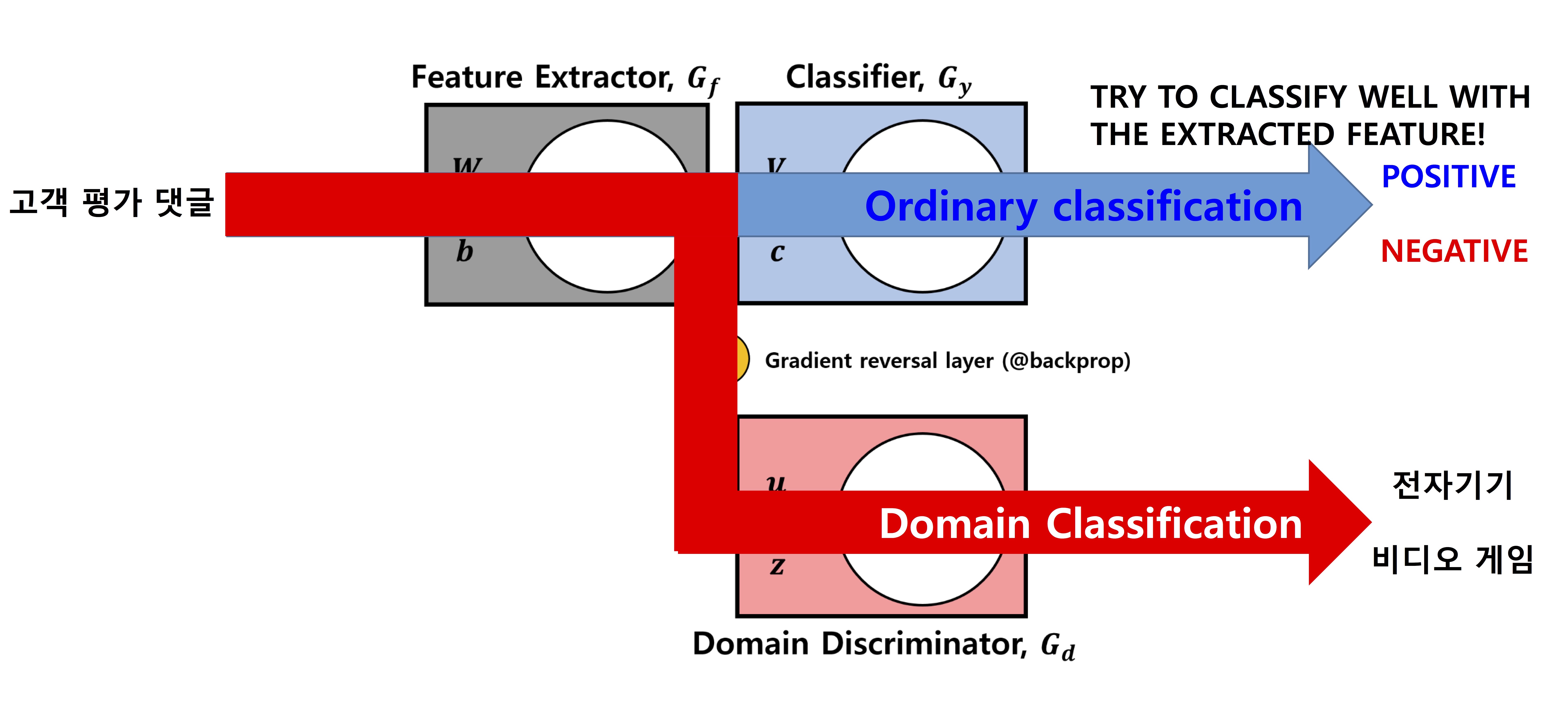
- 도메인이 달라지더라도 충분히 일반화할 수 있도록 모델을 학습하려면, source domain에서의 classifier 성능을 높이면서 한편 domain을 구분하는 성능은 낮아지게 훈련해야한다.
- 즉, 다른 말로 하면 label classifier의 loss를 minimize하면서 동시에 domain classifier의 loss를 maximize하도록 optimize하는 문제를 푸는 것이 되기 때문에 이 논문에서 adversarial이라고 표현!
3. Domain-Adversarial neural networks(DANN) 구조
-
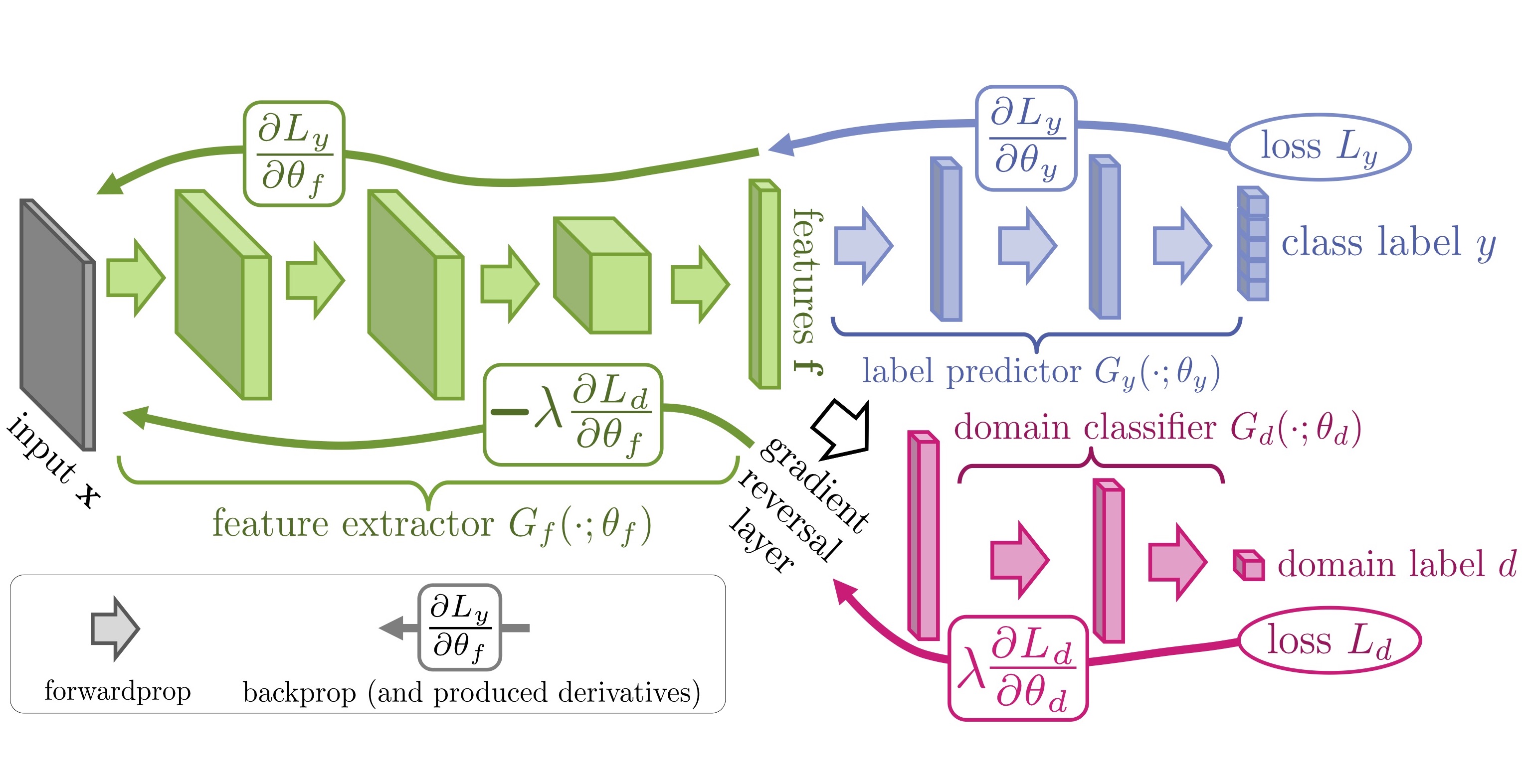
크게 feature extractor(초록), label predictor(파랑), domain classifier(빨강)로 구성되어 있다.
-
앞에서 설명한 것처럼 domain을 구분하는 성능을 낮추기 위해 추가된 부분이 domain classifier인데, 앞 단의 feature extractor와 gradient reversal layer (black)를 통해 연결되어있다.
-
논문의 목표는 앞의 feature extractor Gf 가 최대한 source와 target에 동시에 포함되는, domain의 특성을 지우고 class 분류에만 쓰인 특징을 뽑게 하는 것이다.
이를 위하여 back propogation시 domain label을 구분하는 분홍색 네트워크에서 뽑힌 loss에 -람다를 곱해 feature extractor weight를 업데이트한다.
이렇게 되면 아래 두개의 목적을 동시에 달성할 수 있게 된다.- MInimize Training classification error
- Maximize Training & test domain classification error
-
즉, 일반적인 neural network에서는 backpropagation을 통해 prediction loss를 줄이는 방향으로 gradient를 계산하는데, DANN에서는 domain classifier가 prediction을 더 못하게 하려는 것이 목적이므로 gradient reversal layer에서 negative constant를 곱해 부호를 바꿔 전달하는 것이다.
4. Experiments
-
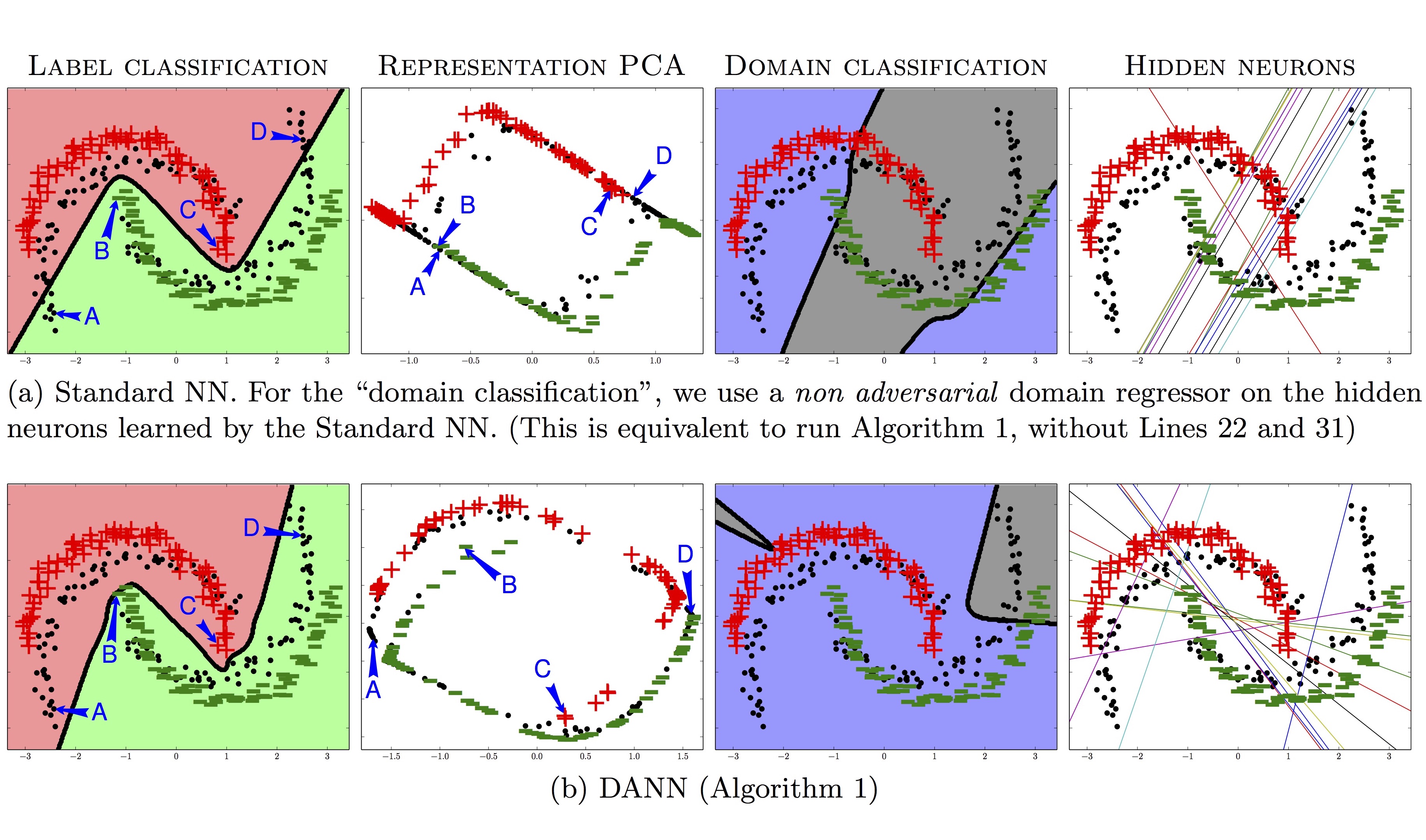
이 논문에서는 앞에서 보인 알고리즘을 inter-twinning moons 2D problem라고 하는 초승달 모양의 distribution을 가지는 dataset에 적용했다.
-
아래 그림에서 red 색의 upper moon이 source distribution의 label 1이고, green 색의 lower moon이 source distribution의 label 0입니다. black 색의 target distribution은 source distribution을 35도 회전시키고 label을 제거해서 만들었다.
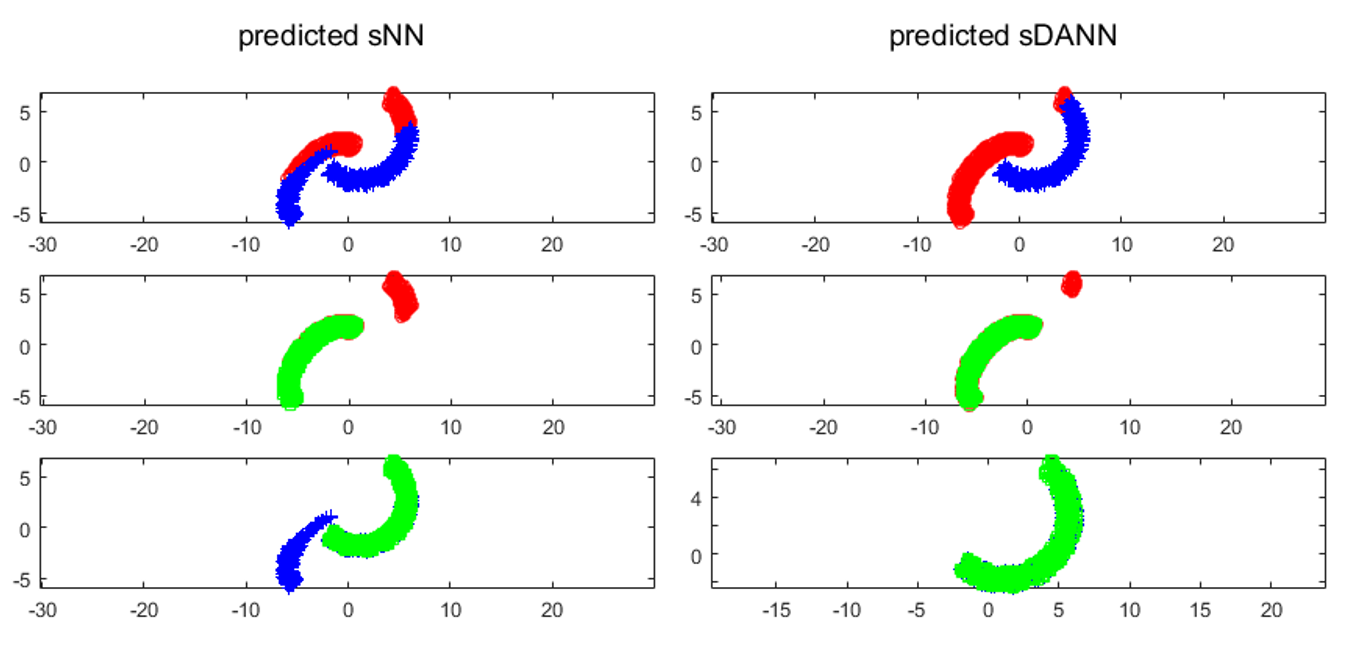
- 빨간색이 'o' 파란색이 '+'로 분류된 점들을 보여줍니다. 두 번째 줄과 세 번째 줄의 결과는 각각 'o'의 ground truth와 '+'의 ground truth를 초록색으로 겹쳐서 각각의 class label에 대해 결과가 어떻게 나왔는지 보여준다.
Reference
. https://jamiekang.github.io/2017/06/05/domain-adversarial-training-of-neural-networks/
. https://jaejunyoo.blogspot.com/2017/01/domain-adversarial-training-of-neural.html
. https://jayeon8282.tistory.com/7
. https://blog.naver.com/PostView.nhn?blogId=dmsquf3015&logNo=222029881504&categoryNo=6&parentCategoryNo=0&viewDate=¤tPage=1&postListTopCurrentPage=1&from=postView
. https://yjs-program.tistory.com/168
. https://www.youtube.com/watch?v=GmqW_v_bXiM
. https://towardsdatascience.com/inductive-vs-transductive-learning-e608e786f7d
. https://jayeon8282.tistory.com/7
. https://jamiekang.github.io/2017/06/05/domain-adversarial-training-of-neural-networks/
. https://www.codecogs.com/latex/eqneditor.php
. https://ifh.cc/
. https://jamiekang.github.io/2017/06/05/domain-adversarial-training-of-neural-networks/
. https://jamiekang.github.io/2017/06/05/domain-adversarial-training-of-neural-networks/