🗻 Overview
🎭
Proxy Serversand a ⚖️Load Balancercan be abstracted as anintermediarybetween aclientand aserver.Hence ⛩️
API Gatewayis theirsuper set.
In the following sections, the following topics will be discussed:
- 🌝
Forward Proxy - 🌚
Reverse Proxy - ⚖️
Load Balancer
where concisely, forward and reverse proxies as their names may suggest, refer to the position of a proxy server.
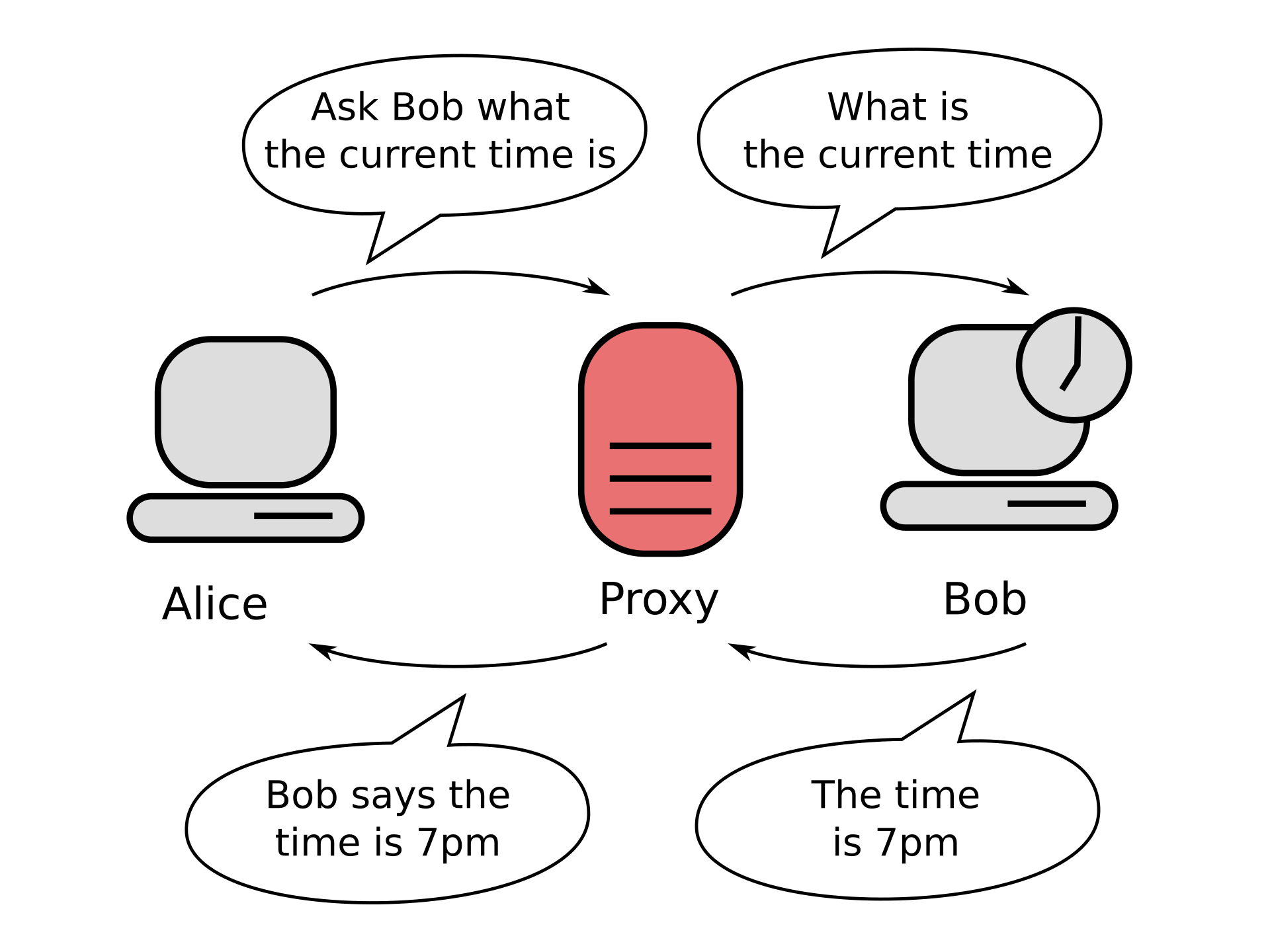
Wikipedia Available at here

🌝 Forward Proxy
🌝
Forward Proxyis aproxy serverthat is positioned between aclientand theinternetwhere aForward Proxybecomes aproxyfor aclient.
Forward Proxy receives all requests from the clients, and on behalf of these clients, a Forward Proxy may then send a request to a server as a proxy.
Forward Proxy is mostly used for:
-
Cliient Anonymity- in which a
serveris not aware of from where arequesthas been fetched.
- in which a
-
Cachingcachesa response.
-
Contents Filtering-
filters a
response(e.g.adults,user-preferences,etc). -
can block access to the sites on the
blackliststoo (e.g.government-blocked,school-blocked).
-
-
Encryption- can encrypt a
requestto aserver-compatible encrypted request.
- can encrypt a
-
Traffic Control- can limit the allowed
requestsin a certainwindow.
- can limit the allowed
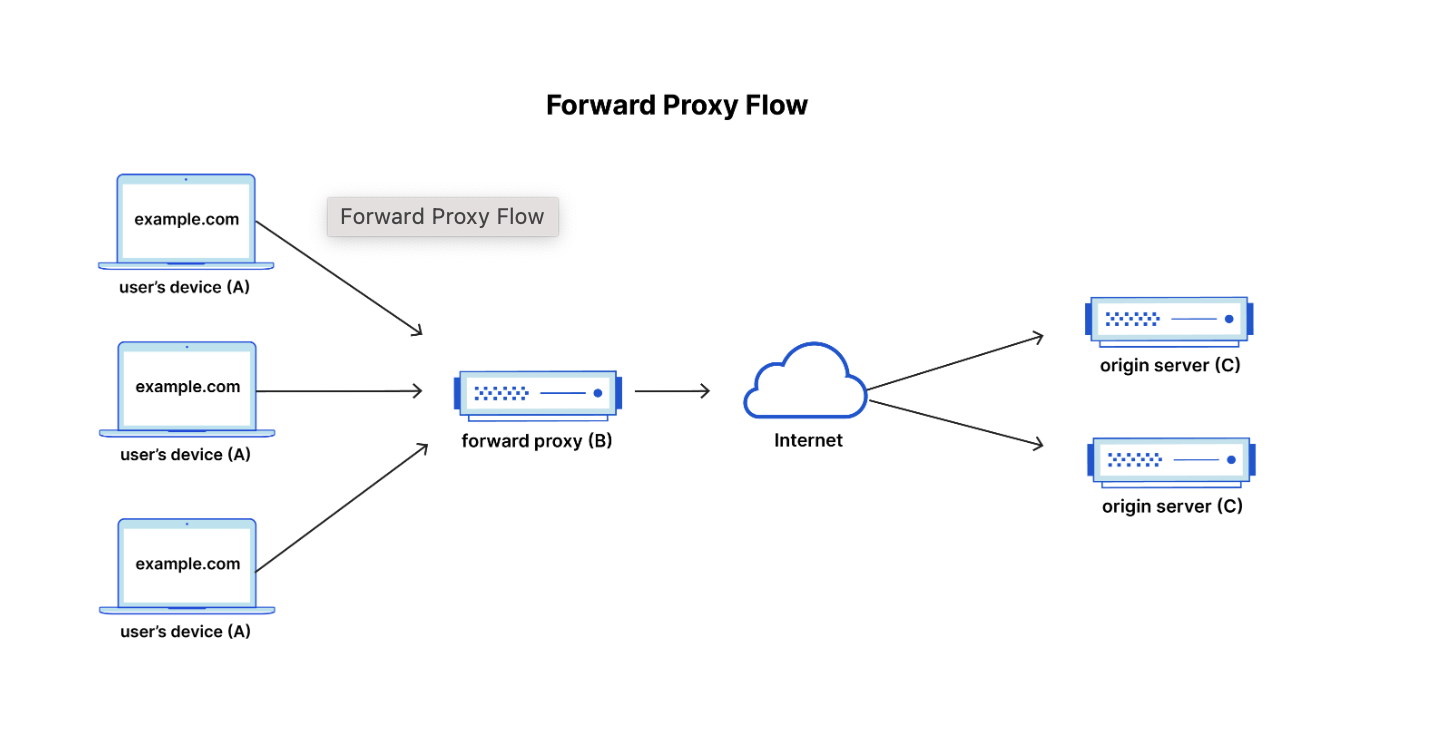
CloudFlare Available at here
🌚 Reverse Proxy
🌚
Reverse Proxyis aproxy serverthat is situated between theinternetand aserverwhere it becomes a reverse to aforward proxy. AReverse Proxyis aproxyfor aserver.
Reverse Proxy receives all requests on behalf of a server and further fetches those requests to the relevant servers if necessary. A Reverse Proxy then, after receiving a response from a server, may send such response to a client.
Reverse Proxy is specifically designed to improve server-side performances, and may achieve it via:
-
Load Balancing- can distribute the
incoming requestsevenly across the validservers.
- can distribute the
-
Server Anonymityenhances security-related features(e.g.DDoS Attacks).
-
Caching- caches
responses.
- caches
-
Encryption&Decryption- can decrypt a
requestand encrypt aresponseto aclient-compatible encrypted response.
- can decrypt a
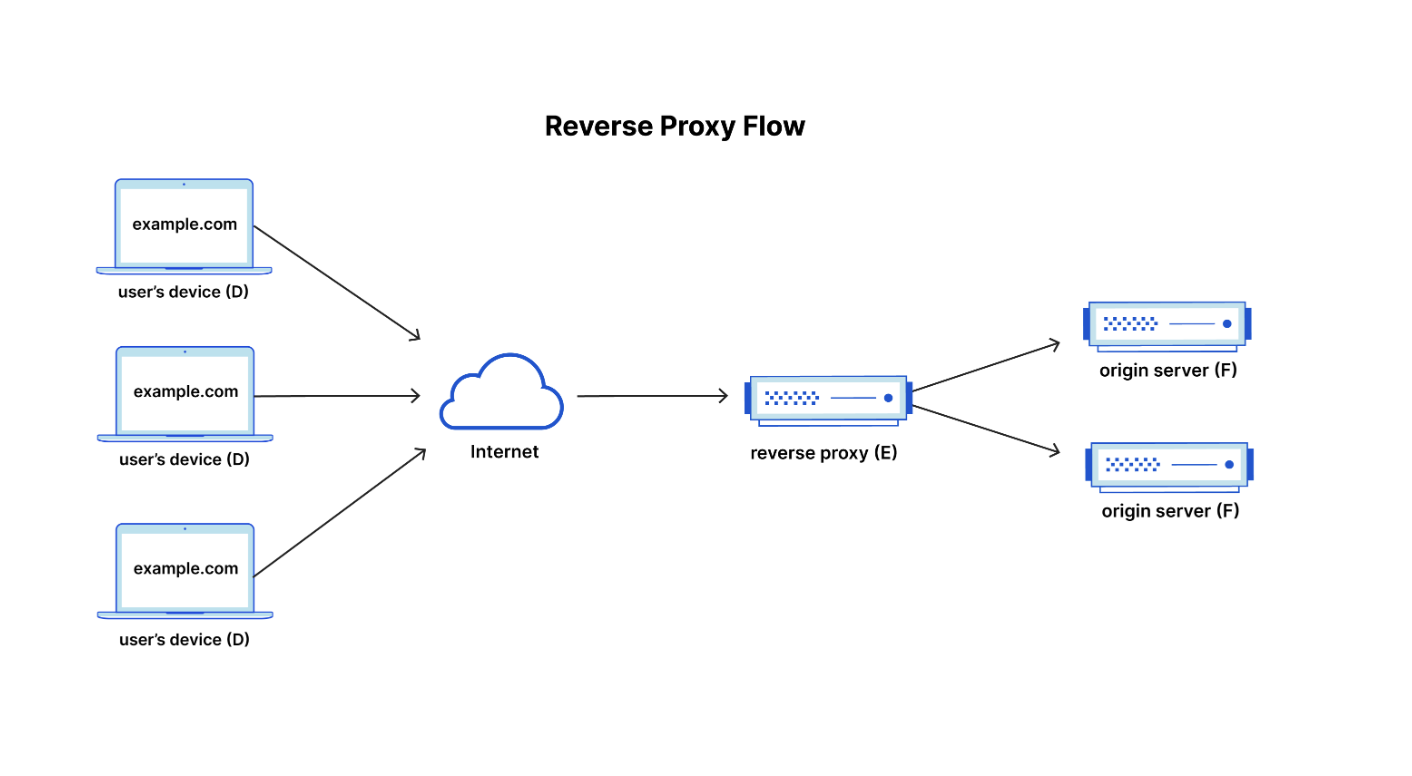
CloudFlare Available at here
⚖️ Load Balancer
⚖️
Load balancingis atechniquethat evenly distributesuser requestsacrossmultiple serversto prevent anysingle serverfrom becomingoverloaded. This enables the improvedavailabilityandreliabilityof theservice.
Load Balancer can be either implemented via a Reverse Proxy or a API Gateway or perhaps any developer-customised layers between the servers and the clients.
Often used algorithms for Load Balancing are:
Round RobinIP HashLeast Connection
... and more.
📚 References
Recently, I ran into a serious headache while trying to manage several Facebook ad accounts for a personal side project. Every time I switched between accounts or accessed them from a different location, Facebook would flag my activity and lock me out temporarily. The situation became so frustrating that I knew I had to find a more technical solution. That’s when I started exploring proxy sites for facebook and came across an article titled “The Best Proxies for Facebook in 2025”. The guide turned out to be much more detailed than I expected. It covered everything from residential proxies to mobile setups, explaining not only how to configure them safely but also why different types of proxies matter depending on your campaign strategy. I discovered that using a dependable residential proxy can make Facebook believe I’m logging in from another country entirely, which drastically reduces the risk of account restrictions while running multiple campaigns in different regions. The article also highlighted major providers like Smartproxy, Bright Data, and Proxy-Seller.io, describing the strengths of each—rotating IPs, dedicated addresses, bandwidth options, and even micro-packages suitable for smaller projects. I decided to test Smartproxy first, and to my surprise, the setup was relatively simple: download the software, assign an IP from a Facebook-friendly location, enable SSL encryption, and clear my browser cache. Moments later, I could access all my accounts without encountering any security alerts. What I found most useful were the practical tips sprinkled throughout the guide: maintain a clean cache, rely on encrypted connections, and stay away from free proxies that could compromise account security. I also learned about scheduling IP rotations and managing multiple accounts simultaneously without raising Facebook’s suspicion. Since implementing these methods, working across several ad accounts has become much smoother. I’ve even started experimenting with proxies for testing content in international markets, which was previously a major challenge. Overall, this experience completely changed my approach to managing Facebook campaigns. The guidance on https://en.trafficcardinal.com/post/the-best-proxies-for-facebook-in-2025 regarding proxy sites for facebook proved to be extremely informative and has become a key part of my workflow.