Why Android Is Emerging as a Leading Platform for HMI and IoT Solutions
Embedded systems have undergone a fundamental transformation. Devices that once operated quietly in the background are now expected to interact directly with users, present rich information, and integrate seamlessly with cloud services. As this shift continues, the operating system choice has become a key factor in determining usability, scalability, and long-term product success.
In recent years, Android has gained strong traction in Human–Machine Interface (HMI) and IoT designs. This trend is not driven by branding or familiarity alone, but by the way Android aligns with modern embedded requirements—especially those centered on interaction, connectivity, and rapid development.
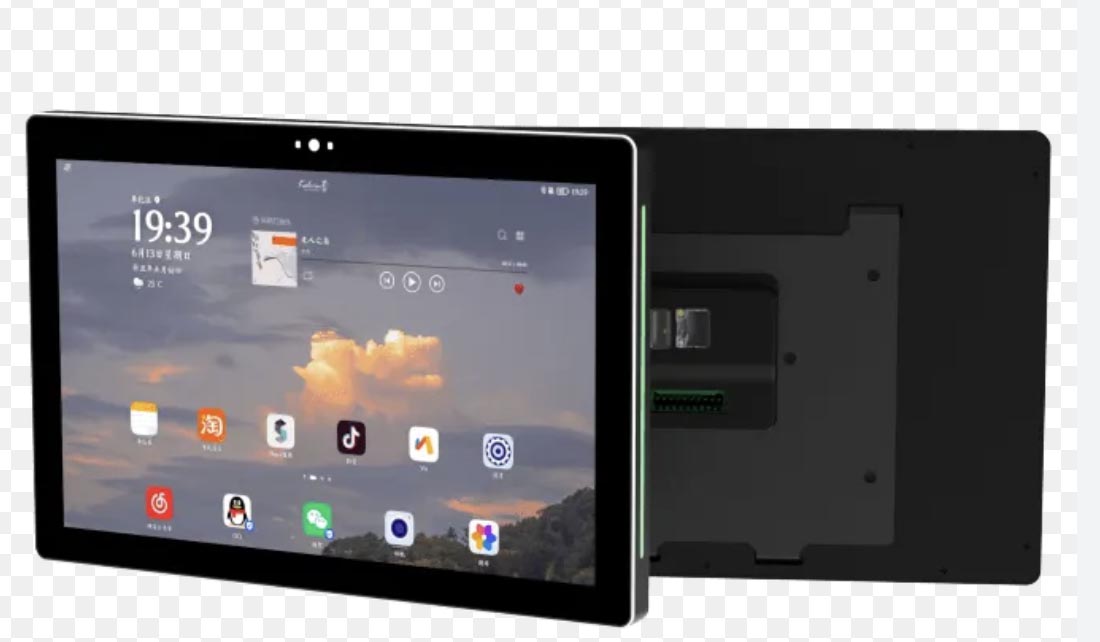
The Evolution of Embedded Interfaces
Early embedded interfaces were designed with strict limitations. Small monochrome displays, physical buttons, and fixed menus were sufficient when systems were simple and operators were highly trained. Today’s devices, however, must communicate with a broader audience and support more complex workflows.
Modern HMIs are expected to deliver:
- Clear visualization of real-time data
- Touch-based interaction with minimal learning curve
- Configurable screens and dynamic layouts
- Remote updates and diagnostics
Android was originally built for interactive devices and naturally supports these expectations. This makes it well suited for embedded products that function as user-facing terminals rather than hidden controllers.
A Platform Designed Around Interaction
At its core, Android is optimized for direct human interaction. Its UI toolkit, input handling, and rendering pipeline are designed to respond smoothly to touch and gestures. For embedded designers, this removes the need to assemble a custom graphics stack from multiple components.
Practical advantages include:
- Predictable touch behavior across different hardware platforms
- Built-in support for animations and transitions
- Layout systems that adapt to various screen sizes and orientations
- A consistent approach to fonts, icons, and scaling
These features help reduce development complexity while improving interface consistency and user experience.
Hardware Acceleration as a Default Capability
In many embedded systems, graphical performance is limited not by hardware capability but by software overhead. Android addresses this by making hardware acceleration a fundamental part of the platform.
Most Android-based systems benefit from:
- GPU-accelerated UI rendering
- Hardware-assisted video decoding
- Efficient display composition handled by the system
- Lower CPU utilization for visual tasks
For HMIs and IoT panels that rely on smooth animations, charts, or video content, this architecture delivers a noticeable improvement in responsiveness and visual quality.
Development Speed and Maintainability
One of Android’s strongest advantages in embedded projects is how it separates system software from applications. This modularity allows teams to iterate quickly without destabilizing the entire platform.
From a development perspective, Android offers:
- Application-level updates independent of the base OS
- Mature debugging and profiling tools
- Well-defined APIs that reduce hardware dependency
- Easier collaboration between UI designers and system engineers
This structure is particularly valuable for connected devices that evolve over time, where new features and UI changes are expected long after initial deployment.
Connectivity Built Into the System
IoT devices depend on reliable communication, and Android treats connectivity as a core capability rather than an optional add-on. Networking, wireless protocols, and device discovery are handled through standardized frameworks.
Commonly supported features include:
- Ethernet and Wi-Fi networking
- Bluetooth and BLE device integration
- Secure communication channels
- APIs for cloud and backend services
Because these capabilities are part of the operating system, developers can focus on application logic instead of building and maintaining low-level communication stacks.
Leveraging Familiar Technologies and Skills
Another reason Android is appealing in embedded contexts is the availability of skills and tools. Many developers already have experience with Android, and while embedded environments impose additional constraints, the learning curve is often lower than with entirely custom systems.
Benefits of this ecosystem include:
- Access to a large pool of developers
- Reusable design patterns and UI concepts
- Availability of third-party libraries for visualization, networking, and data handling
Used carefully, this ecosystem can accelerate development while maintaining control over system behavior.
Security Considerations in Connected Devices
Security is no longer optional in embedded systems. Android provides a structured security framework that helps teams manage risk in connected products.
Key elements include:
- Application sandboxing and permission management
- Mandatory access control mechanisms
- Support for secure boot and verified system images
- Regular security updates as part of the platform lifecycle
While proper configuration is still required, Android offers a clear foundation for building secure, network-connected devices.
Android and Embedded Linux: Complementary Roles
Android is not a replacement for all embedded operating systems. Its strengths are most evident in user-facing, interactive systems. Embedded Linux remains a strong choice for applications that prioritize deterministic behavior, low-level hardware control, or minimal interfaces.
In practice:
- Android excels as a front-end platform for HMIs and smart panels
- Embedded Linux is often preferred for real-time control or protocol handling
Many modern designs combine both approaches, using Android for the interface layer and other systems for time-critical tasks.
Planning for Long-Term Deployment
Adopting Android in embedded systems requires careful planning. Long product lifecycles, hardware availability, and update strategies must be considered early in the design phase.
Key topics to address include:
- Long-term SoC and BSP support
- Boot time optimization for embedded use
- Resource management on constrained hardware
- Strategies for secure updates over years of operation
When these factors are addressed proactively, Android can be a stable and maintainable platform for long-lived products.
Conclusion
Android’s growing role in HMI and IoT devices reflects a broader shift in embedded design—from control-centric systems to interaction-focused products. Its strengths in UI rendering, connectivity, development efficiency, and ecosystem support make it a strong candidate for modern embedded applications.
The most effective designs are those that adopt Android intentionally, based on clear functional and lifecycle requirements. When used in the right context, Android provides a powerful foundation for building intuitive, connected, and future-ready embedded systems.