Template Syntax
- DOM 기본 구성 요소 인스턴스의 데이터에 선언적으로 바인딩할 수 있는 HTML 기반 템플릿 구문을 사용
- 선언적 바인딩 : Vue Instance와 DOM을 연결
- 템플릿 구문 : 확장된 문법 제공
Template Syntax 종류
1. Text Interpolation
<p>Message: {{ msg }}</p>- 데이터 바인딩의 가장 기본적인 형태
- 이중 중괄호 구문 (콧수염 구문)을 사용
- 콧수염 구문은 해당 구성 요소 인스턴스의 msg 속성 값으로 대체
- msg 속성이 변경될 때마다 업데이트됨
2. Raw HTML
<div v-html="rawHtml"></div>
const rawHtmal = ref('<span style="color:red">This should be red.</span>')

# ----------

<div>
  <span style="color:red">This should be red.</span>
</div>- 콧수염 구문은 데이터를 일반 텍스트로 해석하기 때문에 실제 HTML을 출력하려면 v-html을 사용해야 함
3. Attribute Bindings
<div v-bind:id="dynamicId"></div>
const dynamicId = ref('my-id')

# ----------

<div id="my-id"></div>- 콧수염 구문은 HTML 속성 내에서 사용할 수 없기 때문에 v-bind를 사용
- HTML의 id 속성 값을 vue의 dynamicId 속성과 동기화되도록 함
- 바인딩 값이 null이나 undefined인 경우 렌더링 요소에서 제거됨
4. JavaScript Expressions
{{ number + 1 }}

{{ ok ? 'YES' : 'NO' }}

{{ message.split('').reverse().join('') }}

<div :id="`list-${id}`"></div>- Vue는 모든 데이터 바인딩 내에서 JavaScript 표현식의 모든 기능을 지원
- Vue 템플릿에서 JavaScript 표현식을 사용할 수 있는 위치
- 콧수염 구문 내부
- 모든 directive의 속성 값 ("v-"로 시작하는 특수 속성)
Expressions 주의사항
- 각 바인딩에는 하나의 단일 표현식만 포함될 수 있음
- 표현식은 값으로 평가할 수 있는 코드 조각 (return 뒤에 사용할 수 있는 코드여야 함)
- 작동하지 않는 경우
<!-- 표현식이 아닌 선언식 -->
{{ const number = 1 }}

<!-- 제어문은 삼항 표현식을 사용해야 함 -->
{{ if (ok) { return message } }}
Directive
- 'v-' 접두사가 있는 특수 속성
Directive 특징
- Directive의 속성 값은 단일 JavaScript 표현식어어야 함
(v-for, v-on 제외) - 표현식 값이 변경될 때 DOM에 반응적으로 업데이트를 적용
- 예시
<p v-if="seen">Hi There</p>Directive 전체 구문
- v-on:submit.prevent="onSubmit"
- v-on : Name (Starts with v- May be obmitted when using shorthands)
- submit : Argument (Follows the colon or shorthand symbol)
- prevent : Modifiers (Denoted by the leading dot)
- onSubmit : value (Interpreted as JavaScript expressions)
Arguments
- 일부 directive는 directive 뒤에 콜론(":")으로 표시되는 인자를 사용할 수 있음
- 아래 예시의 href는 HTML
<a>요소의 href 속성값을 myUrl 값에 바인딩하도록 하는 v-bind의 인자<a v-bind:href="myUlr">Link</a>
- 아래 예시의 click은 이벤트 수신할 이벤트 이름을 작성하는 v-on의 인자
<button v-on:click="doSomething">Button</button>
Modifiers
- ". (dot)"로 표시되는 특수 접미사로, directive가 특별한 방식으로 바인딩되어야 함을 나타냄
- 아래 예시의 .prevent는 발생한 이벤트에서 event.preventDefault()를 호출하도록 v-on에 지시하는 modifier
<form @submit.prevent="onSubmit">...</form>
Built-in Directives
- v-text
- v-show
- v-if
- v-for
- ...
- https://vuejs.org/api/built-in-directives.html
v-bind
- 하나 이상의 속성 또는 컴포넌트 데이터를 표현식에 동적으로 바인딩
- Attribute Bindings
- Class and Style Bindings
Attribute Bindings
- HTML의 속성 값을 Vue의 상태 속성 값과 동기화되도록 함
<img v-bind:src="imageSrc">
<a v-bind:href="myUrl">Move to url</a>- v-bind shorthand (약어)
- ':' (colon)
<img :src="imageSrc">
<a :href="myUrl">Move to url</a>- Dynamic attribute name (동적 인자 이름)
- 대괄호([])로 감싸서 directive argument에 JavaScript 표현식을 사용할 수도 있음
- 대괄호 안에 작성하는 이름은 반드시 소문자로만 구성 가능 (브라우저가 속성 이름을 소문자로 강제 변환하기 때문)
- JavaScript 표현식에 따라 동적으로 평가된 값이 최종 argument 값으로 사용됨
<button :[key]="myValue"></button>Attribute Bindings 예시
<img :src="imageSrc">
<a :href="myUrl">Move to Url</a>
<p :[dynamicattr]="dynamicValue">...</p>
const app = createApp({
setup() {
const imageSrc = ref('https://picsum.photos/200')
const myUrl = ref('https://www.google.co.kr/')
const dynamicattr = ref('title')
const dynamicValue = ref('Hello Vue.js')
return {
imageSrc,
myUrl,
dynamicattr,
dynamicValue,
}
},
})
app.mount('#app')Class and Style Bindings
- clas와 style은 모두 HTML 속성이므로 다른 속성과 마찬가지로 v-bind를 사용하여 동적으로 문자열 값을 할당할 수 있음
- Vue는 class 및 style 속성 값을 v-bind로 사용할 때 객체 또는 배열을 활용하여 작성할 수 있도록 함
- 단순히 문자열 연결을 사용하여 이러한 값을 생성하는 것은 번거롭고 오류가 발행하기가 쉽기 때문
1. Binding HTML Classes
1.1 Binding to Objects
- 객체를 :class에 전달하여 클래스를 동적으로 전환할 수 있음
- 예시 1
- isActive의 Boolean 값에 의해 active 클래스의 존재가 결정됨
js
const isActive = ref(false)
html
<div :class="{ active: isActive }">Text</div>1.2 Binding to Arrays
- 객체에 더 많은 필드를 포함하여 여러 클래스를 전환할 수 있음
- 예시 2
- :class directive를 일반 클래스 속성과 함께 사용 가능
const isActive = ref(false)
const hasInfo = ref(true)<div class="static" :class="{ active: isActive, 'text-primary': hasInfo }">Text</div>div class="static text-primary">Text</div>
2. Binding Inline Styles
2.1 Binding to Objects
- :style은 JavaScript 객체 값에 대한 바인딩을 지원
(HTML style 속성에 해당) - 예시 1
const activeColor = ref('crimson')
const fontSize = ref(50)<div :style="{ color: activeColor, fontSize: fontSize + 'px' }">Text</div><div :style="color: crimson; font-size: 50px;">Text</div>
- 실제 CSS에서 사용하는 것처럼 :style은 kebab-cased 키 문자열도 지원
(단, camelCase 작성을 권장) - 예시2
<div :style="{ 'font-size': fontSize + 'px' }">Text</div><div style="font-size: 50px;">Text</div>
- 반드시 inline 방식으로 작성하지 않아도 됨
- 반응형 변수를 활용해 객체를 한번에 작성하는 방법
- 예시 3
2.2 Bindings to Arrays
v-bind 종합
Event Handling
v-on
- DOM 요소에 이벤트 리스너를 연결 및 수신
v-on 구성
v-on:event="handler"
- handler 종류
- inline handlers: 이벤트가 트리거될 때 실행될 JavaScript 코드
- Method handlers: 컴포넌트에 정의된 메서드 이름
- v-on shorthand(약어)
- '@'
@event="handler"
- '@'
1. Inline Handlers
- Inline handlers는 주로 간단한 상황에 사용
const count = ref(0)<button @click="count++">Add 1</button>
<p>Count: {{ count }}</p>2. Method Handlers
- Inline handlers로는 불가능한 대부분의 상황에서 사용
js
const name = ref('Alice')
const myFunc = function (event) {
	console.log(event)
    console.log(event.currentTarget)
    console.log(`Hello ${name.value}!`)
}
html
<button @click="muFunc">Hello</button>console
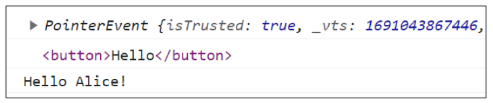
- Method Handlers는 이를 트리거하는 기본 DOM Event 객체를 자동으로 수신
js
const myFunc = function (event) {
  console.log(event)
  console.log(event.currentTarget)
  console.log(`Hello ${name.value})
}- Inline Handlers에서의 메서드 호출
- 메서드 이름에 직접 바인딩하는 대신 Inline Handlers에서 메서드를 호출할 수도 있음
- 이렇게 하면 기본 이벤트 대신 사용자 지정 인자를 전달할 수 있음
const greeting = function (message) {
  console.log(message)
}<button @click="greeting('hello')">Say Hello</button>
<button @click="greeting('bye')">Say bye</button>- Inline Handlers에서 원래 DOM 이벤트에 접근하기
- $event 변수를 사용하여 메서드에 전달
const warning = function (message, event) {
  console.log(message)
  console.log(event)
}<button @click="warning('경고입니다', $event)">Submit</button>Event Modifiers
- Vue는 v-on에 대한 Event Modifiers를 제공해
event.preventDefault()와 같은 구문을 메서드에서 작성하지 않도록 함 - stop, prevent, self 등 다양한 modifiers를 제공
메서드는 DOM 이벤트에 대한 처리보다는 데이터에 관한 논리를 작성하는 것에 집중할 것
<form @submit.prevent="onSubmit">...</form>
<a @click.stop.prevent="onLink">...</a>
Key Modifiers
-
Vue는 키보드 이벤트를 수신할 때 특정 키에 관한 별도 modifiers를 사용할 수 있음
-
예시
- key가 Enter일 때만 onSubmit 이벤트를 호출하기
<input @keyup.enter="onSubmit">
- key가 Enter일 때만 onSubmit 이벤트를 호출하기
Form Input Bindings
-
form을 처리할 때 사용자가 input에 입력하는 값을 실시간으로 JavaScript 상태에 동기화해야 하는 경우 (양방향 바인딩)
-
양방향 바인딩 방법
- v-bind와 v-on을 함께 사용
- v-model 사용
1. v-bind와 v-on을 함께 사용
- v-bind를 사용하여 input 요소의 value 속성 값을 입력 값으로 사용
- v-on을 사용하여 input 이벤트가 발생할 때마다 input 요소의 value 값을 별도 반응형 변수에 저장하는 핸들러롤 호출
const inputText1 = ref('')
const onInput = function (event) {
  inputText1.value = event.currentTarget.value
}<p>{{ inputText1 }}</p>
<input :value="inputText1" @input="onInput">v-model
- form input 요소 또는 컴포넌트에서 양방향 바인딩을 만듦
2. v-model 사용
- v-model을 사용해서 사용자 입력 데이터와 반응형 변수를 실시간 동기화
const inputText2 = ref('')<p>{{ inputText2 }}</p>
<input v-model="inputText2">- v-model을 사용하여 사용자 입력 데이터와 반응형 변수를 실시간 동기화
IME가 필요한 언어(한국어, 중국어, 일본어 등)의 경우 v-model이 제대로 업데이트되지 않음
해당 언어에 대해 올바르게 응답하려면 v-bind와 v-on 방법을 사용해야 함
v-model 활용
v-model과 다양한 입력(input) 양식
- v-model은 단순 Text input 뿐만 아니라 Checkbox, Radio, Select 등 다양한 타입의 사용자 입력 방식과 함께 사용 가능
Checkbox 활용
- 단일 체크박스와 boolean 값 활용
const checked = ref(false)<input type="checkbox" id="checkbox" v-model="checked">
<label for="checkbox">{{ checked }}</label>- 여러 체크박스와 배열 활용
- 해당 배열에는 현재 선택된 체크박스의 값이 포함됨
const checkedNames = ref([])<div>Checked names: {{ checkedNames }}</div>
<input type="checkbox" id="alice" value="Alice" v-model="checkedNames">
<labe for="alice">Alice</label>
<input type="checkbox" id="bella" value="Bella" v-model="checkedNames">
<labe for="bella">Bella</label>Select 활용
- select에서 v-model 표현식의 초기 값이 어떤 option과도 일치하지 않는 경우 select 요소는 "선택되지 않은(unselected)" 상태로 렌더링 됨
- select에서 v-model 표현식의 초기 값이 어떤 option과도 일치하지 않는 경우 select 요소는 "선택되지 않은(unselected)" 상태로 렌더링됨
const selected = ref('')<div> Selected: {{ selected }}</div>
<select> v-model="selected">
<option disabled value="">Please select one</option>
<option>Alice</option>
<option>Bella</option>
<option>Cathy</option>
</select>'$' 접두어가 붙은 변수
- Vue 인스턴스 내에서 제공하는 내부 변수
- 사용자가 지정한 반응형 변수나 메서드와 구분하기 위함
- 주로 Vue 인스턴스 내부 상태를 다룰 때 사용
IME (Input Method Editor)
- 사용자가 입력 장치에서 기본적으로 사용할 수 없는 문자(비영어권 언어)를 입력할 수 있도록 하는 운영 체제 구성 프로그램
- 일반적으로 키보드 키보다 자모가 더 많은 언어에서 사용해야 함
IME가 동작하는 방식과 Vue의 양방향 바인딩(v-model) 동작 방식이 상충하기 때문에 한국어 입력시 예상대로 동작하지 않았던 것