
JavaScript Koans란?
- Koans는 불교에서 유래된 단어로, 결론을 내리기 전에 이게 왜 맞는지 깊게 고민한다는 의미를 가지고 있다고 합니다. Koans 문제 중에는 학습하지 않은 개념도 의도적으로 포함되어 있습니다. 페어와 함께 깊게 고민하고, 정답을 설명할 수 있도록 연습해 보세요.
==> 지금까지 배운 내용들을 정리하며 문제를 해결해나가는 과정!!
All Clear
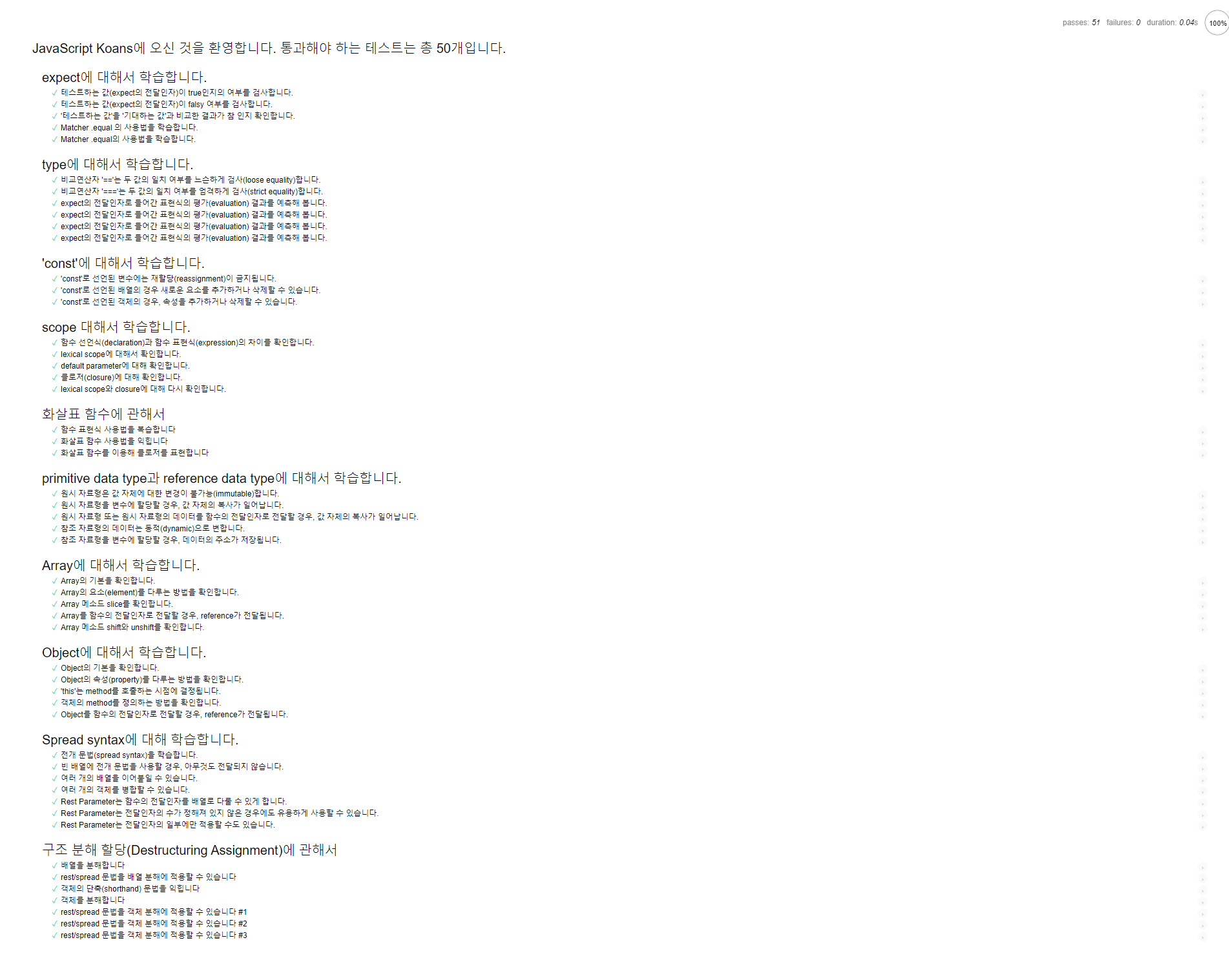
어려웠던 문제 정리
08.Object.js
 it('객체의 method를 정의하는 방법을 확인합니다.', function () {
    const megalomaniac = {
      mastermind: 'Brain',
      henchman: 'Pinky',
      getFusion: function () {
        return this.henchman + this.mastermind;
      },
      battleCry(numOfBrains) {
        return `They are ${this.henchman} and the` + ` ${this.mastermind}`.repeat(numOfBrains);
      },
    };

    expect(megalomaniac.getFusion()).to.deep.equal('PinkyBrain');
    expect(megalomaniac.battleCry(3)).to.deep.equal(`They are Pinky and the Brain Brain Brain`);
});.repeat(numOfBrains) 가 통으로 반복되는 의미인 줄 알았다. 마지막 Brain만 반복하는 것이다.09.SpreadSyntax,js
	// arguments를 통해 '비슷하게' 함수의 전달인자들을 다룰 수 있습니다. (spread syntax 도입 이전)
    // arguments는 모든 함수의 실행 시 자동으로 생성되는 '객체'입니다.
    function getAllParamsByArgumentsObj() {
      return arguments;
    }

    const restParams = getAllParamsByRestParameter('first', 'second', 'third');
    const argumentsObj = getAllParamsByArgumentsObj('first', 'second', 'third');

    expect(restParams).to.deep.equal(['first', 'second', 'third']);
    expect(Object.keys(argumentsObj)).to.deep.equal(['0', '1', '2']);
    expect(Object.values(argumentsObj)).to.deep.equal(['first', 'second', 'third']);

    // arguments와 rest parameter를 통해 배열로 된 전달인자(args)의 차이를 확인하시기 바랍니다.
    expect(restParams === argumentsObj).to.deep.equal(false);
    expect(typeof restParams).to.deep.equal('object');
    expect(typeof argumentsObj).to.deep.equal('object');
    expect(Array.isArray(restParams)).to.deep.equal(true);
    expect(Array.isArray(argumentsObj)).to.deep.equal(false);

    const argsArr = Array.from(argumentsObj);
    expect(Array.isArray(argsArr)).to.deep.equal(true);
    expect(argsArr).to.deep.equal(['first', 'second', 'third']);
    expect(argsArr === restParams).to.deep.equal(false);
  });
arguments라는 변수를 통해 함수를 호출할 때 전달된 인자들을 배열 형태로 저장한다는 사실을 알게 되었다.