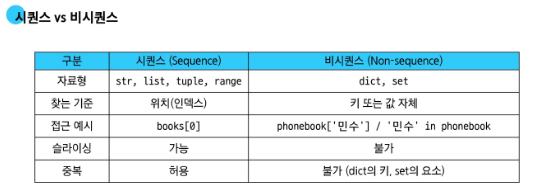
1. 비시퀀스 데이터 구조
2. 딕셔너리 메서드
.get(key[,default])- 키에 연결된 값을 반환한다.
- 키가 없으면 None 혹은 기본 값을 반환한다.
person = {"name": "Alcie", "age": 25}

print(person.get("name") # Alice
print(person.get("country") # None
print(person.get("country", "Unknown") # Unknown
print(person["country"] # KeyError: "country".keys()- 딕셔너리 키를 모은 객체를 반환한다.
person = {"name": "Alcie", "age": 25}
print(person.keys()) # dict_keys(["name", "age"])
for item in person.keys():
	print(item)
"""
name
age
"""values()- 딕셔너리 값을 모은 객체를 반환한다.
person = {"name": "Alcie", "age": 25}
print(person.values()) # dict_values(["Alice", "25"])
for item in person.values():
	print(item)
"""
Alice
25
"""items()- 딕셔너리 키/값 쌍을 모은 객체를 반환한다.
person = {"name": "Alcie", "age": 25}
print(person.values()) # dict_items([("name", "age") ("Alice", "25")])
for item in person.values():
	print(item)
"""
name Alice
age 25
""".setdefault(key[,default])- 키와 연결된 값을 반환한다.
- 키가 없다면
default와 연결한 키를 딕셔너리에 추가하고default를 반환한다.
person = {"name": "Alcie", "age": 25}

print(person.setdefault("country", "Korea")) # Korea
print(person) # {"name": "Alice", "age": 25, "country": "Korea"}.update([*other*])other가 제공하는 키/값 쌍으로 딕셔너리를 갱신하고 기존 키는 덮어쓴다.
person = {"name": "Alcie", "age": 25}
other_person = {"name": "Jane", "country": "Korea"}

person.update(other_person)
print(person) # {"name": "Jane", "age": 25, "country": "Korea"}

person.update(age= 100, address = "Seoul")
print(person) # {"name": "Jane", "age": 100, "country": "Korea", "address": "Seoul"}
pop(key[,default])- 키를 제거하고 연결됐던 값을 반환한다. (없으면 에러나
default를 반환한다.)
- 키를 제거하고 연결됐던 값을 반환한다. (없으면 에러나
person = {"name": "Alcie", "age": 25}
print(person.pop("age")) # 25
print(person) # {"name": "Alice"}
print(person.pop("country", None)) # None
print(person.pop("country")) # KeyErrorclear()- 딕셔너리의 모든 키/값 쌍을 제거한다.
person = {"name": "Alcie", "age": 25}
person.clear()
print(person) # {}
2. 딕셔너리의 확장: defaultdict
defaultdict : 파이썬 내장 모듈 collections에서 제공하는 딕셔너리의 확장판이다.
딕셔너리에 존재하지 않는 키를 조회할때, 자동으로 “기본값”을 생성해주는 자료구조이다.
KeyError 걱정 없이 값을 수정하거나 추가할 때 매우 유용하다.
기본 딕셔너리 vs defaultdict
- 기존 딕셔너리
text = "banana"
counts = {}

for char in text:
	if char not in counts: # 키가 있는지 매번 확인
		counts[char] = 0
	counts[char] += 1

print(counts) # {"b":1, "a": 3, "n": 2}- defaultdict
from collections import defaultdict

text = "banana"
counts = defaultdict(int) # 기본값을 정수(0)으로 설정

for char in text:
	# 키 확인 불필요! 없으면 0으로 자동 생성 후 +1
	counts[char] += 1

print(counts) # defaultdict(<class "int">, {"b": 1, "a": 3, "n": 2})
defaultdict 구문 및 활용 가이드
- 사용법: defaultdict(자료형) 형태로 선언한다.
- 자주 쓰는 패턴
- 숫자 세기:
defaultdict(int)→ 키가 없으면 0으로 초기화 - 그룹핑/리스트 모으기:
defaultdict(list)→ 키가 없으면 빈 리스트 [] 로 초기화
- 숫자 세기:
defaultdict 주의사항
- defaultdict 조회만 해도 키가 생성된다.
- “단순히 키가 있는지 확인할 때” 는 주의해서 사용해야한다.
3. Set
고유한 항목들의 정렬되지 않은 컬렉션이다.
- Set은 내부적으로 해시 테이블을 사용하여 데이터를 저장한다.
- 항목의 고유성을 효율적으로 보장하고, 항목의 추가, 삭제, 존재 여부 확인이 데이터의 크기에 관계 없이 매우 빠르다.
- 수학적인 잡합 연산을 간편하게 수행할 수 있는 것이 가장 큰 특징이다.
set 메서드
.add(x): 세트에 x를 추가한다.
my_set = {"a", "b", "c", 1, 2, 3}

my_set.add("d")
print(my_set) # {1, "b", 3, 2, "c", "d", "a"}

my_set.add("d")
# 순서가 없지만 같은 프로그램을 실행하는 동안은 같은 순서
print(my_set) # {1, "b", 3, 2, "c", "d", "a"}.remove(x): 항목에서 x를 제거한다. x가 없을 경우 keyError가 발생한다.
my_set = {"a", "b", "c", 1, 2, 3}

my_set.remove(2)
print(my_set) # {"b", 1, 3, "c", "a"}

my_set.remove(10) # KeyError: 10
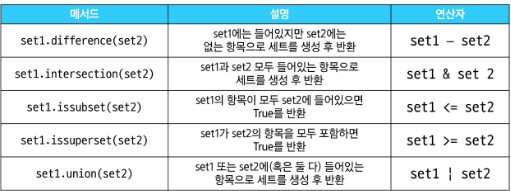
세트의 집합 메서드
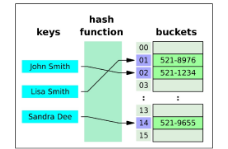
해시 테이블
해시 테이블은
키, 값을 저장하는 자료구조이다.
해시 테이블의 원리
- 키를 해시 함수를 통해 해시 값으로 변환한다.
- 변환된 해시 값을 인덱스로 삼아 데이터를 저장하거나 찾는다.
- 이로 인해 검색, 삽입, 삭제를 매우 빠르게 수행한다.
해시란?
임의의 크기를 가진 데이터를 고정된 크기의 고유한 값으로 변환하는 것 이다.
set의 요소 & dict의 키와 해시 테이블 관계
- set
- 각 요새를 해시 함수로 변환해 나온 해시 값에 맞춰 해시 테이블 내부 버킷에 위치시킨다.
- 이에따라
순서보다는버킷 위치 (인덱스)가 요소의 위치를 결정한다. - 따라서 set은
순서를 보장하지 않는다!!!
- dict
- 키 → 해시 함수 → 해시 값 → 해시 테이블 저장
- set와 달리 삽입 순서는 유지한다는 것이 언어 사양데 따라 보장된다. (python 3.7이상)
- 키를 추가한 순서대로 반복문 순회할 때 나오게 된다.
- 사용자에게 보여지는 키 순서는 삽입 순서가 유지되도록 설계된 것 이다.
- pop
- 정수(숫자)값은 해시 값 숫자 자기 자신과 동일하거나 단순 계산으로 고정된다.
- 문자열은 해시 계산 시 해시 난수화가 적용되므로, 실행마다 순서가 달라질 수 있다.
난수 시드 (Random Seed)
난수를 생성할 때 사용하는 시작값
- 계산 순서
- 시드(seed)를 설정한다.
- 시드를 기준으로 난수 생성 알고리즘이 실행된다.
- 난수가 생성된다.
- 같은 시드 → 같은 난수, 다른 시드 → 다른 난수
예시
random.seed(10)

10(시드)
    ↓
난수 생성 알고리즘
    ↓
5 → 2 → 6 → 1 ...
해시 난수화 (Random Seed)
프로그램 실행마다 해시 계산에 사용할 시드를 바꿔 보안을 강화하는 기능
- 계산 순서
- 프로그램이 시작된다.
- 파이썬이 랜덤한 Hash Seed를 생성한다.
- Hash Seed를 이용해
hash()값을 계산한다.- 계산된 해시값으로
dict,set의 저장 위치를 결정한다.- 프로그램을 다시 실행하면 Hash Seed가 바뀌어 저장 위치도 달라질 수 있다.
예시
프로그램 시작
      ↓
Hash Seed 생성 (1234)
      ↓
hash("apple") 계산
      ↓
저장 위치 결정
다시 실행
프로그램 시작
      ↓
Hash Seed 생성 (9876)
      ↓
hash("apple") 계산 (이전과 다른 값)
      ↓
저장 위치 변경
hashable
- hash() 함수에 넣어 해시 값을 구할 수 있는 객체를 의미한다.
- 대부분의 불변 타입은 해시가 가능하다.
int,str,tuple(단, 내부에 불변만 있을 경우에만)
- 가변형 객체 (
list,dict,set)은 기본적으로 해시 불가능하다.- 값이 변하면 해시 값도 달라질 수 있어서 해시 테이블 무결성이 깨지기 때문

백엔드를 학습하는 주니어 개발자입니다.