이항 분포(Binomial Distribution)
-
저번 게시물에 정리했던 이항분포를 통해 문제를 계산해보자
-
eg. 어떤 선거에서 표본집단 100명의 투표자들에게 53%의 지지를 얻었다면, 당선될것인가?
분산 = 0.53*0.47=0.2491
표준편차 = sqrt(0.2491) = 0.4991
standard_error = 0.4991/sqrt(100)=0.0499(약 5%)
당선확률을 53%+-5%정도로 볼 수 있다. -
위에 예시는
표본집단의 확률과 시행횟수를 통해모집단의 평균을 추정했다.
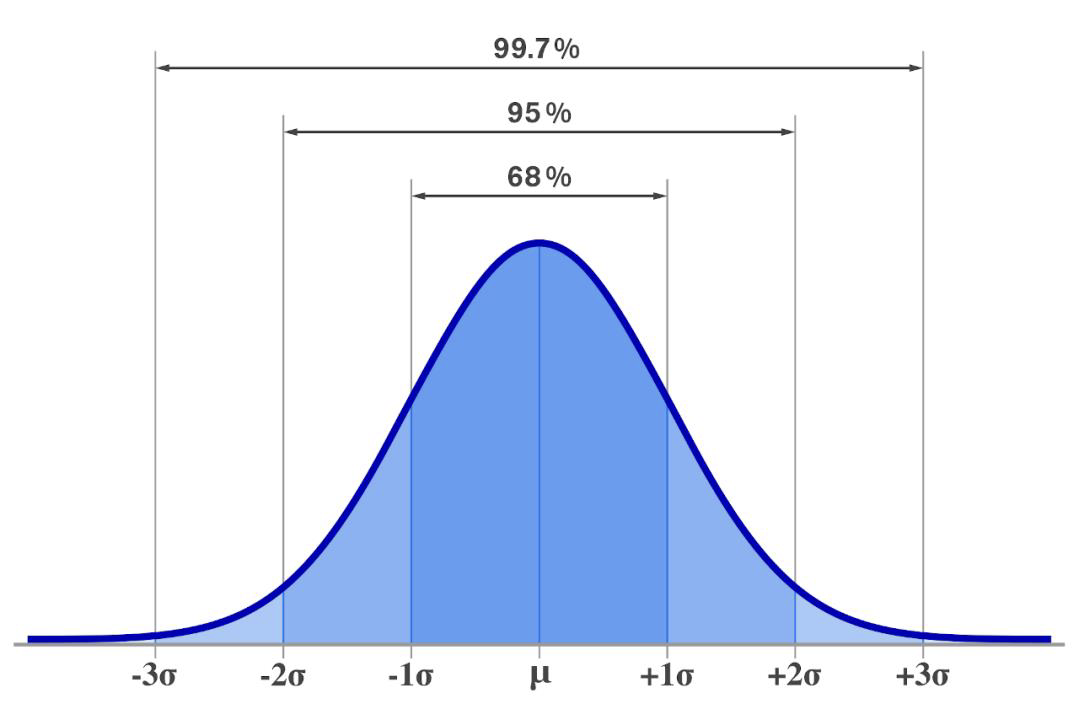
만약 95%의 신뢰구간을 얻고싶다면, 당선확률을 53%+-10%정도로 볼 수 있다.
부트스트랩(Bootstrap)
부트스트랩 정의
재표집(resampling)을 통해 통계적 추정치의 분포를 추정하는 방법이다.
재표집(Resampling): 기존의 표본 데이터 세트에서 복원 추출 방식을 사용하여, 원래 표본과 같은 크기의 새로운 표본을 여러 번 생성합니다. 복원 추출이란 한 번 선택된 데이터를 다시 선택할 수 있도록 다시 표본집단에 반환하는 방식이다.
통계량 계산: 각각의 재표집된 표본에 대해 원하는 통계량(평균, 분산 등)을 계산한다.
분포 추정: 계산된 통계량들의 분포를 사용하여 모집단의 해당 통계량에 대한 추정치를 도출한다. 이 분포로부터 신뢰 구간이나 기타 통계적 결론을 도출할 수 있다.
부트스트랩의 사용
부트스트랩은 모집단의 실제 분포에 대한 가정이 필요 없기 때문에, 다양한 통계적 상황에서 유용하게 사용된다. 특히 표본 크기가 작거나, 복잡한 통계 모델에서 모수의 신뢰 구간을 추정할 때 효과적이다.
왜 부트스트랩이 유효한가?
부트스트랩은 원래의 표본이 모집단을 잘 대표한다는 가정 하에 작동한다. 복원 추출 방식으로 '새로운' 표본을 만들어내며, 이론적으로는 이 표본들이 모집단에서 추출될 수 있었을 것이라고 가정한다. 이를 통해, 실제 모집단을 사용하지 않고도 통계량의 샘플링 분포를 추정할 수 있다. 이는 모집단에 대한 강한 가정 없이도 통계적 추론을 가능하게 한다.
부트스트랩의 장점
-
유연성(Flexibility)
다양한 통계량과 복잡한 추정기에 적용할 수 있다. -
단순성(Simplicity)
복잡한 수학적 공식을 필요로 하지 않으면서도 쉽게 구현하고 이해할 수 있다. -
적용성(Applicability)
전통적인 매개변수적 방법을 사용하기 어려운 경우(예: 표본 크기가 너무 작거나 모집단의 분포가 알려지지 않은 경우)에 유용하다.부트스트랩의 한계
-
정확성(Accuracy)
원래 표본이 모집단을 대표하지 않는 경우 부트스트랩 추정의 정확성이 떨어질 수 있다. 즉, 표본이 편향되어 있거나 모집단의 특성을 제대로 반영하지 못하면 부트스트랩 결과도 오류를 포함할 가능성이 커진다. -
계산 강도(Computationally Intensive)
부트스트랩은 많은 계산을 요구하며, 표본 크기나 부트스트랩 샘플의 수가 증가할수록 계산 부담이 커진다. 따라서 컴퓨터 자원을 많이 소모할 수 있다.응용 예시
-
부트스트랩을 사용하여 평균 키 차이를 분석하거나, 특정 그룹(커피를 마시는 사람들과 마시지 않는 사람들) 사이의 평균 키 차이를 분석한다.
데이터 분석 실습
import pandas as pd
import numpy as np
np.random.seed(104)
df = pd.read_csv('data/MDA_09_coffee_dataset.csv')
print(df.info())
print(df.head(5))
# Randomly sample 200 samples from the population.
df_sample = df.sample(200)
print(df_sample.info())
print(df_sample.head())##### Confidence interval using bootstrap #####
# Let's repeat the bootstrap 10,000 times to find the 99.7% confidence interval for the height difference
# between people who do not drink coffee and people who drink coffee.
# 1. Average height difference between non-coffee drinkers and coffee drinkers
iterationNum = 10000
diffHeightList = []
for _ in range(iterationNum):
bootSample = df_sample.sample(200, replace=True) # 복원 추출(뺀게 사라지지 않음)
nonCoffeeHeightMean = bootSample[bootSample['drinks_coffee'] == False].height.mean()
# Avg. height of people who drink coffee
coffeeHeightMean = bootSample[bootSample['drinks_coffee'] == True].height.mean()
diff = nonCoffeeHeightMean - coffeeHeightMean
diffHeightList.append(diff)
print(diffHeightList)print("mean of height diff:", np.mean(diffHeightList))
print("SE of Height diff:", np.std(diffHeightList))
print("Lowerbound(0.3):", np.percentile(diffHeightList, 0.3))
print("Uppperbound(99.7):", np.percentile(diffHeightList, 99.7))실제 모집단이 잘 모사되었는지 확인
print("##### Height differences in the population #####")
# # 1. Average height difference between non-coffee drinkers and coffee drinkers
diffHeight = df[df['drinks_coffee'] == False].height.mean() - df[df['drinks_coffee'] == True].height.mean()
print("diffHeight : ",diffHeight)print("Lowerbound(0.3):", np.percentile(diffHeightList, 0.3))
print("Uppperbound(99.7):", np.percentile(diffHeightList, 99.7))커피를 많이 마신 집단이 키가 더 큰게 과연 타당한가?
심슨의 역설(Simpson's Paradox)
-
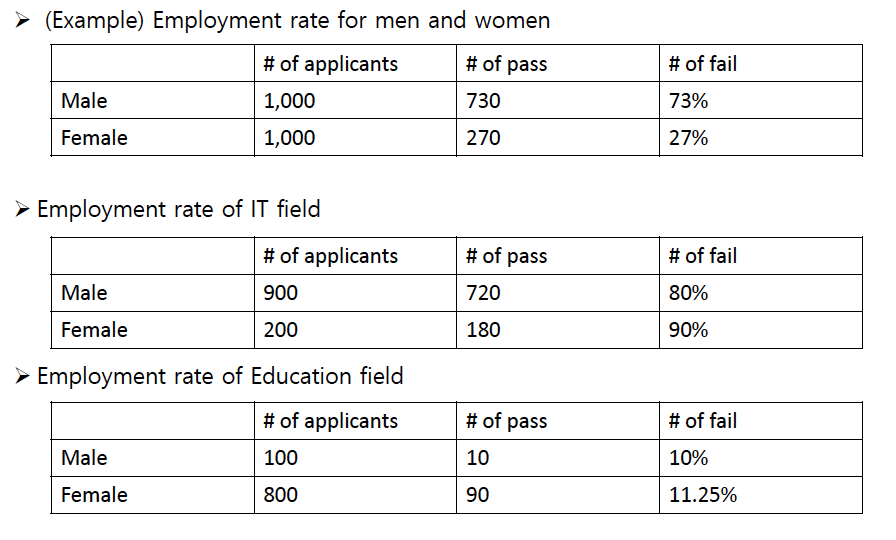
심슨의 역설 정의: 복수의 그룹에 걸쳐 데이터를 분석할 때 보이는 경향성이 전체 데이터를 합쳤을 때와 달라지는 현상이다.
-
예시: 특정 직업군(예: IT와 교육 분야)에서 성별에 따른 취업률을 분석할 때, 각각의 직업군에서 보이는 성별 취업률 차이가 전체를 합쳤을 때와는 다르게 나타날 수 있다.
코드 확인
# 2. Average height difference between people over 21 years old and under 21 years old
diffHeightListByAge = []
for _ in range(iterationNum):
    bootSample = df_sample.sample(200, replace=True) # sampling with replacement
    over21HeightMean = bootSample[bootSample['age'] == '>=21'].height.mean() # Avg.Height for over 21
    under21HeightMean = bootSample[bootSample['age'] == '<21'].height.mean() # Avg.Height for under 21
    diff = over21HeightMean - under21HeightMean
    diffHeightListByAge.append(diff)
# When the confidence level is 99%.7, the confidence interval for the average height difference
print("Lowerbound(0.3):", np.percentile(diffHeightListByAge, 0.3))
print("Uppperbound(99.7):", np.percentile(diffHeightListByAge, 99.7))
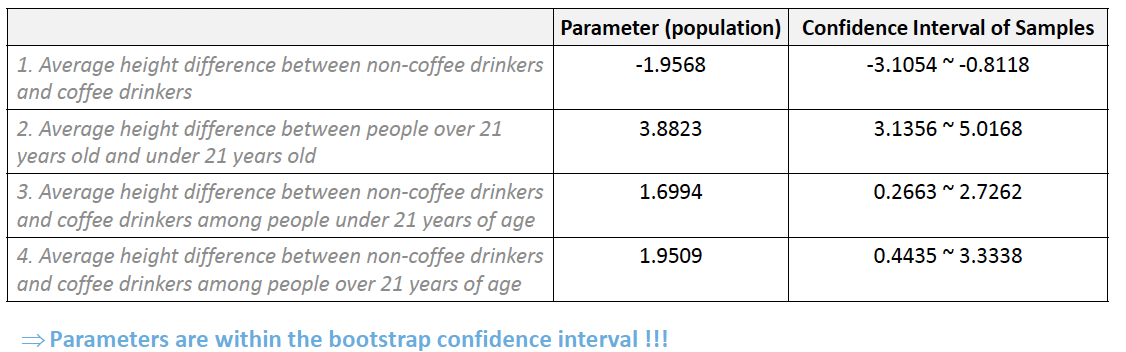
# 3. Average height difference between non-coffee drinkers and coffee drinkers among people under 21 years of age diffHeightListUnder21 = [] for _ in range(iterationNum): bootSample = df_sample.sample(200, replace=True) # sampling with replacement # Average height of people under 21 years of age who do not drink coffee nonCoffeeHeightMeanUnder21 = bootSample.query("age == '<21' and drinks_coffee == False").height.mean() # Average height of people under 21 years of age who drink coffee coffeeHeightMeanUnder21 = bootSample.query("age == '<21' and drinks_coffee == True").height.mean() diff = nonCoffeeHeightMeanUnder21 - coffeeHeightMeanUnder21 diffHeightListUnder21.append(diff) # When the confidence level is 99%.7, the confidence interval for the average height difference print("Lowerbound(0.3):", np.percentile(diffHeightListUnder21, 0.3)) print("Uppperbound(99.7):", np.percentile(diffHeightListUnder21, 99.7))# 4. # Average height difference between non-coffee drinkers and coffee drinkers among people over 21 years of age diffHeightListOver21 = [] for _ in range(iterationNum): bootSample = df_sample.sample(200, replace=True) # sampling with replacement # Average height of people over 21 years of age who do not drink coffee nonCoffeeHeightMeanOver21 = bootSample.query("age != '<21' and drinks_coffee == False").height.mean() # Average height of people over 21 years of age who drink coffee coffeeHeightMeanOver21 = bootSample.query("age != '<21' and drinks_coffee == True").height.mean() diff = nonCoffeeHeightMeanOver21 - coffeeHeightMeanOver21 diffHeightListOver21.append(diff) # When the confidence level is 99%.7, the confidence interval for the average height difference print("Lowerbound(0.3):", np.percentile(diffHeightListOver21, 0.3)) print("Uppperbound(99.7):", np.percentile(diffHeightListOver21, 99.7))->커피를 마신 그룹의 키가 더 컸지만, 21세 이상과 이하로 나누어봤을떄 두 집단 모두 커피를 안마신 그룹의 키가 더 큼을 확인할 수 있다.(심슨의 역설)
print("##### Height differences in the population #####")
# # 1. Average height difference between non-coffee drinkers and coffee drinkers
diffHeight = df[df['drinks_coffee'] == False].height.mean() - df[df['drinks_coffee'] == True].height.mean()
print("1. diffHeight : ",diffHeight)
# 2. Average height difference between people over 21 years old and under 21 years old
diffHeightByAge = df[df['age'] == '>=21'].height.mean() - df[df['age'] == '<21'].height.mean()
print("2. diffHeight : ",diffHeightByAge)
# 3. Average height difference between non-coffee drinkers and coffee drinkers among people under 21 years of age
diffHeightUnder21 = df.query("age == '<21' and drinks_coffee == False").height.mean() - df.query("age == '<21' and drinks_coffee == True").height.mean()
print("3. diffHeight : ",diffHeightUnder21)
# 4. Average height difference between non-coffee drinkers and coffee drinkers among people over 21 years of age
diffHeightOver21 = df.query("age != '<21' and drinks_coffee == False").height.mean() - df.query("age != '<21' and drinks_coffee == True").height.mean()
print("4. diffHeight : ",diffHeightOver21)